
Unveiling the Microscopic World: Your Guide to Finding Tardigrades in Moss
Discover how soaking time and moss source affect your chances of spotting these resilient 'water bears' under the microscope.
Key Insights for Your Tardigrade Hunt
- Moss is Prime Habitat: Tardigrades thrive in moss collected from diverse environments like soil, rocks, and trees.
- Soaking is Crucial: Immersing moss in water for 24 to 72 hours rehydrates dormant tardigrades, making them active and observable.
- Microscopy Reveals All: Both stereo (low power) and compound (high power) microscopes are essential for spotting and examining these tiny creatures.
Embarking on Your Tardigrade Expedition
Tardigrades, affectionately known as "water bears" or "moss piglets," are microscopic invertebrates renowned for their incredible resilience. They inhabit moist environments worldwide, with moss being a particularly rich source. Your plan to collect moss from soil, rocks, and trees and soak it for different durations (one day and three days) is an excellent way to explore their presence and activity levels. This guide outlines the steps and objectives for your investigation.
Lush moss provides the ideal microhabitat for tardigrades.
Step 1: Gathering Your Moss Samples
The first step is collecting your primary material. Tardigrades can be found in various types of moss, so sampling from different substrates increases your chances of finding them.
Where to Collect
- Soil Moss: Look for moss growing directly on the ground in gardens, forests, or shaded patches of lawn.
- Rock Moss: Collect moss attached to rocks, stone walls, pavement cracks, or driveways. These often experience cycles of drying and wetting, environments where tardigrades excel.
- Tree Moss/Lichen: Sample moss or lichen growing on tree bark, particularly in damp, shaded areas.
Collection Technique
- Gently collect small clumps of moss from each location.
- Place samples from each source (soil, rock, tree) into separate, clean containers or jars to avoid cross-contamination. Label them clearly.
- Divide the sample from each source into two portions: one for the one-day soak and one for the three-day soak.
Step 2: The Soaking Process - Awakening the Water Bears
Moss often dries out, causing tardigrades to enter a dormant, dehydrated state called cryptobiosis (specifically, anhydrobiosis). Soaking the moss in water rehydrates them, bringing them back to an active state.
Soaking Method
- Place the designated moss portions into separate, clearly labeled jars (e.g., "Soil - 1 Day", "Rock - 3 Days").
- Submerge the moss completely in water. Using rainwater or distilled water is preferable as tap water might contain chlorine or other chemicals potentially harmful to tardigrades.
- One-Day Soak: Let one set of samples (one from each source: soil, rock, tree) soak for approximately 24 hours. This duration is commonly recommended and often sufficient for revival.
- Three-Day Soak: Let the second set of samples soak for approximately 72 hours. This longer period might allow more tardigrades to emerge or become fully active, although some studies suggest tardigrade density might decrease slightly after 24 hours in water due to factors like oxygen levels or potential sample degradation. Comparing the two durations is a key part of your investigation.

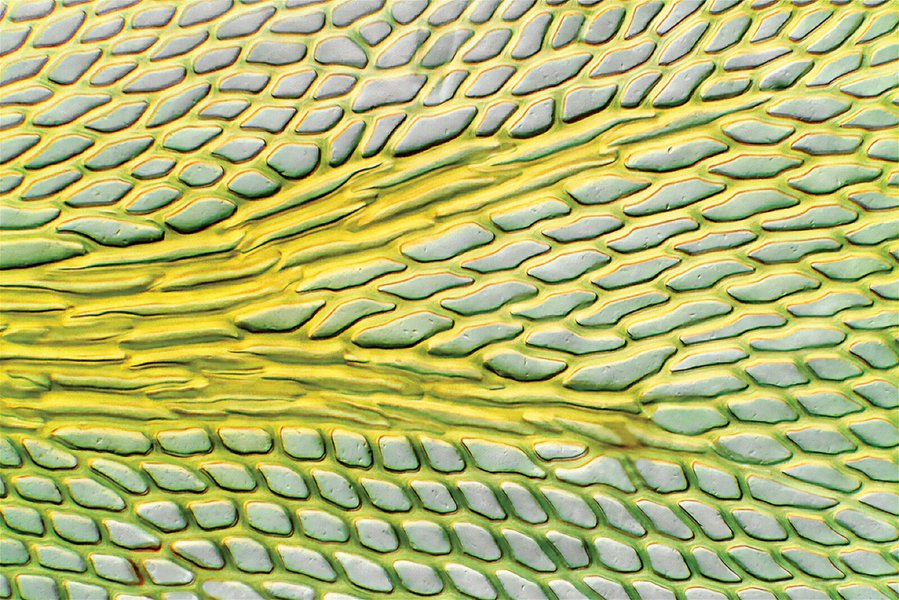
The intricate structure of moss leaves holds water and shelters microorganisms like tardigrades.
Step 3: Microscopic Observation - Finding the Hidden Gems
After the soaking period, it's time to hunt for tardigrades using a microscope.
Preparing the Slide
- Extract Water: Gently squeeze or swirl the moss within its soaking jar. Use a clean pipette or dropper to collect water from the bottom of the jar, where tardigrades and sediment tend to settle.
- Create a Wet Mount: Place a drop or two of this collected water onto a clean microscope slide.
- Add a Cover Slip: Carefully lower a cover slip over the water drop, trying to avoid air bubbles. Ensure there's enough water so the cover slip doesn't crush the tardigrades, but not so much that it floats freely.
Microscope Technique
- Start with Low Power (Stereo Microscope): If you have a stereo (dissecting) microscope, begin with it at low magnification (e.g., 20x-40x). Its wider field of view and 3D perspective are ideal for scanning the sample and spotting the relatively larger, moving tardigrades. Look for their characteristic plump, segmented bodies, eight legs, and slow, lumbering gait.
- Switch to High Power (Compound Microscope): Once you spot a potential tardigrade (or if you only have a compound microscope), switch to it or increase magnification (e.g., starting at 40x total magnification, then moving to 100x or 400x). Use a micropipette to transfer specific specimens to a new slide if needed for clearer viewing under the compound microscope.
- What to Look For: Tardigrades typically range from 50 micrometers to 1.2 millimeters long. Observe their movement, the claws at the end of their legs, and potentially internal structures like their stylets (mouthparts) or gut contents.

A tardigrade as seen through a microscope, showcasing its distinct body shape and legs.
Documenting Your Findings
- Record whether tardigrades are present or absent in each sample (Soil-1 Day, Soil-3 Day, Rock-1 Day, Rock-3 Day, Tree-1 Day, Tree-3 Day).
- If present, try to estimate their abundance (e.g., count the number observed in a specific volume or area).
- Note their activity level (e.g., actively moving, sluggish, inactive).
- Observe any morphological differences if possible.
Visualizing Your Experimental Workflow
This mindmap outlines the key stages of your investigation, from collecting samples to analyzing your observations.
(Distilled/Rain Water)"] id2a1["Group 1: 1-Day Soak (24 hrs)"] id2a2["Group 2: 3-Day Soak (72 hrs)"] id3["Microscopic Observation"] id3a["Water Extraction (Pipette)"] id3b["Wet Mount Slide Prep"] id3c["Microscope Use"] id3c1["Stereo Scope (Low Power Scan)"] id3c2["Compound Scope (High Power Detail)"] id4["Data Analysis & Objectives"] id4a["Presence/Absence Check"] id4b["Compare Soaking Durations"] id4c["Compare Substrate Sources"] id4d["Record Activity/Abundance"]
Comparing Soaking Times and Substrates
Your experiment directly compares two key variables: soaking duration and moss substrate. Here's what you might expect based on common findings:
Impact of Soaking Duration
- One Day (24 hours): This is often sufficient to revive many tardigrades from dormancy. You are likely to observe active individuals.
- Three Days (72 hours): Longer soaking might allow more time for sluggish individuals to become active or for eggs to potentially hatch (though hatching times vary). However, as mentioned, prolonged soaking *could* negatively impact some individuals or lead to sample fouling if microbial growth becomes excessive. Your observations will provide direct insight into which duration yields better results under your specific conditions.
Influence of Moss Source
- Tardigrades are widespread, but their abundance and species composition can vary depending on the microhabitat conditions provided by the moss and its substrate.
- Soil moss often retains moisture well, potentially supporting stable populations.
- Rock moss frequently endures cycles of extreme drying and rehydration, favoring highly desiccation-tolerant species.
- Tree moss/lichen offers a distinct aerial habitat, potentially hosting different species compared to ground-level mosses.
- Comparing the three sources will reveal if one substrate is particularly rich in tardigrades in your collection area.
Hypothetical Tardigrade Observation Potential
This chart provides a hypothetical visualization of expected tardigrade observation success, considering factors like activity levels and abundance based on substrate and soaking time. Note that actual results will vary based on your specific samples and location. We've scaled the potential from 1 (Low) to 5 (High).
The chart suggests that a 3-day soak might slightly increase the potential for observing active tardigrades across all substrates, potentially at the cost of slightly lower overall abundance compared to the 1-day soak, especially for soil moss where initial revival might be high. Rock and tree moss might benefit more from the longer soak time to fully revive desiccation-resistant individuals. Remember, this is illustrative; your experiment will reveal the true patterns.
Experimental Design Summary
This table summarizes the structure of your experiment, outlining the different conditions you will be observing.
| Sample Source | Soaking Duration | Primary Observation Goal |
|---|---|---|
| Moss from Soil | 1 Day (24 hours) | Presence, Abundance, Activity |
| Moss from Soil | 3 Days (72 hours) | Presence, Abundance, Activity |
| Moss from Rock | 1 Day (24 hours) | Presence, Abundance, Activity |
| Moss from Rock | 3 Days (72 hours) | Presence, Abundance, Activity |
| Moss from Tree | 1 Day (24 hours) | Presence, Abundance, Activity |
| Moss from Tree | 3 Days (72 hours) | Presence, Abundance, Activity |
See Tardigrades in Action!
Watching videos of tardigrades can help you recognize them under the microscope. This video provides excellent footage of tardigrades ("water bears") exhibiting their characteristic movement and appearance, which will be helpful for identification during your observations.
Defining Your Research Objectives
Based on your experimental setup, here are clear and specific objectives for your investigation:
Primary Objectives
- Detect Tardigrade Presence: To determine the presence or absence of tardigrades in moss samples collected from three distinct substrates (soil, rock, tree bark).
- Evaluate Soaking Duration Effect: To compare the effectiveness of a one-day (24-hour) versus a three-day (72-hour) soaking period in facilitating the observation of active tardigrades from moss samples.
- Assess Substrate Suitability: To compare the relative abundance and/or presence rates of tardigrades found in moss originating from soil, rock, and tree substrates.
Secondary Objectives
- Analyze Tardigrade Activity: To document and compare the observed activity levels (e.g., movement speed, responsiveness) of tardigrades revived after one-day versus three-day soaking periods.
- Optimize Revival Protocol: To contribute towards identifying an effective soaking duration for reviving tardigrades from cryptobiosis in collected moss samples for microscopic study.
- Document Morphological Observations: To note any observable morphological characteristics of the tardigrades found, potentially identifying different types if possible with the available magnification.
Frequently Asked Questions (FAQ)
What equipment do I really need?
Why soak the moss? Can't I just look at dry moss?
What magnification is best for seeing tardigrades?
What if I don't find any tardigrades?
References
- Frozen tardigrades revived after 30 years - The Johns Hopkins News-Letter
-
The effects of sample storage duration on tardigrade density and composition - ScienceDirect
- How to See Tardigrades Under Microscope? - Kentfaith
- Observing Tardigrades (Water Bears) from Moss Samples - Nikon Instruments Inc.
- Tardigrades: How to find them and observe them under the microscope - Micropia / Microbehunter Microscopy
- Tardigrades (Water Bears) - Microbial Life Educational Resources, SERC Carleton
- Majestic Tardigrades and Where to Find Them - Motic Microscopes
- Everything you need (and want) to know about tardigrades - Frontline Genomics
- How to Find a Tardigrade at Home Under the Microscope - Joyful Microbe
- How To Find Tardigrades – Migratory Legends / Metro Field Guide
Recommended Explorations
Last updated April 20, 2025