
Understanding the Fine Focus Knob
A Simple, Detailed Guide to Enhanced Clarity in Microscopy
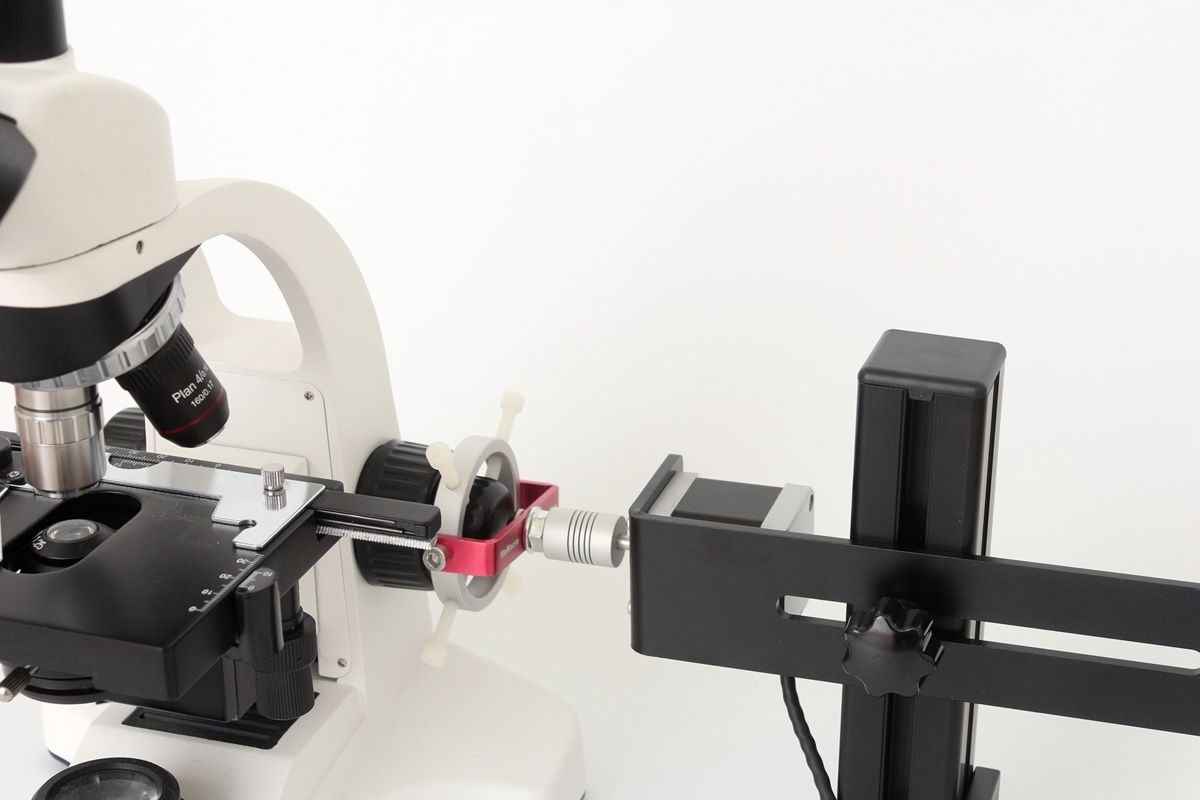
Key Insights
- Precise Adjustments – The fine focus knob allows tiny adjustments for a sharper image.
- Enhanced Details – It helps reveal subtle details that might be missed during basic focusing.
- Smoother Observation – Using the fine focus knob minimizes blur and keeps the view clear especially at high magnification.
Introduction to the Fine Focus Knob
When using a microscope, the first step is to get the image roughly into focus using the larger coarse focus knob. However, for detailed observation – especially when looking at small or intricate structures – this is not enough. The fine focus knob is the tool that lets you adjust the lens very slightly so that your view becomes clear and precise.
Why Fine Focus Matters
Precision in Focusing
The coarse focus knob makes big jumps to get the specimen into view, but it cannot provide the detailed sharpness needed for scientific or detailed observation. The fine focus knob helps you by making very small, accurate adjustments. This precision is especially important when you are working with high magnification, where even a minor change can make a big difference in what you see.
Simple Comparison: Camera Lens
Think of adjusting the fine focus knob like focusing a camera lens. When you take a photo, you might need to tweak the focus to get the picture sharp, especially when things are very close or very small. Similarly, the fine focus knob lets you make tiny corrections after you have used the coarse focus knob.
What Happens When You Adjust the Fine Focus Knob
When you turn the fine focus knob, you are slowly modifying the distance between the lens and the specimen. This small movement may seem insignificant but has a big impact on the resulting image. The result is a much sharper view that highlights the fine details of the specimen. This is crucial for studying features that are very small or require high resolution to be seen properly.
Detailed Explanation of the Fine Focus Adjustment
Step-by-Step Process
Let’s break down the process in simple terms:
- Initial Focus: Start with the coarse focus knob. This large knob brings the image into view quickly by moving the objective lens in big steps.
- Observation: Once you have a basic image, observe it. You may see that the image is not perfectly sharp – the details might appear blurry.
- Fine Tuning: Next, begin using the fine focus knob. This smaller knob allows you to adjust the focus in very small increments.
- Sharpening the Image: As you turn this knob, you will notice that the image becomes clearer. Even the smallest adjustments can reveal hidden details and make the specimen look crisper.
- Final Clarity: Eventually, through gentle adjustments, you achieve the sharpest possible image. The features of the specimen are now clear, allowing for detailed observation.
Impact on Observations
Adjusting the fine focus knob affects your observations in several simple yet vital ways:
- Improved Sharpness: The most noticeable change is the improvement in image sharpness. Fine adjustments mean you see the image more clearly without any blur.
- Enhanced Detail Visibility: Tiny structures or subtle variations in the specimen become visible. This is important in research and learning, for it uncovers information that would be otherwise hidden.
- Reduction of Blurring Effects: At high magnifications, even a slight imperfection in focus can cause significant blurring. The fine focus knob minimizes these issues, leading to smoother and clearer images.
Practical Examples and Analogies
Real-World Analogy: A Microscope as a Telescope
Imagine you are using a telescope to observe stars. Initially, you adjust the coarse focus to bring the star into sight. However, the stars still seem fuzzy. By delicately tweaking the telescope with a fine focus control, you can see them with true clarity. This is very similar to using the fine focus knob on a microscope.
A Simple Table Comparison
| Adjustment Type | Changes Made | Usage |
|---|---|---|
| Coarse Focus | Large, quick movements to bring the object into rough focus. | Best for initial adjustments and quick focusing. |
| Fine Focus | Small, precise movements to sharpen image details. | Used for final adjustments, especially at high magnifications. |
Scientific and Practical Implications
Importance for Scientific Research
In scientific research and microscopic diagnostics, the precision provided by the fine focus knob can be the difference between a successful observation and a missed discovery. For example, biologists studying cell structures or materials scientists examining micro-level defects rely on perfect focus to identify minute details. Without proper fine tuning, the images might be ambiguous, leading to misinterpretation or the inability to detect critical features.
Educational Benefits
The simplicity of understanding fine focus adjustments is also beneficial for educational purposes. Students using microscopes learn that small adjustments can lead to enormous improvements in the quality of what they observe. This skill not only improves laboratory methods but also deepens the understanding of how optical instruments work. Teachers often emphasize the importance of patiently adjusting the fine focus knob to get the best view of their specimen.
Challenges at High Magnification
At very high magnifications, such as 40x, 100x, or even higher, every tiny movement of the fine focus knob has more pronounced effects. The depth of field becomes very shallow, meaning that only a thin plane of the specimen is in focus at any given moment. Fine adjustments allow you to navigate through this thin plane and select the part of the specimen you wish to study. This level of detail is crucial when researchers need to inspect features that are extremely small or require high precision.
Understanding the Mechanics Behind the Fine Focus
How It Works Mechanically
The fine focus knob is mechanically linked to the focusing system of the microscope. When you rotate the fine focus knob, it moves the objective lens or the stage (depending on the design of the microscope) in very small increments. This mechanism typically involves precisely machined gears or screw systems that convert the knob's rotation into minute linear movements. These tiny adjustments alter the path of the light rays coming from the specimen, allowing the image to come into optimal focus. The engineering behind this is a fine balance between mechanical precision and optical clarity.
The Role of Fine Focus in Digital Microscopy
With the advent of digital microscopy, the fine focus knob remains as critical as ever. Modern microscopes often include digital readouts or automated systems that supplement manual adjustments. Even when images are captured via camera, the clarity achieved through fine focusing directly affects the quality of the digital image. This in turn improves the capabilities of specialized software in processing and analyzing the details, leading to more accurate measurements and observations.
Tips for Effective Fine Focusing
Step-by-Step Guidelines
For those new to using microscopes or for anyone seeking to improve their technique, here are some simple tips:
- Start with Coarse Adjustment: Always bring the image roughly into sight with the coarse knob before attempting fine adjustments.
- Turn Slowly: Rotate the fine focus knob slowly to observe each incremental change in detail. Rushing may lead to overshooting the best focus.
- Look for Clarity: Focus on achieving a consistent level of clarity across the entire specimen you are viewing.
- Practice Patience: At higher magnifications, be extra patient because even a trembling hand can cause significant changes in focus.
- Experiment with Lighting: Sometimes adjusting the lighting equally helps in maintaining a perfect focus; once the view is bright and even, the fine focus adjustments are more effective.
Common Mistakes to Avoid
The process is straightforward, but there are common mistakes that beginners might make:
- Too Fast Adjustments: Quickly turning the fine focus knob may overshoot the perfect point of focus.
- Ignoring the Coarse Control: Failing to use the coarse focus properly can make the subsequent fine tuning more challenging.
- Skipping the Fine Adjustment: Jumping directly from coarse to observation without the final fine tuning leads to less detailed images.
Impact on Everyday Observations
Improving Daily Laboratory Work
In daily laboratory practices, even small improvements in focus can make a big difference. Researchers using a microscope for routine tasks such as counting cells, identifying bacteria, or examining the structure of materials find that the subtle improvements offered by the fine focus knob significantly reduce errors and enhance the reliability of observations. This simple tool allows for quick and precise adjustments, which in turn leads to better data and more dependable experimental results.
User-Friendly Experience
For many users, especially students and hobbyists, the ease of use of the fine focus knob is a major advantage. It gives users a sense of control over the instrument and builds confidence in performing precise observations. Because the fine focus adjustment is intuitive, even those new to microscopy can learn to achieve clear, detailed images without excessive difficulty.
Table of Fine Focus Effects
| Aspect | Effect of Fine Focus | Practical Benefit |
|---|---|---|
| Sharpness | Improves clarity by reducing blur. | Helps in seeing fine structures clearly. |
| Detail Resolution | Allows subtle features to be visible. | Essential for accurate observation and analysis. |
| Adjustment Precision | Provides incremental movements. | Minimizes overshooting the correct focus point. |
| Image Stability | Reduces focus instability due to vibrations. | Ensures consistent high-quality images. |
Visualizing the Process: A Diagrammatic Insight
Diagram Description
Imagine a simple diagram where the microscope is shown with two focus knobs. The larger one is labelled "Coarse Focus" and the smaller one "Fine Focus." A series of arrows indicate that the coarse knob brings the image into view and the fine knob adjusts the focus with small steps, improving the detail and clarity. Such diagrams are widely used in textbooks to show the sequential steps needed to achieve the sharpest image.
Scientific Explanations in Layman’s Terms
Focusing as a Delicate Balance
The process of focusing a microscope is much like tuning an instrument. You start with rough tuning using the coarse focus, but the final adjustments are critical. In simple terms, the fine focus knob acts as the fine tuner, ensuring that every little detail is sharp and clear. This is especially important when examining tiny organisms or materials where the slightest blur can hide important information.
Plain Language Summary
Adjusting the fine focus knob helped make the image on the microscope much clearer. It allowed for small shifts in the focus so that details, which were fuzzy at first, became sharp. This means that creatures, cells, or other small features could be seen in much greater detail than they were with just the coarse adjustment.
Enhanced Understanding Through Practice
Learning By Doing
The more you practice using the fine focus knob, the better you become at recognizing the exact moment when an image has transitioned from being slightly blurry to completely clear. Over time, this skill becomes almost natural. This hands-on learning is invaluable not only for professional scientists but also for students and hobbyists who are exploring the microscopic world.
Conclusion and Final Thoughts
Conclusion
In summary, adjusting the fine focus knob is essential for achieving the maximum clarity and detail in microscopy. The device allows users to make minor adjustments that have a major impact on image quality. Whether in scientific research or educational settings, the ability to fine-tune the focus ensures that observers see specimens as sharply as possible. It eliminates much of the blur that can obscure important details, thereby aiding in accurate observations and reliable experiments. For anyone learning to use a microscope, mastering the fine focus knob is a fundamental step towards capturing precise and detailed images. The benefits of this small yet powerful adjustment are evident, as it brings out subtle features and helps in focusing on the most intricate aspects of a specimen.
Final Thoughts
The process is simple in theory: use the coarse focus for a rough outline and the fine focus for honing in on the details. Despite its simplicity, the fine focus knob plays a critical role that cannot be underestimated in the realm of microscopy. Its contributions to scientific precision and the overall quality of observations make it an indispensable tool. By understanding and practicing fine focus adjustments, anyone using a microscope can significantly enhance their observational clarity—turning even the smallest details into a well-defined and comprehensible visual display.
References
- Explaining the Difference Between Coarse and Fine Focus on Your Scope - Microscope Marketplace
- How to Focus a Microscope for Sharp Results - Microscope Reviews Lab
- Functions of Fine and Coarse Adjustment Knobs in Microscopes - Microscope World
- Fine Focus - Microbiology Vocabulary - Fiveable
- What Does Fine Focus Do In A Microscope? - K&F Concept UK
Recommended Further Queries
Last updated February 20, 2025