
First American Pope: A New Era for the Vatican, But Will It "Make America Great Again"?
Exploring the implications of Pope Leo XIV's historic election on U.S. identity and global standing.
The recent election of Cardinal Robert Francis Prevost as Pope Leo XIV on May 8, 2025, marks a monumental moment in the history of the Catholic Church: he is the first American to hold the papacy. This unexpected development has sparked widespread discussion, particularly regarding its potential influence on the United States and the complex question of whether an American pope could align with or contribute to notions of "making America great again." This response delves into the context of his election, his anticipated priorities, and how his papacy might intersect with American political and social landscapes.
Key Highlights of Pope Leo XIV's Election
- Historic First: Pope Leo XIV (Cardinal Robert Prevost) is the first American-born individual to be elected as the leader of the global Catholic Church, a development that was largely unforeseen, with prediction markets giving him very low odds.
- Focus on Social Justice: His background, including extensive service in Latin America and emphasis on Catholic social teaching, suggests a papacy focused on issues like immigration, poverty, and global solidarity, potentially challenging certain nationalist viewpoints.
- Complex Relationship with "MAGA": While his American identity is significant, Pope Leo XIV's past criticisms of policies associated with the "Make America Great Again" movement and its proponents indicate his papacy is unlikely to directly endorse or advance this specific political agenda. His role is primarily spiritual and global, not partisan.
A Historic Papal Election: Pope Leo XIV
The Unexpected Pontiff
The election of Cardinal Robert Francis Prevost as Pope Leo XIV on May 8, 2025, sent ripples of surprise throughout the world. Occurring on the second day of the conclave following the passing of Pope Francis, his selection was not widely anticipated. Prediction markets had placed his chances of becoming pope as low as 1% to 2%, highlighting the unexpected nature of this historic decision. For generations, the idea of an American leading the Catholic Church was considered "unimaginable" by many, given the Church's traditional power centers in Europe and, more recently, Latin America.
White smoke from the Sistine Chapel chimney on May 8, 2025, announcing the election of a new Pope, who would be revealed as the first American pontiff, Leo XIV.
Who is Cardinal Robert Prevost?
Born in Chicago and educated at Villanova University, Pope Leo XIV has a rich background within the Augustinian order. His extensive experience includes serving as a bishop in Peru, where he worked closely with the poor and marginalized communities. This period significantly shaped his pastoral approach. Before his election to the papacy, he held key positions within the Vatican, notably as the prefect of the Dicastery for Bishops, a role where he was influential in advising on bishop selections under Pope Francis. His fluency in multiple languages and experience in both North and Latin America provide him with a broad global perspective.
An American Pope: Implications for the U.S. and its Global Image
A New Narrative for America?
The ascendancy of an American to the papacy comes at a time when America's global image has been described by some observers as "shakier than it has been in recent years," often attributed to domestic political polarization and evolving international relations. In this context, Pope Leo XIV's papacy could offer a different lens through which the world views the United States. His leadership might present a narrative centered on morality, compassion, and social justice, potentially distinct from purely political or economic portrayals of American power. This could influence global diplomacy indirectly, leveraging the Pope's moral authority to soften negative perceptions.

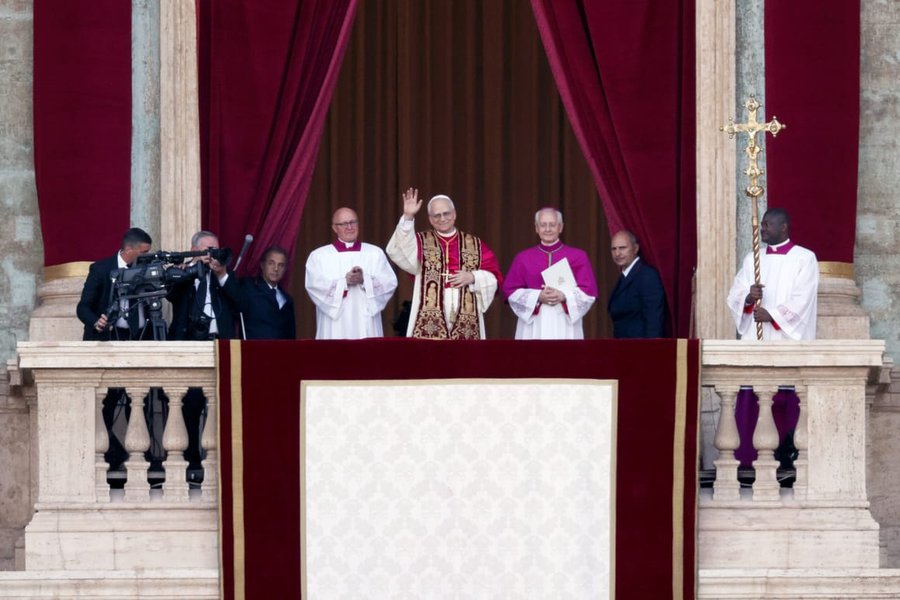
A visual representation evoking the discussion around an American pontiff. The image symbolizes the intersection of American identity and the papacy, a topic of much debate before Cardinal Prevost's election.
Reactions and Interpretations in the U.S.
News of Pope Leo XIV's election has generated considerable excitement and varied reactions within the United States. American Catholics, in particular, have expressed surprise and anticipation. Politicians from across the political spectrum have reportedly sought to frame his election in ways that align with their own perspectives and agendas. This highlights the symbolic power of an American pope and the diverse expectations placed upon him by his home country. His papacy could also play a role in healing internal divisions within the American Catholic Church, which has experienced significant polarization in recent years.
The "Make America Great Again" Question: A Complex Interplay
Understanding the Slogan and Papal Priorities
The phrase "Make America Great Again" (MAGA) is strongly associated with a specific political movement in the United. States, often emphasizing nationalism, economic protectionism, and conservative social values. Whether an American pope could contribute to this vision of "greatness" is a multifaceted question. The primary role of a pope is spiritual and global, focused on leading the 1.3 billion Catholics worldwide, addressing matters of faith, morality, and social justice on an international scale. This mission is distinct from, and can sometimes be at odds with, nationalistic political agendas.
Pope Leo XIV's Stance on Key Issues
Pope Leo XIV's background and public statements suggest a focus on Catholic social teaching, which prioritizes care for the poor, advocacy for migrants, and global solidarity. These priorities may challenge certain policies and rhetoric associated with the "MAGA" movement.
Potential for Friction, Not Endorsement
Reports indicate that before his election, Cardinal Prevost had expressed criticism of certain U.S. political figures and policies linked to "America First" ideologies, particularly concerning immigration and mass deportations. This suggests that his papacy may be more inclined to challenge rather than endorse elements of such movements. His emphasis on reconciliation and social justice appears to diverge from purely partisan or nationalistic approaches.
The Pope's Realm: Spiritual, Not Partisan
It is crucial to remember the separation of Church and State. While a pope's views can influence public debate and inspire action among the faithful, he does not directly engage in the governance or electoral politics of any single nation. Pope Leo XIV's American identity may bring a unique perspective to the papacy and could foster a renewed connection between the Vatican and the U.S. Church. However, his impact on achieving politically defined goals like "making America great again" is indirect at best and will depend heavily on how his moral leadership is interpreted and received.
Comparing Papal Focus with Political Agendas: A Visual Analysis
The following radar chart offers a visual comparison of potential focus areas for Pope Leo XIV, based on his background and traditional papal concerns, against some tenets often associated with the "Make America Great Again" political outlook. This is an interpretative visualization designed to highlight potential areas of alignment or divergence, not a depiction of empirical data. The scores (on a scale where higher means more emphasis) are illustrative opinions based on the provided information.
This chart illustrates that Pope Leo XIV's likely priorities—such as global solidarity, social justice for the poor, and migrant advocacy—may contrast with the strong emphasis on national sovereignty, economic nationalism, and immigration restriction often found within the "MAGA" framework. However, areas like "Conservative Social Values" might see some overlap, though interpretations and applications can differ significantly.
Papal Influence vs. National Politics: A Comparative Overview
The role of a Pope and the aims of national political movements operate in different spheres, though they can influence each other. The table below provides a simplified comparison of these differing domains, particularly in the context of Pope Leo XIV and the concept of "making America great again."
| Aspect | Typical Papal Focus (Pope Leo XIV's anticipated) | "Make America Great Again" Political Focus |
|---|---|---|
| Primary Goal | Spiritual leadership, global evangelization, upholding Catholic doctrine, promoting peace and justice worldwide. | Strengthening national power, economic prosperity, and cultural identity according to a specific political vision. |
| Scope of Concern | Universal (all humanity, the global Catholic Church). | National (primarily the interests of the United States). |
| Key Themes | Love, compassion, forgiveness, solidarity, care for the marginalized, human dignity, environmental protection. | National pride, economic strength, border security, traditional values (as defined by the movement), "America First." |
| Approach to Immigration | Generally welcoming, emphasizing the dignity of migrants and refugees, advocating for humane policies (drawing from Pope Leo XIV's known stances). | Often emphasizes stricter controls, border enforcement, and prioritizing national citizens. |
| Economic Philosophy | Critique of unchecked capitalism, emphasis on social safety nets, fair distribution of wealth, dignity of work. | Often supports deregulation, tax cuts for businesses, protectionist trade policies to boost domestic industry. |
| Source of Authority | Moral and spiritual authority derived from religious tradition and office. | Political authority derived from popular support, elections, and constitutional frameworks. |
| Measure of "Greatness" | Moral integrity, faithfulness to Gospel values, service to humanity, promotion of peace and justice. | Economic indicators, military strength, international standing, adherence to specific cultural/political ideals. |
This table highlights that while an American Pope might bring a sense of pride or renewed spiritual focus to some in the U.S., his core mission and priorities are fundamentally different from, and in some cases potentially critical of, the political agenda encapsulated by "Make America Great Again."
Mapping the Potential Impact of an American Pope
The election of Pope Leo XIV, the first American Pope, introduces a complex web of potential influences and interactions. The mindmap below explores various facets of his papacy, from his personal background to the broader implications for the Church and the world, particularly in relation to the United States.
This mindmap illustrates that Pope Leo XIV's influence is multifaceted. While his American heritage is a significant factor, his papacy will be shaped by his deep pastoral experience, his commitment to Catholic social doctrine, and the global responsibilities of his office. His relationship with U.S. political ideologies like "MAGA" is likely to be complex, characterized more by a call to universal values than an endorsement of specific nationalistic agendas.
Perspectives on the First American Pope: Voices and Prophecies
The election of an American Pope has, as expected, generated much discussion, including reflections on past predictions and potential alignments with various viewpoints. The video below touches upon the historic nature of Pope Leo XIV's election and how it's being received, particularly noting some early reactions from different segments of the Catholic community in America, including those with "MAGA" affiliations.
This video snippet from ABC News discusses how Robert Prevost's (now Pope Leo XIV) neighbors had an early inkling of his future path. More broadly, it reflects the initial reactions to this historic event, including how some conservative Catholic groups, sometimes associated with "MAGA" sentiments, are processing the election of an American Pope whose views on certain issues may differ from their own. It underscores the point that while the "American" aspect is celebrated by many, the Pope's specific theological and social stances will be closely watched and will inevitably lead to diverse interpretations and reactions across the political and religious spectrum in the U.S.
Frequently Asked Questions (FAQ)
Who is Pope Leo XIV? ▼
Pope Leo XIV is the papal name of Cardinal Robert Francis Prevost, born in Chicago, USA. He was elected as the 267th Pope of the Catholic Church on May 8, 2025. Before becoming Pope, he was a prominent member of the Augustinian order, served as a bishop in Chiclayo, Peru, for many years, and later became the Prefect of the Dicastery for Bishops in the Vatican. He is the first American to be elected Pope.
Why is an American Pope significant? ▼
The election of an American Pope is historically significant because the papacy has traditionally been held by Europeans, primarily Italians. It reflects the growing influence of the Church in other parts of the world, including the Americas. It may also impact the Catholic Church in the U.S., potentially influencing its direction and relationship with American society and politics. Furthermore, it could affect America's image on the global stage.
How might Pope Leo XIV influence U.S. politics? ▼
A Pope's influence on politics is generally indirect, through moral teaching and advocacy rather than direct intervention. Pope Leo XIV's known emphasis on social justice, migrant rights, and care for the poor may lead him to speak on U.S. policies related to these areas. His past criticisms of certain political figures and nationalist ideologies suggest he may challenge aspects of U.S. political discourse rather than align with specific partisan agendas. The principle of separation of Church and State means he will not govern, but his moral voice could be influential.
Will Pope Leo XIV align with the "Make America Great Again" movement? ▼
Based on available information, it is unlikely. Pope Leo XIV's emphasis on global solidarity, Catholic social teaching, and advocacy for marginalized communities, along with his past criticisms of policies and rhetoric associated with the "MAGA" movement (such as those concerning immigration and nationalism), suggest a divergence rather than an alignment. The Pope's primary mission is spiritual and universal, which typically transcends specific national political slogans or movements.
Recommended Further Exploration
- Explore Pope Leo XIV's early teachings and social encyclicals for deeper insights into his vision.
- Investigate the diverse reactions within the American Catholic Church to its first American Pope.
- Understand the historical interactions between Popes and U.S. presidents to contextualize future relations.
- Examine Catholic social teaching on nationalism versus globalism to understand the framework guiding papal perspectives.
References
Last updated May 10, 2025