
Humanising the Technical Explanation
Understanding Concorde's Longitudinal Flight Control in Friendly Terms
Key Takeaways
- Elegant Stability: Flight control laws keep the aircraft steady and manageable.
- Pitch Dynamics: Longitudinal control directly influences the nose's attitude, determining altitude and speed adjustments.
- Simulation Insights: Advanced models and computer simulations (such as MATLAB) reveal how well the system performs under various conditions.
Introduction
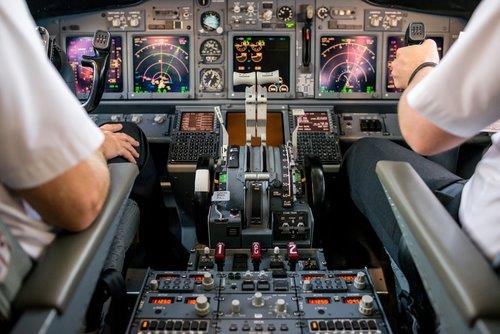
Imagine sitting in the cockpit of the iconic Concorde. Beyond the thrill of flying at supersonic speeds lies a world of sophisticated engineering crafted to ensure that every twist and turn is smooth, deliberate, and safe. A critical part of this complex system is what we call the flight control laws, which are the unseen guidelines enabling the aircraft to behave predictably in the air.
Understanding Flight Control Laws
What Are Flight Control Laws?
Flight control laws can be compared to the body's nervous system. Just as our nervous system sends signals from the brain to our muscles to perform delicate tasks, these laws send precise instructions to an aircraft's control surfaces (such as the elevators) so that the plane remains stable and responds quickly to the pilot’s inputs. They are crucial for ensuring that when a pilot makes even slight adjustments, the aircraft responds in a calm, predictable manner.
The Role of Longitudinal Flight Control
Longitudinal flight control specifically governs the aircraft’s pitch—imagine the nose of the aircraft tilting up or down. This tilting, though subtle, greatly affects both the altitude (how high the aircraft flies) and speed (how fast it moves). Think of it as a finely tuned seesaw: too much or too little tilt can lead to a disruption in the smooth balance that is required for safe flight.
In the case of the Concorde, these laws are not only about keeping the plane level; they are engineered to manage dynamic changes during various phases of flight. Whether the aircraft is accelerating, climbing, or navigating turbulent air conditions, the system continuously adjusts the pitch to ensure that the ride remains as stable and efficient as possible.
The Setting: Concorde at 5000 Feet and Mach 0.7
A Specific Flight Scenario
Picture the Concorde cruising at an altitude of around 5000 feet—a relatively low height for a supersonic airliner—and flying at a speed of Mach 0.7. Even though these numbers might seem mundane when compared to its later supersonic performance, this particular regime provides a window into the early stages or transitional phases of flight. At these conditions, the effects of pitch control on the aircraft's dynamic behavior become very pronounced.
Impact on Altitude and Speed
When the Concorde is at 5000 feet, the precise management of the pitch through longitudinal control is important not only to maintain the desired altitude but also to regulate the speed. A slight upward pitch might result in the aircraft climbing too rapidly or decelerating if the lift increases excessively. Conversely, slight downward adjustments help the aircraft accelerate or descend predictably. The dance between altitude and speed here is subtle and is maintained by the finely tuned flight control system.
Details of the Study Models
Full Flight Model
The full flight model captures the overall dynamic behavior of the aircraft. It encapsulates every aspect of flight physics—from lift and drag to moments acting about the aircraft's center of gravity. In human terms, it is as if we are looking at the entire choreography of the Concorde’s flight, understanding how all parts of the plane interact during each maneuver.
Short Period Oscillation (SPO) Model
In contrast, the Short Period Oscillation (SPO) model zooms in on the quick, short-lived oscillations of the pitch. You can think of it as the micro-dance of the aircraft’s nose – the rapid adjustments the system makes to counteract disturbances like gusts of wind or minor changes in air pressure. This model helps engineers see how well the system can dampen these rapid motions so that the ride never becomes jarring for the pilot or passengers.
Mathematical Tools Used: State-Space Representation and Transfer Functions
To study these flight models, engineers use mathematical approaches that might sound intimidating, but they essentially serve as the language to describe how the Concorde behaves. The state-space representation is like a detailed map showing all the variables at play, while transfer functions provide insight into the system’s response to inputs. Together, they allow engineers to run precise simulations and test different scenarios, akin to rehearsals before the actual performance.
The Role of MATLAB Simulations
Why Use MATLAB?
MATLAB is a powerful computing tool used extensively in aerospace engineering. In our analogy, think of MATLAB as a high-tech lab where every "what if" scenario is tested to understand how the Concorde might react under various conditions. Whether the aircraft experiences sudden gusts, unexpected turbulence, or needs rapid changes in altitude and speed, MATLAB simulations provide a safe and controlled environment to test the responses of the flight control system.
Investigating System Responses
With the aid of MATLAB, engineers can simulate how the full flight model and the SPO model respond in real time. They can measure how quickly the aircraft settles back into a stable state after a disturbance, assess the damping characteristics (which indicate how well the system can absorb fluctuations), and explore which control strategies yield the most efficient performance. This continuous iteration and refinement ensure that the system is optimized for both safety and performance.
Imagine the Concorde’s control system as a seasoned dancer. MATLAB simulations are like video recordings of rehearsals, where every movement is analyzed frame by frame. This detailed feedback allows for improvements and adjustments that ensure the performance (or the flight, in this case) remains flawless.
Practical Implications of the Study
Enhancing Aircraft Stability
The ultimate goal of studying these flight models is to enhance the stability and handling of aircraft like the Concorde. A well-maintained balance between the forces acting on the aircraft ensures that it remains responsive to pilot commands without becoming overly sensitive. The longitudinal flight control system works continuously behind the scenes to correct small deviations before they become significant, much like a skilled driver gently steering to keep a car perfectly centered in its lane.
Improving Passenger Comfort
While the intricate dance of pitch control might seem like purely technical minutiae, its benefits extend to passenger comfort. A smoothly adjusting system means fewer sudden jerks or abrupt changes in altitude and speed, which in turn translates into a less turbulent and more pleasant flight experience. For those aboard, the entire orchestration of these subtle adjustments goes unnoticed, yet it plays a crucial role in the overall sense of a safe and secure journey.
Optimizing Control Strategies
The simulations help engineers evaluate different control strategies – the various methods by which the aircraft can adjust its control surfaces in response to disturbances. An optimal strategy not only improves performance but also minimizes the need for energy-intensive corrections, which in practical terms can enhance overall efficiency. In simpler terms, this is like choosing the most efficient route on a road trip; the goal is to reach the destination in the smoothest, most fuel-efficient manner possible.
A Closer Look Through a Table
Summary of Techniques and Their Roles
| Aspect | Description | Analogy |
|---|---|---|
| Longitudinal Flight Control | Governs the aircraft’s pitch dynamics, which directly affects altitude and speed. | The tilt of a seesaw that regulates balance. |
| Full Flight Model | Represents the overall dynamic behavior of the aircraft including all forces and moments. | The entire choreography of a well-rehearsed dance. |
| Short Period Oscillation (SPO) Model | Focuses on rapid adjustments in pitch to counter short-term disturbances. | The quick, subtle micro-movements a dancer makes to stay balanced. |
| State-Space Representation | A mathematical map of all the variables and dynamics of the aircraft. | A detailed blueprint showing every element of a complex machine. |
| Transfer Functions | Describes how the aircraft’s response changes over time in reaction to inputs. | A cause-and-effect relationship mapping, much like how pressing a pedal affects a vehicle's speed. |
| MATLAB Simulations | Tests and refines the control system in a virtual environment. | Rehearsing a dance routine by watching recordings and making adjustments. |
In-Depth Discussion: The Human Element Behind Technology
The Pilot’s Experience
Pilots who have flown the Concorde often describe the experience as one of trust—trust in the aircraft's ability to maintain stability even when flying at speeds that defy conventional experience. The flight control system, which is engineered based on these sophisticated models and simulations, is the unsung hero in providing that sense of safety. For the pilot, it is not as if they are manually adjusting every single control surface; instead, they are relying on an intricate system that learns from every input, every gust of wind, every deviation from the intended flight path.
This background work enables the pilot to focus more on the overall mission—navigating through the skies—rather than being bogged down by micro-adjustments. In essence, the flight control laws render the aircraft almost self-aware, continuously correcting its posture and attitude in real time.
The Engineer’s Perspective
For the engineers, the ability to simulate flight conditions through tools such as MATLAB is transformative. It allows them to predict the Concorde’s behavior under various conditions, ensuring that the aircraft can handle even unexpected challenges. These simulations provide a virtual testing ground where hypotheses can be validated, control strategies optimized, and potential problems identified long before the aircraft ever takes to the skies.
When engineers talk about damping characteristics and control strategies, they are essentially discussing how the aircraft absorbs and corrects for moments of instability. It is comparable to how shock absorbers in a car work; by carefully tuning these responses, the ride becomes smoother and more comfortable even when the road is rough.
The Relationship Between Technology and Human Experience
At its core, the discussion of flight control laws transcends mere calculations and simulations—it is a celebration of human ingenuity. The ability to break down a complex flying machine into models that can be understood, improved, and eventually perfected speaks volumes about our desire to master the skies. The Concorde represents not only a peak in engineering but also a harmonious blend of technology and the human touch. When every button is pressed and every control surface adjusts in a silent, graceful response, it echoes the artistry and precision of a well-rehearsed performance.
While the technical language of state-space representations and transfer functions may seem arcane to the layperson, the underlying story is one of innovation, collaboration, and the endless pursuit of excellence in flight. It is the narrative of how engineers and pilots work together, trusting in a complex interaction of sensors, computers, and aerodynamic principles to make supersonic travel a reality.
Conclusion
In summary, the humanised view of flight control laws in the Concorde’s longitudinal system brings us closer to understanding the brilliant synchrony between modern engineering and the art of flying. What initially appears as a highly technical description unfolds as a narrative of precise adjustments, continuous feedback, and innovative simulation techniques that together sculpt the smooth performance we experience. Whether through the full flight model that captures every nuance of dynamic behavior or the focused short period oscillation model that fine-tunes rapid pitch adjustments, the system exemplifies how advanced control strategies ensure both stability and comfort. MATLAB simulations further reveal the layers of planning and computation that go into making supersonic flight not just possible, but extraordinarily refined.
References
- AeroPlane Tech - Flight Control Overview
- Aviation Goln - Stability and Control Systems
- Learn G&C - Flight Control Basics
- AeroPlane Tech - Flight Dynamics
- Heritage Concorde - Flight Control Systems
-
Concorde SST - Flight Systems
- Heritage Concorde - Aircraft Dynamics
- Technical Report on Flight Dynamics
- Wikipedia - Concorde
More
Last updated February 18, 2025