
Introduction to Fluid Properties and Experimental Techniques
Understanding Fluid Behavior Through Innovative Experiments and Observations
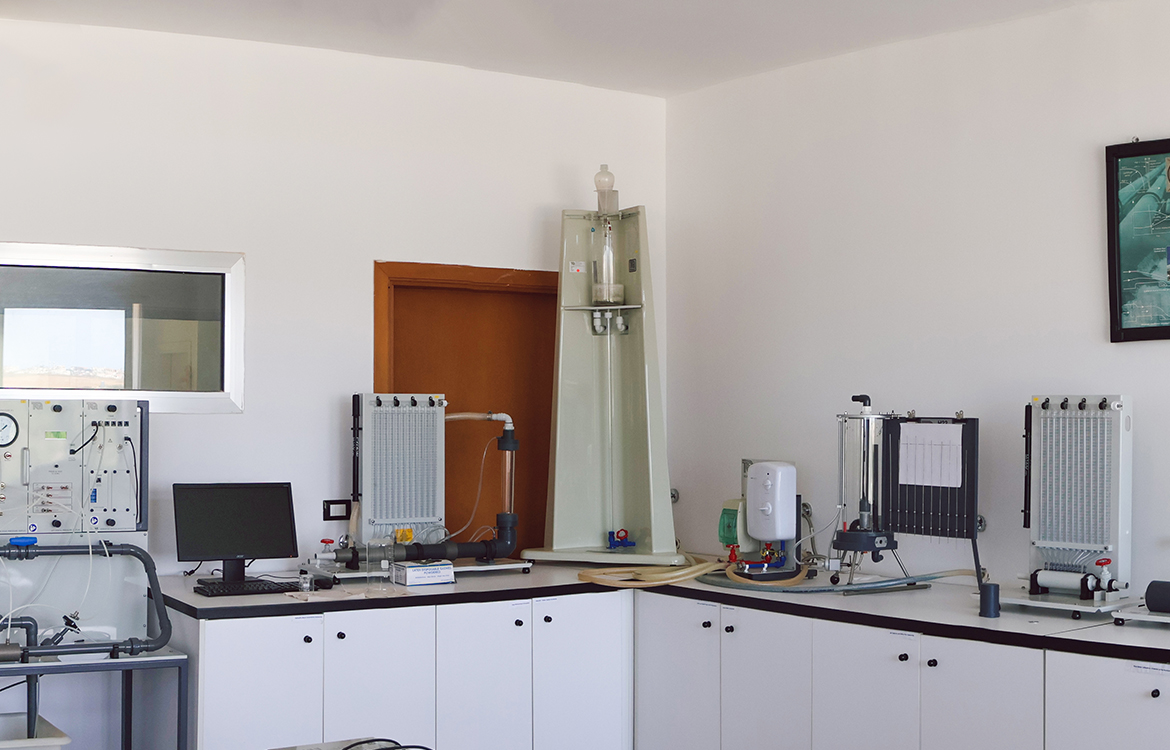
Key Highlights
- Experiment Measuring Fluid Density: Learn the fundamentals of determining a fluid's mass per unit volume to understand its interaction with surrounding materials.
- Observing Viscosity: Discover how a fluid's resistance to flow is measured using precise instruments and methods that capture its internal friction.
- Demonstrating Surface Tension and Exploring Capillarity: Uncover the fascinating phenomena of molecular cohesive forces that lead to surface tension effects and capillary action in narrow spaces.
Introduction
Fluids, encompassing both liquids and gases, are integral to the workings of nature and modern technology. Their unique physical properties such as density, viscosity, surface tension, and capillarity distinguish them from solids and drive their interactions in complex ways. Through a series of carefully designed experiments, researchers and engineers explore these properties to better understand fluid dynamics, optimize industrial processes, and innovate solutions in fields ranging from environmental science to aerospace engineering. In this introduction, we will delve into experimental methods used to measure these key properties and illustrate how they impact our everyday world.
Understanding Fluid Density
1.1 Definition of Fluid Density
Density is defined as the amount of mass contained within a specific volume of a fluid. Expressed mathematically as $$\rho = \frac{m}{V},$$ where \( \rho \) represents density, \( m \) is the mass, and \( V \) is the volume, this property is fundamental in understanding fluid behavior. The density of a fluid determines how it interacts with objects, influencing buoyancy, stability, and mixing processes.
1.2 Techniques for Measuring Density
Several experimental techniques have been developed to measure fluid density accurately:
- Hydrometer Method: A hydrometer is a device that floats in a fluid and is calibrated according to its specific gravity. The level to which the hydrometer sinks corresponds to the density of the fluid.
- Mass-Volume Calculation: By measuring the mass of a known volume of fluid using a density bottle or a graduated cylinder combined with an analytical balance, scientists can calculate density with precision.
- Densitometry: Advanced instruments known as densitometers use oscillating U-tubes to provide rapid and precise density measurements in industrial applications.
1.3 Experimental Setup for Density Measurement
A typical experimental setup for determining fluid density involves collecting a representative sample of the fluid in question, maintaining it at a controlled temperature, and using one of the aforementioned techniques to measure the mass and volume. The experimental data are then used to compute the density, offering insights into how the fluid might behave under varying conditions in both natural environments and engineered systems.
Exploring Viscosity Through Observation
2.1 Viscosity Defined
Viscosity is a measure of a fluid's resistance to flow, often described as its "thickness" or internal friction. For instance, water exhibits low viscosity and flows easily, whereas honey has a high viscosity and moves more sluggishly. Viscosity plays a crucial role in many natural phenomena and technological processes, influencing everything from blood flow in biological systems to lubricants in mechanical devices.
2.2 Observational Techniques
The viscosity of a fluid can be observed and measured using several experimental methods:
- Capillary Viscometers: In these devices, the time taken for a fluid to flow through a narrow tube is measured. The longer the delay, the higher the fluid's viscosity.
- Rotational Viscometers: These instruments assess the torque required to rotate an object within the fluid. The higher the necessary torque, the greater the fluid's viscosity.
- Falling Ball Viscometer: A ball is allowed to fall through a column of fluid and the rate of descent is recorded. This method provides a direct correlation between the speed of the falling ball and the fluid's resistance to flow.
2.3 Significance of Viscosity Measurements
Understanding viscosity is critical because it influences how fluids behave in response to external forces. In industrial applications, knowing the viscosity helps in designing systems involving fluid transport such as pipelines and hydraulic machinery. In biological contexts, it assists in understanding the flow characteristics of bodily fluids and the efficiency of nutrient transport. Viscosity measurements also inform the formulation of products in industries like cosmetics, food, and pharmaceuticals.
Demonstrating Surface Tension
3.1 Understanding Surface Tension
Surface tension arises from the cohesive forces present between liquid molecules at the interface with air (or another immiscible phase), resulting in a film-like effect at the surface. This property enables certain insects to walk on water, facilitates the formation of droplets, and influences the behavior of bubbles.
3.2 Experimental Demonstrations
Several experiments can visually demonstrate surface tension:
- Paper Clip Test: A paper clip gently placed on the surface of water can be supported due to the surface tension acting as a flexible, yet resilient, membrane.
- Droplet Formation: When water droplets form on a surface, their tendency to adopt a nearly spherical shape illustrates the minimization of surface area due to surface tension.
- Needle Floating Experiment: Carefully placing a needle on the surface of water, without letting it break the surface film, allows observers to see how the surface tension supports it.
3.3 Role and Applications of Surface Tension
The effects of surface tension extend beyond simple laboratory demonstrations. In nature, surface tension contributes to the behavior of rain droplets, the spread of oil slicks on water surfaces, and even the capillary action in plant xylem that drives water transport. In technological applications, understanding surface tension is critical in optimizing processes such as inkjet printing, coating technologies, and in the formulation of detergents and emulsions.
Exploring Capillarity in Fluids
4.1 Capillarity Explained
Capillarity, or capillary action, is a phenomenon that occurs when a liquid spontaneously flows into narrow spaces without the assistance of external forces. This results from the interplay between adhesive forces (between the liquid and the surface of the container) and cohesive forces (within the liquid itself). The balance of these forces can either draw the liquid upward or cause it to recede, depending on the characteristics of the fluid and the material in contact.
4.2 Capillarity Experiments
To observe capillarity in action, several experiments have been designed:
- Capillary Tubes: A thin tube is inserted vertically into a liquid, and the height to which the liquid rises (or falls) is measured. This height provides quantitative data on the capillary effect and is influenced by the tube’s radius, the fluid’s surface tension, and its density.
- Porous Materials: Materials like paper or sponges demonstrate capillary action as water spreads through the network of pores. This is particularly useful in studies related to soil moisture or the wicking action in fabrics.
4.3 Importance of Capillary Effects
The study of capillarity has profound implications across multiple disciplines. In biology, capillary action is fundamental to the upward transport of water and nutrients in plants, crucial for their survival. In engineering, capillary effects guide the design of microfluidic devices that are used in medical diagnostics and chemical analysis. Additionally, capillarity principles influence the manufacturing of porous materials and substrates in high-tech industries.
Experimental Setup and Data Analysis
5.1 Overview of Experimental Techniques
Experimentation is at the heart of understanding fluid properties. Researchers employ precise instrumentation and systematic procedures to investigate the behavior of fluids under various conditions, ensuring the reproducibility and reliability of their experimental data. The experiments on density, viscosity, surface tension, and capillarity not only provide quantitative measures of these properties but also offer qualitative insights into the underlying molecular interactions.
5.2 Comparative Table of Experimental Methods
| Property | Measurement Method | Key Instrument/Technique | Application |
|---|---|---|---|
| Density | Mass/Volume Calculation, Hydrometer, Densitometer | Hydrometer, Density Bottle | Buoyancy, Engineering Designs, Fluid Dynamics |
| Viscosity | Time-of-Flow, Rotational Measurement | Capillary Viscometer, Rotational Viscometer, Falling Ball | Pipeline Flow, Lubrication Systems, Biological Fluid Flow |
| Surface Tension | Droplet Formation, Floating Object Demonstration | Paper Clip Test, Needle Floating, Pendant Drop Analysis | Inkjet Printing, Coating Technology, Biological Interfaces |
| Capillarity | Capillary Rise/Fall, Porous Material Analysis | Capillary Tubes, Porous Media Experiments | Plant Physiology, Microfluidics, Material Science |
This table encapsulates the core methodologies used in fluid experiments and underscores how diverse techniques can be tailored to measure each property effectively. The selection of the method depends on the precision required, the nature of the fluid under study, and the specific application field.
Integrating Fluid Properties: A Holistic View
6.1 Interrelation of Fluid Properties
Although each property—density, viscosity, surface tension, and capillarity—is measured separately, they are inherently interconnected. For example, the viscosity and density of a fluid influence its flow behavior, while surface tension and capillarity are deeply related through intermolecular forces and molecular interactions. These properties collectively affect the way fluids behave in confined spaces, under pressure, or during phase changes.
In many experimental setups, adjustments to one property can have implications for another. For instance, temperature variations can alter both viscosity and density, thereby affecting the accuracy of experiments focused on either property. Recognizing these interrelationships is crucial when designing experiments and interpreting statistical results, ensuring that measurements reflect true physical behaviors rather than isolated phenomena.
6.2 Practical Applications in Industry and Research
The insights gained from experiments measuring these properties have broad implications. Engineers use this data to design efficient pipelines, optimize fuel injection systems, and improve industrial mixing processes. In environmental science, understanding fluid behavior helps in predicting pollutant dispersion in water and air. Biological studies leverage these insights for understanding blood flow, plant hydration, and cellular processes. Moreover, the development of new materials—ranging from advanced polymers to nanofluidic devices—rests on a robust understanding of these fundamental fluid properties.
Future Directions and Emerging Trends
7.1 Advancements in Measurement Technology
Innovations in sensor technology and data analytics are refining our ability to measure fluid properties with unprecedented precision. For example, modern densitometers now integrate digital sensors and machine-learning techniques to control experimental variables and reduce human error. Similarly, advancements in microfluidics have paved the way for on-chip viscosity measurements, allowing researchers to study fluids in extremely small volumes and under dynamic conditions.
7.2 Multidisciplinary Approaches
The study of fluid properties is no longer confined to traditional fields like physics and engineering; it has expanded into areas such as biology, medicine, and environmental sciences. Multidisciplinary projects often integrate experimental data with computational fluid dynamics (CFD) and advanced simulation techniques to predict complex fluid behaviors. These approaches enable scientists to model scenarios that are otherwise too challenging or expensive to reproduce experimentally, leading to breakthroughs in areas like cardiovascular research and climate modeling.
7.3 Educational Implications
Educational institutions are incorporating hands-on experiments related to density, viscosity, surface tension, and capillarity into laboratory curriculums. These experiments help students grasp the underlying principles of fluid dynamics in an interactive manner, preparing the next generation of engineers, scientists, and researchers. Interactive simulations and virtual labs are also gaining traction, providing learners with additional platforms to explore fluid properties in a controlled, replicable environment.
Concluding Insights and Final Thoughts
In summary, understanding the properties of fluids is fundamental to both scientific inquiry and practical engineering applications. The experiments focused on measuring fluid density, observing viscosity, demonstrating surface tension, and exploring capillarity provide a comprehensive toolkit for studying fluid behavior. These experiments illuminate how microscopic interactions—be it the internal friction between molecules or the cohesive forces at a fluid surface—manifest as macroscopic phenomena that govern everyday processes.
The detailed experimental techniques discussed herein emphasize the importance of precision, consistency, and a multidisciplinary approach in fluid research. Whether it is the use of hydrometers to measure density, viscometers to examine viscosity, simple demonstrations like the paper clip test for surface tension, or capillary tube setups to observe capillarity, each method offers unique insights that, when integrated, lead to a holistic understanding of fluid dynamics.
These insights drive innovations across industries: from ensuring the optimal performance of hydraulic systems and pipelines to fostering the development of new materials with tailored fluid interaction properties. As technology continues to advance, the ability to measure and manipulate these fluid properties will undoubtedly lead to even more precise control in applications ranging from microfluidics in biomedical devices to large-scale industrial processes.
In an era where sustainable engineering and efficient resource management are paramount, the study of fluid properties remains as critical as ever. As researchers continue to refine experimental methods and develop new computational tools, the synergy between theoretical analysis and experimental validation will help solve some of the most pressing challenges in science and technology.
References and Further Reading
For further insights and detailed methodologies on the experiments and techniques discussed above, the following resources provide invaluable information. These references offer both introductory and advanced content for those interested in a deeper exploration of fluid properties:
- Properties of Fluids: Density, Viscosity, Surface Tension - Discover Engineering
- Fluid Experiments and Demonstrations - School for Champions
- Fluid Density Explained - Vaia
- Understanding Surface Tension - University of Leeds
- Capillarity in Fluids - Modern Physics
Recommended Related Queries
- Explore innovative methods for measuring fluid density
- Learn about advanced techniques to observe and measure viscosity in fluids
- Understand the applications of surface tension in modern technology
- Discover how capillarity affects biological systems and microfluidic devices
- Explore multidisciplinary approaches to understanding fluid dynamics
Conclusion
In conclusion, the exploration of fluid properties through experiments such as measuring density, observing viscosity, demonstrating surface tension, and exploring capillarity provides a deep understanding of the complex behaviors of fluids. These fundamental properties not only drive natural phenomena but also underpin numerous technological advancements and industrial processes. As this field continues to evolve with emerging technologies and interdisciplinary research, the insights gained will broaden our ability to harness fluid dynamics in innovative ways, making significant contributions to science, engineering, and beyond.
The experimental methods discussed offer clear, demonstrable ways to measure and understand these essential properties. Integrating these insights fosters a greater appreciation of the delicate balance between molecular forces and macroscopic behavior—a balance crucial for advancements in environmental sustainability, healthcare, manufacturing, and many other areas.
Through careful experimentation and a continued pursuit of knowledge, the exploration of fluid dynamics remains a vibrant and fruitful area of research. Future studies promise to deepen our understanding further and unlock new possibilities in both theoretical and applied contexts. Embracing these methods and insights will undoubtedly contribute toward innovative solutions that address the challenges of our modern world.
References
- Properties of Fluids: Density, Viscosity, Surface Tension - Discover Engineering
-
Fluid Experiments and Demonstrations - School for Champions
- Fluid Density Explained - Vaia
- Understanding Surface Tension - University of Leeds
- Capillarity in Fluids - Modern Physics
Recommended
Last updated February 21, 2025