
Understanding Typical Foil Web Tension in Industrial Rewinding
A Comprehensive Overview of Tension Measurements for Sheet Metal Foils
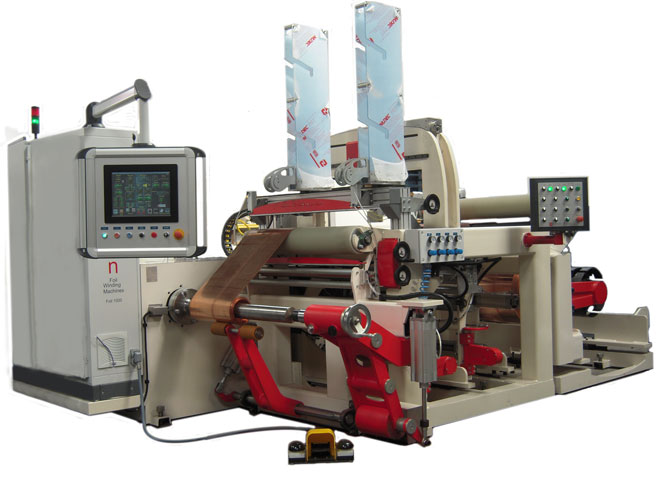
Key Takeaways
- Calculation Methods: Tension is frequently computed in pounds per linear inch (PLI) by multiplying the setpoints with material width in inches, while some guidelines offer values in newtons (N) for total applied force.
- Tension Range for Specified Dimensions: For materials with widths between 100 to 300 mm and thicknesses ranging from 0.1 to 1 mm, typical operating tension for foil rewinding generally falls between about 1 to 6 pounds on roll cores of 6 inches, though engineering controls often adjust these values.
- Factors Influencing Tension: Material characteristics, core size, process speeds, and desired material flatness are crucial elements that dictate the precise tension requirements.
Introduction
Maintaining proper web tension when rewinding sheet metal, particularly foil, is pivotal for ensuring high-quality products and optimal process efficiency in industrial settings. In many continuous processing applications, keeping a consistent tension level is essential to avoid deformation, stretching, or wrinkles that compromise the material’s integrity. In this discussion, we address the typical foil web tension for rewinding sheet metal with widths ranging from 100 to 300 millimeters (mm) and thicknesses from 0.1 to 1 mm, specifically when wound on rolls with 6-inch cores. The analysis considers common tension measurement approaches and provides insights into how various factors, such as material type, operating speed, and equipment configuration, impact tension control.
Core Concepts in Web Tension Control
Why Web Tension Matters
Web tension plays a critical role in maintaining the flatness and structural integrity of thin metal foils during rewinding operations. Proper tension control:
- Ensures that the material winds evenly onto the core.
- Prevents unwanted stretching or slack, thereby preserving the material’s mechanical properties.
- Promotes consistent tension throughout roll buildup, which is important when the roll is later unwound during processing.
- Minimizes the risk of wrinkling and deformation which can lead to product failures or manufacturing rejections.
Achieving the optimal tension involves a balancing act between applying enough force to maintain flatness and not exceeding the material’s elastic limits, which could cause deformations or yield losses.
Units of Measurement: PLI vs. Newtons
In the United States, tension in web processing is often measured in pounds per linear inch (PLI). This unit represents the force applied per inch of material width. Conversely, guidelines applicable in various European and international contexts might express tension in newtons (N).
For instance, if the recommended operating tension is set between 0.25 to 0.50 PLI, multiplying this setpoint by the width of the material in inches provides the total applied tension. As an example, a 100 mm wide foil (approximately 3.94 inches) under a tension of 0.25 PLI would experience around 0.985 pounds of force, while the same foil at 0.50 PLI would have close to 1.97 pounds of force applied. For a wider material of about 300 mm (approximately 11.81 inches), the total applied tension could range from approximately 2.95 pounds (at 0.25 PLI) to 5.91 pounds (at 0.50 PLI).
Fundamental Parameters Affecting Tension
The importance of precise tension control cannot be overemphasized in the process of rewinding sheet metal. Several key parameters can significantly influence the operational tension values:
Material Properties
The inherent properties of the foil, including yield strength and ultimate tensile strength, are vital. Foils typically exhibit low compliance, meaning their elastic limit is reached relatively quickly under tension. Utilizing materials with a higher tensile strength might allow for slightly higher tension operation without risking plastic deformation.
Material Width
Since tension in PLI is a function of the material’s width, any adjustment in width directly influences the total force applied. Industrial-grade foils in the range of 100–300 mm lead to corresponding variations in total frictional and tension forces.
Material Thickness
Thickness, ranging between 0.1 and 1 mm, affects the stiffness of the foil. Thinner foils require lower tension to achieve the same level of rigidity compared to thicker ones, which may mandate higher tension values for proper control and to prevent buckling.
Core Dimensions
The roll core size, specified here as 6 inches, plays a role since the torque required for maintaining consistent tension changes as the diameter of the unwinding roll alters during the rolling process. Automated systems often incorporate dynamic tension control that compensates for changing roll diameters.
Operational Factors
Other practical aspects, such as winding speeds, nip pressures, and frictional forces in the rewinding system, contribute to the practical values of web tension. The use of tension loops and closed-loop tension control systems helps in dynamically adjusting tension during operations.
Detailed Tension Calculation Examples
Calculation Using Pounds per Linear Inch (PLI)
When calculated in pounds per linear inch, the total web tension is directly related to the width of the foil. Let’s deconstruct a couple of examples:
Example 1: 100 mm Wide Foil (Approximately 3.94 inches)
For a recommended tension of 0.25 to 0.50 PLI, the calculations are as follows:
| Tension Setpoint (PLI) | Conversion Factor (Width in Inches) | Total Tension (Pounds) |
|---|---|---|
| 0.25 | 3.94 | 0.25 × 3.94 ≈ 0.985 |
| 0.50 | 3.94 | 0.50 × 3.94 ≈ 1.97 |
This shows that for the smaller width, the applied tension ranges roughly from 1 to 2 pounds.
Example 2: 300 mm Wide Foil (Approximately 11.81 inches)
Using the same approach:
| Tension Setpoint (PLI) | Conversion Factor (Width in Inches) | Total Tension (Pounds) |
|---|---|---|
| 0.25 | 11.81 | 0.25 × 11.81 ≈ 2.95 |
| 0.50 | 11.81 | 0.50 × 11.81 ≈ 5.91 |
Thus, with a larger width, the total tension needed rises proportionally, ensuring that even with the inherent variability in industrial processes, maintaining product quality remains achievable.
Conversion to New Units: Newtons
In some regional practices and engineering calculations, tension might also be expressed in newtons (N). Given that 1 pound-force is equal to approximately 4.44822 N, the above calculations in PLI can be translated into newton values for systems that use SI units.
For a 100 mm wide foil, if the tension is 0.25 PLI (0.985 pounds), this force becomes:
0.985 pounds × 4.44822 ≈ 4.38 N
And for 0.50 PLI (1.97 pounds), the conversion yields about 8.77 N. Similarly, for the 300 mm wide foil, 0.25 PLI equates to roughly 13.10 N, while 0.50 PLI gives approximately 26.20 N of force. These calculations help process engineers compare and adjust specifications based on the preferred measurement framework used in their facilities.
Dynamic Tension Control in Modern Systems
In a modern production environment, fixed tension setpoints are often insufficient due to the dynamic nature of web handling. Consequently, many installations employ continuous feedback systems that monitor and adjust tension in real-time. The use of a tension loop or closed-loop control plays a critical role by automatically adjusting braking and drive torque to sustain constant tension even as the roll diameter and operational speeds change.
The precision required in maintaining tension is particularly stringent for thin, non-extensible materials like aluminum foils and other metal sheets. The industry target is typically around 1% precision at a steady speed and within 2–4% precision during transitional speed phases. This ensures consistent web quality and helps avoid defects that might otherwise go unnoticed until advanced stages of processing.
Industrial Best Practices and Recommendations
Setting Appropriate Tension Based on Material Properties
When determining the ideal tension for rewinding sheet metal foils, the following aspects are routinely measured:
- Material Tensile Strength: Understanding the yield strength and ultimate tensile strength of the foil helps in estimating how much tension the material can sustain without permanent deformation.
- Elasticity and Extensibility: Due to the non-extensible nature of metal foils, even small over-tensioning can lead to stretching or undesirable deformation.
- Process Parameters: Factors such as line speed, torque requirements of the rewinding machine, and frictional effects in the system are all taken into account during initial setup and routine operations.
Operators often conduct preliminary trials under varied tension conditions to assess impacts on product quality, winding density, and material flatness. Adjustments are made iteratively to achieve an optimal balance.
Equipment and Control System Considerations
Modern tension control setups rely heavily on advanced sensing and control technologies. Digital tensiometers, load cells, and computerized control panels enable real-time monitoring and fine adjustments to the feed, braking, and unwinding sections. These systems monitor force variances and automatically correct deviations from setpoints.
For example, software-driven control units use feedback loops to adjust the nip pressure and braking force, thereby sustaining a constant tension irrespective of the roll diameter variation or speed changes. This minimizes operator intervention while ensuring product consistency.
Comparative Analysis: Foil versus Sheet Metal Tension
It is critical to note that while guidelines exist for foil web tension, variations occur when the material transitions from ultra-thin foils to thicker sheet metal. The principles remain constant: the tension must be proportional to the width and material properties, but the derived values will be inherently higher for thicker materials. In the case of sheet metal in the range of 0.1 to 1 mm, similar methodologies are applied; however, operators may need to adopt higher setpoints to counterbalance material stiffness and to ensure the material remains flat during rewinding.
Typical industrial guidelines may advise that web tension for thin metal foils (commonly assumed for materials below 0.2 mm thickness) is lower in terms of force per unit width than for thicker sheet metal. For instance, in the typical case of a 100 to 300 mm wide foil, the applied tension falls in a range that can be calculated through the PLI method (approximately 1–6 pounds total) as discussed above. Meanwhile, if engineered for sheet metal with higher absolute force requirements, the principles of tension control remain the same – adjusting for width, core diameter, and equipment speeds.
Table: Summary of Calculated Tension Ranges
| Material Width (mm) | Width (inches) | Tension (0.25 PLI) in Pounds | Tension (0.50 PLI) in Pounds |
|---|---|---|---|
| 100 | 3.94 | 0.985 | 1.97 |
| 300 | 11.81 | 2.95 | 5.91 |
This table offers a quick reference guide for the tension values derived from the recommended PLI values. It is important to note that these estimates are guidelines and should be validated through controlled trials given the specifics of the material and production environment.
Practical Considerations for Process Optimization
Conducting Controlled Experiments
The optimal tension for any rewinding process is best determined through experimental calibration. Operators typically:
- Start with a baseline tension derived from standard setpoints, such as 0.25 to 0.50 PLI.
- Monitor the web behavior during the rewinding process, examining parameters like roll density, edge alignment, and overall material flatness.
- Iteratively adjust the tension by small increments to evaluate the impact on material performance and quality.
These experiments help establish precise guidelines that account for any anomalies due to variations in material batches or machinery conditions.
Using Advanced Control Systems
Modern manufacturing lines increasingly rely on automation to ensure quality and consistency. Employing closed-loop control systems allows real-time data acquisition and adjustments that mitigate the effects of disturbances such as:
- Variations in material tension as the roll diameter changes during processing.
- Unexpected fluctuations in line speed or tension due to mechanical wear and tear.
- Environmental changes impacting frictional forces or material behavior.
Operators benefit from the integration of sensors and computerized control systems that automate these adjustments. Such systems not only help minimize wastage by avoiding over-tensioning but also improve overall operational efficiency by reducing manual intervention.
Industry Best Practices
Industry leaders recommend a comprehensive approach to tension control that includes:
- Regular calibration of tension sensors and feedback control mechanisms to maintain precision.
- Collaboration with equipment manufacturers who can provide tailored recommendations based on industrial experiences and material-specific guidelines.
- Continuous monitoring and documentation of tension values during production runs, ensuring early detection of any deviation from the desired setpoints.
Adopting these best practices contributes to enhanced product quality, reduced downtimes, and improved overall process reliability.
Conclusion and Final Thoughts
In summary, the typical foil web tension for rewinding sheet metal with widths between 100 and 300 mm and thicknesses ranging from 0.1 to 1 mm, when wound on rolls with 6-inch cores, usually falls within a range derived from tension setpoints of approximately 0.25 to 0.50 pounds per linear inch (PLI). This corresponds to a total tension of roughly 1 to 6 pounds depending on the width of the material.
It is important to recognize that these values are guideline estimates. In real-world industrial processes, tension control is a dynamic parameter influenced by material properties, process speeds, roll diameter changes, and other operational factors. The use of advanced closed-loop control systems and on-site testing remains indispensable to optimize the tension parameters for a given set of conditions. Operators are encouraged to perform specific trials to validate these guideline values while aligning them with the physical properties and processing capabilities of their materials.
Overall, a robust understanding of these principles and a careful, controlled approach to adjusting tension can markedly improve the efficiency and quality of the rewinding process for metal foils, ensuring optimal product performance and production consistency.
References
- Recommended Operating Tension for Common Web Materials - Dover Flexo Electronics
- Web Tension 101 - Paper, Film & Foil Converter - PFFC Online
- Web Tension Control Fundamentals - ISA
More Topics to Explore
Last updated February 19, 2025