
Folin-Wu Method Reagents
A Comprehensive Overview of the Reagents and Their Roles in Glucose Estimation
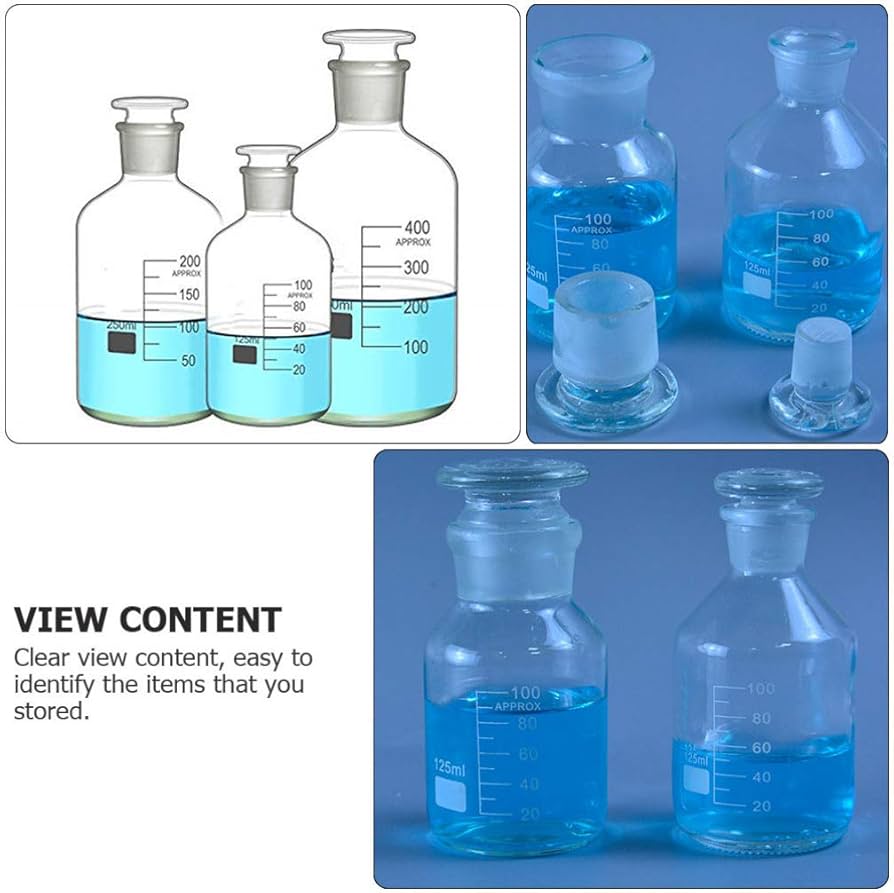
Highlights
- The choice of reagents is critical – Each reagent is carefully selected to facilitate deproteinization and colorimetric reactions.
- Historical and analytical significance – The Folin-Wu method was groundbreaking in its time and laid the foundation for modern biochemical assays.
- Detailed reagent preparation – Specific concentrations and preparation methods ensure precise and reproducible results.
Introduction to the Folin-Wu Method
The Folin-Wu method is a classical colorimetric assay originally developed in 1919 for the quantitative estimation of blood glucose. Over the years, it has provided a stepping stone for advancements in analytical biochemistry, particularly for glucose determination. Though improved techniques have largely supplanted it today, the method’s principles still serve as educational benchmarks in the field of clinical chemistry.
The method relies on a series of chemical reactions that culminate in a blue color formation. The intensity of the blue color, measured using a spectrophotometer, correlates with the glucose concentration in the blood sample. The reagents used are instrumental in ensuring an accurate and reliable reaction.
Key Reagents and Their Functions
1. 2/3 N Sulfuric Acid (H₂SO₄)
Sulfuric acid plays a vital role in the Folin-Wu method primarily by deproteinizing the blood sample. Proteins present in the blood could interfere with the colorimetric reaction, resulting in inaccurate glucose readings. By adding 2 ml of concentrated sulfuric acid to about 50 ml of distilled water and diluting to 100 ml, a 2/3 N solution is prepared. This controlled dilution is critical to maintain the reaction environment without introducing excess acidity.
In the assay, the acid’s primary function is to denature and precipitate proteins, thus removing potential barriers that can affect the reactivity of glucose in subsequent steps.
2. 10% Sodium Tungstate
Sodium tungstate, at a concentration of 10%, is another reagent used principally in the deproteinization stage. When 10 grams of sodium tungstate are dissolved in 100 ml of distilled water, the resultant solution aids in the precipitation of proteins. It works synergistically with sulfuric acid to further remove protein impurities.
Beyond deproteinization, sodium tungstate also ensures clarity of the reaction mixture, setting up an environment where the subsequent colorimetric reactions involving copper and phosphomolybdic acid can occur without interferences.
3. Alkaline Copper Reagent (Copper Tartrate)
The alkaline copper reagent, also sometimes referred to as copper tartrate, is central in facilitating the reduction reaction that is integral to the assay. The standard preparation of this reagent involves:
Component Details:
Typically, this reagent is prepared by dissolving 40 grams of anhydrous sodium carbonate (Na₂CO₃) in about 400 ml of distilled water. To this, 7.5 grams of tartaric acid is added, resulting in a solution that helps in sustaining an alkaline environment. Concurrently, a separate solution is made by dissolving 4.5 grams of copper sulfate (CuSO₄) in 100 ml of distilled water. The two solutions are then combined, and the final mixture is diluted to a total volume of 1000 ml.
In this alkaline environment, glucose present in the blood sample reduces the cupric ions (Cu²⁺) from the copper sulfate to cuprous oxide (Cu⁺). This reduction step is critical because the formation of cuprous oxide sets the stage for the final color development reaction.
4. Phosphomolybdic Acid Reagent
The phosphomolybdic acid reagent acts as a color-developing agent in this assay. Its primary function is to react with the cuprous oxide formed during the reduction step, resulting in the generation of a blue-colored complex. The intensity of this blue color is directly related to the glucose content in the blood.
Preparation Details:
The typical preparation of the phosphomolybdic acid reagent involves several steps:
- A mixture is prepared by dissolving 35 grams of molybdic acid along with 5 grams of sodium tungstate in a volume of 200 ml of 10% NaOH.
- This solution is then diluted with 200 ml of distilled water and boiled for approximately 45 minutes. The boiling process is essential for removing ammonia that is present in molybdic acid, thereby purifying the mixture.
- Once cooled, 125 ml of 89% phosphoric acid is added slowly, followed by further dilution with distilled water to bring the total volume to 500 ml.
The careful preparation of the phosphomolybdic acid reagent ensures that it is reactive enough to interact with the cuprous oxide effectively, thereby making the resulting blue color appear with high intensity and accuracy.
5. Glucose Standard Solutions (Calibration Standards)
For calibration purposes, a glucose standard solution is often prepared. Calibration is key to ensuring that the colorimetric measurements are accurately reflective of the actual blood glucose levels. This involves:
Preparation of Glucose Standard:
A stock solution of glucose can be prepared by dissolving 1 gram of glucose in 100 ml of a saturated benzoic acid solution (typically around 0.3%). From this stock, a working standard is made by diluting it further, usually at a 1:100 ratio, which results in a final concentration of about 10 mg/dl. These standards are essential for constructing a calibration curve.
The calibration process normally involves running the assay with the standard solutions and plotting a graph of absorbance versus glucose concentration. This curve then serves as a reference for determining the glucose concentrations in unknown blood samples.
Detailed Procedural Insights
General Protocol Overview
The Folin-Wu method integrates the reagents in a sequential process. The blood sample is first treated with the sulfuric acid and sodium tungstate in order to precipitate proteins. Removing these proteins is paramount because they could otherwise interfere with the redox reactions involved in the later steps.
Following successful deproteinization, the sample is treated with the alkaline copper reagent. In this stage, the glucose present in the sample reduces the copper (II) ions to copper (I) oxide. The reduction is the critical chemical reaction that forms the basis for the subsequent colorimetric determination.
Once the reduction occurs, the phosphomolybdic acid reagent is added. The reagent interacts with the newly formed cuprous oxide leading to the formation of a blue-colored complex. The intensity of this blue color, which can be quantitatively measured at a specific wavelength in a spectrophotometer, is proportional to the concentration of glucose in the sample.
Key Chemical Reactions and Their Mechanisms
The chemical reactions that occur in the Folin-Wu method are driven by principles of redox chemistry. The series of reactions can be broken down into two primary stages:
Deproteinization Stage:
The addition of 2/3 N sulfuric acid and sodium tungstate results in the denaturation of proteins. These reagents facilitate the complete precipitation of proteins, thus isolating glucose in the solution. This process is fundamental because it clears the sample of interfering substances, allowing the subsequent redox reaction to occur in an unobstructed manner.
Redox Stage:
After deproteinization, when the alkaline copper reagent is introduced, glucose reduces the copper (II) to copper (I), which manifests as a formation of cuprous oxide. This reduced form then reacts with phosphomolybdic acid. The latter produces a blue-colored complex that is directly quantifiable. Mathematically, the correlation is represented as:
\( \text{Absorbance} \propto [\text{Glucose}] \)
This equation, derived from Beer’s Law, shows that the absorbance of the blue complex is directly proportional to the concentration of glucose. The assay requires strict adherence to reagent preparation protocols to ensure reliable optical measurements.
Summary Table of Reagents
| Reagent | Preparation/Concentration | Role in the Assay |
|---|---|---|
| 2/3 N Sulfuric Acid (H₂SO₄) | 2 ml acid in 50 ml distilled water, diluted to 100 ml | Deproteinization of blood sample by protein precipitation |
| 10% Sodium Tungstate | 10 g in 100 ml distilled water | Helps precipitate proteins; works with sulfuric acid |
| Alkaline Copper Reagent | Sodium carbonate (40 g in 400 ml water) and tartaric acid (7.5 g) with copper sulfate (4.5 g in 100 ml water) combined and diluted to 1000 ml | Initiates reduction of Cu²⁺ to Cu⁺ by glucose, forming cuprous oxide |
| Phosphomolybdic Acid Reagent | Molybdic acid (35 g) and sodium tungstate (5 g) in 200 ml of 10% NaOH, diluted and boiled, then mixed with phosphoric acid (125 ml) and water to 500 ml | Reacts with cuprous oxide to form a blue-colored complex for measurement |
| Glucose Standard Solutions | Stock: 1 g/dl in 100 ml of saturated benzoic acid; Working standard: Diluted 1:100 to yield 10 mg/dl | Used to create a calibration curve to quantify blood glucose levels accurately |
Practical Considerations and Modern Context
Advantages and Limitations
One of the major advantages of the Folin-Wu method is its simplicity and historical importance in the field of biochemistry. The method provided a relatively straightforward and cost-effective way to measure blood glucose at a time when more sophisticated techniques were not available. The use of colorimetric measurements allowed for a semi-quantitative analysis that was accessible to many laboratories.
However, the method is not without limitations. The assay requires careful and precise preparation of reagents to avoid errors in protein precipitation or color development. Additionally, because of its reliance on protein removal, any residual interference may affect the accuracy of the measurement. Modern techniques, including enzyme-based assays and high-performance liquid chromatography (HPLC), have largely replaced this method due to higher specificity and sensitivity.
Despite these limitations, the Folin-Wu method remains noteworthy in academic settings. It serves as an excellent example for teaching the principles of deproteinization, redox reactions, and spectrophotometric analysis, contributing foundational knowledge to the evolution of biochemical assay methodologies.
Optimization and Quality Control
Reagent Stability and Handling
The chemical stability and proper storage of each reagent are crucial for maintaining repeatability. For instance, the sulfuric acid solution must be carefully diluted and stored in appropriate glassware to prevent contamination. Similarly, sodium tungstate and the prepared copper reagent should be freshly prepared or stored under conditions that minimize degradation or precipitation.
Quality control in such assays often involves running parallel standard curves and including control samples to verify that the reagents are performing as expected. Cross-checking the absorbance values against known standards can help detect any deviations due to reagent instability or procedural errors.
Calibration Techniques
The use of standardized glucose solutions ensures that the readings from the assay are directly correlated to an established calibration curve. This curve is typically prepared by plotting the absorbance values against the series of known concentrations from the working standards. Meticulous calibration is essential to minimize errors and improve the assay’s reproducibility.
Comparative Context in Biochemical Assays
Evolution of Glucose Estimation Techniques
While the Folin-Wu method was instrumental in the early years of clinical biochemistry, advancements in technology have led to the development of more specific and sensitive methods for glucose analysis. Enzymatic assays using glucose oxidase or hexokinase are now preferred in clinical diagnostics, as these methods offer higher specificity, eliminate protein interference, and provide rapid results.
Nevertheless, understanding the Folin-Wu method is beneficial for those studying the history and evolution of analytical techniques. It not only provides insight into how early biochemists overcame technical challenges but also encourages a deeper understanding of chemical reactions involved in biomolecule quantification.
Application in Research and Education
The Folin-Wu method continues to find relevance in educational laboratories where it serves as a teaching tool for students. By repeating this assay, students learn about the intricacies of preparing precise reagent concentrations, executing sequential chemical reactions, and interpreting spectrophotometric data. These experiences lay the groundwork for more advanced studies in biochemistry and clinical analysis.
Additionally, the method is occasionally referenced in research papers where historical comparisons are drawn between traditional and modern analytical techniques, highlighting the progress made in the field.
Conclusion and Final Thoughts
In conclusion, the Folin-Wu method relies on a well-defined set of reagents that work together to enable the colorimetric determination of blood glucose. The process begins with deproteinization using a 2/3 N sulfuric acid solution and 10% sodium tungstate, which serve to remove protein interference, ensuring a clear reaction environment. The alkaline copper reagent, prepared through a careful combination of sodium carbonate, tartaric acid, and copper sulfate, facilitates the reduction of cupric ions to cuprous oxide by glucose. This reduction is central to forming a measurable blue-colored complex when phosphomolybdic acid is added. Finally, a carefully constructed glucose standard solution aids in calibrating the assay, ensuring that spectrophotometric readings accurately reflect glucose levels.
Although modern methods such as enzymatic assays have supplanted the Folin-Wu method in many clinical settings due to improved specificity and speed, its historical significance and educational value remain undiminished. By mastering the details and preparation of each reagent, one gains insight not only into the chemical intricacies of glucose metabolism but also into the evolution of biochemical assay techniques. The meticulous reaction setup, precision in reagent preparation, and adherence to calibration protocols illustrate both the complexity and the beauty of analytical chemistry as it applied to early clinical diagnostics.
References
- Lab Manual PDF - McConline
- Folin-Wu Method For Estimation of Blood Glucose - Bioscience
- Folin-Wu Method Explanation - LaboratoryTests.org
- Determination of Blood Glucose by Folin-Wu Method - HBMahesh
- Estimation of Sugar by Folin-Wu Method - Biocyclopedia
Recommended
Last updated February 27, 2025