
Unlock the Secrets of Your Follicular Phase: A Comprehensive Guide
Demystifying the follicular phase of the menstrual cycle: hormones, changes, and its crucial role in fertility.
Key Highlights of the Follicular Phase
- Hormonal Shifts: The follicular phase is characterized by rising estrogen levels, which stimulate the growth of the uterine lining and prepare the body for ovulation.
- Follicle Development: During this phase, follicles in the ovaries grow, with one dominant follicle ultimately releasing an egg.
- Energy and Libido: Many individuals experience increased energy and a higher libido during the follicular phase due to the influence of rising estrogen levels.
Understanding the Follicular Phase
The menstrual cycle is a complex and natural process that prepares the female body for potential pregnancy. It consists of four distinct phases: menstruation, the follicular phase, ovulation, and the luteal phase. Among these, the follicular phase is a critical period characterized by significant hormonal changes and the development of ovarian follicles. This phase is essential for understanding fertility and overall reproductive health.
What is the Follicular Phase?
The follicular phase is the first part of the menstrual cycle, overlapping with the menstrual phase and extending until ovulation. It begins on the first day of menstruation and typically lasts about 16 days, although this can vary. During this phase, several follicles in the ovaries are stimulated to grow, preparing an egg for ovulation. The follicular phase is also referred to as the proliferative phase because the rising levels of estrogen cause the endometrial lining of the uterus to proliferate and thicken.
Hormonal Orchestration
The follicular phase is governed by a complex interplay of hormones. Key players include:
-
Follicle-Stimulating Hormone (FSH): Secreted by the pituitary gland, FSH stimulates the growth of ovarian follicles. FSH secretion begins to rise in the last few days of the previous menstrual cycle and is highest during the first week of the follicular phase.
-
Estrogen: As follicles grow, they produce increasing levels of estrogen. Estrogen stimulates the growth of the uterine lining and causes endometrial cells to produce receptors for progesterone, priming the endometrium for the luteal phase. Estrogen levels are highest right before the luteinizing hormone (LH) surge.
-
Luteinizing Hormone (LH): Rising estrogen levels trigger the pituitary gland to release LH, which initiates ovulation. The LH surge halts estrogen production and starts the process of ovulation.
-
Inhibin B: Secreted by granulosa cells, inhibin B suppresses FSH secretion towards the end of the follicular phase. Inhibin B levels are highest during the LH surge before ovulation and decrease rapidly afterward.
The Role of Follicles
Follicles are sacs in the ovaries that contain eggs. During the follicular phase, several follicles begin to grow, but typically only one becomes dominant and releases its egg during ovulation. The dominant follicle produces estrogen, which thickens the uterine lining in preparation for potential pregnancy.
Follicular Waves
Follicular waves describe the phase when follicles have matured sufficiently and rupture, leading to ovulation. The development of a single dominant follicle is crucial for successful ovulation.
Phases Within the Ovarian Cycle
The ovarian cycle consists of two main phases: the follicular phase and the luteal phase. The follicular phase is characterized by the maturation of ovarian follicles, while the luteal phase occurs after ovulation.
Menstrual and Proliferative Phases
The menstrual cycle can also be divided into the menstrual and proliferative phases. The follicular phase corresponds to the proliferative phase, during which the endometrium proliferates under the influence of estrogen.
The Significance of Cycle Length
The length of the follicular phase can vary depending on the overall length of the menstrual cycle. While the average menstrual cycle is 28 days, it can range from 21 to 35 days. Ovulation typically occurs approximately 14 days before the onset of the next menstrual period. Therefore, the follicular phase is shorter in shorter cycles and longer in longer cycles. The luteal phase, however, is usually stable and lasts about 14 days.
Irregularities in Cycle Length
Variations in cycle length can indicate different conditions. Infrequent menstruation, known as oligomenorrhea, is defined as cycle lengths longer than 35 days. Frequent menstruation, or polymenorrhea, refers to cycle lengths shorter than 21 days. Amenorrhea describes the complete absence of menstrual bleeding.
How the Follicular Phase Impacts You
The hormonal changes during the follicular phase can affect your energy levels, mood, and libido. Many people feel more energized and confident during this phase due to rising estrogen levels. Some may also experience a higher sex drive.
Nutrition and Lifestyle During the Follicular Phase
During the follicular phase, it's important to maintain a healthy diet and lifestyle. Given the overlap with the menstrual phase, continuing to consume iron-rich foods is beneficial to compensate for blood loss.
Age-Related Changes in the Follicular Phase
As women age, ovarian function declines, leading to changes in the follicular phase. Lower inhibin levels can result in a higher release of FSH, potentially increasing the occurrence of multiple ovulations. Additionally, the overall duration of the follicular phase may shorten as follicles are recruited at an increased rate.
Assessing Ovarian Reserve
Physicians can evaluate suspected infertility by measuring serum FSH and estradiol levels around day 3 of the cycle. Ovarian reserve can also be assessed by monitoring serum levels of anti-Müllerian hormone (AMH), which is produced by granulosa cells and plays a crucial role in folliculogenesis.
Visualizing the Follicular Phase
Understanding the hormonal changes and physical processes during the follicular phase can be enhanced with visual aids.
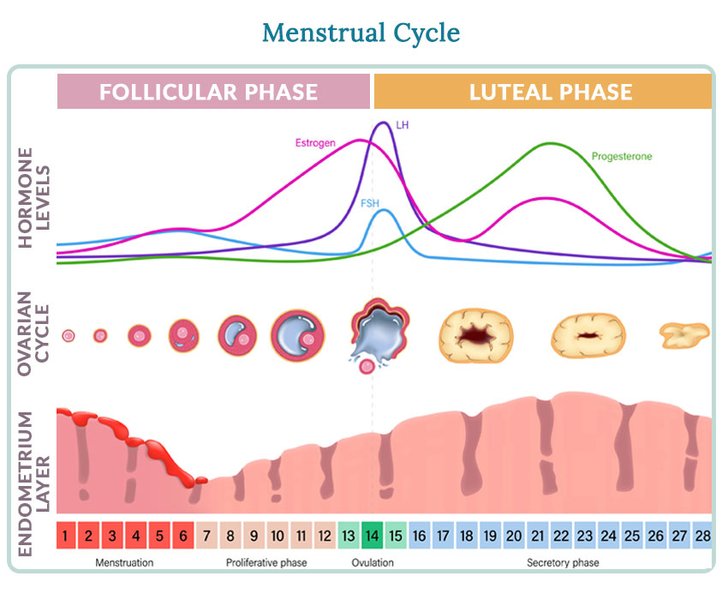
Overview of the Menstrual Cycle: This diagram illustrates the fluctuations in hormone levels and the corresponding changes in the ovaries and uterus during the menstrual cycle, highlighting the follicular phase.

Hormonal Changes: This chart details the changes in hormone levels throughout the menstrual cycle, emphasizing the rise in estrogen during the follicular phase.

Ovarian Follicles: This image depicts the ovarian follicles in the ovaries, the development of which characterizes the follicular phase.

Endometrial Changes: This image showcases the changes in the endometrial lining of the uterus, highlighting the thickening that occurs during the follicular phase in preparation for potential implantation.

Lifestyle Adjustments During the Cycle: This image suggests ways to align daily activities with the different phases of the menstrual cycle, including the follicular phase.
Hormonal Changes During the Menstrual Cycle
The menstrual cycle is regulated by a complex interplay of hormones. Understanding these hormonal changes is crucial for comprehending the events that occur during each phase, including the follicular phase.
| Hormone | Phase | Function |
|---|---|---|
| Follicle-Stimulating Hormone (FSH) | Follicular | Stimulates the growth of ovarian follicles. |
| Estrogen | Follicular | Stimulates the growth of the uterine lining and primes the endometrium for progesterone. |
| Luteinizing Hormone (LH) | Follicular, Ovulation | Triggers ovulation and initiates luteinization of thecal and granulosa cells. |
| Inhibin B | Follicular | Suppresses FSH secretion towards the end of the follicular phase. |
| Progesterone | Luteal | Maintains the uterine lining to prepare for potential pregnancy. |
This table provides a concise overview of the key hormones involved in the menstrual cycle and their functions during the follicular and luteal phases. Understanding these hormonal dynamics is essential for comprehending the physiological changes that occur throughout the cycle.
Video Explanation of Menstrual Cycle Phases
To further illustrate the phases of the menstrual cycle, including the follicular phase, the following video offers a detailed walkthrough of the hormonal regulation and key events.
This video by the Amoeba Sisters provides a comprehensive overview of the menstrual cycle, covering the ovarian cycle (follicular and luteal phases) and the uterine cycle. It is particularly useful for understanding the hormonal interactions and physiological changes that occur during the follicular phase, making it easier to visualize and comprehend the concepts discussed.
Frequently Asked Questions
References
Last updated April 10, 2025