
Unlock the Future: Mastering Essential Forecasting Techniques
Predicting future trends is crucial for strategic planning and informed decision-making in business. Discover how to leverage these powerful methods with real-world applications.
Key Forecasting Techniques
- Time Series Analysis: Analyze historical data patterns over time to predict future values, useful for spotting trends and seasonality.
- Regression Analysis: Examine the relationship between dependent and independent variables to forecast outcomes, ideal for understanding cause-and-effect relationships.
- Qualitative Forecasting: Utilize expert opinions and market research for predictions, especially valuable when historical data is limited or during unique market conditions.
Understanding Forecasting and Its Importance
Forecasting is the process of making predictions based on past and present data to estimate future trends and outcomes. This allows businesses to anticipate changes in various aspects, such as sales, demand, and economic conditions. By leveraging forecasting techniques, organizations can make informed decisions, optimize resource allocation, and enhance their overall competitive advantage.
Effective forecasting is essential for several reasons:
- Strategic Planning: Provides insights for setting goals and objectives.
- Resource Allocation: Helps in efficient distribution of resources based on predicted needs.
- Risk Management: Allows businesses to prepare for potential challenges and uncertainties.
- Financial Health: Supports budgeting, cost control, and financial planning.
Six Essential Forecasting Techniques
There are numerous forecasting techniques available, each with its strengths and suitability for different scenarios. Here are six essential techniques, complete with examples, that can significantly enhance your forecasting capabilities:
1. Time Series Analysis
Time series analysis involves analyzing historical data collected over regular intervals to identify patterns and trends. This method assumes that past patterns can be used to predict future values. Time series forecasting is particularly useful when data exhibits temporal patterns or seasonality.
Example:
Consider a retail business that wants to forecast sales for the next quarter. By analyzing historical sales data from the past few years, the business can identify seasonal trends (e.g., higher sales during the holiday season) and overall growth trends. Using this information, they can predict sales for the upcoming quarter, adjusting for seasonal variations and expected growth.
2. Regression Analysis
Regression analysis is a statistical technique used to examine the relationship between a dependent variable and one or more independent variables. It can identify patterns, make predictions, and, in some cases, establish causal relationships. Different types of regression exist, including simple linear regression and multiple linear regression.
Example:
A company wants to forecast revenue based on advertising expenditure. Using regression analysis, they can analyze historical data to determine how changes in advertising spending affect revenue. If the analysis shows a strong positive correlation, the company can use this relationship to predict future revenue based on planned advertising investments.
3. Moving Average
The moving average method is a smoothing technique that looks at the underlying pattern of a set of forecasting data to establish an estimate of future values. It involves calculating the average of data points over a specific period, which is then used as a forecast for the next period. This method is useful for short-term forecasting and for smoothing out fluctuations in data.
Example:
A company wants to forecast sales for the next month using a 3-month moving average. They would calculate the average sales for the past three months and use that average as the forecast for the next month. This method helps to smooth out any short-term spikes or dips in sales, providing a more stable forecast.
4. Straight-Line Method
The straight-line method is one of the simplest forecasting techniques, using historical data and trends to predict future revenue or growth. This method assumes a constant growth rate over the forecast period.
Example:
A retail business has experienced a consistent sales growth rate of 4% over the past five years. Using the straight-line method, the business can assume that this growth rate will continue for the next five years and forecast future revenue accordingly. This method is straightforward but may not be suitable for businesses with fluctuating growth rates.
5. Qualitative Forecasting
Qualitative forecasting techniques are subjective and based on the opinions and judgments of experts and consumers. These methods are useful when historical data is limited or when dealing with new and unique market conditions. Common qualitative methods include the Delphi method, market research, and informed judgment.
Example:
A company is launching a new product and has limited historical data to rely on. To forecast demand, they use the Delphi method, which involves gathering opinions from a panel of experts in the industry. The experts provide their forecasts anonymously, and the responses are aggregated and shared with the group for further discussion and revision until a consensus is reached. This method helps the company gather valuable insights and make informed predictions.
6. Naive Method
The naive method is one of the simplest forecasting techniques, where the forecast for the next period is equal to the actual value of the most recent period. This method assumes that the past will repeat itself and is often used as a benchmark to compare the performance of more complex forecasting methods.
Example:
A two-wheeler company wants to forecast demand for the next month. Using the naive method, they would simply use the actual sales from the previous month as the forecast for the next month. For example, if they sold 1,000 two-wheelers last month, their forecast for the next month would be 1,000.
Visualizing Forecasting Methods
Visual aids can significantly enhance the understanding and application of forecasting methods. Below are some common charts and graphs used in forecasting:
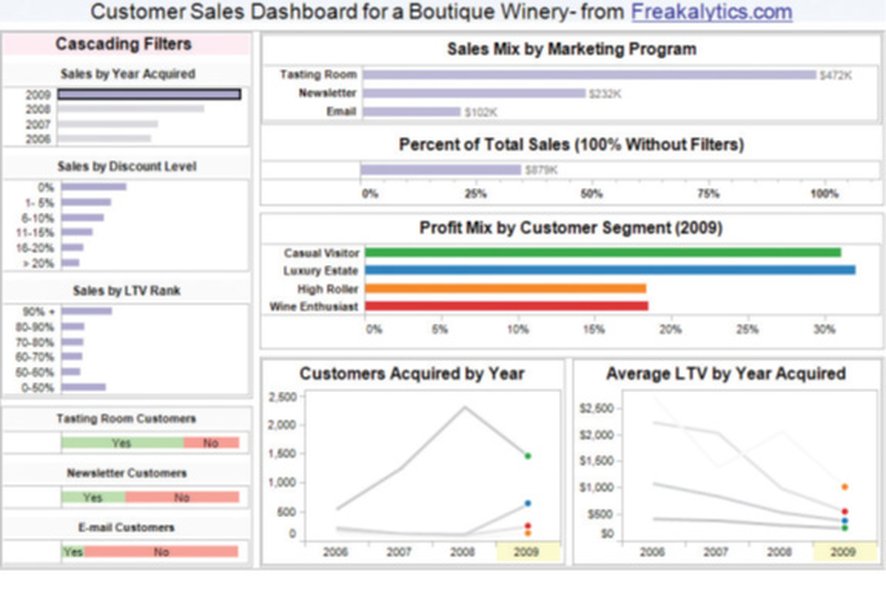
These visual tools help in identifying patterns, trends, and seasonality in data, making it easier to forecast future values. For instance, time series plots can reveal trends and seasonal variations, while scatter plots can illustrate the relationship between variables in regression analysis.
The Power of Moving Averages: A Deep Dive
Moving averages are a versatile and intuitive forecasting technique, widely used to smooth out short-term fluctuations in data and highlight underlying trends. This method is particularly effective when dealing with time series data that exhibits volatility or random noise. By calculating the average of data points over a specific period, moving averages reduce the impact of outliers and provide a clearer picture of the overall trend.
There are several types of moving averages, each with its own characteristics and applications:
- Simple Moving Average (SMA): This is the most basic type, where each data point within the specified period is given equal weight. The SMA is calculated by summing the data points and dividing by the number of periods.
- Weighted Moving Average (WMA): In a WMA, different weights are assigned to each data point within the period, with more recent data typically receiving higher weights. This allows the forecast to be more responsive to recent changes in the data.
- Exponential Moving Average (EMA): The EMA is a type of weighted moving average that gives exponentially decreasing weights to older data points. This method is highly responsive to recent changes and is often used in technical analysis in finance.
The choice of the period for the moving average is crucial. A shorter period makes the forecast more sensitive to recent changes, while a longer period provides a smoother forecast that is less affected by short-term fluctuations. Analysts must consider the nature of the data and the specific forecasting goals when selecting the appropriate period.
Moving averages are used in a wide range of applications, including:
- Financial Forecasting: Smoothing price data to identify trends and potential buy or sell signals.
- Sales Forecasting: Smoothing sales data to predict future demand and manage inventory.
- Economic Forecasting: Smoothing economic indicators to identify business cycles and predict future economic conditions.
Despite their simplicity, moving averages are a powerful tool for extracting meaningful insights from noisy data and making informed forecasts. By understanding the different types of moving averages and their applications, analysts can effectively leverage this technique to improve their forecasting accuracy.
Regression Analysis in Action: A Real-World Scenario
Regression analysis is a statistical technique used to model the relationship between a dependent variable and one or more independent variables. This method is invaluable for forecasting outcomes based on the influence of various factors. Let's explore a real-world scenario where regression analysis proves its worth.
Scenario: A marketing firm wants to predict the impact of their advertising spend on product sales. They have historical data on advertising expenditure and corresponding sales figures for the past few years. To forecast future sales, they employ regression analysis.
Steps Involved:
- Data Collection: Gather historical data on advertising expenditure (independent variable) and product sales (dependent variable).
- Model Selection: Choose a regression model (e.g., simple linear regression if there's only one independent variable, or multiple linear regression if there are multiple).
- Model Fitting: Use statistical software to fit the regression model to the data. This involves estimating the coefficients of the independent variables.
- Model Evaluation: Assess the goodness of fit of the model using metrics such as R-squared, which indicates the proportion of variance in the dependent variable that is explained by the independent variable(s).
- Forecasting: Use the fitted regression model to predict future sales based on planned advertising expenditure.
Interpreting the Results:
The regression analysis provides insights into the relationship between advertising spend and sales. For example, the coefficient of the advertising expenditure variable indicates how much sales are expected to increase for each additional dollar spent on advertising. This information can be used to optimize advertising budgets and forecast future sales.
Benefits of Regression Analysis:
- Quantifies Relationships: Provides a clear understanding of how independent variables affect the dependent variable.
- Enables Prediction: Allows for accurate forecasting of future outcomes based on known or planned values of independent variables.
- Supports Decision-Making: Helps in making informed decisions about resource allocation and strategic planning.
Regression analysis is a powerful tool that can be applied in various fields, from marketing and finance to economics and operations management. By understanding the relationships between variables, businesses can make data-driven decisions and improve their overall performance.
The Role of Qualitative Forecasting: Navigating Uncertainty
In situations where historical data is scarce or unreliable, qualitative forecasting methods come into play. These techniques rely on expert judgment, market research, and other non-numerical data to predict future outcomes. Qualitative forecasting is particularly useful when dealing with new products, emerging markets, or disruptive technologies.
Key Qualitative Forecasting Methods:
- Delphi Method: A structured technique that involves gathering opinions from a panel of experts through multiple rounds of questionnaires and feedback. The goal is to reach a consensus on future trends or events.
- Market Research: Collecting data from customers, industry experts, and other stakeholders through surveys, focus groups, and interviews. This information can reveal emerging trends, shifts in consumer preferences, and other factors that might not yet be seen in numerical data.
- Scenario Planning: Developing multiple, plausible scenarios based on different assumptions about future conditions. This helps businesses prepare for a range of possible outcomes and make more resilient plans.
- Panel Consensus: Gathering a group of experts to discuss and debate their opinions and assumptions. The goal is to arrive at a collective forecast that reflects the best available knowledge and judgment.
Example: A technology company is developing a new type of wearable device. Since there is no historical data on similar products, they rely on qualitative forecasting methods to predict demand. They conduct market research to understand consumer preferences and potential adoption rates. They also use the Delphi method to gather insights from industry experts on the future of wearable technology. Based on this information, they develop a range of scenarios and estimate potential sales volumes.
Benefits of Qualitative Forecasting:
-
Addresses Uncertainty: Provides a way to make predictions when historical data is limited or unreliable.
-
Incorporates Expertise: Leverages the knowledge and judgment of experts and stakeholders.
-
Uncovers Emerging Trends: Reveals insights that might not be apparent from numerical data alone.
Qualitative forecasting is an essential tool for businesses operating in dynamic and uncertain environments. By combining expert judgment with market research and other qualitative data, organizations can make more informed decisions and navigate the challenges of the future.
Youtube: Forecasting Methods Overview
This video provides an overview of basic forecasting methods, explaining how they are used to predict future outcomes. It is particularly relevant as it summarizes several techniques discussed, such as moving averages, regression analysis, and qualitative methods. Understanding these forecasting approaches is crucial for making informed decisions in business and finance, allowing organizations to anticipate trends and allocate resources effectively.
Comparing Forecasting Techniques
Different forecasting techniques serve different purposes and vary in complexity and data requirements. The table below provides a comparison of the forecasting methods discussed above:
| Forecasting Technique | Description | Data Requirements | Best Use Cases | Limitations |
|---|---|---|---|---|
| Time Series Analysis | Analyzes historical data to identify patterns and trends over time. | Historical data collected at regular intervals. | Predicting sales, demand, and other time-dependent variables. | Assumes past patterns will continue into the future; may not be accurate for volatile data. |
| Regression Analysis | Examines the relationship between dependent and independent variables to make predictions. | Historical data on dependent and independent variables. | Forecasting revenue based on advertising spend, demand based on economic factors. | Requires identifying relevant independent variables; assumes a linear relationship. |
| Moving Average | Calculates the average of data points over a specific period to smooth out fluctuations. | Historical data. | Short-term forecasting, smoothing noisy data. | Does not account for seasonality or trends; gives equal weight to all data points in the period. |
| Straight-Line Method | Assumes a constant growth rate based on historical data. | Historical growth rate. | Simple revenue or growth forecasting. | May not be accurate for businesses with fluctuating growth rates. |
| Qualitative Forecasting | Uses expert opinions and market research to make predictions. | Limited or no historical data. | Forecasting demand for new products, assessing market trends. | Subjective and relies on the judgment of experts. |
| Naive Method | Uses the most recent actual value as the forecast for the next period. | Most recent actual value. | Simple benchmark forecasting. | Assumes the past will repeat exactly; not suitable for data with trends or seasonality. |
FAQ: Mastering Forecasting Techniques
References
Last updated April 10, 2025