

- Strategic Stewardship: "Forest decision" fundamentally involves complex human planning for sustainable forest management, balancing ecological health, economic viability, and social well-being.
- Algorithmic Intelligence: In machine learning, a "Random Forest decision" refers to an ensemble method where multiple decision trees collaborate to make highly accurate predictions for classification and regression tasks.
- Interdisciplinary Impact: While distinct, advancements in AI and data-driven methods, including Random Forests, are increasingly supporting human decision-makers in optimizing forest management strategies.
The term "forest decision" can lead to fascinating discussions spanning two very different domains: the intricate art of managing forest ecosystems by human decision-makers and the sophisticated world of machine learning algorithms, specifically "Random Forests." While seemingly disparate, both areas involve making choices that aim for optimal outcomes, whether it's ensuring the longevity of a natural resource or achieving the most accurate data predictions.
Navigating the Green Labyrinth: Forest Management Decisions
At its core, a "forest decision" in the context of forest management refers to the strategic choices made by individuals, organizations, and governments regarding the sustainable use, conservation, and restoration of forest resources. These decisions are critical for maintaining ecological balance, supporting local economies, and addressing global challenges like climate change.
Balancing Diverse Objectives and Stakeholders
Effective forest management requires balancing a multitude of often competing objectives. These include:
- Economic Goals: Sustainable timber harvesting, non-timber forest products, and recreational revenue.
- Ecological Goals: Biodiversity conservation, watershed protection, carbon sequestration, and habitat preservation.
- Social Goals: Recreational opportunities, cultural values, community livelihoods, and environmental justice.
The involvement of various stakeholders—landowners, indigenous communities, government agencies, environmental groups, and industries—makes the decision-making process inherently complex. Each group often brings different priorities and perspectives, necessitating robust frameworks for collaboration and conflict resolution.
This mindmap illustrates the dual nature of "forest decision," highlighting the key components and interconnections between human-centric forest management and machine learning's Random Forest algorithms.
Structured Frameworks and Tools for Informed Choices
To navigate this complexity, forest decision-makers employ various structured frameworks and tools:
- Structured Decision Making (SDM): This systematic approach helps clarify objectives, identify alternatives, predict consequences, and manage uncertainties. It's particularly useful for incorporating landowner objectives and adapting to unforeseen challenges.
- Multi-Criteria Decision Analysis (MCDA) and Decision Support Systems (DSS): These quantitative tools allow for the evaluation of trade-offs among multiple objectives. DSS often integrate simulation and statistical methods to model various scenarios, such as the impact of wind damage or pest outbreaks, aiding in proactive management.
- Robust Decision Making (RDM): Given the uncertainties of climate change and dynamic market conditions, RDM focuses on identifying strategies that perform well across a range of possible future scenarios, rather than optimizing for a single prediction.
- Cost-Benefit Analysis (CBA): A traditional economic tool for evaluating investment decisions, though valuing environmental services can be challenging.
The Policy Landscape and Its Influence
Forest decisions are significantly shaped by policy and regulatory frameworks. National and international policies aim to address issues such as illegal logging, deforestation, wildfire prevention, and sustainable timber production. Laws like the Multiple-Use Sustained-Yield Act in the U.S. mandate a balance between timber production, recreation, and wildlife protection. Furthermore, considerations of environmental justice are increasingly integrated into policy-making to ensure equitable access to forest benefits and safeguard vulnerable communities.
The Digital Forest: Random Forest Decisions in Machine Learning
In a completely different realm, "Random Forest decision" refers to a powerful machine learning technique. A Random Forest is an ensemble learning method primarily used for classification and regression tasks. It operates by constructing a multitude of decision trees during training and outputting the class that is the mode of the classes (classification) or mean prediction (regression) of the individual trees.
How Random Forests Work Their Magic
The strength of a Random Forest lies in its ability to combine the predictions of many relatively weak individual decision trees to create a more accurate and robust predictive model. Here's a breakdown:
- Bagging (Bootstrap Aggregating): Each tree in the forest is trained on a random subset of the training data, sampled with replacement. This introduces diversity among the trees.
- Random Feature Subset: When splitting a node in a decision tree, only a random subset of features is considered. This further decorrelates the trees, preventing them from all making the same errors.
- Ensemble Prediction: For classification, the Random Forest aggregates the predictions of all individual trees, often by taking a majority vote. For regression, it averages their predictions.
This "wisdom of the crowd" approach significantly reduces the risk of overfitting, a common problem with single decision trees, and improves the overall predictive accuracy and stability of the model.
Applications in Data Science
Random Forests are widely used in various data science applications, from medical diagnosis and financial forecasting to customer churn prediction and image classification. Their ability to handle high-dimensional data and provide robust predictions makes them a go-to algorithm for many complex predictive modeling tasks.
The Intersection: AI Supporting Forest Stewardship
While human forest management decisions and Random Forest algorithms originate from different fields, they are increasingly intersecting. Machine learning, including Random Forests, is becoming an invaluable tool to support and enhance human decision-making in forestry.
This video from the University of Kentucky Department of Forestry and Natural Resources explains "What is a Forest Management Plan and Why Do You Need One?", directly addressing the core concept of human-centric forest decisions and their practical application.
Predictive Analytics for Proactive Management
AI can assist in:
- Wildfire Risk Assessment: Random Forests can predict areas at high risk of wildfires based on weather patterns, vegetation density, and historical data, enabling proactive prevention and resource allocation.
- Disease and Pest Outbreak Prediction: By analyzing factors like climate, tree species distribution, and historical outbreaks, machine learning models can forecast potential threats to forest health.
- Optimal Harvest Planning: Algorithms can optimize harvest schedules considering timber prices, growth rates, and ecological impacts, maximizing economic benefits while minimizing environmental harm.
- Biodiversity Monitoring: AI can process vast amounts of sensor data, satellite imagery, and ecological surveys to monitor species distribution, habitat quality, and overall biodiversity trends, informing conservation efforts.
The integration of advanced technologies like satellite imagery, drones, and AI-powered analytics provides forest managers with unprecedented insights. These tools can help identify deforestation, monitor forest health, and track changes over time, allowing for more data-driven and effective decision-making.
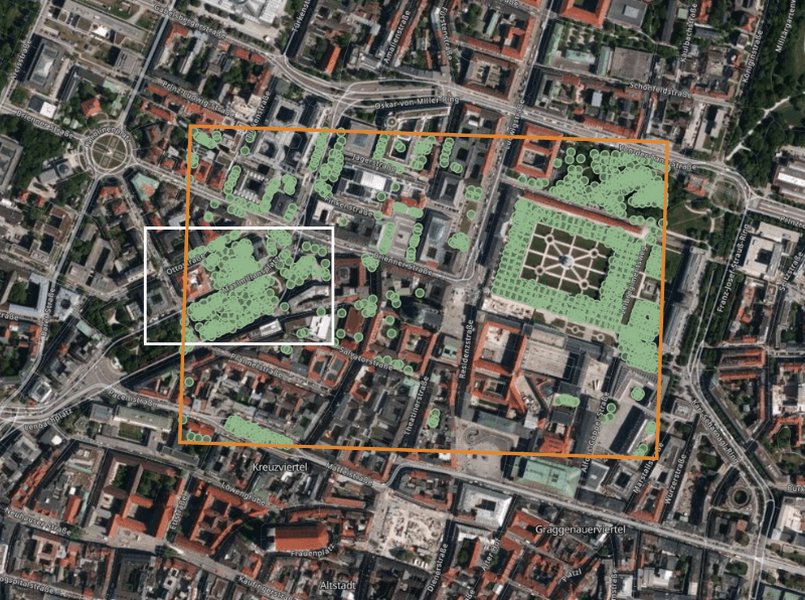
Satellite imagery combined with AI offers a powerful tool for monitoring forest health and informing management decisions.
Comparative Overview: Human vs. Algorithmic Decisions
To further clarify the distinction and complementary nature of these two meanings of "forest decision," let's examine their fundamental characteristics:
| Aspect | Forest Management Decision (Human) | Random Forest Decision (Machine Learning) |
|---|---|---|
| Nature of Decision | Strategic, long-term planning, often subjective and value-driven. | Automated, data-driven, predictive classification or regression. |
| Primary Goal | Sustainable stewardship, balancing ecological, economic, and social objectives. | High predictive accuracy, robustness, and generalization from data. |
| Decision-makers | Humans (landowners, managers, policymakers, communities). | Algorithm based on aggregated outputs of multiple decision trees. |
| Inputs | Ecological data, economic models, stakeholder input, policy frameworks, expert judgment. | Labeled datasets (features and target variables), training data. |
| Complexity Handled | Context-specific factors, socio-political dynamics, ethical considerations, multiple conflicting objectives. | High-dimensional data, non-linear relationships, noise, and outliers. |
| Transparency/Interpretability | Can be highly transparent through documentation, public hearings, and clear policy statements. | Lower interpretability due to ensemble nature, though feature importance can be extracted. |
| Risk of Overfitting | Depends on management strategy, potential for short-sighted or biased decisions. | Significantly reduced by bagging and random feature selection. |
This table outlines the key differences and characteristics of human-led forest management decisions and Random Forest algorithms in machine learning.
Future Outlook: Synergies for Sustainable Futures
The future of "forest decisions" will likely see an even deeper integration of advanced computational methods with traditional ecological knowledge and socio-economic considerations. Machine learning models, including Random Forests, will continue to evolve, offering more sophisticated predictive capabilities and decision support tools. These tools will not replace human judgment but empower it, allowing forest managers to make more informed, adaptive, and resilient decisions in the face of rapidly changing environmental and societal conditions.
Ultimately, whether we refer to the complex human act of stewardship or the intricate workings of an algorithm, the goal remains the same: to make the best possible "forest decisions" for a sustainable and thriving future.
Frequently Asked Questions
What is the primary difference between a "forest decision" in management and a "Random Forest decision" in machine learning?
How do human decision-makers approach forest management?
What are the main benefits of using a Random Forest algorithm?
Can machine learning help with forest management?
What challenges are faced in forest management decisions?
Conclusion
The term "forest decision" encapsulates two distinct yet increasingly interconnected concepts. On one hand, it describes the profound human endeavor of managing complex forest ecosystems for present and future generations, an undertaking fraught with ecological, economic, and social considerations. On the other, it refers to the sophisticated computational technique of Random Forests in machine learning, a powerful tool for predictive analytics across various domains. The convergence of these two interpretations, where AI-driven insights empower human stewardship, marks a critical path forward for more effective, sustainable, and resilient forest management globally.
Recommended Further Exploration
- Sustainable forest management strategies and policy frameworks
- Applications of Random Forests in environmental science
- Decision support systems for natural resource management
- Impact of climate change on forest ecosystems and adaptive management