
Optimal Formation Strategies for Playing with Ten Men
Maximizing defense and attack while adapting tactics for ten-player scenarios
Key Insights
- Balance is Essential: Choosing a formation that offers defensive stability while still providing attacking opportunities is crucial.
- Player Versatility: Success relies heavily on players' ability to adapt, communicate, and perform varied roles.
- Structured Adaptations: Several formations, such as 4-4-1, 4-3-2, and 3-4-2, have inherent strengths that can be modified to suit specific match conditions.
Understanding the Challenges with Ten Men
When a team is reduced to ten players due to a red card, injury, or any other reason, the balance between defense and offense becomes critically challenged. Coaches and players must quickly transition into a formation that compensates for the missing man without sacrificing the team's structural integrity. Playing with ten men requires disciplined organization, as the defensive lines are likely to be compromised, and gaps can be exploited by a well-prepared opposition.
The Tactical Dilemma
Losing a player necessitates a reevaluation of responsibilities on the field. While maintaining a defensive posture is fundamental, completely sacrificing an attacking threat can lead to a stagnant match where the opposition can dominate possession. Therefore, the optimal strategy involves adopting a formation that makes the best use of available players, ensuring some are committed to defense while others are tasked with counterattacking and initiating transitions through the midfield.
Exploring Formation Options
4-4-1 Formation
Concept and Structure
The 4-4-1 formation is one of the most common responses to playing with ten men. This approach involves lining up with four defenders, four midfielders, and a lone striker. The primary advantage of this formation is its inherent compactness, especially in the midfield and defense.
In this formation, the four defenders maintain a solid backline, while the four midfielders are tasked with both pressing the opposition and supporting the lone forward on counterattacks. The single forward's role is to hold up play and create opportunities for exploiting gaps left by the opposition when they commit numbers forward.
Tactical Advantages
- Strong defensive structure with fewer gaps to be exploited.
- Midfield compactness aids in quick transitions and counterattacks.
- Allows flexibility; midfielders can drop deeper to support defense when necessary.
4-3-2 Formation
Concept and Structure
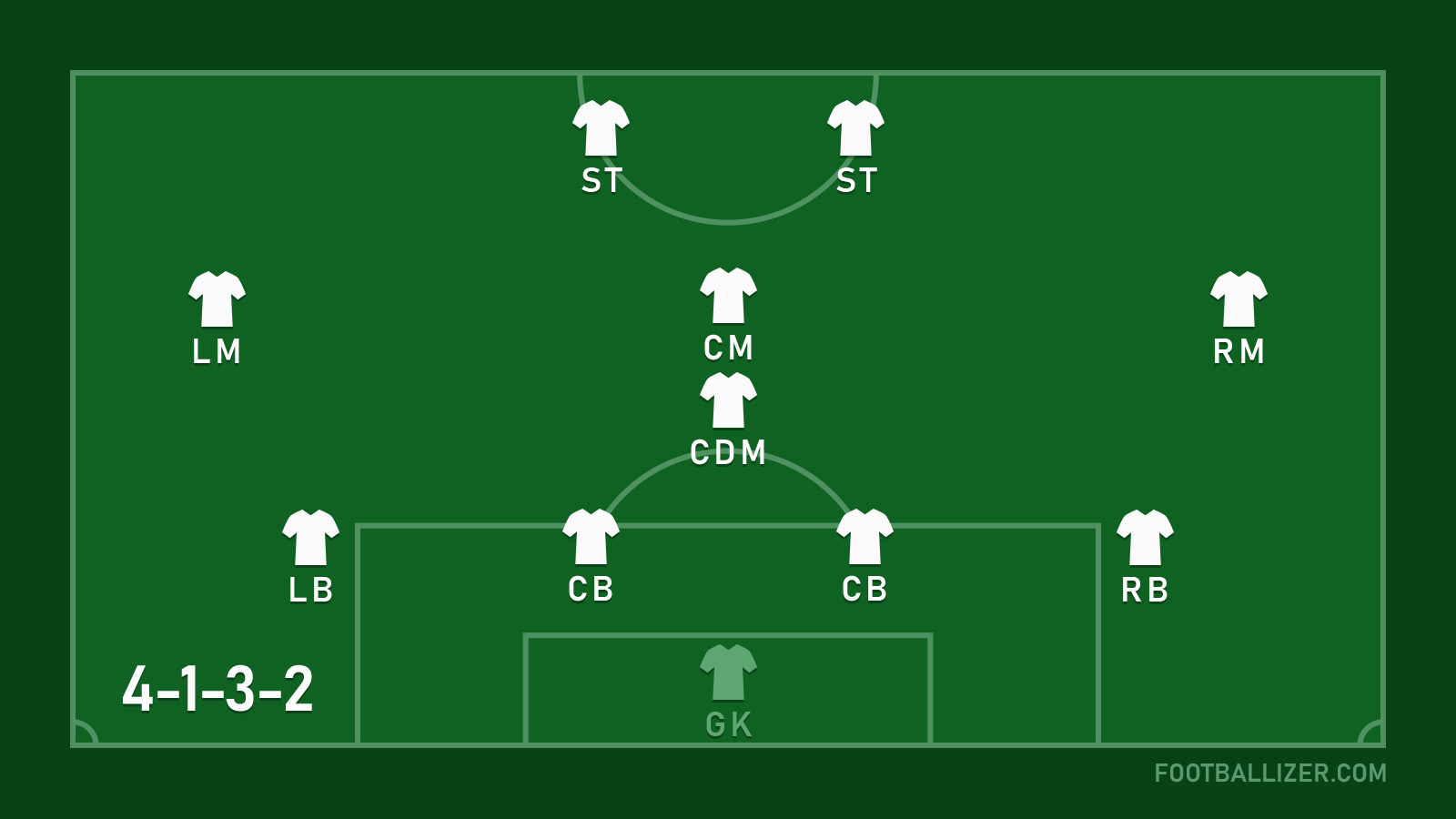
The 4-3-2 formation is another attractive option for teams reduced to ten men. This setup comprises four defenders, three midfielders, and two attackers. One of its key benefits is the compact midfield that supports a robust defensive line while still having a pair of forwards capable of launching counterattacks.
In practical terms, this formation allows the midfield to control the game’s tempo. The three midfielders work closely to provide both vertical support and lateral coverage, which helps in shifting quickly between attacking and defensive duties. The two forwards provide a dual threat that can press high, forcing the opposition into errors.
Tactical Advantages
- Enhanced midfield control with three dedicated players helping in both defense and attack.
- Dual-forward pressing enables quick recovery and effective counterattacks.
- The formation is adaptable, providing the flexibility to revert to a more defensive shape when needed.
3-4-2 Formation
Concept and Structure
A more unconventional yet effective option is the 3-4-2 formation. This formation features three central defenders, a robust midfield with four players, and two forwards. Its design is particularly focused on flexibility. The midfielders often have the freedom to push forward or drop back to bolster the defense, making it an excellent system for counterattacking football.
Tactical Advantages
- Offers additional width through midfielders, which can act as auxiliary fullbacks.
- Provides the team with an aggressive counterattacking edge supported by two forwards.
- The structure allows for dynamic switching between defense and attack, maintaining team compactness.
4-3-1-1 and 4-2-2-1 Variations
Concept and Structure
Beyond the standard formations, variations such as the 4-3-1-1 and 4-2-2-1 systems have gained popularity when operating with ten players. Both formations aim to maintain a balance in the midfield while ensuring that the forward is adequately supported.
In the 4-3-1-1 formation, for example, the midfield is structured with three central players who are responsible both for linking defense to attack and for breaking up opposition plays. A creative attacking midfielder (CAM) operates just behind a lone striker, innovating counterattacks and providing a connection point between midfield and the attacking line.
On the other hand, the 4-2-2-1 formation lends itself to a slightly different tactical discipline, where the two holding players in midfield secure the defensive line and recycle possession. Two midfield players then support both the attack and transitioning phases, while a single forward acts as the spearhead of counterattacks.
Tactical Advantages
- Flexibility in adapting roles as the match demands.
- Enhanced offensive support through creative midfield arrangements.
- Emphasis on compactness in transition to mitigate defensive vulnerabilities.
Detailed Comparison of Formations
Comparative Table of Ten-Men Formations
| Formation | Defensive Solidity | Midfield Control | Counterattacking Potential | Flexibility |
|---|---|---|---|---|
| 4-4-1 | High - Compact backline with a reinforced midfield | Moderate - Midfielders must cover wide areas | Good - Lone striker holding up play | Moderate - Predetermined roles but adaptable in defense |
| 4-3-2 | Moderate to High - Three midfielders support the defense | High - Centralized midfield control | High - Two forwards press and support counterattacks | High - Flexible transition between attack and defense |
| 3-4-2 | Moderate - Fewer central defenders but compensated by midfield support | High - Wide players provide additional coverage | High - Two forwards and dynamic midfielders enable fast breaks | High - Fluid roles and rapid switching are key |
| 4-3-1-1 / 4-2-2-1 | High - Use of midfielders to bolster the defense | High - Midfielders function as both anchors and transitioners | Good - Support from attacking midfielder and striker well-coordinated for counterattacks | High - Player roles can shift with game phases |
Implementing the Formation: Key Strategies and Considerations
Defensive Organization
Irrespective of the chosen formation, defensive solidity should be the foundation of a team playing with one player less. Teams must prioritize:
Maintaining Compactness
Keeping the team shape tight is fundamental. Whether playing in a 4-4-1 or a 4-3-2 setup, players should minimize the spaces between lines. This compact shape forces the opposing team to work harder for penetrating passes, thereby reducing their chances of exploiting gaps. A compact defensive block also enhances the effectiveness of the midfield, which can work in tandem with the backline to intercept passes and disrupt transitions.
Communication and Role Flexibility
With reduced numbers, every opponent’s movement and pass becomes critical. Thus, it’s essential for the remaining players to communicate effectively. Verbal cues, hand gestures, and pre-agreed signals can help players adapt dynamically. Moreover, the ideal formation benefits players who are comfortable switching roles on the fly. For instance, a wide midfielder in a 3-4-2 may tuck in to form an auxiliary defender when the backline is under pressure or surge forward when opportunities arise.
Attacking Transitions and Counterattacks
The essence of counterattacking is timing and precision. Given that the opposition might press forward relentlessly, it is crucial to seize moments of disorganization:
Quick Transitional Play
Whether the team is organized in a 4-4-1 or a 4-3-2 formation, transitioning rapidly from defense to attack is key to exploiting the spaces left by an over-committing opposition. This often involves deep, incisive passes from the defensive or midfielders directly into the path of a quick striker who can hold off the opponent’s retreating defenders.
Utilizing Wide Areas
Formations such as the 3-4-2 and its variations inherently facilitate wide play. Midfielders operating on the wings not only help to stretch the opposition’s formation but also provide safe outlets to relieve pressure during transitions. When the opposition’s midfield is congested, exploiting wide channels can create one-on-one situations with fullbacks, opening up counter-strike opportunities.
Player Roles and Special Considerations
The success of any formation relies on understanding the specific roles and attributes that each player brings. The coaching staff must be well aware of the players’ strengths such as defensive traits, passing accuracy, pace, and creativity in attacks. For instance:
Defensive Midfielders
In formations with three central midfielders, such as the 4-3-2 or 4-3-1-1, the defensive midfielder acts as a pillar. Their role involves intercepting passes, tackling, and providing timely cover for the defenders. This position is inherently demanding when a team is down to ten men, as it serves as the link between defense and attack.
Attacking Midfielders and Forwards
The attacking support, particularly in varied formations like the 4-2-2-1 or 3-4-2, depends on creative midfielders who can both score and set up goals. These players must be adept at reading the game and anticipating transitions. Their positioning should ensure that when the opposition loses possession, there is an immediate, coordinated response.
Practical Implementation: Training and Adaptation
Coach Preparation and Tactical Briefing
The shift to a ten-men formation requires that the coaching team rethinks tactical briefings. Pre-match preparations must include:
- Scenario-Specific Drills: Training sessions focusing on defensive transitions, counterattacking drills, and spatial adjustments when a player is missing.
- Role-Specific Tactics: Emphasizing the unique responsibilities of defensive midfielders, fullbacks, and attacking midfielders. During these drills, coaches should also stress the importance of situational awareness and quick decision-making.
- Communication Exercises: Enhancing on-field communication is essential. Drills that simulate quick transitions can help players develop non-verbal cues and subdivided responsibilities when adjustments are necessary.
In-Game Management and Adjustments
While pre-game preparation is crucial, in-game management plays an equally important role. Tactical flexibility during the match is the key to adjusting to unfolding scenarios:
Mid-game Formation Shifts
Coaches might need to instruct their teams to switch between slight variations of a formation based on the flow of the game. For example, starting with a 4-4-1 and then morphing into a 4-3-2 as the team regains confidence in the midfield can preserve the compact shape while opening up avenues for effective counterattacks. This dynamic adjustment ensures that the team is never caught off guard by the opponent's tactical shifts.
Empowering On-field Leaders
The presence of experienced players who can make tactical decisions on the fly is invaluable. Empowering leaders on the pitch—often playing in central midfield or defense—ensures continuity in strategy despite the reduced numbers. These players often serve as the extension of the coach on the field, making minor adjustments and signaling necessary changes to teammates.
Case Studies and Tactical Examples
Analysis of Real Match Tactics
Many top teams and managers have successfully implemented strategies for ten-men scenarios. For instance, managers like Iain Dowie have advocated for the 4-3-2 formation, pointing out its dual strength in both defensive solidity and counterattacking potency.
In various matches where teams were a man down, the 4-4-1 formation has been frequently used to maintain a defensive block while leveraging quick counterattacks. In some cases, switching to a 3-4-2 has allowed teams to utilize wing play and press the opposition high up the pitch. The common factor in these tactical choices emphasizes compactness, fluidity in midfield roles, and maximizing the limited attacking opportunities available.
Comparative Real-World Outcomes
Historical data from matches in various leagues suggest that adopting the right formation can help mitigate the disadvantages of having one fewer player. Teams that consistently trained in transitional phases tended to lose possession less frequently and were better organized defensively. Tactical evolutions during a game by shifting midfield roles or changing formation shape have shown statistically significant improvements in ball recovery and counterattacking success.
Advanced Tactical Considerations
Mathematical and Statistical Insights
While football is inherently fluid and unpredictable, some tactical decisions benefit from statistical insights and performance analytics. Coaches often use data on team positioning, passing networks, and defensive coverage to determine which formation offers the best balance of risk and reward when down a player.
For example, statistical models may reveal that a compact 4-4-1 formation reduces the probability of conceding goals by a fraction compared to an overly extended attacking formation. These insights have been supported by comparative analysis in professional leagues, where formation adjustments during numerical disadvantages have correlated with a slight uptick in successful defensive interventions and successful counterattacks.
Optimizing Formation According to Opponent Strategies
Not all opponents are equal; some may rely on a high pressing game, while others prefer to maintain a deep defensive line. Tailoring the formation to the specific threats posed by the opposition can have a major impact on the outcome:
- Against a high-pressing team, playing a 4-2-2-1 can allow midfielders to drop deeper, effectively neutralizing the pressure while maintaining counterattacking options.
- Against an opponent that relies on wide play, a 3-4-2 formation may be advantageous, as the midfield bandwidth can cover the flanks and reduce the risk of one-on-one situations with opposing wingers.
- In matches where recruitment of midfield dominance is feasible, a 4-3-2 formation can provide additional support in the central areas, ensuring control over the game's pace.
Summary
In summary, the choice of formation to both contain the opposition and launch effective counterattacks when playing with ten men depends on a careful balancing of defensive solidity, midfield control, and attacking dynamism. The 4-4-1 formation offers a straightforward approach with a compact defensive structure and a focus on counterattacks. However, formations like the 4-3-2, 3-4-2, 4-3-1-1, and 4-2-2-1 offer additional flexibility, allowing teams to shift roles and tailor tactics according to the opposition’s strengths and weaknesses.
Knowing your players, understanding their strengths, and having the flexibility to adjust mid-game are critical for success. Coaches should ensure that players understand their roles explicitly, conduct rigorous training sessions tailored to these formations, and be ready to adapt dynamically during a match. Through clear communication and effective tactical planning, teams can neutralize the inherent disadvantage of having one fewer player and still exploit attacking opportunities.
References
- Going Man Down – Playing with a High Line
- Playing with 10 Players vs 11 – Football DNA
- Iain Dowie on Defending 10 Men – FourFourTwo
- Formations and Tactics with 10 Men – RedCafe.net
- Top 10 Best Football Formations – Mingle Sport
Recommended Related Queries
 playingwithahighline.blogspot.com
Last updated March 10, 2025