
Unlocking the Mind: A Deep Dive into Foundational Cognitive Skills
Exploring the Mental Pillars that Drive Learning, Reasoning, and Daily Functioning
Foundational cognitive skills are the bedrock of our mental abilities, the essential tools our brains use to perceive, process, store, and retrieve information. These fundamental mental processes are not merely academic concepts; they are the very mechanisms that enable us to navigate the world, learn new things, solve problems, and interact effectively with others. From the simplest daily tasks to the most complex intellectual endeavors, these skills operate constantly, often without our conscious awareness, shaping our understanding and guiding our actions.
Key Insights into Foundational Cognitive Skills
- The Core Building Blocks: Foundational cognitive skills include essential mental processes such as attention, memory, perception, and logical reasoning. These skills are fundamental to all forms of learning and problem-solving, acting as the prerequisites for acquiring more complex abilities.
- Impact Across Life: Strong foundational cognitive skills are crucial not only for academic success in subjects like reading, writing, and math but also for broader life outcomes, including career performance, social interactions, emotional intelligence, and overall well-being.
- Malleability and Improvement: While some cognitive abilities may seem innate, research and extensive experience show that foundational cognitive skills are highly malleable and can be significantly strengthened through targeted exercises and cognitive training programs, offering pathways to enhanced learning and improved daily functioning at any age.
Defining the Essence of Foundational Cognitive Skills
Cognitive skills, often referred to as cognitive abilities, functions, or capabilities, are the mental processes that enable us to acquire knowledge, manipulate information, reason, and solve problems. They are the underlying mechanisms that empower our brains to think, read, learn, remember, and pay attention. Think of them as the operating system of your brain; without a robust foundation, all other applications (like academic subjects or complex tasks) will struggle to run efficiently. When these foundational skills are robust, learning becomes faster and easier, whereas weaknesses in these areas can significantly impede comprehension, retention, and the effective use of information.
These skills encompass a diverse array of mental abilities, including memory, attention, language, visual-spatial awareness, and executive functions. They are the tools that help us make sense of our experiences and navigate the complexities of our environment. The efficiency and accuracy of these basic processes determine how well new information is taken in, organized, understood, and retrieved, forming the basis for all higher-level cognitive functions.
The Interconnected Nature of Cognitive Abilities
While various cognitive skills can be identified and studied individually, it's crucial to understand that they do not operate in isolation. Instead, they are deeply interconnected and constantly interact with one another. For example, effective memory relies on focused attention, and problem-solving often integrates logical reasoning, working memory, and language skills. This intricate interplay highlights the holistic nature of cognitive function.
The brain exhibits a degree of modularity, meaning certain cognitive functions are specialized, but they always overlap and interact. This synergy ensures that our brains can adapt to continually shifting circumstances, process diverse inputs, and respond appropriately. Cognitive resilience, the capacity to adjust one's thinking and adapt to change, is a prime example of this interconnectedness in action.
Core Pillars of Cognitive Function
While the exact categorization of cognitive skills can vary, several are consistently identified as foundational due to their pervasive influence on nearly all mental activities. These core cognitive abilities are essential for effective learning, problem-solving, and overall intellectual growth.
Attention: The Gateway to Learning
Attention is arguably the most fundamental cognitive skill, acting as the gateway through which all other information must pass. It enables individuals to focus on specific stimuli or tasks while effectively filtering out distractions. Without adequate attention, information cannot be properly registered, processed, or stored.
- Sustained Attention: The ability to maintain focus on a task over an extended period. This is critical for classroom learning, completing projects, and maintaining focus in challenging situations.
- Selective Attention: The capacity to focus on relevant information while ignoring irrelevant distractions. This allows us to concentrate in noisy environments, such as listening to a friend in a crowded room.
- Divided Attention (Multitasking): The ability to attend to multiple tasks simultaneously. While often seen as efficient, true divided attention is complex and often involves rapidly switching focus between tasks.
Memory: Retaining and Recalling Information
Memory is a foundational pillar of cognitive ability, encompassing the capacity to store, retain, and retrieve information, experiences, and knowledge. It is integral to any ability to manipulate information, compare, comprehend, and learn. If we cannot remember something, we cannot truly say we have learned it.
- Sensory Memory: Briefly holds sensory impressions (e.g., the scent of a flower, the melody of a song).
- Short-Term Memory: Temporarily retains information for a brief period, such as a phone number before dialing it.
- Working Memory: A more active form of short-term memory that involves holding and manipulating information in the mind to perform tasks. It's critical for problem-solving, reading comprehension, and mathematical calculations.
- Long-Term Memory: Stores information for extended periods, potentially a lifetime, forming the basis for our knowledge, skills, and personal experiences.
- Auditory Memory: The ability to take in orally presented information, process it, store it, and then recall what was heard.
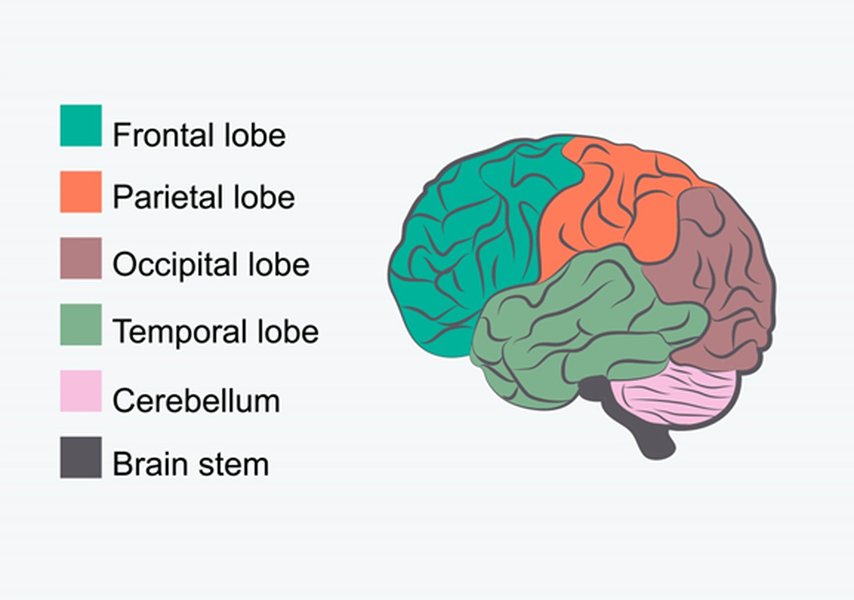
An illustration of the interconnected components of human cognition.
Processing Speed: The Pace of Thought
Processing speed refers to the efficiency with which our brains can take in, understand, and respond to information. It's not about how intelligent someone is, but rather how quickly they can perform mental tasks. Slow processing speed can impact the timely access to correct strategies, even for "non-speeded" tasks.
Logical Reasoning and Problem-Solving: Making Sense of the World
These skills involve the ability to analyze information, identify patterns, draw conclusions, and devise solutions to challenges. They are crucial for critical thinking and decision-making.
- Abstract Thinking: The ability to understand complex concepts that are not tied to concrete objects or experiences.
- Critical Thinking: Involves analyzing and evaluating information and arguments to form sound judgments.
- Problem-Solving: The process of identifying problems, analyzing potential solutions, and implementing the most effective one.
Language: Communication and Comprehension
Language proficiency encompasses the ability to comprehend, speak, read, and write effectively. Successful communication relies on various language-related cognitive abilities, including comprehension, vocabulary, and speech articulation. It's foundational for acquiring knowledge and interacting socially.
Visual-Spatial Awareness: Navigating Our Environment
Visual-spatial awareness is the ability to understand and navigate the physical world. This includes perceiving objects, understanding relationships between them, and mentally manipulating images. Examples include reading maps, giving directions, creating art, and participating in sports requiring spatial coordination.
Executive Functions: Orchestrating Our Thoughts and Actions
Often considered higher-order cognitive skills, executive functions are essential for managing and regulating our thoughts and behaviors. They allow us to plan, organize, prioritize, and adapt to new situations.
- Response Inhibition: The ability to suppress impulsive responses and resist distractions.
- Cognitive Flexibility: The capacity to switch between tasks, adapt to changes in the environment, and consider different perspectives.
- Planning and Organization: The ability to set goals, sequence steps, and manage resources to achieve objectives.
Here is a table summarizing some of the key foundational cognitive skills and their real-world applications:
| Foundational Cognitive Skill | Description | Everyday Application |
|---|---|---|
| Attention | Focusing on relevant stimuli and ignoring distractions. | Listening to a lecture, driving safely, reading a book. |
| Memory (Working, Long-Term) | Storing, retaining, and retrieving information. | Remembering phone numbers, recalling facts for a test, learning a new language. |
| Processing Speed | How quickly the brain can process information. | Quickly understanding instructions, reacting to traffic signals, solving mental math problems. |
| Logical Reasoning | Analyzing information to draw conclusions and solve problems. | Debugging code, making strategic business decisions, understanding scientific principles. |
| Language | Comprehending, speaking, reading, and writing. | Following conversations, writing reports, understanding written instructions. |
| Visual-Spatial Awareness | Understanding and navigating physical space. | Reading a map, assembling furniture, playing sports. |
| Cognitive Flexibility | Adapting to new situations and switching between tasks. | Adjusting to a new work process, considering alternative solutions, shifting focus in a conversation. |
The Significance of Foundational Cognitive Skills Across Development and Life
Foundational cognitive skills are not just important for academic success; they are crucial for navigating the complexities of modern life. They align with periods of mental growth from early childhood into adulthood, influencing thought patterns, learning progress, and problem-solving abilities. Developing these skills early in life can significantly benefit children well into adulthood, leading to increased social skills, emotional intelligence, and robust problem-solving capabilities.

Early engagement in stimulating activities is vital for nurturing foundational cognitive skills in children.
Impact on Learning and Academics
In educational settings, these skills are the prerequisites for mastering academic subjects. Strong cognitive abilities facilitate faster and easier learning, distinguishing adept learners from those who struggle. For instance, weaknesses in attention, memory, or processing speed can underpin common learning difficulties such as ADHD, dyslexia, dyscalculia, and dysgraphia. Cognitive training programs often focus on strengthening these underlying skills to address such challenges.
Relevance in Professional and Personal Life
Beyond academics, foundational cognitive skills are invaluable in the workplace and social situations. Every job requires the use of cognitive skills, from analyzing data and making strategic decisions in business to following instructions and problem-solving in any profession. They also enhance our ability to practice self-control, make sound decisions, and socialize effectively. Refining processing skills, memory retention, and attention span builds a solid logical foundation that impacts daily tasks, social interactions, and professional endeavors.
Assessing and Enhancing Foundational Cognitive Skills
Given their critical importance, assessing and enhancing foundational cognitive skills has become a significant area of focus. Cognitive tests are often used as quick assessments to check for problems with mental functioning, providing insights that can lead to further targeted interventions.
The Power of Cognitive Training
The good news is that cognitive skills are not fixed; they can be improved through various activities and targeted training. Cognitive exercises, games that challenge analytical skills, and even general practices like stress reduction and regular exercise contribute significantly to enhancing these mental abilities. Programs that focus on strengthening cognitive abilities aim to make learning more successful and improve overall intellectual performance. For example, some approaches combine direct instruction with structured practice to address weaknesses in areas like attention, visual and auditory processing, and working memory.
This radar chart illustrates the potential impact of targeted cognitive training on various foundational cognitive skills. The 'Average Adult Baseline' represents typical proficiency levels, while 'Impact of Targeted Training' shows significant improvements that can be achieved through dedicated cognitive exercises. This visual emphasizes that these skills are not static but can be developed and enhanced, leading to greater mental efficiency and capacity.
The Role of Early Intervention
Early cognitive development in children is especially crucial, as it sets the stage for academic success and adaptability in diverse life situations. Engaging children in stimulating activities nurtures these foundational skills, fostering a lifetime of effective learning and critical thinking. Milestones in cognitive development, such as recognizing voices, differentiating sounds, engaging in imaginative play, and recognizing objects, all build upon these core abilities.
Understanding Foundational Cognitive Skills: A Visual Overview
For a concise yet informative perspective on cognitive skills, this video provides an excellent visual summary. It helps to conceptualize how these fundamental mental processes contribute to our overall ability to learn, think, and interact with the world.
"Every Cognitive Skill Explained (In 3 Minutes)" - This video offers a quick overview of what cognitive skills are and why they matter, aligning with the foundational principles discussed.
Frequently Asked Questions (FAQ)
What is the main difference between cognitive skills and academic skills?
Can foundational cognitive skills improve with age?
Why are cognitive skills called "foundational"?
How do weak foundational cognitive skills impact daily life?
Conclusion
Foundational cognitive skills are the essential mental tools that underpin virtually every aspect of our lives, from basic perception and memory to complex reasoning and problem-solving. They are the silent architects of our learning, critical for both academic achievement and navigating the intricate demands of professional and personal spheres. Understanding these core abilities reveals that they are not fixed endowments but dynamic capacities that can be nurtured and strengthened. Through targeted interventions and continuous engagement, individuals of all ages can enhance their cognitive foundation, unlocking greater potential for learning, adaptability, and overall intellectual resilience. Investing in these fundamental mental processes is an investment in a more capable and fulfilling life.
Recommended Further Exploration
- How to improve attention span and focus?
- What are effective exercises to boost working memory?
- What is the role of cognitive flexibility in problem-solving?
- What are the key cognitive development milestones in children?