
Comprehensive Guide to Futsal
Explore the dynamic world of futsal, its rules, history, and global impact.
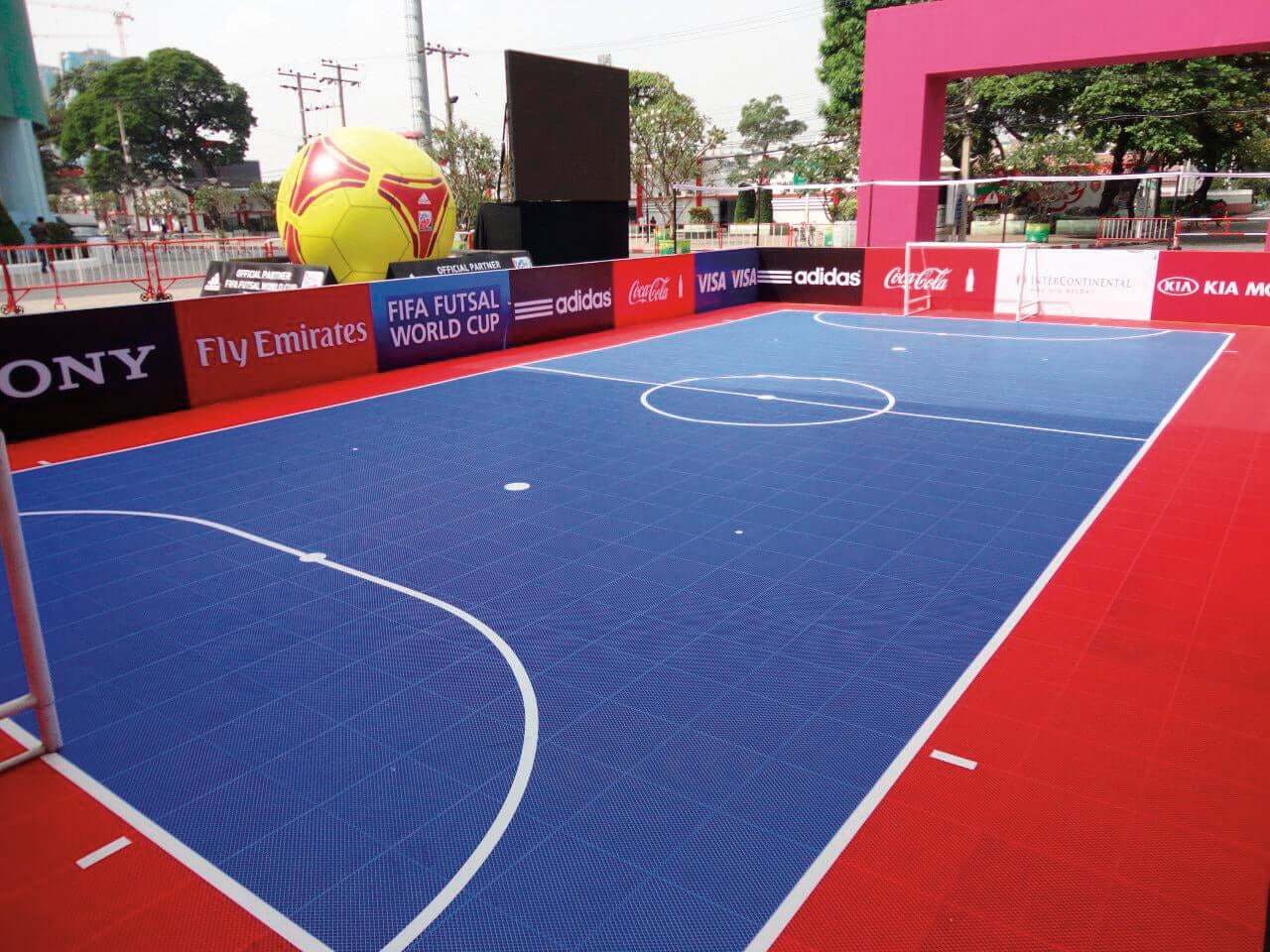
Key Takeaways
- Origins and Evolution: Futsal was developed in Uruguay in the 1930s and has grown into a globally recognized sport.
- Gameplay and Rules: Played indoors with five players per team, emphasizing technical skills and quick decision-making.
- Global Influence: Futsal contributes significantly to the development of professional soccer players and enjoys widespread popularity.
Introduction to Futsal
Futsal, a variant of association football, is an indoor sport characterized by its fast-paced and skillful gameplay. Played on a hard court, typically smaller than a traditional soccer field, futsal emphasizes close ball control, rapid passing, and creative play in confined spaces. This dynamic sport has not only gained popularity worldwide but has also played a crucial role in honing the skills of many renowned soccer players.
History and Origins
Early Beginnings
Futsal originated in Uruguay in the 1930s, created by Juan Carlos Ceriani at the YMCA in Montevideo. Designed as an indoor version of soccer to be played during unpredictable weather, futsal was intended to provide recreational opportunities and improve players' technical abilities in tight spaces. The name "futsal" derives from the Spanish words "fútbol" (football) and "salón" (hall), reflecting its indoor nature.
Global Expansion
From its humble beginnings, futsal rapidly spread across South America, particularly in Brazil and Uruguay, where it became a cornerstone for developing exceptional soccer talent. The sport's appeal grew as it offered a platform for players to refine their skills, leading to the establishment of professional leagues in countries like Spain, Russia, Portugal, and Argentina. By the late 20th century, futsal had garnered international recognition, leading to the formation of governing bodies and global competitions.
Governing Bodies
Futsal is governed by two main organizations: FIFA (Fédération Internationale de Football Association) and AMF (Asociación Mundial de Futsal). While both bodies oversee the sport globally, they promote slightly different rules and host separate tournaments. FIFA's involvement, particularly through the FIFA Futsal World Cup, has significantly elevated futsal's status, ensuring standardized regulations and fostering international competition.
Court and Equipment
Playing Surface
Futsal is typically played on a flat, smooth, indoor court with dimensions ranging from 25 to 42 meters in length and 16 to 25 meters in width. The court often resembles a basketball court, though it does not have walls; instead, boundaries are marked by lines. This smaller playing area compared to traditional soccer fields necessitates quick thinking and tight ball control.
Ball Specifications
The futsal ball is smaller, denser, and has a lower bounce than a standard soccer ball. Its design facilitates precise handling and reduces unpredictable movements, which is essential for the fast-paced nature of the game. The ball's characteristics encourage players to develop superior technical skills and maintain control even in tight spaces.
Player Equipment
Players typically wear indoor futsal shoes with non-marking soles to provide better grip on the hard court surface. Shin guards are mandatory for safety, and goalkeepers may use specialized gloves. Uniforms consist of jerseys, shorts, and socks, similar to traditional soccer attire but tailored for indoor play.
Team Composition and Substitutions
Team Structure
Each futsal team comprises five players on the court at any given time, including one goalkeeper and four outfield players. The limited number of players promotes extensive player involvement, ensuring that each individual contributes significantly to both offensive and defensive plays. This structure fosters a high level of coordination and strategic thinking among team members.
Substitution Rules
Futsal employs a 'flying' substitution system, allowing players to enter and exit the game multiple times without waiting for a formal stoppage. This fluid substitution method keeps the game dynamic and ensures that players can recover and re-enter the game seamlessly, maintaining high energy levels and strategic flexibility throughout the match.
Gameplay and Rules
Match Duration
Standard futsal matches consist of two halves, each lasting 20 minutes of actual playing time. The clock stops whenever the ball is out of play, ensuring that the game maintains a consistent flow and intensity. Some competitions may adjust the duration based on age groups or specific tournament regulations.
Basic Rules
Futsal shares many similarities with traditional soccer but includes several distinctive rules:
- No Offside Rule: Unlike soccer, futsal does not enforce an offside rule, promoting continuous attacking play and increased scoring opportunities.
- Kick-ins: Instead of throw-ins, players perform kick-ins to restart play when the ball crosses the boundary lines.
- Goalkeeper Restrictions: Goalkeepers can only hold the ball for a maximum of four seconds within their half, encouraging quicker ball distribution and reducing stalling tactics.
- No Sliding Tackles: Sliding tackles are generally prohibited to minimize injuries on the hard court surface, although some variations may allow them under specific conditions.
- Accumulated Fouls: Teams accumulate fouls during each half, and after the sixth foul, the opposing team is awarded a free kick from the ten-meter mark.
Fouls and Penalties
Fouls in futsal are categorized into direct and indirect, similar to traditional soccer. However, due to the fast-paced nature of the game and the smaller playing area, referees may award free kicks more frequently. Accumulated fouls can lead to a "double penalty," where the opposing team receives a direct free kick without requiring the ball to touch another player first. This rule penalizes teams for repetitive infractions and maintains fair play.
Skills and Strategies
Technical Skills
Futsal places a strong emphasis on technical proficiency. Players must master close ball control, quick dribbling, precise passing, and swift shooting. The confined space of the futsal court forces players to make rapid decisions and execute skills under pressure, which enhances their overall technical abilities.
Tactical Approaches
Strategic planning is crucial in futsal. Teams often employ formations that maximize space utilization, such as the 2-2 or 1-2-1 setups. Quick transitions between offense and defense are essential, and players must be adept at both creating scoring opportunities and thwarting opponents' advances. Defensive strategies often involve tight marking and collective pressure to regain possession swiftly.
Player Roles
Each player on the futsal court has a specific role that contributes to the team's overall strategy:
-
Goalkeeper: Besides shot-stopping, goalkeepers play a pivotal role in starting attacks with precise passes.
-
Defenders: Tasked with safeguarding the defensive zone, intercepting passes, and initiating counter-attacks.
-
Wingers: Offensive players who utilize speed and dribbling to create scoring opportunities from the flanks.
-
Pivots: Central attacking players responsible for holding up the ball, linking play, and finishing scoring chances.
Futsal Competitions
International Tournaments
The FIFA Futsal World Cup is the premier international competition, held every four years. It features national teams from around the globe, showcasing the highest level of futsal talent and competition. Additionally, continental tournaments like the UEFA Futsal Champions League and the AMF Futsal World Cup cater to regional interests and foster competitive spirit among clubs and nations.
Club Competitions
At the club level, numerous national leagues and continental competitions exist, providing platforms for professional futsal teams to compete. Prominent clubs such as Inter FS, Barça, Sporting CP, and Kairat Almaty have established strong reputations in European and international competitions, attracting top talent and fostering high-quality futsal.
Youth and Amateur Leagues
Futsal is widely embraced at the youth and amateur levels, with many organizations incorporating it into their training programs. Youth leagues emphasize skill development and teamwork, often serving as a pipeline for future professional players. Amateur leagues offer recreational opportunities, promoting the sport's accessibility and inclusive nature.
Global Popularity and Impact
Worldwide Participation
Futsal enjoys significant popularity across various continents, particularly in South America, Europe, and parts of Asia. With an estimated 12 million players worldwide, the sport fosters community engagement and provides a competitive yet enjoyable alternative to traditional soccer. Its indoor nature makes it accessible year-round, regardless of weather conditions.
Development of Professional Players
Many legendary soccer players credit futsal for developing their technical and tactical skills. Icons like Pelé, Ronaldinho, and Cristiano Ronaldo have highlighted the importance of futsal in their formative years, noting how the sport's demands for precision and creativity translated into their professional careers. Futsal's focus on individual skill and teamwork makes it an invaluable training tool for aspiring soccer talent.
Social and Economic Impact
Futsal contributes to social cohesion by bringing together diverse communities through sport. Economically, it stimulates investments in indoor sports facilities, creates jobs, and generates revenue through tournaments and leagues. The sport's growth also opens avenues for sponsorships and media coverage, enhancing its commercial viability and sustainability.
Benefits of Playing Futsal
Technical Skill Enhancement
Futsal's emphasis on close control and quick passing significantly enhances players' technical abilities. The smaller court and limited player count require precise ball handling and efficient movement, fostering superior touch and coordination. These skills are transferable to traditional soccer, making futsal an excellent complementary training activity.
Physical and Mental Agility
The fast-paced nature of futsal improves players' physical fitness, including speed, endurance, and agility. Mentally, the sport sharpens decision-making skills and situational awareness, as players must constantly anticipate and react to rapidly changing game scenarios. This combination of physical and mental demands contributes to overall athletic development.
Teamwork and Communication
Futsal fosters strong teamwork and communication among players. The necessity for coordinated movements and strategic plays in confined spaces ensures that players develop effective communication skills and a deep understanding of team dynamics. This collaborative environment enhances both individual and collective performance.
Common Futsal Formations
Futsal teams employ various formations to optimize their gameplay based on strengths, opponent strategies, and match circumstances. Here are some of the most common formations:
1-2-1
This formation consists of one goalkeeper, two defenders, one midfielder, and one pivot (striker). It provides a balanced approach, ensuring strong defense while maintaining offensive pressure through the pivot.
2-2
The 2-2 formation features two defenders and two wingers. It emphasizes width and quick transitions between defense and attack, allowing wingers to exploit the flanks effectively.
1-3-1
With one defender, three midfielders, and one forward, the 1-3-1 formation focuses on midfield dominance and creative playmaking. It allows for greater control in the center of the court and enhances the team's ability to build attacks.
Training and Development
Skill Drills
Futsal training emphasizes drills that enhance close ball control, quick passing, and accurate shooting. Exercises such as dribbling through cones, passing under pressure, and shooting in tight spaces are integral to developing the technical prowess required in futsal.
Tactical Training
Strategic training sessions focus on team formations, defensive schemes, and offensive tactics. Players learn to anticipate opponents' moves, execute coordinated attacks, and maintain defensive solidity under pressure.
Fitness and Conditioning
Physical conditioning is tailored to futsal's demands, incorporating high-intensity interval training (HIIT) to improve endurance, speed, and agility. Functional exercises that mimic game movements help players perform optimally during matches.
Challenges and Considerations
Injury Prevention
While futsal is generally lower-impact than traditional soccer due to the absence of sliding tackles, the hard court surface can increase the risk of abrasions and joint stress. Proper warm-ups, use of protective gear, and adherence to rules are essential for minimizing injury risks.
Accessibility and Facilities
Access to suitable indoor facilities can be a barrier to participation in futsal, especially in regions with limited infrastructure. Investment in indoor sports complexes and promotion of community futsal programs are necessary to enhance accessibility and encourage widespread participation.
Balancing Tradition and Innovation
As futsal grows, maintaining the balance between traditional rules and innovative gameplay is crucial. Governing bodies must ensure that the sport evolves while preserving its foundational principles of skill, creativity, and teamwork.
Conclusion
Futsal stands as a vibrant and influential variant of soccer, offering a unique platform for developing technical skills, fostering teamwork, and enhancing athletic performance. Its rich history, structured rules, and global presence make it a significant contributor to the world of sports. Whether as a training tool for aspiring soccer stars or a competitive sport in its own right, futsal continues to captivate players and fans alike with its dynamic and engaging gameplay.
References
Last updated February 13, 2025