
The Future of Work: Unveiling the Key Shifts in Employee Experience by 2025
Navigating the next wave of workplace evolution: technology, flexibility, and a human-centric approach are redefining how we work.
As we look towards 2025, the landscape of employee experience (EX) is undergoing a profound transformation. Driven by rapid technological advancements, evolving employee expectations, and new organizational priorities, companies are rethinking how to create environments where their workforce can thrive. The focus is shifting towards a more personalized, flexible, and supportive workplace that leverages technology while emphasizing human connection and well-being.
Highlights: The Core of Tomorrow's Workplace
- AI-Powered Personalization: Artificial Intelligence will increasingly tailor work processes, learning, and support to individual employee needs, moving away from one-size-fits-all solutions.
- Holistic Well-being as a Standard: Comprehensive mental, physical, and emotional health support will become integral to the employee experience, recognized as crucial for productivity and engagement.
- Flexible Hybrid Models Mature: Hybrid work will become more refined, focusing on balancing employee autonomy with organizational goals, supported by robust digital collaboration tools.
Deep Dive into Employee Experience Trends for 2025
The future employee experience is not a single concept but a multifaceted approach that integrates technology, culture, and individual needs. Understanding these interconnected trends is crucial for organizations aiming to attract, retain, and empower their workforce.
The Unstoppable Rise of AI and Automation in the Workplace
Artificial Intelligence (AI) is set to become a ubiquitous partner in the workplace. Far from being just a tool for automation, AI will augment human capabilities, streamline workflows, and provide data-driven insights to enhance the employee journey.
AI Integration and Augmentation
By 2025, a significant majority of companies, with some estimates suggesting nearly 82%, plan to integrate AI agents into their operations. This means employees will increasingly collaborate with AI-powered tools, and in some industries, physical robots and cobots. The goal is to automate routine and repetitive tasks, freeing up employees to focus on more strategic, creative, and high-value work. AI will also power personalized coaching, real-time feedback mechanisms (like pulse checks replacing traditional annual reviews), and decision support, leading to improved efficiency and job satisfaction. While there's employee excitement about AI's potential, organizations must ensure its ethical implementation and demonstrate clear benefits to their workforce.
Data Analytics and HR Technology
Mega data analytics will play a pivotal role in shaping HR strategies. Organizations are leveraging sophisticated data tools to understand employee behaviors, preferences, and pain points. This allows for the fine-tuning of programs related to engagement, well-being, and performance. Digital Employee Experience Platforms (EXPs) are becoming central, with projections indicating that 74% of organizations will use EXPs by 2025 to manage and personalize the entire employee lifecycle, from onboarding to ongoing development and even offboarding.
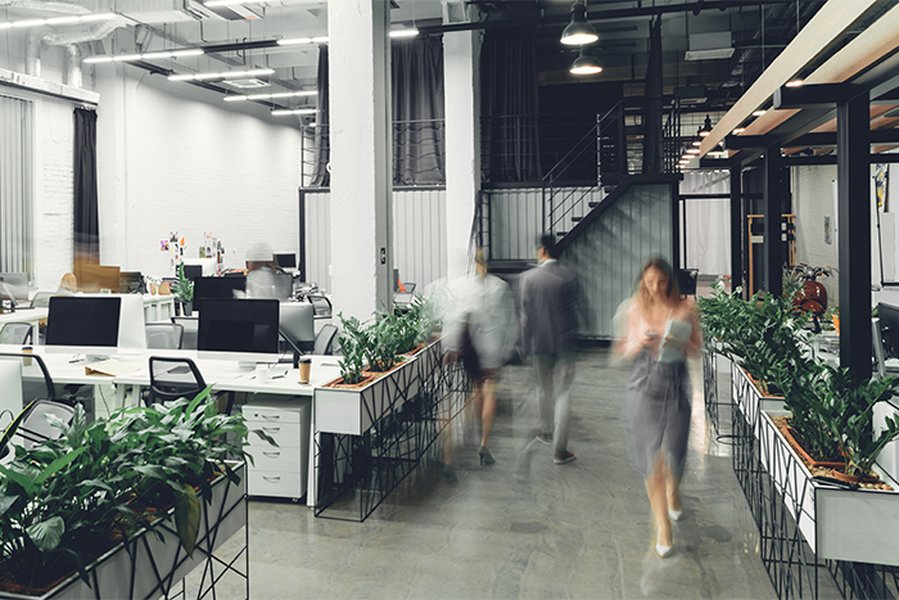
A modern office design exemplifying the integration of technology and flexible workspaces.
The Evolution of Work Models and Environments
The traditional concept of the workplace is being redefined. Flexibility, adaptability, and a focus on creating meaningful connections are paramount.
Refining Hybrid and Flexible Work
Hybrid and remote work models are no longer experimental; they are foundational. The focus in 2025 will be on refining these models to effectively balance employee desire for flexibility and autonomy with organizational needs for productivity, collaboration, and culture. This involves embracing fluid work hours tailored to individual productivity patterns and investing in digital tools that support seamless remote collaboration and virtual onboarding. The challenge lies in maintaining strong team connections and company culture across distributed teams.
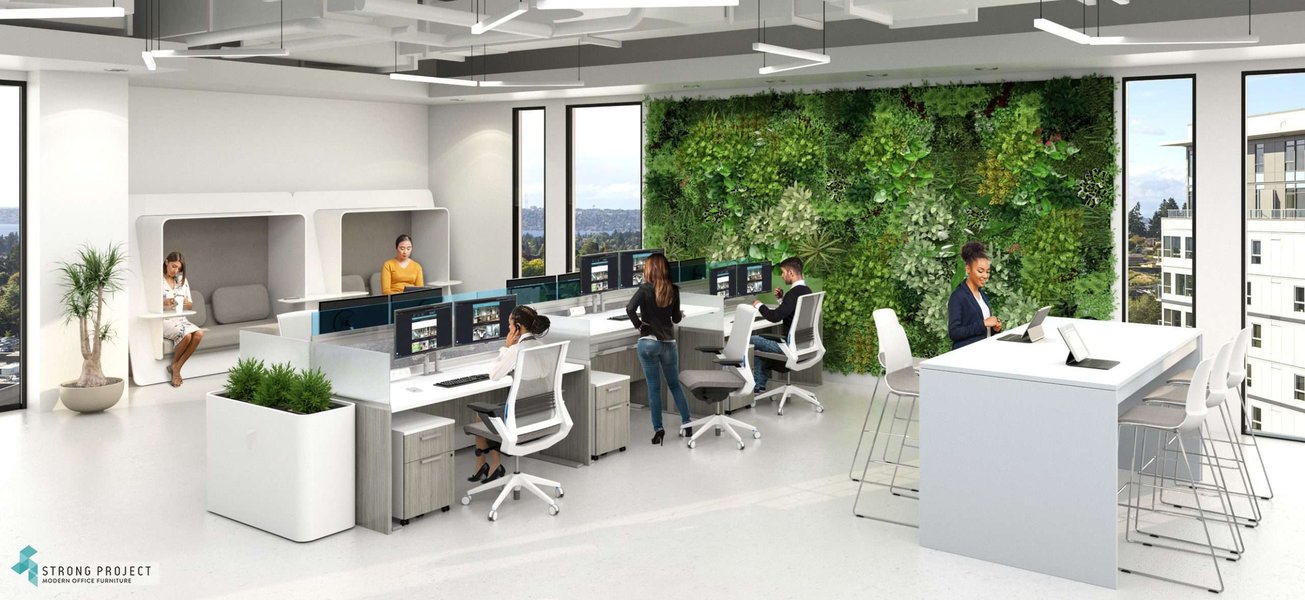
An example of a hybrid workspace designed for flexibility and collaboration.
Experience-Centric Workplaces and Fostering Community
Physical office spaces are evolving from places of mandatory attendance to hubs for intentional collaboration, innovation, and connection. Designs will focus on creating environments that foster a sense of community and teamwork. This includes versatile spaces that can adapt to different types of work and interactions. Companies that celebrate milestones and achievements, and intentionally design for connection, will build greater trust and a stronger organizational culture. Strong relationships among employees, often nurtured through purposeful in-office interactions, are linked to a stronger sense of community and engagement.
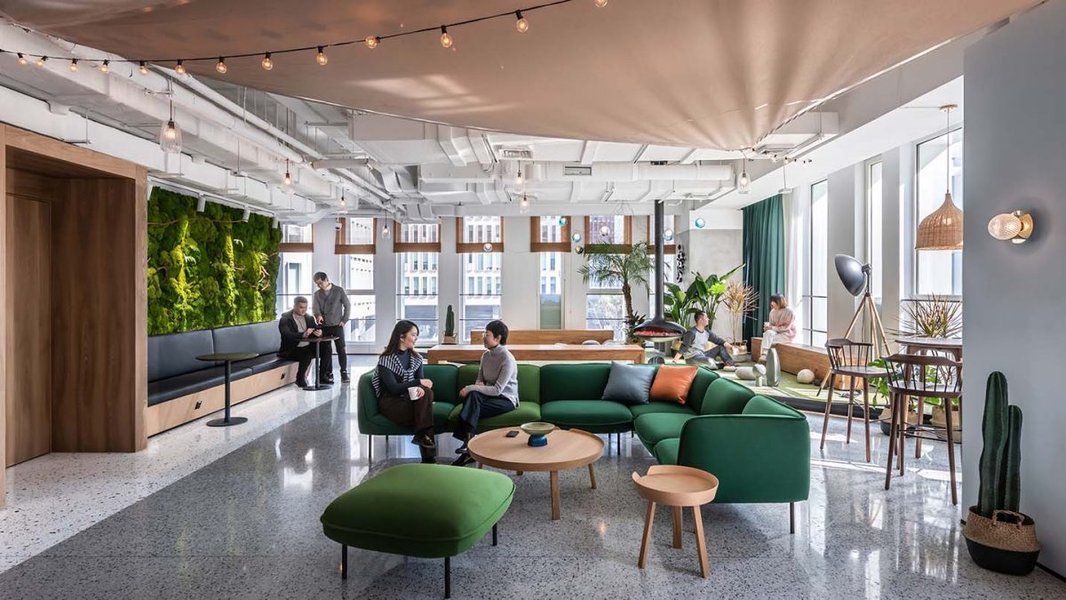
A collaborative lounge area in an office, designed to foster connection and community.
Prioritizing the Human Element: Well-being, Growth, and Inclusion
Technology and new work models must serve a fundamentally human-centric purpose. Prioritizing employee well-being, fostering growth, and building inclusive cultures are non-negotiable.
Holistic Employee Well-being and Mental Health
Employee well-being is expanding beyond physical health to encompass comprehensive mental, emotional, and even financial well-being. Minimal mental health support will no longer suffice. Organizations are expected to provide robust mental health resources, proactive support systems, and create a culture where seeking help is destigmatized. AI-enabled tools may offer personalized wellness programs and mental health support, tailored to individual needs. This proactive approach is crucial for navigating the pressures of a fast-paced, changing work environment and is directly linked to higher productivity and retention.
Personalization of the Employee Experience Journey
Employees increasingly expect their workplace experiences to be as personalized as their consumer experiences. This means tailoring aspects like career development paths, learning opportunities, rewards and recognition, work style accommodations, and wellness programs to individual preferences and needs. Advanced HR technologies and data analytics are key enablers of this trend, allowing organizations to move away from generic, one-size-fits-all approaches. Personalized onboarding processes, for example, can significantly improve new hire retention and productivity.
Emphasis on Diversity, Equity, and Inclusion (DEI)
Promoting DEI is a top priority and a critical component of a positive employee experience. Organizations are focusing on creating truly inclusive cultures where all employees feel valued, respected, and have an equal opportunity to thrive. This contributes to a more supportive, connected, and healthy work environment. DEI efforts involve not just policies but also embedding inclusive practices into daily operations, leadership behaviors, and using technology to identify and mitigate bias in processes like hiring and promotion.
Continuous Skill Development and Talent Mobility
In an era of rapid technological change, particularly with the rise of AI, continuous upskilling and reskilling are essential. Organizations are investing in adaptive learning platforms and internal talent marketplaces to ensure employees have the skills needed for current and future roles. This focus on skill development is critical for future-proofing careers, enhancing employee engagement, and fostering organizational agility. Learning ecosystems will become more contextual, destination-based, and AI-supported, moving away from generic training programs.
Visualizing Key Facets of the Future Employee Experience
To better understand the interplay of these trends, the following chart visualizes key aspects based on their anticipated impact, employee demand, and the complexity of their implementation. These are qualitative assessments reflecting the general sentiment from industry analyses.
This radar chart illustrates how different facets of the future employee experience score across three dimensions: potential impact on productivity, level of employee demand, and the complexity anticipated in their implementation. For instance, 'Holistic Well-being' and 'Hybrid Work Models' show high employee demand, while 'AI Integration' might have a high impact on productivity but also higher implementation complexity.
Interconnectedness of Employee Experience Trends
The various trends shaping the future of employee experience are not isolated; they are deeply interconnected and influence each other. This mindmap provides a visual representation of these relationships, showing how technology, work models, well-being initiatives, and growth opportunities combine to create a comprehensive and evolving employee experience.
This mindmap illustrates how "Technology & Automation" (like AI and Digital EXPs) directly supports "Work Models & Environment" (such as hybrid work) and enables "Growth, Development & Personalization." Simultaneously, "People, Culture & Well-being" (including DEI and mental wellness) is foundational and influences how technology is adopted and how work models are implemented successfully.
Key Employee Experience Trends at a Glance
The following table summarizes some of the most impactful trends shaping the future employee experience, outlining their core description and key benefits for both employees and organizations.
| Trend | Description | Key Benefit for Employees | Key Benefit for Organizations |
|---|---|---|---|
| AI Integration & Augmentation | AI tools assist with tasks, personalize support, and enhance efficiency in daily work. | Reduced mundane work, access to personalized development, better decision-making support. | Increased productivity, data-driven insights for strategy, enhanced innovation capabilities. |
| Hybrid & Flexible Work Models | Blending remote and in-office work with adaptable schedules to suit individual and team needs. | Improved work-life balance, greater autonomy, increased job satisfaction, reduced commute stress. | Wider talent pool access, potential for real estate cost optimization, higher employee retention. |
| Holistic Employee Well-being | Comprehensive support for mental, physical, emotional, and financial health through dedicated programs and resources. | Reduced stress, better overall health outcomes, feeling valued and supported by the employer. | Higher engagement levels, lower absenteeism and turnover, improved morale and productivity. |
| Personalization of EX | Tailoring work experiences, career paths, learning, and rewards to individual employee needs and preferences using data. | Feeling understood and uniquely valued, more relevant growth opportunities, enhanced engagement. | Increased employee loyalty, higher individual performance, better talent mapping and development. |
| Continuous Skill Development | Ongoing opportunities for upskilling and reskilling to adapt to changing job roles and new technologies, especially AI. | Enhanced career growth, future-proofing of skills, increased confidence and competence. | More adaptable and innovative workforce, ability to fill skill gaps internally, competitive advantage. |
| Emphasis on DEI & Community | Fostering inclusive environments where all employees feel a sense of belonging, are treated equitably, and can thrive; building strong connections. | Sense of belonging, psychological safety, fairness, stronger peer relationships and support networks. | Access to diverse perspectives fueling innovation, improved employer brand, better decision-making. |
| ESG Integration | Incorporating Environmental, Social, and Governance principles into daily operations and company culture. | Opportunity for purpose-driven work, alignment with personal values, sense of contribution. | Enhanced brand reputation, attraction of value-aligned talent, long-term sustainability. |
This table highlights that these trends are not just about employee perks but are strategic imperatives that drive tangible benefits for both individuals and the organization as a whole, leading to a more resilient, engaged, and productive workforce.
Insights from an Expert: The Evolving World of Work
The future of work is a dynamic and constantly evolving field. Understanding these shifts is crucial for both employees and organizations. The following video offers insights into key HR trends, including how technology and new work models are redefining the employee experience, providing valuable context for the changes we anticipate by 2025.
This video discusses 7 HR trends for 2025 that are set to change the workplace, covering technology and new work models impacting employee experience.
The discussion in the video aligns with many of the trends identified, such as the growing importance of AI, the need for flexible work arrangements, and the continuous focus on employee well-being and skill development. It underscores the necessity for HR departments and organizational leaders to be proactive in adapting their strategies to meet these evolving expectations and technological advancements. By understanding these broader shifts, organizations can better prepare for a future where the employee experience is a key differentiator and driver of success.
Frequently Asked Questions (FAQ)
What is the biggest driver of change in employee experience for 2025?
While multiple factors are influential, the integration of Artificial Intelligence (AI) stands out as a primary driver. AI is reshaping how work is done, enabling greater personalization, automating routine tasks, and providing powerful data analytics for HR. Its impact is felt across almost all other trends, from enhancing flexible work models to supporting personalized well-being initiatives and skill development programs.
How is the concept of 'workplace' changing with these trends?
The 'workplace' is evolving from a fixed physical location to a more fluid concept. With the rise of hybrid and flexible work models, the workplace can be anywhere – an office, home, or a co-working space. Physical offices are being redesigned as hubs for collaboration, innovation, and community building, rather than just places for individual task completion. Technology plays a crucial role in connecting distributed teams and ensuring a consistent employee experience regardless of location.
Why is employee well-being becoming such a critical focus?
Employee well-being, particularly mental health, is now recognized as fundamental to productivity, engagement, and retention. The pressures of a fast-paced, always-on work culture, coupled with global uncertainties, have highlighted the need for robust support systems. Organizations understand that a healthy, happy, and supported workforce is more resilient, innovative, and committed. Prioritizing well-being is no longer just a 'nice-to-have' but a strategic imperative for sustainable organizational success.
What role does personalization play in the future employee experience?
Personalization is key to making employees feel valued and understood. As workforces become more diverse, a one-size-fits-all approach to EX is ineffective. By leveraging data and technology (especially AI), organizations can tailor career development, learning opportunities, communication, rewards, and well-being support to individual needs and preferences. This fosters a stronger sense of connection, loyalty, and engagement, as employees receive support and opportunities that are directly relevant to them.
Recommended Further Exploration
- How is Artificial Intelligence specifically transforming HR and employee engagement strategies for the future?
- What are the emerging best practices for implementing successful hybrid work models that balance employee flexibility with organizational productivity?
- What practical strategies can organizations adopt to foster genuine employee well-being and mental health in an increasingly demanding work environment?
- How can companies effectively measure and continuously improve the digital employee experience, especially for remote and hybrid teams?
References
Last updated May 8, 2025