
How Galileo and Newton Revolutionized Modern Science
Exploring the transformative contributions that redefined our understanding of nature
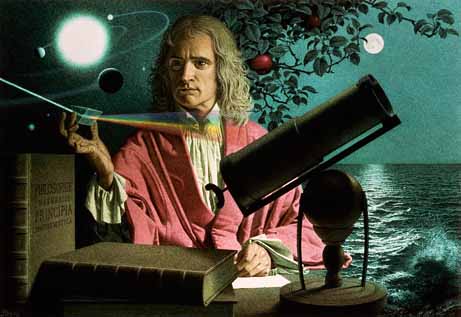
Highlights
- Evidence-Based Research and the Scientific Method: Galileo and Newton established systematic approaches centered around observation, experimentation, and mathematical modeling.
- Unified Understanding of Terrestrial and Celestial Mechanics: Their work bridged the gap between earthbound and astronomical phenomena, establishing universal laws.
- Foundations of Modern Physics and Mathematics: With innovations like the telescope, laws of motion, universal gravitation, and calculus, they laid critical groundwork for subsequent scientific advances.
Galileo Galilei: The Pioneer of Empirical Science
Early Contributions and Methodological Shifts
Galileo Galilei (1564-1642) profoundly transformed the methods of scientific inquiry. Before his time, natural philosophy was dominated by speculative reasoning and reliance on classical authorities such as Aristotle. Galileo introduced a radical shift by emphasizing empirical evidence and systematic experimentation.
Empirical Observations and Instrumental Innovations
One of Galileo's most notable contributions was his improvement of the telescope. Although not the inventor of the device, he enhanced its capabilities and was the first to utilize it for detailed astronomical observations:
- Discovery of Jupiter’s Moons: Through his observations, Galileo discovered four moons orbiting Jupiter, providing concrete evidence that celestial bodies could orbit entities other than the Earth.
- Phases of Venus: His observations of Venus’ phases offered strong support for the Copernican heliocentric model, which posited that planets, including the Earth, revolve around the Sun.
- Surface Observations of the Moon: Contrary to the Aristotelian view of celestial perfection, Galileo illustrated that the Moon had rugged terrain with craters and mountains.
These observations not only revolutionized astronomy but also challenged longstanding dogmatic views about the perfection of the heavens. Galileo’s methodological approach – basing conclusions on direct observations and experiments – became a cornerstone for modern science.
Developing the Scientific Method
Galileo’s insistence on evidence-based inquiry and mathematical analysis spearheaded the evolution of the scientific method:
- Experimentation and Repeatability: Unlike earlier scholars who primarily relied on philosophy and metaphysics, Galileo conducted experiments (such as those with inclined planes and projectile motion) that could be independently reproduced.
- Mathematics as a Tool: His use of precise measurement and mathematics to explain natural phenomena provided a template for future scientific research, influencing generations of scientists including Newton.
Consequently, Galileo is often hailed as the “father of modern science” not merely for his astronomical discoveries but also for establishing a new paradigm that combined observation, experimentation, and quantitative analysis.
Isaac Newton: The Architect of Universal Laws
Synthesizing Observations into Unified Theories
Isaac Newton (1642-1727) built upon and extended Galileo’s empirical methods by formulating comprehensive theories that unified the natural world under universal laws. Newton integrated his predecessors' observations with groundbreaking mathematical formulations, creating a cohesive framework for understanding motion and gravity.
Laws of Motion and Universal Gravitation
Newton’s formulation of the three laws of motion and his law of universal gravitation represent some of the most seminal achievements in the history of science:
- Laws of Motion: Newton’s three laws provided a systematic description of how forces act upon a body. They explained:
- The principle of inertia and the resistance of an object to a change in its state of motion.
- How the acceleration of an object is proportional to the net force acting upon it.
- That for every action, there is an equal and opposite reaction, a concept that governs the interactions between objects.
- Universal Gravitation: Newton postulated that every mass attracts every other mass with a gravitational force that is proportional to the product of their masses and inversely proportional to the square of the distance between them. This principle provided a unifying explanation for:
- Celestial Mechanics: Explaining the motions of planets, comets, and other astronomical bodies in a manner consistent with terrestrial physics.
- Terrestrial Mechanics: Explaining everyday phenomena, such as objects falling towards the Earth.
Together, these laws not only offered explanations for observed phenomena but also served as the foundation for classical mechanics, influencing subsequent scientific thought and practical applications in engineering and technology.
Mathematics and the Birth of Calculus
A critical element of Newton’s legacy is his development of calculus, which provided the necessary mathematical tools to model changes and solve complex problems in physics and engineering:
- Calculus as a Framework: Calculus allowed scientists to understand dynamic systems where quantities varied continuously. This breakthrough enabled precise descriptions of motion, growth, and change in various scientific fields.
- Applying Calculus to Optics and Beyond: In addition to mechanics, Newton’s work in optics – such as his experiments with light refraction and the discovery that white light is a mixture of colors – further demonstrates the power of a mathematical approach in explaining natural phenomena.
Newton’s ability to mathematically model the world around him not only secured his place as one of the most influential scientists of all time but also provided the tools that continue to underpin modern scientific inquiry and technological advancements.
Integrating Their Impact on Modern Science
From Empirical Observations to Universal Theories
The combined contributions of Galileo and Newton mark a profound transition in the history of science. Their work collectively catalyzed the Scientific Revolution, characterized by:
- Transition from Qualitative to Quantitative Analysis: Galileo’s methods and Newton’s mathematical formulations replaced metaphysical speculation with a rigorous, evidence-based approach.
- Unification of Celestial and Terrestrial Mechanics: Newton synthesized observations from Galileo, as well as insights from other contemporary astronomers like Kepler, to demonstrate that the same physical laws govern phenomena on Earth and in the heavens.
- Establishment of a Scientific Culture: Their insistence on verification through experiment, mathematical precision, and repeatability set the standard for all subsequent scientific endeavors and remain central to modern research practices.
Long-Term Influence on Science and Society
The legacy of Galileo and Newton is pervasive across various disciplines:
- Educational Foundations: The principles established by these scientific pioneers form the core curriculum in physics, engineering, and applied mathematics at institutions around the globe.
- Technological Advancements: The universal laws of motion and gravitation have guided the development of technologies ranging from aerospace engineering to everyday mechanical devices.
- Philosophical Implications: Their work has challenged and redefined humanity’s view of its place in the universe, fostering an intellectual environment that values skepticism, evidence, and continuous inquiry.
In modern times, the contributions of Galileo and Newton continue to inspire scientific research, underpin technological innovation, and frame the way contemporary problems are approached across various fields. Their groundbreaking methodologies provide a model that emphasizes rigorous testing, objective analysis, and the integration of observation with mathematical theory.
Comparative Overview in a Structured Format
| Aspect | Galileo Galilei | Isaac Newton |
|---|---|---|
| Scientific Method | Emphasized empirical observation, systematic experimentation, and mathematical analysis. Developed innovative use of the telescope to challenge established views. | Built on empirical methods by formulating precise mathematical laws to explain motion and gravitational phenomena. Established systematic experimentation through calculative modeling. |
| Astronomical Contributions | Discovered moons of Jupiter, observed phases of Venus, and detailed lunar topography, challenging geocentric theories. | Unified terrestrial and celestial mechanics through the laws of motion and universal gravitation, providing robust explanations for planetary orbits and other astrophysical phenomena. |
| Mathematical Innovations | Used mathematics to quantify observations and describe phenomena, inspiring later developments in formal mathematical approaches. | Developed calculus and formulated universal laws expressed through mathematical equations that model physical behavior. |
| Legacy and Influence | Laid the groundwork for the scientific method and challenged established doctrines, influencing modern observational techniques. | Provided a unified and mathematically rigorous framework that supports modern physics, engineering, and many other scientific disciplines. |
References
- Galileo's Effects On Science Today - Sciencing
- Galileo and the Birth of Modern Science - TheCollector
- How Galileo Changed Your Life - Biography
- Isaac Newton: The Father of Modern Science - History Is Now Magazine
-
Isaac Newton's Influence on Modern Science - Wondrium Daily
Recommended Queries for Deeper Insights
Last updated March 24, 2025