
Building a Robust Floating Deck with Galvanized Steel: A Comprehensive Guide
Unlocking Durability and Design for Your 1.2x2.5 Meter Outdoor Oasis
- Galvanized Steel for Longevity: Utilizing galvanized steel for your floating deck's frame, especially for a 1.2x2.5 meter structure, offers superior corrosion resistance and an extended lifespan compared to traditional wood framing.
- Optimal Joist and Beam Sizing: For a deck of this size, steel joists around 70x50x1.6mm or 70x50x2mm to 2.5mm are suitable, while support beams should be sized to accommodate loads and spans, with adjustable steel posts providing excellent foundation flexibility.
- Material Choices and Considerations: Combining galvanized steel framing with composite decking boards provides the "best" balance of durability, low maintenance, and aesthetic appeal for a modern floating deck.
Constructing a floating deck offers a versatile and attractive addition to any outdoor space, providing a level platform without the need for traditional deep footings or direct attachment to a main structure. For a 1.2x2.5 meter floating deck, selecting the right materials, especially for the structural components like galvanized steel, is paramount to ensure durability, stability, and longevity. Galvanized steel is highly recommended due to its exceptional resistance to corrosion, strength-to-weight ratio, and ability to create a very stable frame, particularly beneficial in various environmental conditions.
Understanding Floating Decks
Defining the Freestanding Outdoor Structure
A floating deck, also known as a ground-level or detached deck, is designed to rest on the ground rather than being permanently affixed to a house. This design eliminates the complexities associated with ledger board attachment, flashing, and deep concrete footings, making it an appealing DIY project. Typically, floating decks are built low to the ground, often less than 30 inches high, and are supported by concrete deck blocks or shallow footings.
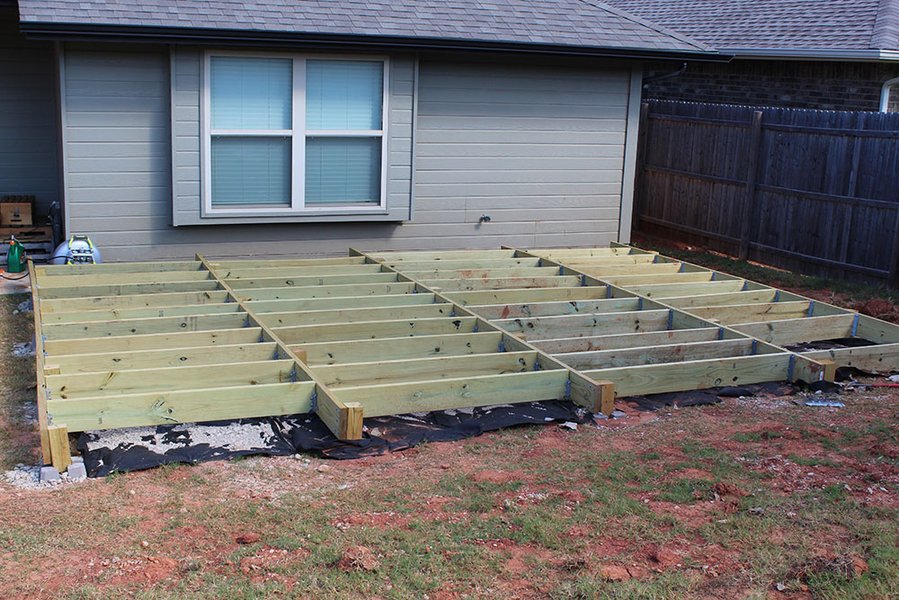
A typical floating deck construction, illustrating the frame and support blocks.
The flexibility of a floating deck design allows for easy expansion or relocation, and it's generally simpler to build compared to an elevated or attached deck. The key to a successful floating deck lies in its foundational support and the robustness of its framing materials. While pressure-treated lumber is a common choice, galvanized steel offers significant advantages in terms of structural integrity and resistance to environmental degradation.
Why Galvanized Steel for Your Floating Deck?
The Superiority of Steel in Deck Construction
When considering materials for your deck's substructure, galvanized steel stands out for several reasons. Steel is inherently strong, durable, and resistant to pests, rot, and fire—issues commonly associated with wood framing. Galvanization, a process where steel is coated with a protective layer of zinc, significantly enhances its corrosion resistance. This makes it an ideal choice for outdoor applications where exposure to moisture and varying weather conditions is inevitable.
Corrosion Resistance and Durability
The zinc coating on galvanized steel acts as a sacrificial barrier, protecting the underlying steel from rust. Common galvanization levels include G60 (0.60 oz/ft² zinc) and G90 (0.90 oz/ft² zinc), with G90 offering superior protection for outdoor projects with specific requirements or in more severe environmental conditions. This protective layer ensures that your deck's frame will maintain its structural integrity for decades, minimizing the need for frequent repairs or replacements.
Structural Stability and Span Capabilities
Steel's high strength-to-weight ratio allows for longer spans between supports compared to traditional lumber, potentially reducing the number of posts or blocks required. This can simplify the layout and installation process for a 1.2x2.5 meter deck, leading to a cleaner aesthetic underneath. Steel framing can also maintain a flatter profile over time, as it is less prone to warping, twisting, or shrinking, which are common issues with wood.
Compatibility with Decking Materials
Galvanized steel framing is compatible with a wide array of decking materials, including wood, composite, and PVC boards. This versatility allows for greater design freedom in choosing the visible surface of your deck, whether you prefer the natural look of wood or the low-maintenance benefits of composite materials. Many experts suggest that the "best" material combination is a steel frame with composite decking, balancing durability with aesthetic and upkeep benefits.
Sizing Galvanized Steel for a 1.2x2.5 Meter Floating Deck
Optimizing Components for Strength and Stability
For a floating deck measuring 1.2x2.5 meters, precise sizing of galvanized steel components is crucial for structural integrity. The primary structural elements will be the joists and potentially main support beams, resting on concrete deck blocks or similar foundational supports.
Steel Joists: The Backbone of Your Deck
For joists in a small deck like 1.2x2.5 meters, cold-formed steel sections are suitable. A common recommendation for light-duty applications is steel joists around 70x50x1.6mm. To enhance rigidity and prevent twisting over time, some suggest bumping up the thickness to 2mm or even 2.5mm. Joists are typically spaced at intervals to support the decking boards, often 16 inches (approximately 40 cm) on center. For a 1.2 meter width, this would mean 3-4 joists, while for a 2.5 meter length, you might have 6-7 joists depending on the orientation and support structure.
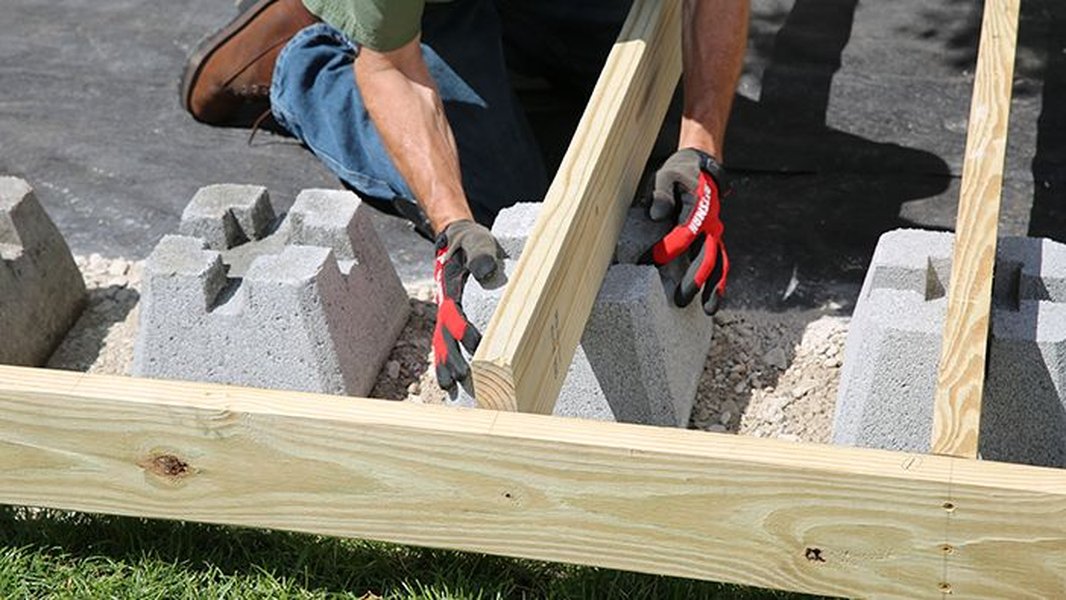
Detail of deck framing showing joist placement. While this image depicts wood, the principles of joist spacing and support apply to steel.
The strength of steel joists also allows for potential cantilevers or overhangs. A typical allowed overhang is one-quarter to one-third of the joist span, which can be useful for concealing the deck blocks or creating a design feature.
Support Beams and Posts: Foundation of the Frame
While a 1.2x2.5 meter deck might be small enough to primarily rely on joists directly on blocks, incorporating main support beams (girders) can provide additional stability, especially if heavier loads are anticipated or if the deck is slightly elevated. For small decks, adjustable steel posts set into concrete footings can provide excellent support and allow for leveling. A common cost-effective steel post size is 4.5 inches in diameter with 1/8-inch thick walls.
Given the dimensions, the maximum span between support centers for beams would be dictated by the load requirements. The minimum deck design live load is typically 40 psf (pounds per square foot), with a typical deck weight of 10 psf. Deflection is usually limited to Span Length (L)/360. A structural engineer can provide precise calculations based on specific loads and local building codes.
Galvanized Steel Decking Sheets: When Applicable
For a floating deck, "steel decking" or "metal decking" primarily refers to the corrugated steel sheets used as a permanent formwork for concrete floor slabs in commercial or multi-story residential construction. While not typically used as the primary walking surface for a floating deck (which would use wood or composite boards), it's important to differentiate. These sheets are available in various gauges (thicknesses) and profiles (shapes of ribs) and are galvanized to resist corrosion. For example, Type 915 (WZ76-305-915) is a common floor decking sheet with a 76mm wave height and 305mm wave width.
Material Specifications and Best Practices
Ensuring a Durable and Code-Compliant Structure
Adhering to material specifications and best practices is crucial for the structural integrity and longevity of your galvanized steel floating deck. This includes the quality of the galvanization, the type of fasteners used, and adherence to structural design principles.
Galvanization Coatings: G60 vs. G90
As mentioned, G60 and G90 are standard galvanized finishes. G60 is generally suitable for most applications, offering good corrosion protection. However, for outdoor projects like a floating deck, especially in environments with high humidity or exposure to elements, G90 galvanized steel offers superior protection. Heavier galvanized finishes (e.g., G-40 or even heavier than G-90) can be specified for more extreme conditions.
Fasteners and Connections
All fasteners used with galvanized steel must also be corrosion-resistant. Hot-dipped galvanized or stainless steel bolts, screws, and nails are essential to prevent galvanic corrosion, which can occur when dissimilar metals come into contact. For instance, 3 1/2-inch galvanized nails are common for framing, and 3/8-inch to 1/2-inch diameter AISI 18-8 grade B5M stainless steel bolts are recommended for structural connections in floating dock systems, a good benchmark for floating decks.
Structural Design Considerations
While a 1.2x2.5 meter deck is relatively small, it's still subject to live loads (people, furniture) and dead loads (the weight of the deck itself). The Steel Deck Institute (SDI) provides manuals and guidelines for steel deck construction, emphasizing continuous perimeter support and proper bearing. For any openings or unusual loading, a qualified structural engineer should be consulted to ensure the design meets local code requirements and maintains structural performance.
Comparing Deck Material Properties
A Look at Performance Characteristics
To further illustrate the benefits of galvanized steel, let's consider a comparison of various material attributes relevant to deck construction. This radar chart presents an opinionated analysis of typical performance characteristics for different decking frame materials, with higher values indicating better performance in that attribute.
As the radar chart illustrates, galvanized steel (represented by the yellow area) generally outperforms pressure-treated wood in terms of corrosion resistance, strength-to-weight ratio, longevity, and stability. While it might have a slightly higher upfront cost and require specialized tools or expertise for installation compared to wood, its long-term cost efficiency and reduced maintenance make it a compelling choice. Aluminum, another strong contender, offers excellent corrosion resistance and light weight but can be more expensive than galvanized steel.
Step-by-Step Construction Overview
A Glimpse into Building Your Steel-Framed Floating Deck
While the exact steps for building a galvanized steel floating deck will depend on the chosen system (e.g., pre-fabricated steel framing kits vs. custom fabrication), here's a general overview of the process:
This video demonstrates how to build a steel-framed deck, providing valuable visual insights into the construction process, including the assembly of the steel frame.
- Site Preparation: Clear and level the area where the deck will be built. Ensure proper drainage to prevent water accumulation under the deck.
- Layout and Footings: Mark out the deck dimensions (1.2x2.5 meters). Place concrete deck blocks or pour shallow concrete footings for your steel posts or a strip bearer system. For floating decks, galvanized steel stirrups can be set into concrete footings very close to the ground.
- Frame Assembly: Assemble the galvanized steel frame according to your design. This typically involves connecting the perimeter beams and then installing the joists within the frame. Pre-drilling pilot holes and using appropriate galvanized or stainless steel fasteners are crucial. For a 1.2x2.5 meter deck, you might consider pre-fabricated galvanized steel truss frames, available in various lengths and widths (e.g., 3' or 4' wide and 10' or 20' lengths).
- Leveling: Use a long level to ensure the entire steel frame is perfectly level. Adjustable steel posts are particularly useful for achieving precise leveling.
- Decking Installation: Once the steel frame is complete and level, install your chosen decking boards (wood, composite, or PVC) perpendicular to the joists. Fasten the boards to the steel joists using appropriate deck screws or hidden fastening systems. Ensure consistent spacing between boards for drainage and expansion.
- Finishing Touches: Add any desired railings, trim, or steps.
Always check with local building codes and regulations before starting your project, as requirements can vary. While steel framing offers superior durability, its installation might be more complex than wood and may require specialized tools or professional assistance.
Key Considerations for Your Galvanized Steel Deck
Summary of Design and Construction Elements
This table summarizes critical aspects and material recommendations for constructing your 1.2x2.5 meter galvanized steel floating deck.
| Component | Recommended Galvanized Steel Sizing/Type | Key Considerations |
|---|---|---|
| Deck Joists | 70x50x1.6mm to 70x50x2.5mm cold-formed galvanized steel. | Spacing typically 16 inches (approx. 40 cm) on center. Thicker gauges (2mm-2.5mm) reduce twisting. |
| Support Beams/Girders | Depends on load and span. For small decks, joists directly on blocks might suffice, or consider 90x90mm steel sections. | Ensures structural integrity, especially for heavier loads or longer spans. |
| Support Posts | Adjustable steel posts, 4.5" diameter with 1/8" thick walls, or galvanized steel stirrups set in concrete. | Provides flexibility for leveling and foundation stability. Essential for freestanding decks. |
| Galvanization Level | G90 is recommended for outdoor exposure; G60 is standard but G90 offers enhanced corrosion protection. | Crucial for longevity and preventing rust in outdoor environments. |
| Fasteners | Hot-dipped galvanized or AISI 18-8 grade stainless steel bolts, screws, and nails. | Prevents galvanic corrosion and ensures secure connections. |
| Decking Material | Compatible with wood, composite, or PVC deck boards. Composite is often paired with steel for low maintenance. | Choose based on aesthetic preference, maintenance requirements, and budget. |
| Load Capacity | Minimum 40 psf live load design. Consider dead load of deck components. | Ensure the steel frame can support anticipated weights and activities. Consult engineer for complex loads. |
Frequently Asked Questions (FAQ)
What is a floating deck?
Why use galvanized steel for a deck frame?
What galvanized steel joist size is suitable for a 1.2x2.5 meter deck?
Do I need concrete footings for a floating deck?
Conclusion
Constructing a 1.2x2.5 meter floating deck with a galvanized steel frame is an excellent choice for a durable, long-lasting, and low-maintenance outdoor living space. The inherent strength and corrosion resistance of galvanized steel, coupled with appropriate sizing for joists (e.g., 70x50x1.6mm to 2.5mm) and adequate foundational support, will ensure your deck remains stable and aesthetically pleasing for many years. While the initial investment or installation complexity might be slightly higher than for traditional wood, the long-term benefits in terms of durability, resistance to environmental factors, and reduced maintenance make galvanized steel a superior option for a robust floating deck.
Recommended Further Exploration
- Explore the comprehensive benefits of steel deck framing compared to traditional wood.
- Understand the different galvanized steel coating standards (G60, G90) and their applications.
- Learn more about designing floating deck supports, including concrete blocks and shallow footings.
- Conduct a detailed cost analysis comparing steel and wood deck framing over their lifespans.
Referenced Search Results
 amazon.com