
Designing a Robust Floating Dock: Key Considerations for a 1.2x2.5 Meter Structure
Unveiling the Optimal Galvanized Steel Specifications for Your Waterfront Project
Essential Insights for Your Floating Dock Project
- Galvanized steel offers superior corrosion resistance, making it an excellent choice for marine environments, ensuring longevity and durability for your floating dock.
- For a 1.2 x 2.5 meter floating dock, frame components often range from 12-gauge to 16-gauge steel, with thicker options for heavy-duty applications, while hardware typically uses 1/4" (6.35 mm) to 3/8" (9.525 mm) thick steel.
- Properly selecting and applying galvanized steel dimensions and types is crucial for structural integrity, buoyancy, and long-term stability of your floating dock.
Constructing a floating dock, particularly one designed to be both stable and durable, requires careful consideration of materials. For a 1.2 x 2.5 meter floating dock, galvanized steel is a highly recommended material due to its exceptional strength and resistance to corrosion in aquatic environments. This comprehensive guide will delve into the appropriate dimensions and types of galvanized steel for various components of your floating dock, ensuring a robust and long-lasting structure.
Understanding Galvanized Steel for Marine Applications
The Superiority of Hot-Dip Galvanization in Dock Construction
Galvanized steel is steel that has been coated with a protective layer of zinc. This process, most commonly hot-dip galvanization, provides a sacrificial barrier that prevents the underlying steel from corroding, even when exposed to water and harsh weather conditions. This makes it an ideal material for floating docks, which are constantly exposed to moisture, varying temperatures, and sometimes even saltwater. Hot-dipped galvanized steel is preferred over other types of galvanized coatings because the zinc layer is thicker and more uniform, offering superior long-term protection against rust.
While aluminum is also a popular choice for docks due to its lightweight nature and corrosion resistance, galvanized steel offers unmatched strength and rigidity, especially important for larger or more heavily used docks. The trade-off is often in weight and cost, with aluminum typically being lighter and more expensive than galvanized steel for comparable strength. Stainless steel, while highly corrosion-resistant, can be prohibitively expensive and may not be as strong as galvanized steel for the same bolt size, and is prone to galling.
Why Galvanization is Critical for Dock Longevity
The marine environment is incredibly demanding on construction materials. Constant exposure to water, fluctuating temperatures, and the potential for abrasive forces from waves or boat impact necessitates materials that can withstand these stresses. Galvanized steel's zinc coating acts as a barrier, preventing oxygen and water from reaching the steel surface, thus inhibiting rust formation. Even if the coating is scratched, the surrounding zinc will corrode sacrificially, protecting the exposed steel, a process known as cathodic protection. This inherent property of galvanized steel ensures that your floating dock maintains its structural integrity and aesthetic appeal for many years with minimal maintenance.
For example, some manufacturers use 12-gauge welded galvanized steel frames with 14-gauge C-Purlin bracing on 16-inch centers, and hot-dipped galvanized fasteners and components, for their standard steel-framed floating docks. This robust construction ensures that the dock can withstand extreme weather conditions and heavy use.
Frame Dimensions for a 1.2x2.5 Meter Floating Dock
Achieving Stability and Durability Through Proper Framing
The structural frame of your floating dock is its backbone, dictating its stability, load-bearing capacity, and overall lifespan. For a 1.2 x 2.5 meter (approximately 4 ft x 8 ft) floating dock, a common approach involves a robust steel frame. Frame components are typically made from galvanized steel, with varying gauges (thicknesses) depending on the desired strength and intended use of the dock.
Main Frame Components and Thicknesses
For the main structural frame, manufacturers often utilize welded galvanized steel. Common thicknesses for these frames include:
- 12-gauge (approximately 2.68 mm) steel: This is a robust option suitable for standard and heavy-duty floating docks. It provides excellent strength and rigidity, making it capable of handling various loads and resisting environmental stressors.
- 14-gauge (approximately 1.905 mm) steel: Often used for bracing within the frame, such as C-Purlin bracing on 16-inch (406.4 mm) centers, providing additional support and preventing warping.
- 16-gauge (approximately 1.61 mm) steel: While thinner, it can be used for less stressed areas or lighter-duty applications, though 12-gauge is generally preferred for the main frame due to its superior strength.
Some heavy-duty applications might even use 5" x 1/2" (127 mm x 12.7 mm) thick pile or 6 5/8" x 1/4" (168.275 mm x 6.35 mm) thick pile for more substantial structures. For a 1.2 x 2.5 meter dock, a 12-gauge or 14-gauge main frame is usually sufficient, ensuring a balance of strength and manageability. The frame height is typically around 12 inches (304.8 mm), which accommodates the floats and provides sufficient freeboard.
The image below illustrates the concept of a steel truss frame, a common design for robust floating docks.
Conceptual illustration of a galvanized steel truss frame, demonstrating the structural integrity required for floating docks.
Channel and Truss Frame Options
Beyond flat sheets and basic profiles, specific channel and truss frame designs are common for floating docks:
- Steel Channel Docks: These often feature a 6-inch (152.4 mm) low-profile box frame system, offering strength and configurability for both floating and stationary applications. Channel dimensions can vary, with 8-inch (203.2 mm) dock channels typically being 16-gauge (1.61 mm) galvanized steel and 10-inch (254 mm) boat dock channels being 14-gauge (1.905 mm) galvanized steel.
- Steel Truss Docks: Designed for maximum strength, these utilize horizontal and vertical angle supports, diagonal round bar supports, and corner gussets. They often have a higher 12-inch (304.8 mm) frame profile, making them suitable for rougher waters or where a very sturdy dock is needed. These frames are typically manufactured using 1-1/2 inch x 3/16 inch (38.1 mm x 4.76 mm) angle iron and 1/2 inch (12.7 mm) round bar.
For a 1.2 x 2.5 meter dock, a modular system with hot-dipped galvanized steel truss frames is a viable option. These frames are typically available in 3 ft (0.91 m) or 4 ft (1.22 m) widths and 10 ft (3.05 m) or 20 ft (6.10 m) lengths, with a standard height of 12 inches (304.8 mm). This allows for combination to achieve your desired 1.2 x 2.5 meter dimension.
Hardware and Fasteners: The Unsung Heroes of Dock Construction
Ensuring Secure Connections and Long-Term Stability
While the frame provides the primary structure, the hardware and fasteners are equally critical, ensuring all components are securely connected and the dock remains stable under various conditions. These smaller, yet vital, components also benefit immensely from galvanization or the use of stainless steel.
Thickness and Type of Hardware
Standard dock hardware, including corner brackets, hinges, and pipe holders, is typically made from:
- 1/4 inch (6.35 mm) thick hot-dipped galvanized steel: This is a common standard for many dock components, offering good strength and corrosion resistance. These often accept 1/2 inch (12.7 mm) carriage bolts for assembly.
- 3/8 inch (9.525 mm) thick hot-dipped galvanized steel: Used for heavy-duty applications or components that will experience significant stress.
- 10-gauge (approximately 3.416 mm) galvanized steel: Specific components like hinges and backing plates might utilize this thickness for robust connections.
It's crucial to use hot-dipped galvanized fasteners and components, as they offer superior corrosion resistance compared to other finishes. Stainless steel fasteners can also be used, especially in saltwater environments, but it's important to note that stainless steel might not be as strong as galvanized steel for the same bolt size and can be prone to galling (seizing of nuts and bolts).
The image below provides a visual of hot-dipped galvanized steel components, highlighting the protective coating.
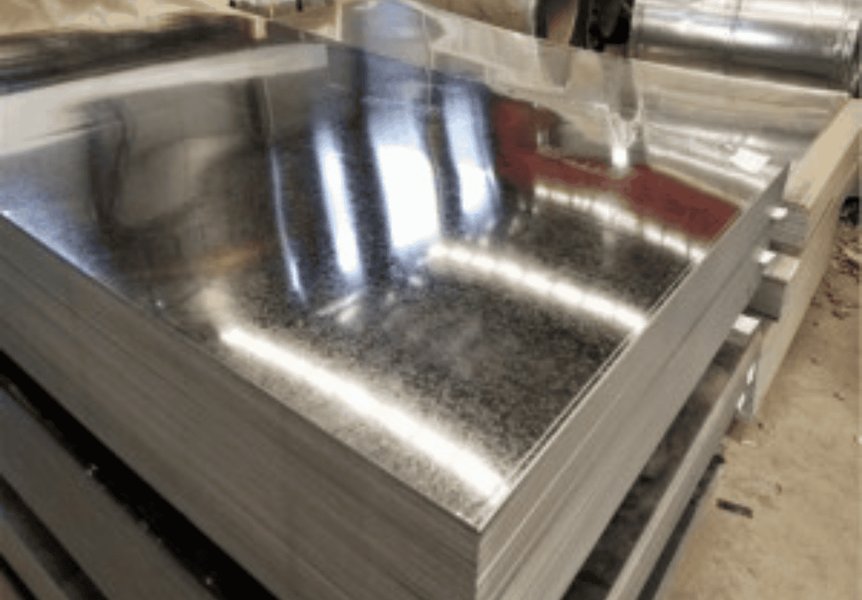
An example of hot-dipped galvanized steel sheet, demonstrating the protective zinc coating essential for marine environments.
Pipes and Pilings
For floating docks, pipes are typically used as guide posts to hold the dock in place, allowing it to move vertically with water level changes. These are usually:
- Galvanized steel pipe: Commonly 1.5 inches (38.1 mm) Schedule 40 (1.9 inches OD or 48.26 mm OD) or 2 inches (50.8 mm) diameter galvanized steel. Tommy Docks, for instance, offers 8-ft (2.44 m) long galvanized steel dock pipes that are made of hi-tensile strength galvanized steel with a special coating covering both the inside and outside for added corrosion resistance.
- Oilfield drill stem: Some users have reported using 2 7/8 inches (73.025 mm) thick-walled steel pipe for pilings, set in concrete, for extreme durability.
These pipes serve as vertical supports or axles for rolling and stationary docks, as well as guides for floating docks. The thickness and diameter of these pipes are critical for stability and resistance to bending under load or environmental forces.
Buoyancy and Decking Materials
Supporting Your Dock and Enhancing Functionality
Beyond the steel frame, the choice of floats and decking materials significantly impacts the dock's performance and maintenance requirements. While not steel, these components are integral to a complete floating dock system.
Dock Floats and Buoyancy Calculation
The floats provide the necessary buoyancy to keep the dock afloat and support its weight, along with any people or equipment on it. The most common float materials are High-Density Polyethylene (HDPE) and Expanded Polystyrene (EPS), often foam-filled for added durability and buoyancy. Float dimensions vary, but common sizes include 48"x24"x12" (1.22m x 0.61m x 0.30m) with a capacity of around 390 pounds (176.9 kg).
To calculate the required buoyancy, a general rule of thumb is to allow 28 pounds per square foot (136.7 kg/sq meter) for wood framing with pressure-treated decking, and 31 pounds per square foot (151.3 kg/sq meter) for composite decking. For your 1.2 x 2.5 meter dock (3 square meters), this would translate to approximately:
- Wood decking: \(3 \text{ m}^2 \times 136.7 \text{ kg/m}^2 = 410.1 \text{ kg}\) buoyancy required.
- Composite decking: \(3 \text{ m}^2 \times 151.3 \text{ kg/m}^2 = 453.9 \text{ kg}\) buoyancy required.
You would then select floats that collectively provide this required buoyancy, ensuring they are never submerged more than 50% under normal conditions for optimal stability and lifespan.
Decking Choices
The walking surface of the dock can be made from various materials, each with its own advantages:
- Pressure-treated lumber: A common and cost-effective choice, but requires more maintenance (sealing/staining) and can interact negatively with galvanized fasteners over time due to copper content.
- Cedar, Redwood, and Tropical Hardwoods: Offer natural resistance to rot and insects, but can be more expensive.
- Composite decking: Made from recycled plastics and wood fibers, it's low-maintenance, resistant to fading, cracking, and marine growth, and provides a long lifespan. Often used with deluxe steel-framed docks.
- PVC decking: Lightweight, low-maintenance, and inherently resistant to staining and marine growth.
For a robust galvanized steel frame, composite or PVC decking would be a complementary choice, minimizing overall maintenance and enhancing the dock's longevity.
Comparative Analysis of Dock Materials
A Holistic View of Aluminum, Steel, and Wood
When planning a floating dock, understanding the pros and cons of common construction materials—aluminum, steel, and wood—is essential. This comparison helps in making an informed decision tailored to your specific needs, budget, and environmental conditions.
This radar chart illustrates the relative strengths and weaknesses of galvanized steel, aluminum, and wood across key performance indicators for floating dock construction. Galvanized steel excels in strength and rough water performance, offering a good balance of cost and corrosion resistance. Aluminum leads in weight and maintenance, albeit at a higher cost. Wood, while cost-effective and lighter than steel, generally lags in corrosion resistance and requires more maintenance, especially in marine environments.
Material Comparison Table
Below is a detailed comparison of these materials, highlighting their characteristics relevant to floating dock construction:
| Feature | Galvanized Steel | Aluminum | Wood (Pressure-Treated) |
|---|---|---|---|
| Strength/Durability | Very high; excellent for heavy loads and rough waters. Typically 12-gauge frames (2.68 mm). | High; comparable strength to steel but lighter. 5XXX or 6XXX series recommended. | Moderate; prone to rot, warping, and insect damage over time. Typically 2x8 or 2x10 lumber. |
| Corrosion Resistance | Excellent due to hot-dip galvanization; zinc sacrifices itself to protect steel. Can last decades. | Excellent; naturally resistant to saltwater corrosion. | Low; requires regular treatment and sealing. Galvanized fasteners can degrade due to copper in treated wood. |
| Weight | Heavy; can cause buoyancy issues if not adequately supported. | Lightweight; approximately 1/3 the weight of steel, making installation easier. | Moderate; can become waterlogged over time. |
| Maintenance | Low; requires minimal maintenance once installed. Potential for rust if coating is damaged. | Very low; generally maintenance-free. | High; requires regular cleaning, sealing, and potential replacement of boards. |
| Cost | Moderate to High; more affordable than stainless steel, but higher than basic wood. | High; typically the most expensive option initially. | Low to Moderate; depends on wood type and treatment. |
| Installation | Can be heavy and require specialized equipment for larger sections. Often pre-welded. | Easier to install due to lightweight nature; modular systems common. | Relatively straightforward for DIY; requires cutting and fastening. |
| Ideal Application | Areas with significant water level fluctuations, rough waters, or heavy commercial use. | Residential docks, areas where portability or ease of removal is desired, aesthetic appeal. | Calm waters, smaller ponds, DIY projects where cost is a primary concern. |
This table summarizes the key characteristics to consider when choosing between galvanized steel, aluminum, and wood for your floating dock. For a 1.2 x 2.5 meter dock, galvanized steel provides a robust and durable solution, especially if stability and longevity in varying water conditions are priorities.
The Construction Process and Tools
Assembling Your Galvanized Steel Floating Dock
Building a floating dock, even a smaller 1.2 x 2.5 meter one, involves several steps, from cutting materials to securing components. While professional installation is an option, many homeowners choose a DIY approach, especially with modular systems and pre-fabricated frames.
Tools and Techniques for Steel Dock Assembly
When working with galvanized steel, certain tools are essential for efficient and safe construction:
- Cutting Tools: For galvanized steel pipes and channels, an angle grinder with a metal cutting disc, a chop saw with a metal blade, or a plasma cutter would be necessary. For wood decking, a chop saw or skill saw is sufficient.
- Fastening Tools: Impact wrenches or socket ratchets are crucial for securing bolts. Drilling might be needed for pilot holes.
- Measuring and Squaring Tools: Measuring tape, pencil, and a square are fundamental for accurate construction.
- Welding Equipment: If you are assembling a fully welded steel frame, as is common with many heavy-duty galvanized steel docks, professional welding equipment and expertise are required. Some manufacturers offer fully welded frames for superior strength and rigidity.
- Lifting Equipment: Due to the weight of steel components, especially for larger sections, a backhoe, track hoe, or even a crane might be necessary for positioning, particularly for commercial or larger residential docks. For a 1.2 x 2.5 meter dock, manual lifting by multiple people might be feasible, but caution is advised.
Many floating dock systems, especially those with galvanized steel frames, are designed to be modular. This means sections can be bolted together either end-to-end or side-to-side, allowing for custom layouts without extensive on-site fabrication. The use of pre-punched holes in truss frames simplifies the attachment of hardware, making the assembly process more straightforward for DIY enthusiasts.
Below is a video demonstrating how to build a floating dock, which provides visual insights into the construction process, though it may feature wood framing rather than steel:
This video provides a general overview of floating dock construction, showcasing some fundamental techniques applicable to various material types.
Frequently Asked Questions (FAQ)
What thickness of galvanized steel is best for the main frame of a small floating dock?
What thickness of galvanized steel hardware should I use for my floating dock?
Can I use wood and galvanized steel together in my dock construction?
How important is hot-dip galvanization for dock components?
What types of pipes are used to anchor or guide floating docks?
Conclusion
Constructing a 1.2 x 2.5 meter floating dock with galvanized steel is an excellent choice for ensuring a durable, stable, and long-lasting structure. The optimal dimensions for galvanized steel components largely depend on the specific part of the dock and its intended load. For the main frame, 12-gauge (approximately 2.68 mm) welded galvanized steel is highly recommended, often supplemented by 14-gauge (approximately 1.905 mm) bracing. Hardware components typically range from 1/4 inch (6.35 mm) to 3/8 inch (9.525 mm) thick hot-dipped galvanized steel, while guide pipes are commonly 1.5 to 2 inches (38.1 to 50.8 mm) in diameter. The inherent corrosion resistance of hot-dip galvanized steel, combined with proper design and assembly, will provide a reliable and low-maintenance floating dock for years to come. Remember to always consult local building codes and, if unsure, seek professional advice to ensure safety and compliance.
Recommended Further Reading
- Explore the comprehensive benefits of hot-dip galvanized steel in challenging marine environments.
- Deep dive into advanced buoyancy calculation methods for different dock sizes and materials.
- Understand the long-term durability and maintenance requirements of various decking materials for docks.
- Learn about the modular design and installation processes for modern floating dock systems.
