
Unlocking the Intelligence: How Gemini 2.5 Pro's Thinking Process Works Behind the Scenes
Discover the inner workings of Google's most advanced AI reasoning model and what you can (and cannot) control about its thinking process
Key Insights About Gemini 2.5 Pro's Thinking Time
- Fixed Architecture: The thinking time is integrated into the model's core architecture and cannot be directly modified by users
- Performance Factors: Context size, prompt complexity, and server load significantly impact perceived response times
- Ongoing Development: Google is working on "Dynamic Thinking" to optimize reasoning for different complexity levels
Understanding Gemini 2.5 Pro's Thinking Process
As of April 7, 2025, Gemini 2.5 Pro represents Google's most advanced AI "thinking model," designed specifically to enhance reasoning capabilities through an internal thought process before generating responses. However, users seeking to directly adjust or modify the model's thinking time should understand that this capability is not currently available.
Gemini 2.5 Pro's thinking process is a fundamental component of its architecture, not a user-configurable setting. The model typically undergoes an approximately 20-second reasoning period during which it breaks down complex problems into logical steps before formulating responses. This deliberate processing is what enables its enhanced performance on reasoning-intensive tasks.
How Gemini 2.5 Pro's Thinking Works
Gemini 2.5 Pro employs sophisticated reasoning techniques including:
- Chain-of-thought prompting to break down complex problems
- Reinforcement learning to improve decision-making
- Generation of "thought tokens" that aren't visible in the final output
- Multi-step reasoning before producing a final answer
The model was deliberately designed to prioritize thoughtful analysis over immediate responses, particularly for complex queries requiring deeper reasoning. This architectural choice represents Google's philosophy that thorough reasoning leads to higher quality outputs, especially for coding, mathematics, and scientific problem-solving.
The Thinking-Performance Balance
Google's approach with Gemini 2.5 Pro balances thorough reasoning with performance considerations. While the initial thinking phase may take longer, the model compensates with quick response rates once processing is complete, creating a more natural interaction flow following the initial reasoning phase.
Factors Affecting Gemini 2.5 Pro's Response Time
While you cannot directly adjust the thinking time, several factors influence how quickly Gemini 2.5 Pro processes and responds to your queries:
| Factor | Impact on Response Time | User Control |
|---|---|---|
| Context Size | Larger contexts (longer prompts or uploaded files) require more processing time | Partial - Users can optimize prompt length |
| Query Complexity | Complex reasoning tasks trigger deeper thinking processes | Partial - Users can break down complex queries |
| Server Load | High traffic periods may cause processing delays | None - Server-side issue |
| Model Architecture | Core thinking processes built into model design | None - Fixed by Google's implementation |
| Temperature Setting | Higher randomness may require additional processing | Yes - Adjustable in Google AI Studio |
| Token Limits | Working with the model's maximum context window affects performance | Partial - Configurable within platform limits |
Google's Ongoing Improvements
According to Google's Tulsee Doshi, the Gemini team acknowledges that the 2.5 Pro model may "overthink" for simpler prompts, which is an area they're actively working to improve. This suggests that while users cannot manually adjust thinking time today, Google is developing improvements to optimize thinking time based on prompt complexity.
Visualizing Gemini 2.5 Pro's Thinking Capabilities
The radar chart below illustrates how Gemini 2.5 Pro balances thinking time against various performance metrics compared to previous models. This demonstrates where the model excels and the tradeoffs made in its design:
As shown in the chart, Gemini 2.5 Pro outperforms its predecessor in reasoning depth, accuracy, and complex task handling, but with slightly lower user control options and response speed — reflecting the trade-off between thorough thinking and immediate response.
The Future of Thinking in AI Models
While direct control of thinking time isn't currently available to users, Google has indicated they're working on "Dynamic Thinking" - a feature that would allow the model to modulate the amount of reasoning based on the complexity of the task. This suggests future versions might optimize thinking time automatically without requiring manual user adjustment.
Video Insight: Understanding Gemini 2.5's Thinking Process
This video featuring Jack Rae, Tech Lead for Gemini 2.5, provides insights into how Google designed the thinking capabilities of the model and explains the technical reasoning behind its processing time:
In this conversation, Jack Rae explains how Google's approach to scaling "thinking" in Gemini 2.5 Pro involves internal thought processes that happen before generating a response, contributing to both the model's enhanced reasoning abilities and its characteristic thinking time.
Visual Representation of Gemini 2.5 Pro
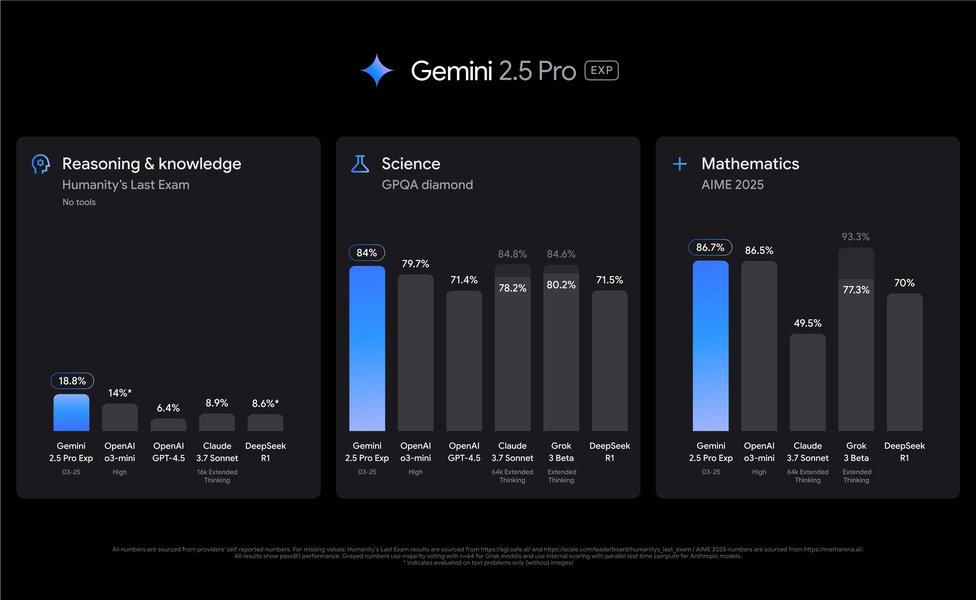
Google's official graphic for Gemini 2.5 Pro highlights the model's advanced thinking capabilities, showcasing how the system processes information through multiple reasoning steps. The visual representation emphasizes the model's design philosophy of prioritizing thorough reasoning for better outputs.
Frequently Asked Questions
References
- Gemini 2.5: Our newest Gemini model with thinking - Google Blog
- With the release of Gemini 2.5 Pro, Google looks toward a dynamic AI future - Ars Technica
- Google's Gemini 2.5 Pro AI Thinking Performance Tested - Geeky Gadgets
- How tf is Gemini-2.5-pro so fast? - Reddit
- Gemini 2.5 Pro, Thinking and Non-thinking - Google AI Studio
- Gemini 2.5 Pro web interface lag - Google AI Studio
- Gemini - Google DeepMind
You Might Also Want to Explore
Last updated April 7, 2025