
Unveiling the Journey of Gemstones: Alluvial Transport Exposed
Discover the natural process that shapes gemstone deposits in river systems
Key Highlights
- Natural Erosion & Transport: Gemstones are liberated from primary rocks and carried by water.
- Deposition Processes: Slowing water flows deposit gems in alluvial and placer deposits.
- Mining and Environmental Impact: Alluvial mining methods extract gems while raising sustainability questions.
Overview of Alluvial Transport of Gemstones
The alluvial transport of gemstones is a complex geological process that involves the disintegration of primary host rocks, liberation of gemstones, transportation by water flow, and eventual deposition in secondary sedimentary environments. This natural process results in the creation of secondary deposits, commonly known as placer or alluvial deposits, which are rich repositories for various valuable gemstones such as diamonds, sapphires, rubies, and emeralds.
Primary Processes Involved
Erosion and Weathering
The journey of a gemstone begins within robust primary rocks, which are often igneous or metamorphic in nature. Geologic activities such as volcanic eruptions, tectonic shifts, and exposure resulting from erosion initiate weathering processes. Mechanical abrasion, chemical dissolution, and temperature fluctuations gradually disintegrate the host rock. In this initial stage, gemstones are freed from the rock matrix, setting the stage for subsequent transport.
Hydrological Transport
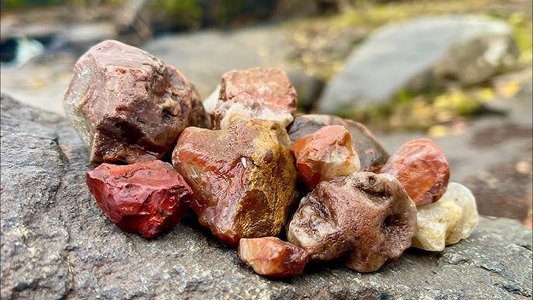
Once liberated, gemstones are swept into the dynamic environment of river systems. Flowing water, carrying sediments composed of sand, gravel, and silt, becomes the primary mechanism by which these minerals are moved over vast distances. The continuous motion within rivers can carry gemstones for hundreds of miles, during which the tumbling and friction inherent in the riverine environment helps to polish and round them. Consequently, many gemstones exhibit a smooth, well-defined surface that enhances their aesthetic and market value.
Deposition Dynamics
The momentum of waterways eventually dissipates in regions where the current slows down. Such locales include meanders, floodplains, backwaters, and river deltas. As water flow decreases, its capacity to hold heavier particles diminishes, leading to sedimentation. Gemstones, due to their high densities relative to the surrounding sediments, are deposited in these calmer zones. The resulting accumulations, commonly termed alluvial or placer deposits, often reveal a concentrated presence of valuable gemstones that have been naturally sorted by hydraulic forces.
Types and Characteristics of Deposits
Alluvial and Placer Deposits
Secondary deposits formed through the processes described above can be broadly classified into two categories: alluvial deposits and placer deposits. While these terms are sometimes used interchangeably, they describe deposits formed primarily by different water-related processes:
- Alluvial Deposits: Typically associated with river systems, these deposits form along riverbeds, in floodplains, and near deltas. The continuing action of water ensures a regular supply of sedimentary materials where heavy minerals like gemstones eventually settle.
- Placer Deposits: While similar in formation to alluvial deposits, placer deposits may also occur in coastal regions, beaches, or other locations where gravitational forces complement water flow. Placer deposits are significant for minerals like gold alongside gemstones.
Gemstone Characteristics Due to Transport
As gemstones traverse through river systems, they undergo continuous physical transformations. The movement causes a natural tumbling that removes sharp edges and fractures. Over time, a process of natural polishing occurs:
- Rounding and Smoothing: Due to repeated collisions with sediment particles, gemstones become rounded. This natural abrasion not only enhances their appearance but can also improve clarity and brilliance by removing microfractures.
- Sorting by Density: Water flow acts as a natural sieve, segregating lighter and heavier minerals. Gemstones, being denser, settle preferentially, which results in deposits that are relatively rich in valuable gems compared to other sediments.
- Surface Texturing: While continuous movement creates a smooth texture, it can also lead to minor scratches and wear, which are characteristic of alluvial gemstones. These surface modifications can sometimes add to the gem’s character and historical significance.
Gemstone Mining Techniques and Considerations
Extraction Methods
Alluvial mining leverages the naturally concentrated gemstone deposits formed by water transport. Several methods are applied to extract these precious materials:
| Method | Description | Application |
|---|---|---|
| Sluicing | Water is directed to wash sediments through sluice boxes which separate heavier particles from lighter ones. | Commonly used by small-scale miners in riverbeds and floodplains. |
| Dredging | A mechanical process involving scraping or vacuuming sediments from the riverbed. | Frequently employed in larger-scale operations to extract vast amounts of placer deposits. |
| Hydraulic Mining | Utilizes high-pressure water jets to dislodge sediment, transporting the material for subsequent processing. | Typically involves larger machinery and is applied in areas where deposits are deeply buried under sediments. |
Environmental and Ethical Issues
While alluvial mining is an important economic activity, it does come with several environmental and ethical considerations:
Environmental Impact
The excavation of alluvial deposits can disrupt local ecosystems. The removal of large quantities of sediments may lead to:
- Alterations in river morphology
- Increased erosion downstream
- Pollution of water systems due to sediment runoff and chemical usage
Effective regulation and the adoption of environmentally sustainable mining practices are essential for mitigating these impacts.
Ethical Considerations
Artisanal and small-scale mining, particularly in developing regions, raises ethical concerns including:
- Working conditions and safety
- Fair wages for miners
- Potential exploitation and conflicts with local communities
There is ongoing global discussion about establishing ethical frameworks and certification systems to ensure responsible gemstone mining.
The Scientific and Economic Significance
Geological Insights
The study of alluvial gemstone transport provides valuable insights into the historical dynamics of Earth’s surface processes. Researchers and geologists analyze:
- The composition and mineral content of sediments
- The hydrological patterns of ancient river systems
- The impacts of tectonic activity and climate change on erosion and sedimentation
These insights not only advance mineralogy and geology but also guide mineral exploration efforts by predicting where high concentrations of gemstones could be found.
Economic Implications
For many regions, the alluvial deposits represent a significant economic resource. The gemstone industry, supported by these secondary deposits, fuels:
- Local economies through small-scale mining activities
- Global gemstone trade markets
- Investment in mineral exploration and processing technology
In addition, the natural polishing process that occurs during alluvial transport often enhances the market value of gemstones by improving their aesthetic quality—a factor that is critically important in the jewelry sector.
Integrative Perspectives and Further Insights
Linking Alluvial Processes with Mining Practices
The interplay between alluvial transport and mining practices is a textbook example of how natural processes can be both beneficial and challenging for resource extraction. The movement of gemstones by water does not only lead to the formation of accessible secondary deposits, but it also paves the way for understanding the durability of these precious stones under physical stress. The geological journey—from erosion and hydraulic transport to deposition and subsequent extraction—offers critical data that can help refine mining techniques. Efficient extraction methods are designed considering the rounded and polished surfaces resulted from extensive river transport.
Challenges and Future Directions
As climate change and environmental concerns impact water systems globally, the future dynamics of alluvial deposition may also change. Alterations in precipitation patterns, river flow rates, and human interventions like damming could modify the natural sorting and deposition of gemstones. For the mining industry and scientific community, understanding these changes is crucial for:
- Ensuring sustainable mining practices
- Adapting exploration strategies to new environmental realities
- Developing more precise methods to predict and locate high-quality deposits
Ongoing research is focusing on integrating modern hydrological data with traditional geological models to better anticipate variations in gemstone deposition in response to environmental shifts.
Detailed Synthesis and Comparative Analysis
Examining the natural history of gemstone transport involves synthesizing data from several areas of study. Geological investigations document the formation of primary sources and the mechanisms by which weathering liberates gemstones. Hydrological studies quantify the distances and processes of sediment transport, while economic analyses evaluate the profitability and sustainability of mining these deposits. This integrated approach helps delineate a comprehensive view that not only appreciates the aesthetic and economic value of gemstones but also respects the environmental context in which these minerals are found.
References
-
Gems Recovered from Sedimentary Rocks - GIA
- Gemstone Deposits - GemSelect
- The Geology of Famous Gemstone Mines - Geology Science
- Discover Why You Can Find Million-Dollar Gems in Rivers - Geology In
- Alluvial Mining | What are Alluvial Diamonds? - Albert Hern
Recommended Further Queries
 lgc2016.files.wordpress.com
Last updated March 25, 2025