
Unlocking Home Power: A Comprehensive Guide to Generator Backup
Ensuring Uninterrupted Electricity During Outages with Safe and Effective Solutions
Key Insights into Home Generator Backup
- Safety First: Never "backfeed" a generator directly into your home's outlets without proper safety mechanisms like a transfer switch or interlock kit. This can be lethally dangerous for utility workers and can damage your home's electrical system.
- Choosing the Right Generator: Select a generator that matches your power needs. Portable generators are suitable for essential appliances, while standby generators can power an entire home automatically, offering greater convenience and capacity.
- Professional Installation is Key: For whole-house backup, a licensed electrician should install a transfer switch or interlock kit to ensure safe, legal, and efficient integration of the generator with your home's electrical panel.
In an increasingly unpredictable world, maintaining a reliable power supply for your home during outages has become a top priority for many homeowners. A backup generator serves as a crucial safeguard, offering peace of mind by keeping essential systems running, from refrigerators and heating to communication devices. Understanding how to safely and effectively use a generator to power your home is paramount, ensuring both the functionality of your household and the safety of everyone involved, including utility workers.
Understanding Generator Types and Their Applications
Before delving into the methods of connecting a generator, it's vital to differentiate between the primary types available and their typical applications for home backup.
Portable Generators: Flexibility for Essential Needs
Portable generators are versatile, often powered by gasoline, propane, or dual-fuel options. They are a cost-effective solution for temporarily powering critical appliances and lights during shorter outages. These generators are designed for mobility, featuring outlets for direct connection of individual appliances using extension cords. While convenient, their power output is limited, making them less suitable for powering an entire home simultaneously. They require manual setup and operation each time they are used.
A portable generator providing backup power during an outage.
Standby Generators: Automatic Whole-Home Power
Standby generators, also known as whole-house generators, are permanently installed outside your home, similar to a central air conditioning unit. They typically run on natural gas or liquid propane (LP) from your home's existing fuel lines. The key advantage of a standby generator is its automatic operation: when a power outage occurs, a sophisticated automatic transfer switch (ATS) detects the loss of utility power, starts the generator, and seamlessly transfers the home's electrical load to the generator. Once utility power is restored, the system automatically switches back and shuts down the generator. This hands-off operation provides unparalleled convenience and the capacity to power an entire home without interruption.

A permanent standby generator unit, providing continuous backup power.
Solar Generators and Battery Backup Systems
Emerging as a clean energy alternative, solar generators and battery backup systems harness solar energy through panels and store it in large batteries. Systems like EcoFlow DELTA Pro can offer significant power output and capacity, sometimes up to 90kWh, allowing for extended off-grid living or substantial backup. They connect directly to home circuits via a transfer switch or smart subpanel, offering quick switchovers and energy monitoring capabilities, and reducing reliance on fossil fuels.
Methods for Connecting a Generator to Your Home
Connecting a generator to your home requires careful consideration of safety, legality, and your specific power needs. There are generally two safe and recommended methods, and one extremely dangerous method to avoid at all costs.
The Peril of Backfeeding: Why It's Illegal and Dangerous
A critical point to understand is why "backfeeding" a generator into your home's electrical system via a regular outlet (often called a "suicide cord") is illegal and extremely hazardous. When a generator is improperly connected in this manner, it can send electricity "back" through the power lines, energizing the grid even when utility power is down. This phenomenon, known as backfeed, poses a severe risk of electrocution to utility workers who might be working on seemingly de-energized lines. Additionally, backfeeding can overload circuits, damage your home's electrical system, and even cause fires. Always prioritize safety over convenience; backfeeding is never an acceptable practice.
Safe and Approved Connection Methods
Method 1: Direct Appliance Connection (Portable Generators)
For portable generators, the simplest and safest method is to directly plug individual appliances into the generator's outlets using heavy-duty, outdoor-rated extension cords. This method is suitable for powering essential items like refrigerators, freezers, sump pumps, lights, and charging small electronics. While effective for limited needs, it can be cumbersome, especially for powering multiple appliances across different rooms, and doesn't provide power to hard-wired systems like furnaces or central AC units.
Method 2: Using a Transfer Switch or Interlock Kit (Portable and Standby Generators)
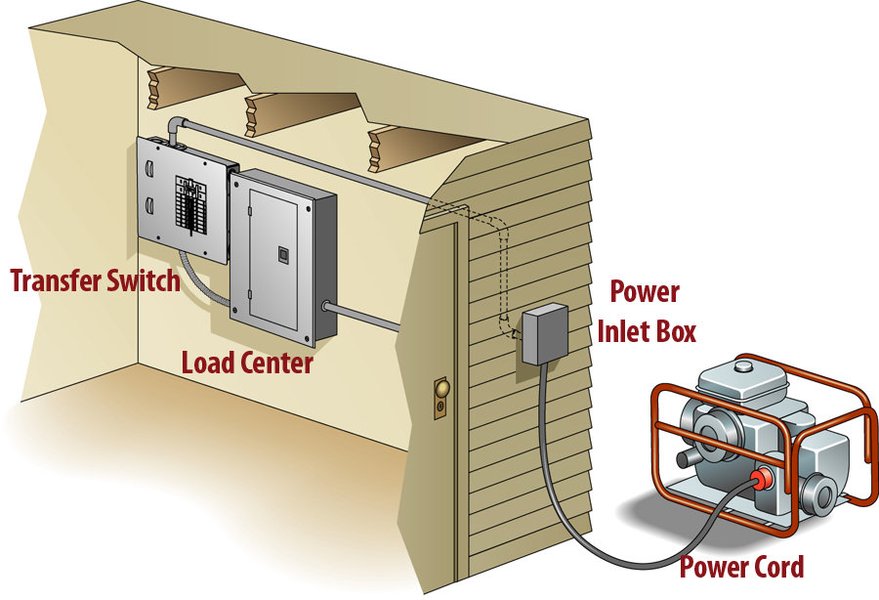
This is the safest and most recommended method for connecting a generator to your home's electrical panel, allowing it to power multiple circuits or even the entire house. A transfer switch or interlock kit ensures that your home is completely disconnected from the utility grid before the generator's power is introduced, eliminating the risk of backfeeding.
This video from "How To Home" demonstrates how to install an interlock kit and a 30-amp power inlet box, which is the best way to safely connect a generator to your house for backup power. It clearly illustrates the necessary components and the process for ensuring safe and legal power transfer during an outage, emphasizing the importance of preventing backfeeding.
- Transfer Switch: A transfer switch is a dedicated electrical device installed near your main service panel. When utility power goes out, you manually (or automatically, with a standby generator) flip a switch to disconnect from the grid and connect to the generator. This allows the generator to supply power to pre-selected circuits in your home. Automatic transfer switches (ATS) are standard for standby generators, sensing power loss and engaging the generator without human intervention.
- Interlock Kit: An interlock kit is a mechanical slide plate installed in your main electrical panel. It physically prevents the main breaker from being on at the same time as the generator's breaker. This ensures that you cannot accidentally backfeed power into the utility lines. An external power inlet box is installed outside your home, where you plug in your portable generator, and a heavy-duty cord connects this box to the interlock kit in your panel. This setup allows you to power a selection of circuits throughout your home by simply flipping breakers in your main panel.

An installed transfer switch in an electrical panel for safe generator connection.
Estimating Your Home's Power Needs
Before purchasing or connecting a generator, it's crucial to estimate your home's power requirements. This involves listing all the appliances and systems you want to power during an outage and calculating their running and starting (surge) wattages. Starting wattage is typically 2-3 times higher than running wattage for motors, so you need a generator that can handle the highest surge load. Undersizing a generator can lead to "brownout" conditions, potentially damaging appliances.
Appliance Wattage Guide
The following table provides typical wattage ranges for common household appliances. This can help you in calculating your total power requirements for a backup generator.
| Appliance | Running Watts (Approx.) | Starting Watts (Approx.) |
|---|---|---|
| Refrigerator (Energy Star) | 100-200 | 700-1000 |
| Central Air Conditioner (3-ton) | 3500-5000 | 9000-15000 |
| Furnace Fan (1/2 HP) | 500-700 | 1500-2000 |
| Sump Pump (1/2 HP) | 750-1000 | 1500-2500 |
| Microwave (1000W) | 1000-1500 | - |
| Electric Water Heater | 4000-5000 | - |
| Well Pump | 1000-2000 | 2000-4000 |
| Lights (LED per bulb) | 5-15 | - |
| Television | 80-200 | - |
| Computer/Laptop | 50-200 | - |
| Electric Dryer | 3000-5000 | 6000-9000 |
| Washing Machine | 500-1000 | 1000-2000 |
For a whole-house backup, smaller homes might need 8,000 to 10,000 watts, while larger homes or those with many high-demand appliances might require 20,000 to 48,000 watts or more. Professional consultation with an electrician is highly recommended for accurate sizing.
Operational Considerations and Safety Protocols
Beyond connection methods, adherence to strict safety protocols during generator operation is crucial to prevent accidents and ensure longevity of the equipment.
Placement and Ventilation
Generators produce carbon monoxide (CO), a colorless, odorless, and deadly gas. Therefore, NEVER use a generator indoors, including in homes, garages, basements, or partially enclosed areas, even with ventilation. Always operate generators outdoors, at least 20 feet away from your home, with the exhaust directed away from windows and doors. Install carbon monoxide detectors on every floor of your home.
Fuel Management
Store fuel in approved containers in a safe, well-ventilated area away from living spaces and heat sources. When refueling, always turn off the generator and allow it to cool down to prevent accidental ignition of fuel vapors.
Maintenance and Readiness
Regular maintenance is essential for generator reliability. This includes checking oil levels, spark plugs, air filters, and ensuring proper fuel storage. For standby generators, manufacturers like Generac and Kohler recommend periodic exercise cycles to keep the engine lubricated and ready for operation. Having a pre-planned list of essential appliances and knowing their wattage will help you manage your power usage effectively during an outage.
Assessing Generator Performance and Suitability
To provide a comprehensive understanding of generator characteristics and their suitability for different home backup needs, the following radar chart illustrates key performance metrics. These values are opinionated assessments based on typical models and general capabilities.
This radar chart provides a comparative view of different generator types based on several critical factors, with higher values indicating better performance or higher impact in that category. For instance, standby generators excel in "Power Output Capacity" and "Automatic Operation," while portable generators score higher on "Cost" due to lower initial investment. Solar/Battery systems lead in "Fuel Efficiency" and have very low "Noise Level." This visual representation helps in understanding the trade-offs and strengths of each type when considering a home backup power solution.
Frequently Asked Questions (FAQ)
What is the safest way to connect a generator to my house?
Can I just plug my generator into a wall outlet?
How far should a generator be from my house?
What fuel types do home backup generators use?
Do I need a professional to install a home backup generator?
How do I determine the right size generator for my home?
Conclusion
Having a backup generator for your home is an invaluable asset in ensuring comfort and safety during power outages. Whether you opt for a portable unit for essential needs or a whole-house standby system for complete coverage, understanding the safe and proper connection methods is paramount. Always prioritize safety by preventing backfeeding and ensuring proper ventilation. Professional installation of transfer switches or interlock kits is the most reliable way to integrate a generator into your home's electrical system, providing seamless power during emergencies and offering invaluable peace of mind.
Recommended Further Reading
- Understanding the dangers of generator backfeeding.
- Choosing between portable and standby home generators.
- Essential safety tips for operating home generators.
- How to calculate home power needs for a backup generator.
References
Last updated May 21, 2025