
Comprehensive Justifications for Genetic Diversity and Drought Tolerance in Soybean Lines
Integrating Phenotypic Traits and Molecular Markers for Enhanced Resilience
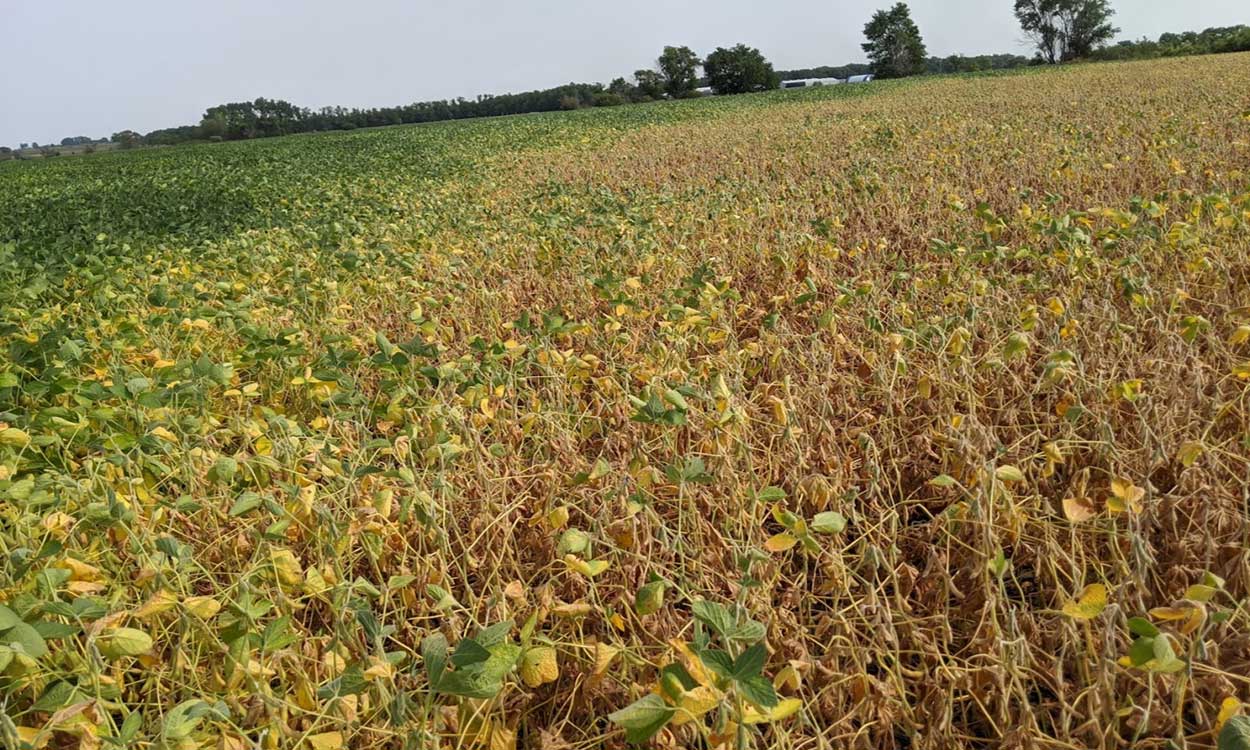
Key Takeaways
- Phenotypic traits provide observable indicators of drought tolerance, enabling targeted breeding.
- Molecular markers offer a genetic perspective, facilitating precise identification of drought-tolerance genes.
- The integration of both approaches enhances breeding efficiency and ensures stable yields under stress conditions.
Introduction
As climate variability intensifies, drought stress has become a critical challenge for soybean production worldwide. Developing drought-tolerant soybean lines is essential for ensuring yield stability and meeting the growing demand for this vital crop. Genetic diversity plays a pivotal role in enhancing drought tolerance by providing a broad genetic base that can be harnessed through integrated approaches using both phenotypic traits and molecular markers.
Phenotypic Trait Selection
Direct Trait Evaluation
Phenotypic traits offer direct and observable evidence of a plant's response to drought conditions. Key traits include:
- Root Architecture: Variations in root depth and structure significantly influence a plant's ability to access water from deeper soil layers, enhancing drought resilience.
- Water Use Efficiency (WUE): Measures how efficiently a plant utilizes water to produce biomass, with higher WUE being indicative of better drought tolerance.
- Pod Number and Seed Yield: Drought stress often reduces pod number, a critical yield component. Soybean lines that maintain higher pod numbers under drought conditions are considered more tolerant.
- Leaf Relative Water Content: Reflects the water status of the plant, with higher water retention correlating with improved drought tolerance.
- Biomass Accumulation: The ability to maintain biomass growth during drought stress is linked to overall plant vigor and yield stability.
High-Throughput Phenotyping
The advent of high-throughput phenotyping platforms has revolutionized the evaluation of drought-responsive traits. These platforms utilize imaging and spectral analysis to monitor plant physiology in real-time, allowing for the rapid assessment of large populations. This technology enhances the accuracy and speed of selecting drought-tolerant lines by capturing dynamic changes in traits at various developmental stages.
Integrating Phenotypic Data with Environmental Models
Integrating phenotypic data with predictive environmental models enables a more precise understanding of genotype-by-environment interactions (EGIs). This integration ensures that the observed phenotypic traits translate into yield stability across diverse drought scenarios, thereby validating the effectiveness of selected traits in real-world conditions.
Molecular Marker Approaches
Use of Molecular Markers in Assessing Genetic Diversity
Molecular markers such as simple sequence repeats (SSRs), single nucleotide polymorphisms (SNPs), and insertion/deletion (InDel) markers provide high-resolution insights into the genetic diversity of soybean lines. These markers reveal considerable genetic variation within soybean germplasm, which is essential for identifying alleles associated with drought tolerance. By assessing genetic diversity at the molecular level, breeders can pinpoint specific genetic variations that contribute to drought resilience.
Genome-Wide Association Studies (GWAS)
GWAS has emerged as a fundamental approach for associating specific SNPs with drought tolerance-related phenotypic traits. Recent studies have identified numerous candidate genes that control traits such as stomatal density, osmotic adjustment, and root morphology under drought conditions. These discoveries allow breeders to target specific genomic regions for marker-assisted selection (MAS), enhancing the precision of breeding programs aimed at improving drought tolerance.
Genomic Selection (GS) and Marker-Assisted Breeding
Genomic selection leverages genome-wide marker information to predict the genetic merit of soybean lines under drought stress. This approach accelerates breeding cycles by enabling early selection based on genomic estimated breeding values (GEBVs), even in the absence of complete phenotypic data. Marker-assisted breeding further enhances this process by facilitating the introgression of drought-tolerance alleles into elite backgrounds, thereby improving the efficiency and effectiveness of breeding programs.
Combining Molecular Data with Phenotypic Observations
The synergy between molecular marker data and field-based phenotyping enriches genetic characterization. For example, markers linked to root depth and water-use efficiency traits can be validated through field measurements, overcoming the limitations of relying solely on either approach. This integrative strategy reduces false positives and enhances the precision of identifying truly drought-tolerant lines, thereby optimizing breeding outcomes.
Justification for Combining Phenotypic and Molecular Approaches
Complementary Strengths
Phenotypic evaluations capture the complex interplay between genes and the environment, reflecting the plant's actual performance under drought conditions. However, environmental factors and phenotyping errors can sometimes obscure the genetic basis of observed traits. Molecular markers provide a direct insight into genetic variation, unaffected by immediate environmental conditions, and enable the dissection of polygenic traits such as drought tolerance. Combining both approaches harnesses the strengths of each, providing a more comprehensive understanding of drought resilience.
Enhanced Breeding Efficiency
The integration of phenotypic and molecular data allows breeders to make more accurate selection decisions. Marker-assisted backcrossing strategies can be employed to introgress drought-tolerance alleles into elite soybean lines while continuously monitoring key phenotypic traits. Additionally, the identification of quantitative trait loci (QTL) with small effects, crucial for polygenic traits, becomes feasible through this combined approach, ensuring that important genetic variations are not overlooked.
Resource Optimization and Risk Mitigation
In unpredictable drought environments, relying exclusively on phenotypic selection can be risky due to year-to-year fluctuations in environmental conditions. Incorporating genotypic data provides a stable genetic foundation that can be revisited and re-evaluated as new phenotypic screening technologies become available. This dual strategy optimizes resources and mitigates the risks associated with climatic unpredictability, ensuring long-term breeding gains.
Recent Advances and Future Perspectives
Recent advancements have underscored the importance of integrating high-throughput phenotyping with advanced genotyping platforms to refine the identification of drought-tolerance alleles. Studies have demonstrated the utility of combining imaging technologies with SNP analyses to pinpoint drought-responsive candidates in soybeans. Furthermore, genomic selection models that incorporate multi-environment data have shown high accuracy in predicting drought resilience. Ongoing research continues to enhance our understanding of the genetic architecture underlying drought responses, promoting a shift towards more predictive and efficient breeding frameworks.
Emerging Technologies
Emerging technologies such as CRISPR/Cas-mediated gene editing and transcriptomic profiling during stress periods promise to further refine our understanding of drought tolerance mechanisms. These technologies, when combined with molecular markers, will likely lead to the development of soybean varieties that are not only drought-tolerant but also high-yielding and resilient to other abiotic stresses. The integration of these advanced tools will accelerate the breeding process and enhance the precision of developing climate-resilient soybean lines.
Physiological Adaptation Mechanisms
Soybean cultivars exhibit various physiological mechanisms that contribute to drought tolerance. Key mechanisms include:
- Root System Architecture: Enhanced root depth and branching increase water uptake from deeper soil layers.
- Water Use Efficiency: Improved WUE allows plants to maintain growth and yield with limited water availability.
- Stomatal Conductance Regulation: Efficient regulation of stomatal opening reduces water loss while maintaining photosynthesis.
- Antioxidant Enzyme Activity: Higher activity of antioxidant enzymes mitigates oxidative stress induced by drought.
Practical Implications
The integration of genetic diversity and drought tolerance through phenotypic traits and molecular markers has significant practical implications for agriculture:
-
Development of Climate-Resilient Varieties: Breeding drought-tolerant soybean lines ensures stable yields in water-limited regions, contributing to food security.
-
Improved Agricultural Productivity: Enhanced drought tolerance leads to reduced yield losses, increasing overall agricultural productivity.
-
Sustainable Crop Production: Resilient soybean varieties support sustainable farming practices by reducing dependency on water resources.
-
Economic Benefits: Farmers benefit from reduced risks associated with drought, leading to increased profitability and economic stability.
Conclusion
Leveraging genetic diversity through both phenotypic traits and molecular markers offers a comprehensive approach to developing drought-tolerant soybean lines. Phenotypic assessments provide tangible evidence of drought resilience, while molecular markers offer a deeper genetic understanding, enabling targeted breeding efforts. The integration of these approaches enhances breeding efficiency, ensures stable yields under stress conditions, and supports the development of climate-resilient varieties. Continued research and the adoption of advanced breeding strategies are essential for addressing the challenges posed by climate change and ensuring the sustainability of soybean production.
References
Last updated February 13, 2025