
Unlocking Life's Code: Mastering the Art of DNA, RNA, and cDNA Isolation
Your comprehensive guide to the essential techniques for purifying genetic material in molecular biology.
Highlights
- Foundation of Molecular Biology: Isolating pure DNA, RNA, and cDNA is crucial for reliable downstream applications like PCR, sequencing, and gene expression analysis.
- Method Diversity: Various techniques exist, including organic extraction, solid-phase methods (silica columns, magnetic beads), and salting-out, each tailored for specific sample types and goals.
- Purity is Paramount: Contaminants like proteins, polysaccharides, or other nucleic acids can inhibit enzymes and skew results, making purification steps essential for accuracy.
The Core Principles: Why Isolate Genetic Material?
Isolating and purifying nucleic acids – DNA (deoxyribonucleic acid), RNA (ribonucleic acid), and cDNA (complementary DNA) – forms the bedrock of modern molecular biology. The primary objective is to separate these vital molecules from the complex mixture of other cellular components, such as proteins, lipids, carbohydrates, and cellular debris. Obtaining pure and intact genetic material is non-negotiable for the success and reliability of virtually all subsequent molecular analyses.
The general workflow typically involves three key stages:
- Cell Lysis: This initial step involves breaking open the cells or tissues to release the nucleic acids. The method chosen depends heavily on the sample type. For example, bacterial cells might require enzymes like lysozyme, plant cells often need mechanical disruption (like grinding in liquid nitrogen) due to their tough cell walls, and animal cells might be lysed using detergents.
- Removal of Contaminants: Once the cellular contents are released, the target nucleic acid must be separated from contaminants. Proteins are often degraded using enzymes like proteinase K or removed through precipitation (e.g., salting out) or organic extraction (phenol-chloroform). RNases (for DNA isolation) or DNases (for RNA isolation) might be used to eliminate unwanted nucleic acid types.
- Recovery and Concentration: Finally, the purified nucleic acid is typically concentrated, often by precipitation using cold alcohol (ethanol or isopropanol) and salt. The precipitated nucleic acid is then pelleted by centrifugation, washed, and resuspended in a suitable buffer for storage or immediate use.
Isolating Deoxyribonucleic Acid (DNA)
Unraveling the Blueprint
DNA isolation techniques aim to extract genomic DNA (gDNA) from the nucleus or plasmid DNA from bacteria. The choice of method depends on the source material (blood, tissue, plant, bacteria, bone), the quantity and quality of DNA required, and the downstream application.
Common DNA Extraction Methods
- Organic Extraction (Phenol-Chloroform): A classic, robust method effective for high yields from diverse sources. It uses phenol and chloroform to denature and separate proteins from the DNA, which remains in the aqueous phase. DNA is then precipitated with alcohol. While effective, it involves hazardous organic solvents and can be time-consuming.
- Non-Organic Salting-Out: A safer alternative that avoids organic solvents. Cells are lysed, proteins are degraded with proteinase K, and then precipitated out using a high concentration of salt (e.g., potassium acetate or ammonium acetate). DNA remains in the supernatant and is recovered by alcohol precipitation. It's generally faster and less toxic than organic extraction but may yield DNA with slightly lower purity.
- Silica-Based Adsorption (Spin Columns): A widely popular method due to its speed, ease of use, and scalability. DNA selectively binds to a silica membrane in the presence of high concentrations of chaotropic salts. Contaminants are washed away, and pure DNA is eluted using a low-salt buffer or water. This method is central to many commercial kits.
- Magnetic Bead Technology: Utilizes paramagnetic beads coated with silica or other chemistries that bind DNA. After binding, beads are captured using a magnet, contaminants are washed away, and DNA is eluted. This method is highly amenable to automation and high-throughput processing.
- Alkaline Lysis: Primarily used for isolating plasmid DNA from bacteria. It relies on the differential denaturation of chromosomal and plasmid DNA under alkaline conditions (pH ~12.0-12.5). Chromosomal DNA denatures and precipitates, while smaller, supercoiled plasmid DNA remains soluble and can be recovered after neutralization and centrifugation.
- CTAB (Cetyltrimethylammonium Bromide) Extraction: Especially useful for plant tissues, which are rich in polysaccharides and polyphenols that can interfere with DNA isolation and downstream enzymatic reactions. CTAB is a detergent that helps remove these contaminants.
Isolating Ribonucleic Acid (RNA)
Capturing the Messenger
RNA isolation presents unique challenges primarily due to the instability of RNA molecules and the pervasive presence of RNase enzymes, which rapidly degrade RNA. Therefore, speed, cold temperatures, and maintaining an RNase-free environment (using dedicated reagents, consumables, and workspaces) are critical.
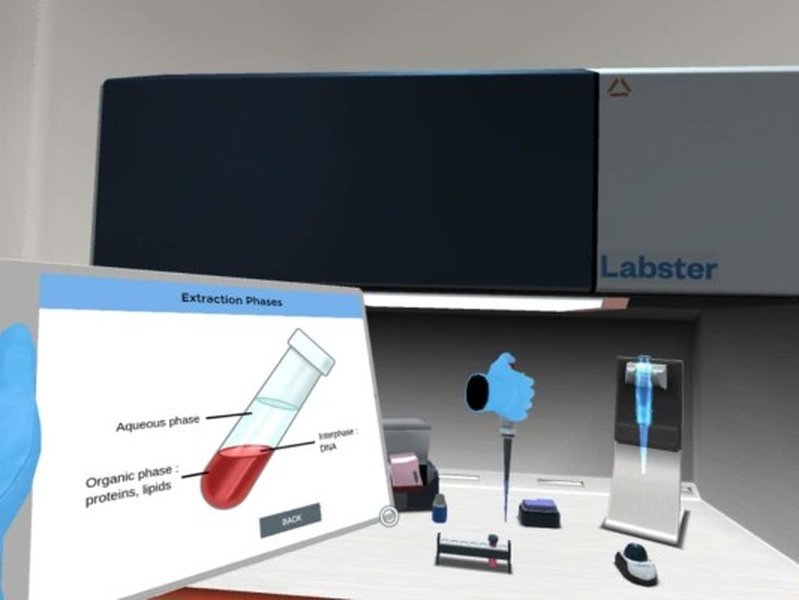 Visualizing the steps involved in RNA extraction.
Key RNA Extraction Techniques
- Organic Extraction (TRIzol/Guanidinium Thiocyanate-Phenol-Chloroform): A common and effective method using reagents like TRIzol. It employs guanidinium thiocyanate, a potent chaotropic agent that lyses cells and inactivates RNases, combined with phenol-chloroform extraction. Under acidic conditions, RNA selectively partitions into the aqueous phase, while DNA and proteins move to the interphase and organic phase. RNA is recovered by isopropanol precipitation.
- Silica-Based Column Purification: Similar to DNA column methods, RNA binds to a silica membrane in the presence of chaotropic salts (which also inhibit RNases). After washing steps to remove contaminants (including genomic DNA, often facilitated by an on-column DNase digestion step), pure RNA is eluted. This method is fast and yields high-purity RNA suitable for sensitive applications like RT-qPCR.
- Magnetic Bead Technology: Similar to DNA isolation, magnetic beads coated to bind RNA offer a rapid and automatable purification method.
Regardless of the method, it's crucial to assess RNA quality and quantity after isolation, typically using spectrophotometry (checking A260/A280 and A260/A230 ratios) and gel electrophoresis or microfluidic analysis (e.g., Agilent Bioanalyzer) to confirm integrity.
Synthesizing and Purifying Complementary DNA (cDNA)
From RNA Transcript to Stable Copy
Complementary DNA (cDNA) is not directly isolated from cells; it is synthesized *in vitro* from an RNA template using an enzyme called reverse transcriptase. This process is essential for studying gene expression (via RT-qPCR or RNA-Seq), cloning eukaryotic genes into prokaryotic hosts (which lack splicing machinery), and creating cDNA libraries.
The cDNA Synthesis and Purification Pathway
- High-Quality RNA Template: The process starts with purified, intact RNA. The quality of the starting RNA directly impacts the yield and length of the resulting cDNA. Contaminating genomic DNA must be removed (usually via DNase treatment during or after RNA isolation).
- Reverse Transcription (RT): RNA is converted into a single-stranded cDNA molecule using reverse transcriptase, dNTPs (nucleotide building blocks), and primers (typically oligo(dT) primers that bind to the poly-A tail of mRNA, random hexamers that bind throughout the RNA, or gene-specific primers).
- Optional Second-Strand Synthesis: For some applications like cloning, the single-stranded cDNA is converted into double-stranded cDNA using DNA polymerase.
- cDNA Purification: After synthesis, the reaction mixture contains cDNA along with leftover primers, dNTPs, enzymes, and salts, which can interfere with downstream steps. Purification is necessary. Common methods include:
- Column-Based PCR Clean-Up Kits: Similar to DNA/RNA purification columns, these bind the cDNA while allowing contaminants to be washed away. cDNA is then eluted.
- Ethanol Precipitation: cDNA can be precipitated using ethanol or isopropanol and salt, similar to genomic DNA or RNA recovery.
- Enzymatic Treatment: RNase H can be added to degrade the original RNA template after first-strand synthesis if required.
Purified cDNA is more stable than RNA and can be readily used in PCR, cloning, sequencing, and other molecular techniques.
Visualizing the Methods: A Mindmap Overview
To better understand the relationships between the different types of genetic material and their common isolation strategies, here is a simplified overview:
(Cells, Tissues, Plasmids, etc.)"] id1b["Methods"] id1b1["Organic (Phenol-Chloroform)"] id1b2["Salting Out"] id1b3["Silica Columns"] id1b4["Magnetic Beads"] id1b5["Alkaline Lysis (Plasmids)"] id1b6["CTAB (Plants)"] id2["RNA"] id2a["Sources
(Cells, Tissues, etc.)"] id2b["Key Challenge: RNase Contamination"] id2c["Methods"] id2c1["Organic (TRIzol)"] id2c2["Silica Columns
(with DNase step)"] id2c3["Magnetic Beads"] id3["cDNA"] id3a["Synthesized from RNA Template
(Reverse Transcription)"] id3b["Purification Methods"] id3b1["Column Clean-Up Kits"] id3b2["Ethanol Precipitation"] id3b3["Enzymatic Treatment (RNase H)"]
Method Comparison: At a Glance
Choosing the right isolation method depends on various factors. This table provides a brief comparison of some common techniques:
| Method | Principle | Primary Target(s) | Advantages | Disadvantages | Common Applications |
|---|---|---|---|---|---|
| Phenol-Chloroform Extraction | Differential partitioning in organic/aqueous phases | DNA, RNA (pH dependent) | High yield, effective lysis, removes proteins well | Uses toxic solvents, time-consuming, potential for organic carryover | Genomic DNA isolation, Total RNA isolation |
| Salting Out | Protein precipitation via high salt concentration | DNA | Safer (no organic solvents), relatively simple | Can have lower purity (RNA/protein carryover), less effective for some samples | Genomic DNA isolation |
| Silica Column (Spin Column) | Nucleic acid adsorption to silica in chaotropic salts | DNA, RNA, cDNA (kit specific) | Fast, easy to use, high purity, scalable, kit convenience | Can have lower yield than precipitation, cost of kits, potential for shearing large DNA | Routine DNA/RNA isolation, PCR cleanup, Plasmid prep, cDNA purification |
| Magnetic Beads | Nucleic acid binding to functionalized magnetic particles | DNA, RNA, cDNA | Fast, easily automated, scalable, high throughput, no centrifugation | Higher cost (beads & equipment), potential for bead carryover | High-throughput screening, automated DNA/RNA extraction, NGS library prep |
| Alkaline Lysis | Differential denaturation of plasmid vs chromosomal DNA | Plasmid DNA (from bacteria) | Specific for plasmids, relatively fast | Only for plasmids, RNA contamination common if RNase step omitted | Plasmid isolation for cloning, sequencing, transfection |
| TRIzol / Guanidinium-Phenol | Cell lysis, RNase inactivation, phase separation | RNA (primarily) | Robust lysis, inactivates RNases effectively, good yield | Uses toxic phenol, requires careful phase separation | Total RNA isolation from various tissues |
Comparing Key Performance Metrics
The performance of different nucleic acid isolation methods can be evaluated based on several criteria. This radar chart provides a comparative overview (relative scores, not absolute values) of common techniques based on typical outcomes:
Note: Scores are relative estimations for comparison purposes. Actual results vary based on specific protocols, sample types, and operator skill.
Why Purity and Integrity Matter
The quality of the isolated DNA, RNA, or cDNA is paramount. Contaminants can significantly impact downstream applications:
- Enzyme Inhibition: Residual salts, ethanol, phenol, polysaccharides, or proteins can inhibit enzymes used in PCR, RT, restriction digestion, ligation, or sequencing, leading to failed reactions or biased results.
- Inaccurate Quantification: Contaminating nucleic acids (e.g., DNA in an RNA prep, or vice-versa) can lead to incorrect quantification by UV spectrophotometry (A260 measurements) and skew results in quantitative assays like qPCR or RT-qPCR.
- Compromised Sequencing: Impurities can interfere with library preparation and sequencing reactions, resulting in poor data quality or failed runs.
- Degradation Issues: For RNA, integrity (lack of degradation) is crucial. Degraded RNA will lead to truncated cDNA synthesis and inaccurate representation of the transcriptome in gene expression studies. DNA shearing (breaking into smaller fragments) can be problematic for long-read sequencing or constructing large-insert libraries.
- Clinical Diagnostics: In diagnostic settings, the accuracy and reliability of tests depend directly on the purity and integrity of the extracted nucleic acids.
Therefore, careful selection and execution of isolation and purification protocols, along with quality control checks, are essential steps in any molecular biology workflow.
See It In Action: DNA Extraction Basics
While laboratory methods involve precise reagents and equipment, the basic principle of extracting DNA can be visualized even in simpler contexts. This video provides a look at the concept of DNA extraction:
This video from Myriad Genetics demonstrates the basic steps involved in extracting DNA, making the concept accessible. While showing a simplified home method, it illustrates the core ideas of cell lysis, separation, and precipitation used in laboratory settings.
Frequently Asked Questions (FAQ)
What's the main difference between DNA and RNA isolation?
How do I check the purity and concentration of my DNA/RNA?
Why is cDNA needed? Can't I just use RNA for PCR?
Can I use the same kit to isolate DNA and RNA?
References
- DNA Purification | DNA Extraction Methods - Promega Corporation
-
Comprehensive guide to RNA purification | Abcam - Abcam
-
Nucleic Acid Extraction Techniques - PMC
- DNA and RNA Extraction: Reliable Methods for Quality Results - Biology Insights
- Basic Techniques to Manipulate Genetic Material (DNA and RNA) - Bio LibreTexts
- Reverse Transcription (cDNA Synthesis) - NEB
- DNA extraction - Wikipedia
Recommended
Last updated April 16, 2025