
Elevating Your German: A Comprehensive Learning Path for Intermediate Learners
Master grammar, gender recognition, and functional conversation skills with this structured approach for post-beginner German students
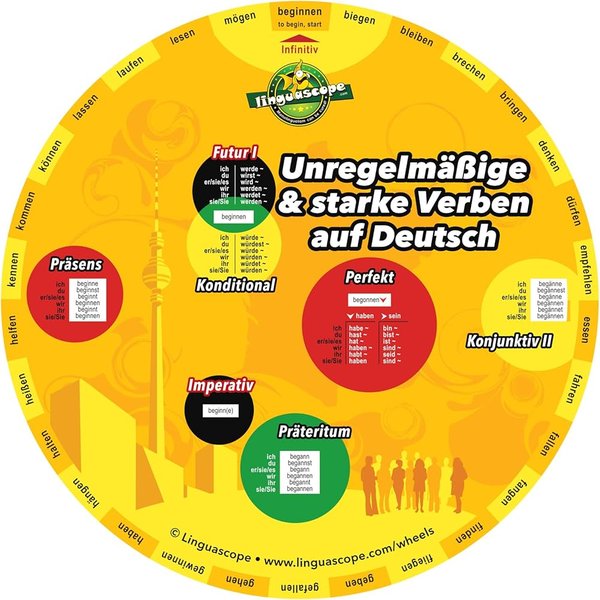
Key Elements for Intermediate German Success
- Systematic grammar progression focusing on sentence structure, case usage, and verb conjugations beyond basic patterns
- Gender recognition techniques that leverage pattern recognition instead of rote memorization
- Practical application of tenses with clear guidelines on when to use each one in both written and spoken contexts
Understanding German Grammar Structures
For someone advancing beyond beginner level, mastering more complex German grammar structures becomes essential. Instead of simply memorizing rules, focus on understanding the logic behind them and practicing their application in context.
Case System Fundamentals
German has four cases that determine how nouns, pronouns, and adjectives function in sentences:
| Case | Function | Question Words | Example |
|---|---|---|---|
| Nominative | Subject of sentence | Wer? (Who?) | Der Mann liest. (The man reads.) |
| Accusative | Direct object | Wen? (Whom?) | Ich sehe den Mann. (I see the man.) |
| Dative | Indirect object | Wem? (To whom?) | Ich gebe dem Mann ein Buch. (I give the man a book.) |
| Genitive | Possession | Wessen? (Whose?) | Das ist das Buch des Mannes. (That is the man's book.) |
Sentence Structure Patterns
German follows specific word order patterns that differ from English:
Main Clause Structure (V2)
In independent clauses, the conjugated verb always takes the second position (V2), regardless of what comes first:
1. Ich gehe morgen ins Kino. (I'm going to the cinema tomorrow.)
2. Morgen gehe ich ins Kino. (Tomorrow I'm going to the cinema.)
Subordinate Clause Structure
In dependent clauses, the conjugated verb moves to the end of the clause:
Ich weiß, dass er morgen kommt. (I know that he's coming tomorrow.)
Modal Verb Construction
When using modal verbs, the main verb moves to the end in its infinitive form:
Ich muss heute viel arbeiten. (I must work a lot today.)
Gender Recognition: Mastering Der, Die, Das
One of the most challenging aspects of German is recognizing and remembering noun genders. Rather than memorizing each noun individually, focus on recognizing patterns in word endings.
Masculine Noun Endings (-der)
Common Masculine Endings
- -er: der Lehrer (teacher), der Computer, der Fehler (mistake)
- -el: der Schlüssel (key), der Himmel (sky)
- -en: der Garten (garden), der Regen (rain)
- -ig: der König (king), der Honig (honey)
- -ling: der Frühling (spring), der Schmetterling (butterfly)
Also masculine: Days, months, seasons, weather phenomena, alcoholic drinks, and most car brands.
Feminine Noun Endings (-die)
Common Feminine Endings
- -e: die Lampe, die Katze (cat) - about 80% of nouns ending in -e are feminine
- -in: die Lehrerin (female teacher), die Ärztin (female doctor)
- -heit/-keit: die Freiheit (freedom), die Möglichkeit (possibility)
- -schaft: die Freundschaft (friendship), die Wissenschaft (science)
- -ung: die Bedeutung (meaning), die Zeitung (newspaper)
- -tät: die Universität, die Qualität
- -ion: die Information, die Station
Also feminine: Most rivers in Europe, motorcycle brands, and names of planes and ships.
Neuter Noun Endings (-das)
Common Neuter Endings
- -chen: das Mädchen (girl), das Häuschen (small house)
- -lein: das Büchlein (booklet), das Tischlein (small table)
- -um: das Museum, das Stadium
- -ment: das Dokument, das Element
- -o: das Auto, das Kino (cinema)
Also neuter: Most metals, young animals and people, most colors as nouns, most hotels and restaurants.
Visualizing German Gender Distribution
This chart shows the approximate distribution of noun genders in German vocabulary. Masculine nouns make up about 40% of German nouns, feminine nouns account for approximately 38%, and neuter nouns constitute around 22%.
German Tense Usage Guide
Understanding when to use each tense is crucial for natural-sounding German. Here's a guide on the appropriate contexts for each tense.
Present Tense (Präsens)
When to use it:
- Current actions and states: Ich lerne Deutsch. (I am learning German.)
- Habitual or repeated actions: Ich trinke jeden Morgen Kaffee. (I drink coffee every morning.)
- General truths: Die Erde dreht sich um die Sonne. (The Earth revolves around the sun.)
- Near future events: Morgen gehe ich ins Kino. (Tomorrow I'm going to the cinema.)
Perfect Tense (Perfekt)
When to use it:
- Completed actions in the past: Ich habe das Buch gelesen. (I have read the book.)
- Primary past tense in spoken German: Gestern haben wir Pizza gegessen. (Yesterday we ate pizza.)
- Actions with present relevance: Sie hat ihr Handy verloren. (She has lost her phone.)
Simple Past (Präteritum)
When to use it:
- Formal writing and storytelling: Er ging nach Hause. (He went home.)
- Common verbs in speech (sein, haben, modal verbs): Ich war krank. Er hatte keine Zeit. (I was sick. He had no time.)
- Newspaper reports and literature: Der Präsident sprach über die Wirtschaft. (The president spoke about the economy.)
Future Tense (Futur I)
When to use it:
- Future predictions: Es wird morgen regnen. (It will rain tomorrow.)
- Assumptions about the present: Sie wird jetzt in der Schule sein. (She will be at school now.)
- Promises or intentions: Ich werde dir helfen. (I will help you.)
A2 Level Small Talk Phrases in Slovene
For learners who need to communicate in Slovene while learning German, here are practical phrases for everyday conversations at the A2 level:
Greetings and Basic Interactions
- Zdravo! Kako si? - Hello! How are you?
- Dobro, hvala. Pa ti? - Good, thanks. And you?
- Me veseli, da te spoznam. - Nice to meet you.
- Kako se imate? - How are you? (formal)
- Oprostite, ne razumem. - I'm sorry, I don't understand.
- Ali lahko ponovite, prosim? - Could you repeat that, please?
Talking About Language Learning
- Učim se nemščino. - I'm learning German.
- Govorim malo nemško. - I speak a little German.
- Ali govorite angleško? - Do you speak English?
- Težko mi je z nemško slovnico. - German grammar is difficult for me.
- Vadim izgovorjavo. - I'm practicing pronunciation.
- Rad/a bi izboljšal/a svoje znanje. - I would like to improve my skills.
Everyday Conversations
- Kakšno je vreme danes? - How's the weather today?
- Kaj počneš za vikend? - What are you doing this weekend?
- Ali si iz Slovenije? - Are you from Slovenia?
- Kje se lahko dobiva? - Where can we meet?
- Všeč mi je ta kraj. - I like this place.
- Imate kakšno priporočilo? - Do you have any recommendations?
This video provides additional basic Slovene phrases that can be useful when traveling in Slovenia or practicing small talk with Slovene speakers.
4-Week Learning Plan for Intermediate German
Week 1: Building Foundation
- Day 1-2: Review and enhance basic grammar structures
- Day 3-4: Focus on gender recognition patterns and practice with exercises
- Day 5-7: Present tense review and practice with daily conversation exercises
Week 2: Expanding Skills
- Day 8-9: Introduction to perfect tense and its usage contexts
- Day 10-11: Case system deep dive with practical applications
- Day 12-14: Vocabulary expansion focusing on specific topics (travel, food, daily activities)
Week 3: Practical Application
- Day 15-16: Simple past tense introduction and practice with reading
- Day 17-18: Subordinate clauses and complex sentence construction
- Day 19-21: Conversation practice focusing on fluency and accurate tense usage
Week 4: Integration and Advanced Practice
- Day 22-23: Future tense introduction and usage practice
- Day 24-25: Modal verbs with complex sentence structures
- Day 26-28: Comprehensive review, self-assessment, and practice with authentic materials
Daily Routine Recommendation
- 30 minutes: Grammar study and exercises
- 20 minutes: Vocabulary review and practice
- 15 minutes: Reading authentic materials
- 15 minutes: Listening practice (podcasts, videos)
- 10 minutes: Speaking practice (self-talk or with partners)
Frequently Asked Questions
What's the most effective way to remember noun genders in German?
Instead of memorizing each noun individually, focus on pattern recognition. Learn the common gender endings listed above and practice grouping nouns by gender. Create mental associations or color-code your vocabulary lists (blue for masculine, red for feminine, green for neuter). Also, always learn new nouns with their articles, and try to use them in sentences to reinforce memory through context.
How can I practice German if I don't have a conversation partner?
There are many ways to practice without a partner. Try speaking aloud to yourself (describing your day or surroundings), recording yourself and listening for mistakes, using language exchange apps like Tandem or HelloTalk, joining online German forums, watching German YouTube videos and responding aloud to questions, or using interactive apps like Duolingo's speaking exercises. Virtual language meetups on platforms like Meetup.com can also connect you with other learners.
When should I use Perfekt tense versus Präteritum in conversation?
In everyday spoken German, the Perfekt tense is much more common for talking about past events. Use Perfekt for most conversational contexts. The Präteritum is mainly used in writing, formal contexts, and storytelling. However, there are exceptions: the verbs "sein" (to be), "haben" (to have), and modal verbs (können, müssen, etc.) are commonly used in Präteritum even in spoken German. For example, "Ich war gestern krank" (I was sick yesterday) is more natural than using the Perfekt form.
How can I incorporate Slovene small talk into my German learning routine?
If you're learning German but need to use Slovene for small talk, consider a parallel learning approach. Create flashcards with German phrases on one side and their Slovene equivalents on the other. Practice translating common conversational topics from German to Slovene and vice versa. This reinforces both languages and helps you understand the structural differences. You might also look for a language exchange partner who speaks both German and Slovene to practice with, or join online communities where both languages are used.
References
- German Tenses: Overview & Usage - StudySmarter
- Learn German Tenses: The Complete Guide For Beginners - GermanMind method
- Master the 3 German Gender - der, die, or das? │ Easy Guide - EasyDeutsch
- How to Structure Sentences in German - Emma Loves German
- The Most Important Grammar Topics for A2 German - German Academy Zurich
- Basic Slovene Phrases for Travelers - YouTube
Recommended Queries
Last updated March 28, 2025