
Unlock Germany's Untapped Market: Service Ideas You Can Launch in Under a Month
Discover high-demand B2B and B2C services ripe for rapid development and ready to attract paying customers in Germany's dynamic 2025 landscape.
Highlights: Key Opportunities
- Focus on Niche Needs: Leverage Germany's growth in e-commerce, SME digitalization, and sustainability by addressing specific, underserved pain points.
- Embrace Rapid Development: Utilize Minimum Viable Product (MVP) strategies and low-code/no-code tools to launch a functional service within your tight timeframe.
- Prioritize Compliance: Build trust and viability by ensuring your service adheres to German regulations like GDPR and specific industry standards (e.g., VAT, sustainability reporting).
Understanding the German Market Context (2025)
Germany presents a robust and dynamic environment for new ventures, characterized by strong government support for innovation and distinct growth trends. Understanding this landscape is key to identifying viable service opportunities.
Key Growth Sectors
Several sectors are driving Germany's economic and technological advancement in 2025:
- E-commerce (B2B & B2C): Both business-to-business and business-to-consumer e-commerce continue to expand rapidly. The B2B segment shows particularly strong growth, outpacing B2C, while the overall e-commerce market revenue is projected to continue its significant upward trajectory.
- SaaS for SMEs: Small and Medium-sized Enterprises (SMEs) are increasingly seeking lightweight, affordable Software-as-a-Service (SaaS) solutions to digitize workflows, manage compliance, handle customer interactions, and improve overall efficiency.
- Sustainability & GreenTech: Driven by regulations (like the Supply Chain Due Diligence Act) and growing consumer awareness, there's a strong demand for services related to environmental sustainability, energy efficiency, and eco-friendly practices.
- FinTech & Digital Solutions: Financial technology and digital-first services remain at the forefront, catering to evolving consumer and business needs for seamless online transactions, management, and financial planning.
- AI & DeepTech: While complex deep tech solutions require significant development time, there are opportunities for services that leverage AI in simpler applications, such as automation, personalization, or data analysis for specific niches.
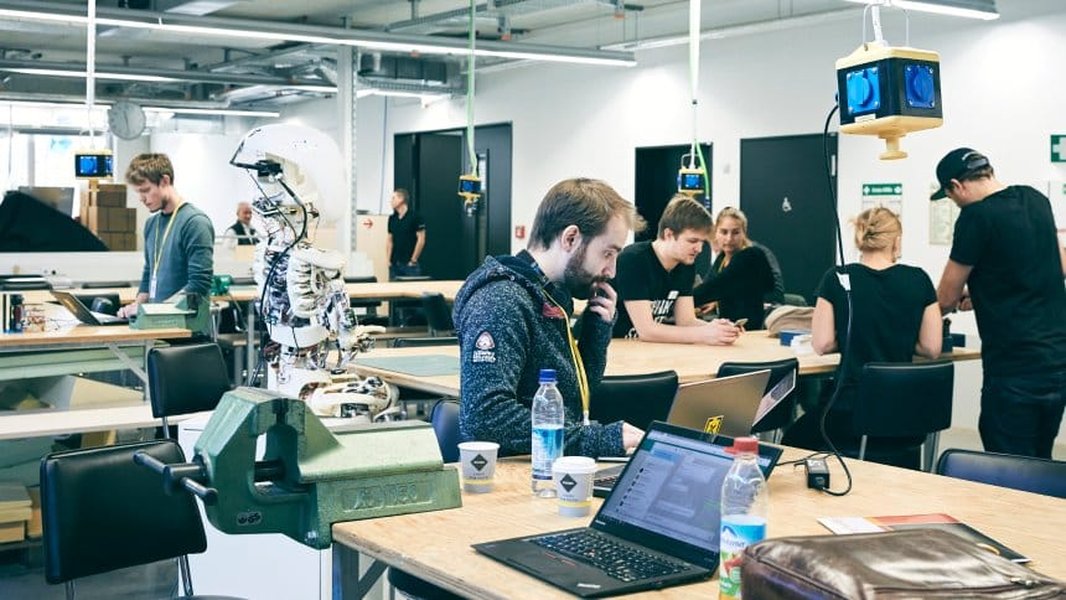
Germany's startup scene benefits from a focus on innovation and key growth sectors.
The Startup Environment & Government Support
Germany actively fosters its startup ecosystem through government initiatives and regional support structures. This creates a generally favourable environment for launching new businesses, although navigating regulations remains crucial.
The MVP Imperative: Building Fast, Validating Early
Given the constraint of developing a service in under a month, the Minimum Viable Product (MVP) approach is essential. An MVP includes only the core features necessary to solve a primary user problem and test the fundamental business hypothesis. This strategy allows for:
- Rapid Development: Focusing on essential functionality significantly reduces build time.
- Market Validation: Launching quickly enables gathering feedback from real, potentially paying, users to validate demand.
- Iterative Improvement: Feedback guides future development, ensuring the service evolves based on actual user needs.
- Resource Efficiency: Minimizes initial investment, saving resources for scaling after validation.
Leveraging low-code or no-code development platforms can further accelerate the MVP process, allowing developers to build functional web or mobile applications with minimal traditional coding.
Promising Service Niches for Rapid Development
Based on Germany's market needs and the feasibility of quick MVP development, several service ideas stand out. These focus on addressing specific pain points within high-growth areas.
Streamlining E-commerce Operations (B2B Focus)
The booming e-commerce sector creates demand for tools that simplify complex operations for businesses, especially SMEs.
Idea 1: Localized VAT & Compliance Automation Tool
- Problem: Navigating Value Added Tax (VAT) regulations, especially for cross-border sales within the EU, is complex and time-consuming for small e-commerce businesses.
- MVP Solution: A simple SaaS tool offering automated VAT calculation specifically for German/EU rules, basic invoice generation templates compliant with local standards, and potentially exportable summaries for tax reporting. Integration with major e-commerce platforms (via existing APIs) could be a key feature.
- Feasibility ( < 1 Month): High. Focus on core calculation logic for standard cases and basic reporting. Leverage APIs where possible.
- Monetization: Monthly subscription model (e.g., tiered based on transaction volume).
- Why it's needed: Addresses a mandatory, complex requirement for a large and growing user base (online sellers).
Idea 2: Hyperlocal Delivery Coordination Platform
- Problem: Small local retailers struggle with the cost and logistics of last-mile delivery, competing against larger players. Delivery congestion is also an issue in urban areas.
- MVP Solution: A platform enabling retailers in a specific neighborhood or district to pool deliveries. Features could include basic route optimization for shared trips, simple scheduling, and potentially SMS/email notifications for customers.
- Feasibility ( < 1 Month): Medium-High. Focus on a specific geographic area initially. Core features involve scheduling and basic mapping/routing logic.
- Monetization: Small fee per delivery coordinated through the platform or a low-cost monthly subscription for retailers.
- Why it's needed: Offers cost savings and efficiency for local businesses, potentially with an eco-friendly angle (fewer delivery trips).
Empowering SMEs with Digital Tools (B2B Focus)
Many German SMEs need accessible digital tools to improve efficiency and manage increasing compliance demands.

SMEs increasingly need simple digital tools to manage operations and compliance.
Idea 3: GDPR-Compliant Customer Feedback SaaS
- Problem: SMEs need customer feedback but often lack simple, affordable tools that ensure compliance with the strict General Data Protection Regulation (GDPR).
- MVP Solution: A web-based tool providing easy-to-create feedback forms, options for anonymization, secure data storage adhering to GDPR principles, and basic summary reports.
- Feasibility ( < 1 Month): High. Core features are relatively simple; the main challenge is ensuring and clearly communicating GDPR compliance.
- Monetization: Freemium model (basic features free, advanced analytics/customization paid) or a low-cost subscription.
- Why it's needed: Addresses a common need (feedback collection) combined with a critical compliance requirement.
Idea 4: Simplified Sustainability Reporting Tool
- Problem: Increasing regulations (like the German Supply Chain Due Diligence Act) and market pressure require SMEs to report on sustainability metrics, but dedicated tools are often complex or expensive.
- MVP Solution: A focused tool providing checklists for common sustainability requirements (e.g., energy use, waste reduction), templates for basic reports, and potentially links to relevant resources or certified consultants.
- Feasibility ( < 1 Month): Medium. Focus on specific, common reporting needs for SMEs rather than comprehensive corporate solutions.
- Monetization: Subscription model, potentially tiered by the number of metrics tracked or report types offered.
- Why it's needed: Taps into the major trend of sustainability and addresses emerging regulatory requirements for businesses.
Enhancing Consumer & Local Experiences (B2C/Hyperlocal Focus)
Opportunities also exist in creating tools that simplify daily life or cater to specific local niches.
Idea 5: AI-Powered Assistant for Classifieds (e.g., Kleinanzeigen)
- Problem: Users of popular classifieds platforms like eBay Kleinanzeigen spend significant time manually searching, comparing prices, and negotiating.
- MVP Solution: A browser extension or simple app offering features like automated price tracking for saved searches/categories, alerts for new listings matching criteria, and potentially an AI chatbot to help draft initial negotiation messages based on price history or common phrases.
- Feasibility ( < 1 Month): Medium-High. Can leverage publicly available data (scraping requires caution regarding terms of service). Focus on core features like alerts and price tracking first.
- Monetization: Freemium model (basic alerts free, advanced analytics, faster updates, or negotiation assistance paid).
- Why it's needed: Offers tangible time savings and potential cost savings for users of a very popular platform in Germany.
Idea 6: Niche Booking/Matching Platforms
- Problem: Freelancers or small service providers in specific niches (e.g., wellness practitioners, local artisans, specialized tutors) often lack simple, tailored booking and payment systems. Similarly, startups may struggle to find specific freelance talent quickly.
- MVP Solution: A focused platform for a specific niche. Examples: (a) A booking system for freelance wellness professionals with integrated payment options and reminders. (b) An AI-assisted matching tool connecting startups with freelancers possessing specific tech skills (e.g., specific programming languages, e-commerce platform expertise).
- Feasibility ( < 1 Month): Medium. Requires defining the niche very clearly. Building basic booking or matching logic is feasible.
- Monetization: Transaction fees (for bookings/payments), subscription fees for service providers/startups, or premium features (e.g., priority listings).
- Why it's needed: Addresses unmet needs in specific, potentially underserved, market segments.
Visualizing Service Potential: A Comparative Analysis
To help evaluate these ideas, the following radar chart compares four promising concepts based on key factors relevant to rapid launch and potential success. Scores are subjective estimates (1=Low, 5=High) based on the analysis:
This chart suggests the VAT Tool and Feedback Tool have strong potential due to clear market needs and development feasibility. The Kleinanzeigen Helper also scores well on need and speed, while Hyperlocal Delivery offers a unique niche opportunity.
Mapping the Development Path
Regardless of the chosen idea, a structured approach is vital for development within a month. This mindmap outlines the typical steps involved in launching an MVP:
This map emphasizes starting with validation, focusing development on essential features, launching quickly to gather real-world feedback, and then iterating based on that input.
Exploring Germany's Startup Vision
Understanding the broader ambitions and challenges within Germany's startup ecosystem can provide valuable context. The government's vision, funding initiatives, and identified hurdles influence the opportunities available for new services. This video discusses some aspects of Germany's startup strategy for 2025:
Insights from discussions like these highlight the importance of aligning new services with national priorities (like digitalization and sustainability) while being mindful of potential budget constraints or regulatory complexities discussed in the ecosystem.
Service Idea Comparison Table
This table provides a quick overview of the discussed service ideas:
| Service Idea | Target | Core Problem Solved | MVP Focus | Potential Monetization | Est. Dev Time (MVP) |
|---|---|---|---|---|---|
| Localized VAT Tool | B2B (E-commerce SMEs) | VAT complexity & compliance | Basic calculation, reporting templates | Subscription | 2-4 weeks |
| Hyperlocal Delivery | B2B (Local Retailers) | Last-mile delivery cost/logistics | Scheduling, basic routing, notifications | Per-delivery fee / Subscription | 3-4 weeks |
| GDPR Feedback Tool | B2B (SMEs) | GDPR-compliant feedback collection | Simple forms, anonymization, basic reports | Freemium / Subscription | 2-3 weeks |
| Sustainability Reporter | B2B (SMEs) | Basic sustainability reporting needs | Checklists, report templates | Subscription | 3-4 weeks |
| Kleinanzeigen Assistant | B2C (Classifieds Users) | Time spent searching/negotiating | Price tracking, alerts, draft messages | Freemium | 2-4 weeks |
| Niche Booking/Matching | B2B/B2C (Specific Niches) | Lack of tailored booking/matching tools | Core booking or matching logic for one niche | Transaction fees / Subscription | 3-4 weeks |
Key Considerations for Success
Launching quickly requires focus, but certain elements are critical for long-term viability.
Regulatory Compliance
Germany has strict regulations, particularly concerning data privacy (GDPR) and specific industry rules (e.g., finance, healthcare, tax). Ensuring your MVP is compliant from the start is crucial for building trust and avoiding legal issues. Clearly communicate your compliance measures to potential customers.
Market Validation & Early Adopters
Before investing significant development time, validate your idea. Talk to potential customers within your target niche. Are they experiencing the problem you aim to solve? Would they be willing to pay for your solution? Securing a few early adopters who provide feedback (and potentially initial revenue) is invaluable.
Technology Choices for Speed
Consider using low-code/no-code platforms (like Bubble, Webflow, Retool) or leveraging existing frameworks and APIs to accelerate development. Choose technologies that allow for rapid prototyping and iteration, enabling you to build the core MVP functionality within the one-month timeframe.
Frequently Asked Questions
What exactly is an MVP and why is it important here?
An MVP, or Minimum Viable Product, is a version of a new product that includes only the features necessary to satisfy early customers and provide feedback for future product development. For a developer aiming to build a service in under a month, an MVP approach is critical because it focuses resources on launching the core value proposition quickly, validating the market need with minimal investment, and allowing for data-driven iteration rather than building features based on assumptions.
Are low-code/no-code tools suitable for building a paid service?
How significant are regulations like GDPR in Germany?
Which sectors currently show the most promise for new services in Germany?
How can I validate my service idea before building it?
Recommended Further Exploration
- What specific challenges do German SMEs face in digital transformation?
- Can you provide a detailed guide to VAT compliance for online sellers targeting Germany?
- What are the best low-code platforms for building a SaaS MVP quickly?
- What are the latest trends in sustainable business practices expected in Germany for 2025?
References
Last updated May 4, 2025