
Transforming GKR: Building Efficient Interactive Arguments with Merkle Hashing
Discover how the GKR protocol merges with Merkle trees to create powerful NP arguments, bypassing complex PCPs.
The Goldwasser-Kalai-Rothblum (GKR) protocol is a cornerstone in the field of interactive proofs, offering an efficient way for a computationally limited verifier to check the correctness of computations performed by a powerful prover, particularly for arithmetic circuits. While powerful, the standard GKR protocol is an interactive *proof* system. However, it can be adapted into an interactive *argument* system for any problem in the NP complexity class by integrating Merkle hashing, crucially *without* resorting to the complexities of Probabilistically Checkable Proofs (PCPs). This transformation offers distinct advantages, particularly when compared to other approaches like the Kilian-Micali protocol.
Key Insights
- GKR for Circuit Verification: The GKR protocol efficiently verifies computations expressed as layered arithmetic circuits using interactive sum-check protocols.
- Merkle Hashing for Commitment: Merkle trees allow a prover to commit to large datasets (like circuit layer values) succinctly and provide efficient proofs of individual data points.
- PCP-Free NP Arguments: Combining GKR with Merkle hashing creates an interactive argument for NP problems, leveraging computational hardness assumptions (of hash functions) instead of relying on complex PCP constructions.
Understanding the GKR Protocol
The Foundation: Interactive Circuit Verification
The GKR protocol operates on layered arithmetic circuits, typically composed of addition and multiplication gates arranged in levels. A prover wants to convince a verifier that for a given public input \(x\), the circuit \(C\) evaluates to a claimed output \(y\). Instead of re-executing the entire circuit (which might be too large for the verifier), the GKR protocol provides an interactive method.
Layer-by-Layer Verification
The core idea is to verify the circuit's computation layer by layer, starting from the output layer and moving towards the input layer. Let \(W_i\) represent the values of all gates at layer \(i\). The protocol verifies the consistency between layer \(i\) and layer \(i+1\).
The Sum-Check Protocol
At the heart of GKR lies the sum-check protocol. To verify the value of a gate at layer \(i\), the prover needs to demonstrate the correctness of a sum computed over values from layer \(i+1\). The sum-check protocol allows this verification interactively. The verifier challenges the prover with random values, and the prover responds with polynomial evaluations. The verifier only needs to perform a small number of checks at each step.
Multilinear Extensions
GKR represents the values at each layer (\(W_i\)) and the circuit's wiring using multilinear polynomials (polynomials where each variable appears with degree at most 1). The sum-check protocol is then applied to these multilinear extensions, allowing efficient evaluation and verification.
For example, to check the computation at layer \(i\), the verifier needs to check a claim about the sum of polynomial evaluations over the boolean hypercube \(\{0, 1\}^k\). The sum-check protocol reduces this claim iteratively to a claim about a single point evaluation, which can then be related to the next layer (\(i+1\)).
The Role of Merkle Hashing
Efficient Data Commitment and Proof
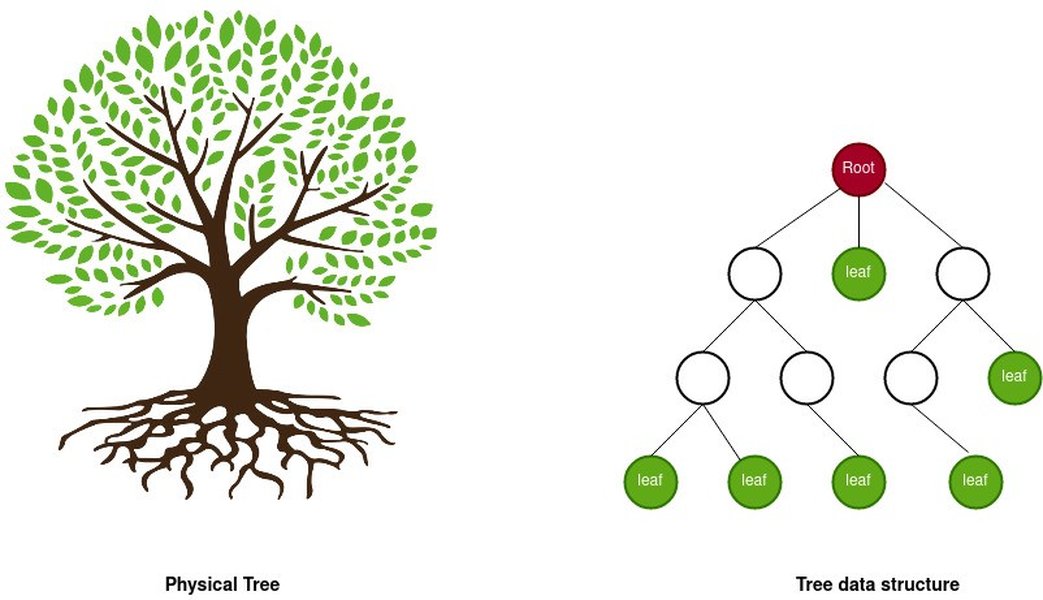
Merkle trees (or hash trees) are fundamental cryptographic tools for creating compact commitments to large datasets and enabling efficient verification of individual data items within the set.
Building the Tree
A Merkle tree is built bottom-up. The leaves of the tree are cryptographic hashes of individual data blocks (e.g., gate values in a circuit layer). Each internal node is the hash of its child nodes. This process continues recursively until a single hash, the Merkle root, remains. This root acts as a succinct commitment to the entire dataset.
Merkle Proofs
To prove that a specific data block is part of the dataset committed to by the Merkle root, a prover provides a "Merkle proof" (also known as an authentication path). This proof consists of the sibling nodes along the path from the data block's leaf to the root. The verifier can use the data block, the proof, and the hash function to recompute the Merkle root. If the computed root matches the committed root, the verifier is convinced (under the assumption that the hash function is collision-resistant) that the data block is authentic and part of the original dataset.
Converting GKR to an Interactive Argument for NP via Merkle Hashing
Combining Efficiency and Commitment
To transform the GKR proof system into an interactive argument for an NP language \(L\), we follow these steps, leveraging Merkle hashing for commitment and avoiding PCP constructions:
Step 1: NP Statement to Arithmetic Circuit
First, any NP problem can be reduced to verifying the satisfiability of a circuit. We represent the NP statement (e.g., 3-SAT, Graph Hamiltonicity) as a large, layered arithmetic circuit \(C\). This circuit takes the potential witness \(w\) as input and outputs 1 if the witness is valid for the instance \(x\), and 0 otherwise. The statement we want to prove is "There exists a witness \(w\) such that \(C(x, w) = 1\)".
Step 2: Prover Computes and Commits
The prover, knowing a valid witness \(w\), computes all intermediate values (gate outputs) for each layer \(i\) of the circuit \(C\). Let these values for layer \(i\) be \(W_i\). Instead of sending these values directly, the prover does the following:
- For each layer \(i\), the prover constructs a Merkle tree over the values \(W_i\).
- The prover sends the Merkle root (\(root_i\)) for each layer \(i\) to the verifier. This collection of roots serves as the commitment to the entire computation trace.
Step 3: Interactive GKR Rounds with Merkle Proofs
The prover and verifier engage in the standard GKR protocol interaction (layer-by-layer verification using the sum-check protocol). However, whenever the verifier needs the value of a specific gate (or a polynomial evaluation at a specific point corresponding to gate values) during the sum-check protocol, the interaction changes:
- The verifier requests the value(s) needed for its sum-check verification step.
- The prover provides the requested value(s) *along with* their corresponding Merkle proofs relative to the committed root (\(root_i\)) of the relevant layer \(i\).
Step 4: Verifier's Checks
The verifier performs the GKR protocol checks as usual. Additionally, for every value received from the prover during the interaction:
- The verifier uses the provided Merkle proof to check if the value is consistent with the Merkle root (\(root_i\)) it received during the commitment phase.
- If the Merkle proof verifies correctly, the verifier uses the value in its sum-check calculation.
- If any Merkle proof fails, or if the sum-check protocol fails at any step, the verifier rejects.
If all checks pass throughout the GKR interaction and all Merkle proofs are valid, the verifier accepts the argument. The soundness relies on the collision resistance of the hash function used for Merkle trees, making it a computationally sound *argument* system rather than a statistically sound *proof* system.
Visualizing the GKR-Merkle Conversion
A Mindmap Overview
This mindmap illustrates the key components and their relationships in converting the GKR protocol into an interactive argument for NP using Merkle Hashing.
Illustrative Code: Merkle Tree Construction
Python Example
While the cryptographic integration is complex, the core idea of building a Merkle tree for commitment can be illustrated. The following Python snippet shows how to construct a basic Merkle tree and generate a proof path (note: uses simplified hashing for clarity).
import hashlib

def hash_node(left_hex, right_hex):
    """Hashes two hexadecimal child node strings."""
    # Decode hex, concatenate bytes, hash, then encode back to hex
    combined_bytes = bytes.fromhex(left_hex) + bytes.fromhex(right_hex)
    return hashlib.sha256(combined_bytes).hexdigest()

def build_merkle_layer(nodes):
    """Builds the next layer of the Merkle tree."""
    new_layer = []
    # Process nodes in pairs
    for i in range(0, len(nodes) - 1, 2):
        new_layer.append(hash_node(nodes[i], nodes[i+1]))
    # If there's an odd number of nodes, duplicate the last one to pair it
    if len(nodes) % 2 == 1:
        # Note: In practice, handling odd nodes might involve specific rules,
        # like hashing the node with itself or a predefined padding.
        # Here, we simply append it (or hash with itself if needed).
        # A common approach is to hash the last node with itself if it's odd.
        new_layer.append(hash_node(nodes[-1], nodes[-1])) # Hash last node with itself
        # If just appending: new_layer.append(nodes[-1]) -- this changes the logic.
        # Sticking to hashing pairs is more standard.
    return new_layer

def merkle_tree_root(data_blocks):
    """Constructs a Merkle tree and returns the root."""
    if not data_blocks:
        return None # Or handle empty case appropriately

    # Initial layer: Hash each data block
    current_layer = [hashlib.sha256(block.encode()).hexdigest() for block in data_blocks]

    # Build layers until only the root remains
    while len(current_layer) > 1:
        current_layer = build_merkle_layer(current_layer)

    return current_layer[0] # The single root hash

# Example usage: Commit to gate values of a layer
layer_values = ["value_0", "value_1", "value_2", "value_3", "value_4"]
root_commitment = merkle_tree_root(layer_values)
print(f"Merkle Root Commitment: {root_commitment}")

# (Generating Merkle proofs requires storing the tree structure or paths)
This code demonstrates hashing data blocks and iteratively hashing pairs to arrive at a single root hash, which acts as the commitment sent by the prover in the GKR-Merkle scheme.
Comparison with Kilian-Micali Protocol
Alternative Approaches to Succinct Arguments
The Kilian-Micali protocol is another seminal work in constructing interactive arguments, particularly known for achieving succinctness (proof size much smaller than the witness).
Kilian-Micali Overview
The Kilian-Micali protocol typically relies on:
- PCPs (Probabilistically Checkable Proofs): The NP statement is first converted into a PCP format. A PCP allows verification by checking only a small, random subset of the proof bits.
- Cryptographic Commitments: The prover commits to the (potentially very large) PCP string using a collision-resistant hash function, often via a Merkle tree constructed over the PCP bits.
- Interactive Verification: The verifier challenges the prover to reveal specific bits of the committed PCP (and their Merkle proofs). The verifier checks these bits according to the PCP verification procedure and validates the Merkle proofs against the committed root.
Advantage of GKR + Merkle Hashing over Kilian-Micali
One significant advantage of the GKR protocol converted using Merkle hashing (as described above) over the Kilian-Micali protocol is its potential for greater concrete efficiency and avoidance of complex PCP machinery.
- Avoiding PCP Construction Complexity: Generating PCPs, especially efficient ones, is often a complex and computationally intensive process. The constants hidden in the asymptotic complexity can be large, impacting practical performance. The GKR+Merkle approach bypasses PCP construction entirely, working directly with the structure of the arithmetic circuit derived from the NP problem.
- Potentially Simpler Implementation: While both protocols involve cryptographic hashing (Merkle trees), the GKR+Merkle scheme avoids the intricate machinery needed to build and verify PCPs. This can lead to simpler implementations and potentially better performance for circuits with regular structures where GKR excels.
- Lightweight Primitives: Merkle hashing relies on standard cryptographic hash functions (like SHA-256), which are generally fast and well-optimized. While Kilian-Micali also uses hashing, the overhead associated with generating and querying the underlying PCP adds complexity.
In scenarios where the NP problem translates well into an arithmetic circuit suitable for GKR, and where the overhead of PCP construction is a bottleneck, the GKR+Merkle approach can be more efficient in practice.
Protocol Feature Comparison
GKR+Merkle vs. Kilian-Micali
This table summarizes the key differences between the two approaches for constructing interactive arguments for NP.
| Feature | GKR + Merkle Hashing | Kilian-Micali Protocol |
|---|---|---|
| Core Technique | Sum-Check Protocol on Arithmetic Circuits | Probabilistically Checkable Proofs (PCPs) |
| Commitment Mechanism | Merkle Tree over Circuit Layer Values | Merkle Tree (or similar) over PCP String |
| Relies on PCPs? | No | Yes |
| Soundness Basis | Computational (Collision Resistance of Hash Function) | Computational (Collision Resistance + PCP Soundness) |
| Primary Advantage Highlighted | Avoids PCP complexity; potentially higher concrete efficiency for suitable circuits | Generic construction based on any PCP system |
| Potential Bottleneck | Performance depends on circuit structure/depth | PCP construction overhead; PCP query complexity |
| Trusted Setup Required? | No | No (for basic version, though variations might) |
Comparative Analysis: Efficiency and Complexity
A Radar Chart View
This chart provides a qualitative comparison between the GKR+Merkle approach and the Kilian-Micali protocol across several dimensions. Scores are relative (higher is generally better, except for complexity where lower is better), based on the typical trade-offs discussed in cryptographic literature. 'Reliance on Advanced Primitives' refers specifically to PCPs in this context.
This visualization suggests that GKR+Merkle might offer better verifier efficiency and lower implementation complexity due to avoiding PCPs, while Kilian-Micali relies more heavily on these advanced primitives. Prover efficiency and communication complexity can vary depending on the specific circuit/PCP and parameters used.
Further Insights: GKR and Sum-Check
Exploring the Core Mechanisms
To deepen the understanding of the GKR protocol, which forms the basis of the GKR+Merkle construction, this video provides an in-depth workshop on the GKR and sum-check protocols. Understanding these mechanisms is crucial for appreciating how the interactive verification works layer by layer.
The video covers the mathematical foundations, including multilinear extensions and the interactive nature of the sum-check, which are adapted when integrating Merkle proofs for commitment verification in the GKR+Merkle argument system.
Frequently Asked Questions (FAQ)
What is an "interactive argument" vs. an "interactive proof"?
Both involve interaction between a prover and a verifier. The key difference lies in the soundness guarantee:
- Interactive Proof: Offers statistical soundness. Even an infinitely powerful (computationally unbounded) cheating prover has only a negligible probability of convincing the verifier of a false statement.
- Interactive Argument: Offers computational soundness. A cheating prover who is computationally bounded (e.g., limited to polynomial time) has only a negligible probability of convincing the verifier of a false statement. Soundness relies on computational hardness assumptions (like the difficulty of breaking a cryptographic hash function).
The GKR+Merkle scheme described here is an argument system because its soundness relies on the collision resistance of the hash function used in the Merkle trees.
Why avoid PCPs in this construction?
While PCPs are theoretically powerful, constructing and working with them can be complex and computationally expensive in practice.
- Construction Overhead: Transforming an NP statement into an efficient PCP can involve significant computational cost for the prover.
- Proof Size: Although verifiable with few queries, the PCP itself can still be very large.
- Complexity: The underlying mathematical machinery for PCPs can be intricate.
The GKR+Merkle approach provides an alternative path to constructing arguments for NP that leverages the structure of arithmetic circuits directly, potentially offering better concrete performance and simpler implementation for certain classes of problems, by relying only on standard hash functions.
How does the verifier's work scale in GKR+Merkle?
The verifier's work in the GKR protocol (and its Merkle-based argument variant) is highly efficient. For a circuit of depth \(d\) and layer size (number of gates per layer) \(S\), the verifier's runtime is typically logarithmic in the circuit size \(S\) and linear in its depth \(d\), often expressed as \(O(d \cdot \log S)\) plus the cost of hash verification.
When Merkle proofs are added:
- The verifier needs to receive and store the Merkle roots for each layer (small cost).
- During the interaction, for each value queried, the verifier receives the value and a Merkle proof. The size of a Merkle proof is logarithmic in the number of leaves (layer size \(S\)).
- Verifying a Merkle proof requires performing a number of hash computations proportional to the proof length (i.e., logarithmic in \(S\)).
Therefore, the verifier remains highly efficient, typically much faster than executing the entire circuit computation, and the added cost from Merkle proof verification is generally manageable (\(O(\log S)\) hashes per query).
Can this GKR+Merkle scheme be made non-interactive?
Yes, interactive argument systems like the GKR+Merkle scheme can often be made non-interactive using the Fiat-Shamir heuristic. This involves replacing the verifier's random challenges at each round with pseudorandom challenges generated by applying a cryptographic hash function to the transcript of the interaction up to that point.
By applying Fiat-Shamir, the prover can simulate the entire interaction and generate all responses and proofs, bundling them into a single non-interactive proof string. The verifier can then check this single proof. However, the security analysis then relies on modeling the hash function as a random oracle, which is a strong assumption.
Making GKR non-interactive often leads to constructions related to SNARKs (Succinct Non-Interactive Arguments of Knowledge) or STARKs (Scalable Transparent Arguments of Knowledge), depending on the specific techniques and assumptions used.
References
- MIT Problem Set: GKR Protocol and Merkle Hashing - MIT OpenCourseWare
- GKR Protocol: A Step-by-Step Example - LambdaClass Blog
- Overview of the GKR Protocol - HackMD
- How Do Merkle Trees Work? - Baeldung on Computer Science
- A Note on the GKR Interactive Proof for Circuit Evaluation - Georgetown University
- Lecture 5: The Kilian-Micali Protocol - MIT OpenCourseWare
- Merkle Proofs Explained - Medium
Recommended Reading
Last updated April 17, 2025