
Enhancing RAG Systems with GNN and Semantic Retrieval
Integrating Advanced Techniques for Superior Information Retrieval
Key Takeaways
- Comprehensive Integration: Combining GNNs with semantic retrieval significantly enhances the reranking process by modeling intricate relationships between documents.
- Information Statistics Optimization: Incorporating information statistics theory, such as mutual information and entropy, improves the recall rate of RAG systems, ensuring more relevant documents are retrieved.
- Robust Implementation: A structured two-stage retrieval architecture, coupled with efficient graph construction and GNN architectures, ensures scalable and effective reranking.
Introduction to GNN and Semantic Retrieval
In the evolving landscape of information retrieval, combining Graph Neural Networks (GNNs) with semantic retrieval mechanisms offers a powerful approach to enhancing reranking systems. This integration leverages the strengths of both methodologies to improve the efficiency and accuracy of Retrieval-Augmented Generation (RAG) systems. By incorporating information statistics theory, it's possible to further refine these systems to achieve higher recall rates, ensuring that relevant information is consistently retrieved and utilized.
Understanding Graph Neural Networks (GNNs)
What are GNNs?
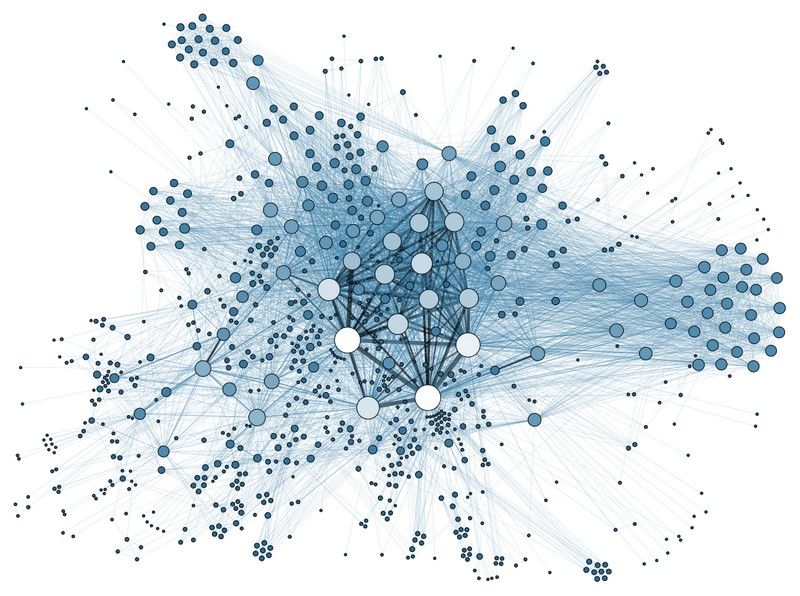
Graph Neural Networks are a class of neural networks designed to operate on graph structures, enabling the modeling of complex relationships between entities. Each node in a graph represents an entity (e.g., a document), and edges represent the relationships or interactions between these entities. GNNs excel in capturing both local and global structures within the graph, making them ideal for tasks that require an understanding of the interconnectedness of data points.
Applications in Information Retrieval
In the context of information retrieval, GNNs can be used to model the relationships between retrieved documents, query-document pairs, or even incorporate external knowledge graphs. This relational modeling allows the system to better understand the context and relevance of each document in relation to others, thereby enhancing the accuracy of reranking processes.
Semantic Retrieval Mechanisms
Overview of Semantic Retrieval
Semantic retrieval focuses on understanding the meaning behind queries and documents rather than relying solely on keyword matching. By utilizing embeddings and vector representations, semantic retrieval systems can capture the nuanced relationships between different pieces of text, leading to more accurate and contextually relevant search results.
Techniques and Tools
Techniques such as dense passage retrieval (DPR) and the use of transformer-based models (e.g., BERT) are commonly employed in semantic retrieval. These methods generate high-dimensional vectors that represent the semantic content of queries and documents, enabling the system to measure similarity based on meaning rather than mere keyword overlap.
Designing a GNN-Based Reranker
Two-Stage Retrieval Architecture
A robust approach to integrating GNNs with semantic retrieval involves a two-stage retrieval architecture:
Stage 1: Initial Semantic Retrieval
The first stage employs a semantic retrieval system to obtain an initial set of candidate documents. This is typically achieved using dense retrievers or bi-encoders that rank documents based on their semantic similarity to the query.
Stage 2: GNN-Based Reranking
In the second stage, a GNN-based reranker processes the candidate set by constructing a graph where nodes represent documents and edges capture semantic or relational similarities. The GNN aggregates information from connected nodes to refine the ranking, considering both individual relevance and contextual relationships.
Graph Construction Strategies
Effective graph construction is crucial for leveraging GNNs in reranking. Several strategies can be employed:
Query-Document Bipartite Graph
Here, nodes represent both the query and documents, with edges indicating semantic similarity or relevance scores. This structure allows the GNN to directly model the relationship between the query and each document.
Inter-Document Similarity Graph
Documents are connected based on their semantic similarities, co-occurrence statistics, or shared entities. This captures the broader context in which documents relate to each other, enhancing the reranker's ability to discern relevant information.
Dynamic Graph Construction
Dynamic graphs adjust edge weights based on real-time interactions or additional features, allowing for a more nuanced representation of relationships that can evolve with the data.
GNN Architectures for Reranking
The choice of GNN architecture can significantly impact the performance of the reranker. Common architectures include:
Graph Convolutional Networks (GCNs)
GCNs aggregate information from neighboring nodes through convolution operations, effectively capturing local graph structures.
Graph Attention Networks (GATs)
GATs introduce attention mechanisms that allow the network to weigh the importance of different neighbors, enabling more flexible and context-aware information aggregation.
Heterogeneous GNNs
When dealing with multiple types of nodes or edges, heterogeneous GNNs can effectively model the varied interactions, providing a richer representation of the data.
Incorporating Information Statistics Theory
Enhancing Retrieval with Information Theory
Information statistics theory offers a mathematical framework to analyze and optimize information retrieval processes. By integrating concepts such as entropy and mutual information, systems can be fine-tuned to prioritize data that is both relevant and informative.
Key Concepts and Applications
Entropy-Based Weighting
Entropy measures the uncertainty or unpredictability of information. In retrieval systems, documents with lower entropy (indicating more predictable and informative content) can be weighted more heavily. This ensures that the reranker prioritizes documents that provide clear and valuable information.
Mutual Information (MI)
Mutual Information quantifies the amount of information one variable contains about another. In the context of reranking, MI can assess the relevance between queries and documents, refining the edge weights in the document graph based on the statistical dependence between them.
Information Gain in Message Passing
During the GNN’s message-passing steps, incorporating information gain can enhance the aggregation process. By measuring how much information a message delivers, the GNN can prioritize more informative signals, leading to improved reranking accuracy.
Implementing the Combined System
Step-by-Step Implementation Guide
1. Initial Semantic Retrieval
Begin by leveraging a semantic retrieval system, such as a dense passage retriever or bi-encoder, to obtain a broad set of candidate documents based on their semantic similarity to the query. This stage ensures that the reranker has access to a comprehensive pool of potentially relevant documents.
2. Building the Document Graph
Construct a graph where each node represents a document, and edges represent semantic or relational similarities. Utilize techniques like cosine similarity on document embeddings or co-occurrence statistics to define the edges. Optionally, integrate external knowledge graphs to enrich the relational data.
3. Applying the GNN Reranker
Feed the constructed graph into a GNN model. The GNN processes the graph through multiple layers, aggregating information from neighboring nodes to refine each document’s representation. The output is a set of reranked documents based on both their standalone relevance and their contextual relationships within the graph.
4. Integrating Information Statistics
Enhance the reranking process by incorporating information statistics. Calculate metrics such as mutual information and entropy for each document relative to the query. Use these metrics to adjust the scores produced by the GNN, ensuring that documents with higher informational value are prioritized.
5. Final Ranking and Retrieval
Combine the GNN-adjusted scores with the information statistics to produce a final ranking of documents. This ranked list can then be utilized by the RAG system to generate more accurate and contextually relevant responses.
Implementation Example with Code Snippets
Below is a simplified Python example demonstrating how to implement a GNN-based reranker within a two-stage retrieval system. This example uses PyTorch and PyTorch Geometric for GNN operations:
import torch
from torch_geometric.nn import GCNConv
from torch_geometric.data import Data
from transformers import AutoModel, AutoTokenizer

class GNNReranker(torch.nn.Module):
    def __init__(self, input_dim, hidden_dim, output_dim, num_layers=2):
        super(GNNReranker, self).__init__()
        self.convs = torch.nn.ModuleList()
        self.convs.append(GCNConv(input_dim, hidden_dim))
        for _ in range(num_layers - 1):
            self.convs.append(GCNConv(hidden_dim, hidden_dim))
        self.fc = torch.nn.Linear(hidden_dim, output_dim)

    def forward(self, data):
        x, edge_index = data.x, data.edge_index
        for conv in self.convs:
            x = conv(x, edge_index)
            x = torch.relu(x)
        x = self.fc(x)
        return x

# Example usage
if __name__ == "__main__":
    # Initialize tokenizer and model for semantic retrieval
    tokenizer = AutoTokenizer.from_pretrained("bert-base-uncased")
    model = AutoModel.from_pretrained("bert-base-uncased")

    # Sample documents
    documents = ["Document one content", "Document two content", "Document three content"]

    # Generate embeddings
    embeddings = []
    for doc in documents:
        inputs = tokenizer(doc, return_tensors="pt")
        outputs = model(**inputs)
        embeddings.append(outputs.last_hidden_state.mean(dim=1).squeeze())
    embeddings = torch.stack(embeddings)

    # Construct a simple graph (fully connected for illustration)
    edge_index = torch.tensor([[0, 1, 2, 0, 2, 1],
                               [1, 0, 1, 2, 0, 2]], dtype=torch.long)

    # Create data object
    data = Data(x=embeddings, edge_index=edge_index)

    # Initialize and apply GNN model
    gnn_model = GNNReranker(input_dim=embeddings.shape[1], hidden_dim=128, output_dim=1)
    scores = gnn_model(data)

    # Apply sigmoid to get relevance scores
    relevance_scores = torch.sigmoid(scores).squeeze().detach().numpy()

    # Combine with information statistics (e.g., entropy)
    # Placeholder for entropy calculation
    entropy_scores = [0.5, 0.3, 0.2]  # Example values
    final_scores = relevance_scores + entropy_scores

    # Get final ranking
    ranked_indices = torch.argsort(torch.tensor(final_scores), descending=True)
    ranked_documents = [documents[i] for i in ranked_indices]

    print("Ranked Documents:", ranked_documents)
Optimizing Recall with Information Statistics
Enhancing Recall Rates
Recall is a critical metric in information retrieval, representing the system's ability to retrieve all relevant documents for a given query. By integrating information statistics theory, the recall rate of RAG systems can be significantly improved.
Techniques for Recall Optimization
| Technique | Description | Impact on Recall |
|---|---|---|
| Mutual Information Analysis | Measures the dependency between queries and documents, refining relevance scores based on statistical association. | Enhances the identification of truly relevant documents, reducing missed matches. |
| Entropy-Based Weighting | Assigns higher weights to documents with lower entropy, indicating more predictable and informative content. | Prioritizes documents that are more likely to contain relevant information. |
| Dynamic Pruning | Removes less relevant documents dynamically based on statistical measures, focusing computational resources on higher-quality candidates. | Maintains a high recall rate by ensuring that the most informative documents are retained. |
| Information Gain in Message Passing | Incorporates information gain during the GNN’s message-passing steps to prioritize updates that contribute more to relevance. | Ensures that the reranker focuses on the most informative signals, enhancing overall recall. |
Balancing Precision and Recall
While optimizing for recall is essential, it's crucial to maintain a balance with precision to ensure that the retrieved documents are not only relevant but also highly accurate. Techniques like mutual information and entropy-based weighting help in achieving this balance by filtering out less informative documents while retaining those that provide valuable insights.
Performance Considerations
Scalability and Efficiency
Implementing a combined GNN and semantic retrieval system requires careful consideration of computational resources and scalability. Techniques such as batch processing, efficient graph construction, and optimized GNN architectures are essential to handle large datasets without compromising performance.
Batch Processing
Processing multiple documents in batches can significantly speed up the retrieval and reranking processes. Batch processing allows for parallel computations, making the system more efficient and capable of handling larger volumes of data.
Semantic Chunking
Breaking down documents into coherent segments or chunks ensures that the semantic retrieval system can focus on relevant sections, improving both retrieval accuracy and computational efficiency. This approach maintains the integrity of information while facilitating faster processing.
Evaluation and Iteration
Performance Metrics
Evaluating the effectiveness of the combined system involves monitoring various performance metrics beyond traditional ranking measures. Key metrics include:
- Recall@k: Measures the proportion of relevant documents retrieved within the top-k results.
- Precision@k: Assesses the accuracy of the retrieved documents within the top-k results.
- Mean Reciprocal Rank (MRR): Calculates the average rank position of the first relevant document.
- Normalized Discounted Cumulative Gain (NDCG): Evaluates the ranking quality based on the position of relevant documents.
- Contextual Relevance: Assesses how well the retrieved documents support the downstream generation tasks in RAG systems.
Iterative Refinement
Continuous iteration based on evaluation results is crucial for optimizing the system. This may involve:
-
Adjusting the GNN architecture or the number of layers to better capture document relationships.
-
Refining the semantic retrieval techniques to improve initial candidate quality.
-
Enhancing the integration of information statistics to better prioritize relevant documents.
-
Incorporating feedback loops where the system learns from its performance metrics to make informed adjustments.
Conclusion
Combining Graph Neural Networks with semantic retrieval presents a formidable strategy for enhancing reranking in Retrieval-Augmented Generation systems. By effectively modeling the relationships between documents and leveraging information statistics theory, such systems can achieve higher recall rates and improved overall performance. The structured two-stage retrieval architecture, coupled with advanced graph construction and efficient GNN implementations, ensures that the system remains scalable and robust. Continuous evaluation and iterative refinement further solidify the system's ability to deliver accurate and contextually relevant information, positioning it as a significant advancement in the field of information retrieval.
References
Last updated February 5, 2025