
Gold(I) Thiosulfate: Comprehensive Overview
An in-depth look at the chemistry, structure, and applications of gold(I) thiosulfate.
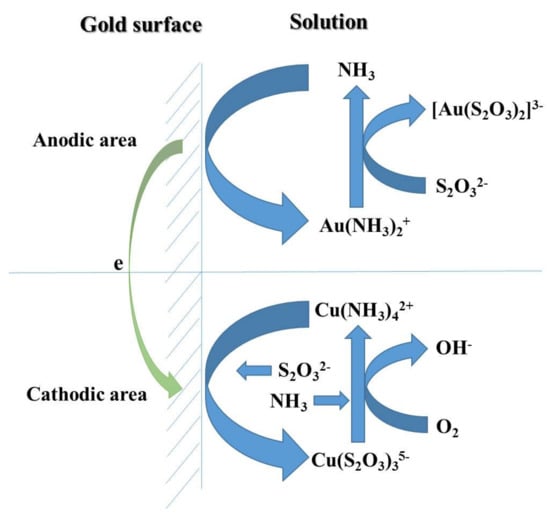
Key Takeaways
- Gold(I) thiosulfate serves as a versatile compound in various chemical applications.
- The compound has a complex structure that balances gold and thiosulfate ions effectively.
- Understanding its formula is crucial for its utilization in industrial and scientific contexts.
Introduction to Gold(I) Thiosulfate
Gold(I) thiosulfate is a coordination compound that plays a significant role in various chemical processes, particularly in leaching gold from ores in mining operations. Its unique properties make it a valuable reagent in both industrial and laboratory settings. Understanding its chemical structure and formula is essential for its effective application in these fields.
Chemical Formula and Composition
Understanding the Formula
The chemical formula of gold(I) thiosulfate can be represented in different forms depending on the presence of counterions. The pure compound without sodium ions is typically denoted as Au(S2O3)2. However, in its salt form, it incorporates sodium ions to balance the charge, resulting in the formula Na3[Au(S2O3)2].
Balancing the Charges
Gold in the +1 oxidation state (Au+) combines with the thiosulfate ion (S2O32−). To achieve charge neutrality, two thiosulfate ions are needed to balance the charge of gold(I), leading to the anionic complex [Au(S2O3)2]3−. Sodium ions (Na+) are then introduced to balance the overall charge, resulting in the complete formula Na3[Au(S2O3)2].
Alternative Representations
Depending on the context, the formula may be presented differently. For instance, anhydrous sodium gold(I) thiosulfate can be written as AuNa3O6S4, which explicitly shows the composition without brackets. However, the more commonly accepted representation is Na3[Au(S2O3)2], which clearly delineates the complex anion.
Structural Analysis
Coordination Geometry
The gold center in gold(I) thiosulfate adopts a linear coordination geometry. This means that the gold atom is bonded to two thiosulfate ions in a straight line. The linear arrangement is a result of the d10 electron configuration of gold(I>, which favors the formation of linear complexes to minimize electron repulsion.
Bonding Characteristics
The bonding between gold(I) and thiosulfate involves both sigma and pi interactions. The thiosulfate ion acts as a bidentate ligand, coordinating through both sulfur and oxygen atoms. This dual binding enhances the stability of the complex and contributes to its overall robustness in various chemical environments.
Synthesis of Gold(I) Thiosulfate
Preparation Methods
Gold(I) thiosulfate can be synthesized through several methods, typically involving the reaction of gold(I) salts with thiosulfate ions in an aqueous solution. One common synthesis route involves reacting gold(I) chloride (AuCl) with sodium thiosulfate (Na2S2O3) under controlled conditions to form the desired complex.
Reaction Conditions
The synthesis requires precise control over factors such as pH, temperature, and reactant concentration to ensure the formation of the correct stoichiometry and to prevent the formation of unwanted by-products. Typically, the reaction is conducted in a mildly acidic to neutral pH environment to facilitate the stability of the gold-thiosulfate complex.
Physical and Chemical Properties
Solubility
Gold(I) thiosulfate is moderately soluble in water, which makes it suitable for aqueous applications such as leaching in gold extraction processes. Its solubility is influenced by temperature and the presence of other ions in the solution.
Stability
The compound is relatively stable under standard conditions. However, it can decompose upon heating or in the presence of strong reducing agents, leading to the precipitation of elemental gold or the formation of other gold complexes.
Spectral Characteristics
Gold(I) thiosulfate exhibits characteristic spectral features in both infrared (IR) and ultraviolet-visible (UV-Vis) spectroscopy. The thiosulfate ligands contribute to distinct absorption bands, which can be used to confirm the presence of the complex in a solution.
| Property | Description |
|---|---|
| Appearance | Yellowish solid |
| Melting Point | Decomposes before melting |
| Solubility in Water | Moderately soluble |
| Stability | Stable under standard conditions |
| Color | Yellow to orange |
Applications
Gold Extraction
One of the primary applications of gold(I) thiosulfate is in the extraction of gold from ores. The compound acts as a lixiviant, dissolving gold to form a soluble complex that can be subsequently processed to recover the metallic gold.
Catalysis
Gold(I) thiosulfate serves as a catalyst in various chemical reactions, including oxidation and reduction processes. Its ability to facilitate electron transfer makes it valuable in both industrial and research settings.
Analytical Chemistry
In analytical chemistry, gold(I) thiosulfate is used as a reagent for the detection and quantification of gold in samples. Its distinct spectral properties allow for precise measurements using spectroscopic techniques.
Safety and Handling
Hazards
Gold(I) thiosulfate should be handled with care, as it may pose health risks upon exposure. Inhalation, ingestion, or skin contact with the compound can be harmful. Proper personal protective equipment (PPE) such as gloves, goggles, and lab coats should be worn when handling this chemical.
Storage
The compound should be stored in a cool, dry place away from incompatible substances such as strong oxidizing agents and reducing agents. It should be kept in tightly closed containers to prevent moisture absorption and degradation.
Comparison with Other Gold Compounds
Gold(III) Thiosulfate
Unlike gold(I) thiosulfate, which contains gold in the +1 oxidation state, gold(III) thiosulfate features gold in the +3 state. This difference in oxidation state leads to variations in their chemical behavior, stability, and applications.
Sodium Gold Thiosulfate vs. Potassium Gold Thiosulfate
The choice of counterion, such as sodium or potassium, affects the solubility and reactivity of the gold thiosulfate complex. Sodium gold thiosulfate is more commonly used due to its higher solubility in water compared to its potassium counterpart.
Conclusion
Gold(I) thiosulfate is a pivotal compound in the field of chemistry, particularly in the extraction and processing of gold. Its well-balanced formula, [Au(S2O3)2]3−, highlights the intricate coordination between gold and thiosulfate ions, ensuring charge neutrality and structural stability. The compound's versatility extends to catalysis and analytical chemistry, underscoring its importance across various scientific disciplines. Proper understanding and handling of gold(I) thiosulfate are essential for maximizing its potential while ensuring safety and efficacy in its applications.
References
Last updated February 13, 2025