
Understanding Fixed vs. Evolving Currency Exchange Rates Under the Gold Standard
Explore how the gold standard both fixed and allowed gradual evolution of exchange rates.
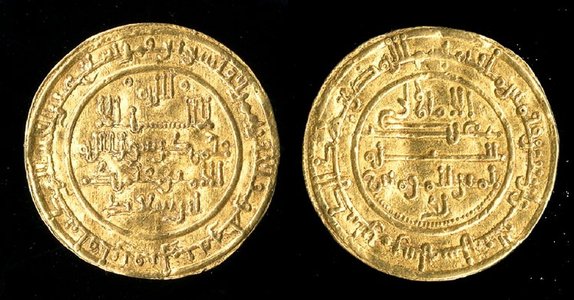
Key Insights
- Fixed Parity: Currencies were pegged to a given amount of gold ensuring predefined values.
- Adjustment Mechanisms: Market forces and economic imbalances led to gradual adjustments.
- Historical Context: Evolving exchange rates were influenced by geopolitical events and trade flows.
Overview of the Gold Standard System
The gold standard was a monetary system in which a country’s currency was defined in terms of a specific quantity of gold. In this system, governments fixed the value of their currency directly to gold, meaning that a unit of currency could theoretically always be exchanged for a fixed amount of gold. This system established fixed parities between different currencies because each currency’s value was determined by its gold content. Over time, however, practical market conditions and economic realities meant that, while the system was designed to enforce fixed exchange rates, there were natural adjustments that led to a slow evolution of these rates.
Fixed Exchange Rates: The Foundations
The primary design of the gold standard was to provide a stable and predictable monetary system:
Fixed Parity and Convertibility
Under the classical gold standard, each participating country's government set its currency's value in terms of a fixed quantity of gold. For example, if a country declared that its currency was equivalent to 5 grams of gold, the exchange rate with another country fixed its currency to, say, 2.5 grams of gold, leading to a direct and stable exchange ratio. This meant that if the U.S. fixed the dollar at a certain amount of gold and Britain fixed the pound at another amount, the exchange rate between the two was immediately derived from these fixed values. This arrangement provided predictability in international transactions and trade, as businesses and governments could rely on the fixed conversion without much concern for volatility.
The Bretton Woods Connection
After World War II, the fixed exchange rate system was partially revived under the Bretton Woods Agreement. In this system, the U.S. dollar was pegged to gold at roughly US$35 per ounce, and other currencies were pegged to the dollar. This arrangement aimed to combine the stability of the gold standard with the flexibility required in a post-war economic order. Despite the fixed conversion, global economic conditions often necessitated adjustments, and eventually, the Bretton Woods system itself found limitations, which led to its collapse in the early 1970s.
Mechanisms of Gradual Adjustments
Even though the gold standard is often cited as a system with fixed exchange rates, several mechanisms enabled gradual evolution over time, both in the classical era and under the Bretton Woods system.
Market and Economic Realities
The ideal of fixed exchange rates under the gold standard was subject to several real-world influences:
Trade Imbalances and the Price-Specie-Flow Mechanism
When international trade imbalances occurred (with one country consistently exporting more than it imported), gold would flow from the deficit country to the surplus country. This movement, known as the "price-specie-flow mechanism", forced adjustments in the money supply, which, in turn, helped to restore balance. As gold reserves shifted, countries might have had to alter their gold conversion rates slightly or experienced changes in the supply of money, leading to slow changes in the effective exchange rates, even though the official par values remained fixed.
Economic Shocks and Policy Adjustments
Significant economic shocks—including wars, financial crises, or changes in global economic power—put pressure on the rigid system. In response, countries occasionally found it necessary to modify the fixed gold values attributed to their currencies. These adjustments, though infrequent and often politically sensitive, reflect the slow evolution of the exchange rates. For example, during periods of deflation or economic stress, countries sometimes would revalue or devalue their currency in relation to gold to restore competitiveness or stabilize the economy.
Transition from Fixed to Floating
Eventually, the limitations of this fixed system became evident, leading to a gradual transition to more flexible arrangements:
End of the Bretton Woods System
During the early 1970s, the constraints of a gold-backed monetary system became too rigid for the dynamic global economy. When the United States, facing various pressures, decided to suspend the dollar's convertibility into gold, the Bretton Woods system effectively ended. This decision led the world to increasingly adopt floating exchange rates, where currencies fluctuate against each other depending on market conditions, supply and demand, and broader economic policy. This transition marked the definitive evolution from a system with fixed rates to one that is significantly more dynamic.
Modern Implications and Legacy
While the gold standard itself is no longer in use, its legacy continues to influence modern monetary policy. The stability it once provided is often contrasted with the flexibility of the modern floating rate system. In a modern context, the analysis of fixed versus evolving exchange rates draws on historical experiences of the gold standard and the subsequent adjustments made when countries faced economic imbalances. Economists study these systems to understand how different monetary policies may influence exchange rates in both a fixed and a flexible regime.
Comparative Analysis Table
| Aspect | Fixed Characteristics | Evolutionary Adjustments |
|---|---|---|
| Currency Peg | Currencies were pegged to a specific amount of gold, setting a fixed par value. | Economic pressures sometimes forced slight adjustments or revaluations. |
| Exchange Rate Stability | Provided stable, predictable rates that facilitated international trade. | Market forces such as trade imbalances led to gradual shifts in effective exchange rates. |
| Mechanism for Change | Officially, the rates were fixed, promoting certainty in international transactions. | Gold flows (price-specie-flow mechanism) and policy interventions slowly adjusted rates. |
| Historical Examples | The classical gold standard, where fixed parities were common. | Minor adjustments during economic crises and the end of the Bretton Woods era. |
Detailed Historical Context and Mechanisms
The Classical Gold Standard Era (1870s - Early 20th Century)
During the classical period of the gold standard, the system was implemented to provide an internationally agreed-upon measure of value through gold. Each country’s approach was based on their gold reserves and required convertibility of paper money to gold. This policy helped maintain a degree of confidence in international trade and investment because exchange rates were pre-determined and thus reduced the risk associated with currency fluctuations.
However, even in this era, the dynamics of international trade and economic crises occasionally necessitated adjustments. Although the official policy was one of fixed conversion, countries could experience shifts in their effective monetary base if heavy gold outflows occurred. This gradual evolution, though not as rapid or pronounced as modern floating rates, allowed for correction mechanisms in response to sustained trade imbalances.
Bretton Woods System and Its Shortcomings (Post-World War II)
The Bretton Woods system reintroduced fixed exchange rates by pegging currencies to the U.S. dollar, which in turn was convertible to gold at a fixed rate. It was intended to combine the best features of the gold standard with greater flexibility and to support international economic reconstruction. Although technical fixed rates were in place, the system was not immune to economic pressures. Trade imbalances and shifts in economic power created pressures that forced countries to react. For example, gold convertibility put pressure on the U.S. dollar, leading eventually to the suspension of gold convertibility in 1971. This marked a critical shift towards more dynamic, market-driven exchange rates.
Adjustment Dynamics and Policy Implications
Several factors contributed to the slow, evolutionary changes in exchange rates even under systems that were ostensibly fixed:
International Trade and Gold Movements
Countries with a trade surplus would accumulate gold, increasing their money supply and potentially causing inflation. Conversely, a trade deficit could lead to a contraction in the money supply. This natural flow of gold helped correct international imbalances, acting as an automatic stabilizer.
Government Interventions
Given the limitations of a purely fixed system, governments occasionally intervened in order to adjust their gold par values. These adjustments were generally infrequent and often implemented only under severe economic stress. The slow pace of these adjustments underscored the rigidity of the system while simultaneously acknowledging its insufficiencies in the face of dynamic global economic conditions.
Economic and Political Pressures
The interplay between economic realities and political considerations often accelerated or moderated the pace of change. During periods of geopolitical tension, such as wars or major economic reforms, countries were more likely to re-evaluate their commitments to fixed gold parities. This re-evaluation sometimes led to devaluations or upward adjustments of currency values against gold to better align with domestic economic realities.
Synthesis of How the System Worked
In summary, the gold standard was designed to enforce fixed currency exchange rates by anchoring them to a specific quantity of gold. This system provided a level of stability that was highly valued in international commerce and long-term investment. Nonetheless, the theoretical fixed nature was moderated by practical economic adjustments:
- Officially, the exchange rates were fixed, which built a predictable framework for international trade.
- Economic forces—such as trade imbalances, fluctuations in gold reserves, and political pressures—occasionally forced governments to make minor adjustments, meaning that the system, while fixed in theory, experienced slow evolution in practice.
- The transition to floating exchange rates after the collapse of the Bretton Woods system further exemplifies how little rigidity in the system could adapt to evolving global economic conditions.
This hybrid reality of the gold standard illustrates why it is sometimes viewed as having fixed rates and at other times as allowing gradual, evolutionary adjustments. The adjustments were not as fluid or frequent as in the modern foreign exchange market, yet they were sufficient to gradually change the dynamics of the international monetary landscape over periods of economic stress or major shifts in confidence.
References
- The Classical Gold Standard - Gold.org
- Gold Standard: Definition and How It Works - Investopedia
- Gold Standard Explained - Econlib
- What is a Fixed Exchange Rate? - Currency Transfer
- End of the Gold-Dollar Standard - Citeco
Recommended Related Queries
Last updated March 28, 2025