
Unveiling the "Golden Dome": America's Ambitious Bid for an Impenetrable Sky Shield – Revolutionary Defense or Colossal Gamble?
An in-depth analysis of the proposed U.S. missile defense system, its potential impact, staggering costs, and the critical question of its ultimate value.
The United States has announced plans for a highly ambitious, next-generation missile defense system known as the "Golden Dome." This initiative aims to create a comprehensive shield over the nation, protecting against a wide array of advanced aerial threats. As your defense tech adviser, I'll break down this complex topic into understandable terms, exploring what the Golden Dome entails, its potential ramifications, and the critical debate surrounding its justification and effectiveness.
Key Insights: The Golden Dome at a Glance
Essential Takeaways from the Proposed Missile Shield
- Revolutionary Scope: The Golden Dome is envisioned as a multi-layered defense system integrating space-based sensors and interceptors with existing ground and sea capabilities to counter ballistic, hypersonic, and cruise missiles, as well as drones.
- Controversial Cost & Timeline: While an initial $175 billion cost and a three-year operational timeline have been announced, independent estimates suggest the project could exceed half a trillion dollars and take significantly longer to implement, fueling skepticism.
- Strategic Imperative vs. Feasibility: Proponents argue the Golden Dome is a crucial response to evolving global threats, while critics question its technological feasibility, vulnerability, and the potential for it to become a financial boon for the defense industry without guaranteeing enhanced national security.
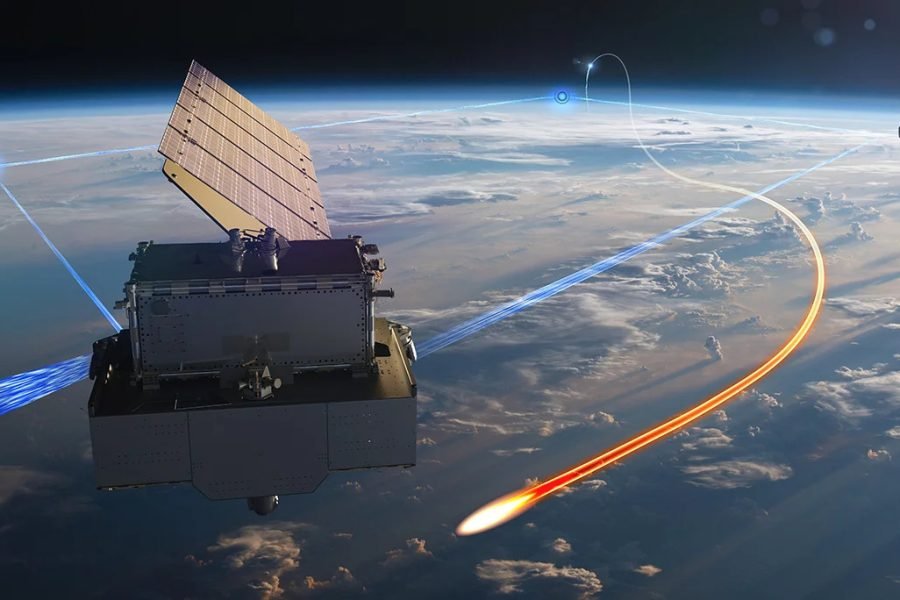
Conceptual representation of advanced satellite systems, pivotal to the Golden Dome's early warning and tracking capabilities.
1. What is the "Golden Dome" Defense System?
Understanding the Architecture of America's Proposed Shield
The "Golden Dome" is a proposed U.S. missile defense system designed to protect the American homeland from a comprehensive range of aerial threats. Think of it as an advanced, multi-layered "umbrella" intended to be far more sophisticated than anything currently in place. It aims to integrate existing U.S. defense infrastructure with cutting-edge, space-based components. Former U.S. President Donald Trump announced this initiative on May 20, 2025, presenting it as a revolutionary concept to keep U.S. homeland missile defense ahead of threats posed by adversaries.
Key characteristics include:
- Multi-Layered Defense: The system is not just one thing; it's a network of different technologies working together. This includes ground-based, sea-based, and, crucially, space-based sensors and interceptors.
- Comprehensive Threat Spectrum: It's designed to counter a variety of threats, including:
- Ballistic missiles (long-range missiles that travel in a high arc)
- Hypersonic missiles (which travel at extreme speeds and can maneuver)
- Cruise missiles (which fly at low altitudes)
- Drones
- Space-Based Components: A significant aspect is the emphasis on space. This involves detector satellites for early warning and potentially attack satellites capable of intercepting missiles during their "boost phase" (shortly after launch), using kinetic (physical impact) or non-kinetic (e.g., lasers, microwaves) methods.
- Open Architecture: The system is intended to have an "open architecture." This means it's designed to allow for the integration of new technologies and innovations from a variety of commercial, defense, and newer contractors. This approach aims to foster rapid upgrades and adaptability.
The initiative was formalized by an executive order on January 27, 2025, directing the Pentagon to develop a plan for such a system, now overseen by U.S. Space Force General Michael Guetlein.
2. What Difference Will It Make, If Any?
Potential Impacts on U.S. National Security and Deterrence
If successfully developed and deployed, the Golden Dome aims to make a profound difference to U.S. national security. Its primary goal is to provide comprehensive, nationwide protection against advanced missile threats, including those that could be launched from great distances or possess sophisticated evasion capabilities.
Enhanced Deterrence and Protection
By creating a more robust and difficult-to-penetrate defense, the Golden Dome could significantly enhance U.S. deterrence. The idea is that if potential adversaries believe their missiles are highly unlikely to reach their targets, they will be less inclined to launch an attack. Specific potential impacts include:
- Boost-Phase Intercept: Intercepting missiles in their boost phase—shortly after launch when they are slower and hotter—is considered a game-changer. This capability, heavily reliant on space-based assets, could neutralize threats before they reach their peak speed or deploy countermeasures.
- Nationwide Coverage: Unlike existing systems that may offer regional or point defense, the Golden Dome aspires to shield the entire continental U.S.
- Countering Advanced Threats: It is specifically being designed to address emerging threats like hypersonic missiles, which current defense systems may struggle to effectively counter due to their speed and maneuverability.
- Strengthened Deterrence: A highly effective missile shield could alter the strategic calculations of potential adversaries, reinforcing the U.S. policy of "peace through strength."
Skepticism and Challenges
However, the actual difference the system will make is contingent on overcoming immense technological, logistical, and financial hurdles. Experts caution that its effectiveness will depend on successful implementation and technological breakthroughs. Some, like Laura Grego from the Union of Concerned Scientists, warn that such an orbital system would be complex, costly, and potentially vulnerable to countermeasures, such as overwhelming the system with multiple launches or direct attacks on the satellites themselves.

Israel's Iron Dome, an inspiration for the Golden Dome, though vastly different in scale and capability.
3. Cost: A Staggering Financial Undertaking
Examining the Projected Price Tag of National Defense
The financial investment required for the Golden Dome is substantial, with figures varying significantly between official announcements and independent analyses.
- Announced Cost: President Trump stated on May 20, 2025, that the Golden Dome would cost approximately $175 billion. An initial tranche of $25 billion has reportedly been earmarked within a new budget bill to kickstart the project.
- Independent Estimates: The Congressional Budget Office (CBO) has provided far higher projections. The CBO suggests that the U.S. could spend more than $500 billion, potentially up to $542 billion over 20 years, for just the space-based components of the system. Some reports indicate the total cost could even reach $831 billion if the system is expanded to counter all threats from major adversaries.
This wide disparity in cost estimates raises concerns about financial transparency and the potential for significant cost overruns, a common issue with large-scale defense projects. The high costs are driven by the sheer number of sensors and interceptors required for reliable nationwide coverage, the development and deployment of advanced space-based technologies, and the complex integration of myriad systems.
4. Timeline: An Ambitious Race Against Time
Projected Deployment and Expert Opinions
The proposed timeline for making the Golden Dome operational is notably ambitious and has drawn considerable skepticism from defense experts and industry analysts.
- Official Timeline: President Trump declared that the Golden Dome system would be operational "in less than three years," aiming for completion before the end of his potential term in January 2029, with a proclaimed "success rate close to 100%."
- Expert Skepticism: Many industry experts and defense officials view this timeline as highly optimistic, if not unrealistic. They point to the immense complexity of developing, testing, and integrating such a multi-layered system, especially one with significant space-based components. Some experts believe a ballistic missile defense system of this scope might be possible in 7 to 10 years, and even then, it might initially have limitations, perhaps only protecting critical federal buildings and major cities. U.S. Defense Secretary Pete Hegseth has mentioned that the system would be fielded in phases, prioritizing defense where the threat is greatest.
The history of technologically advanced defense programs often involves longer development cycles than initially projected due to unforeseen challenges and rigorous testing requirements.
Visualizing Golden Dome's Key Attributes
A Comparative Look at System Characteristics
To better understand the Golden Dome's profile, the radar chart below offers an opinion-based analytical comparison across several key attributes. This visualization contrasts the "Golden Dome (Announced)" based on official claims, a more "Golden Dome (Realistic Projection)" considering expert skepticism, and "Current U.S. Missile Defense Capabilities." The attributes are scored on a hypothetical scale where higher values represent greater magnitude or achievement (e.g., higher cost, higher complexity, greater effectiveness).
This chart illustrates the high ambitions for the Golden Dome, particularly in coverage and advanced capabilities, but also underscores the anticipated high cost and complexity, especially when comparing the announced vision with more conservative projections.
5. Comparison with the Israeli Iron Dome System
Understanding the Differences in Scale, Scope, and Technology
While the "Golden Dome" draws nominal inspiration from Israel's highly successful "Iron Dome" system, the two are fundamentally different in purpose, scale, technology, and the types of threats they are designed to counter. It's often described as comparing a kayak (Iron Dome) to a battleship (Golden Dome).
Regional Defense"] id1_2["Coverage Area:
Specific cities/regions
(~Size of New Jersey)"] id1_3["Technology:
Ground-based radar & interceptors"] id1_4["Threats:
Short-range rockets & artillery shells
(4-70 km range)"] id1_5["Cost:
Relatively Lower
(Billions over years)"] id1_6["Development:
Incremental, proven in combat"] id1_7["Primary Goal:
Protect populated areas from less sophisticated, numerous threats"] id2["U.S. Golden Dome (Proposed)"] id2_1["Purpose:
Nationwide Homeland Defense"] id2_2["Coverage Area:
Entire Continental U.S.
(Thousands of times larger)"] id2_3["Technology:
Ground, Sea, & Space-based
sensors & interceptors (incl. boost-phase)"] id2_4["Threats:
Ballistic, Hypersonic, Cruise missiles,
Drones, Space-based threats"] id2_5["Cost:
Significantly Higher
($175B announced, CBO up to $500B+ for space elements)"] id2_6["Development:
Pioneering new tech, unproven on this scale"] id2_7["Primary Goal:
Counter advanced, strategic threats from major powers"]
A mindmap illustrating the core distinctions between Israel's Iron Dome and the proposed U.S. Golden Dome.
The following table provides a direct comparison:
| Aspect | Israeli Iron Dome | U.S. Golden Dome (Proposed) |
|---|---|---|
| Primary Purpose | Regional defense against short-range rockets and artillery shells. | Nationwide (potentially global) defense against advanced ballistic, hypersonic, cruise missiles, and other complex threats. |
| Coverage Area | Limited, protecting specific Israeli populated areas and critical sites (comparable to the size of New Jersey). | Entire continental United States, a vastly larger geographical area. |
| Technology | Primarily ground-based radar and interceptor missiles. Mobile and all-weather. | Multi-layered system incorporating ground-based, sea-based, and advanced space-based sensors and interceptors, focusing on early (boost-phase) interception. |
| Threats Addressed | Short-range rockets, artillery shells, and mortars (typically 4 to 70 kilometers). | Long-range intercontinental ballistic missiles (ICBMs), hypersonic missiles, sophisticated cruise missiles, drones, and potentially threats from space. |
| Scale & Complexity | Effective but less complex, designed for a specific regional threat. | Far more ambitious and complex, requiring integration of numerous advanced technologies on an unprecedented scale. |
| Cost | Significantly lower. The U.S. has contributed billions to its development and procurement over many years. | Estimated by the White House at $175 billion, with independent estimates (CBO) suggesting space-based components alone could cost up to $542 billion over 20 years. |
| Development Status | Operational and combat-proven with a high success rate (over 90% against targeted threats). | Proposed, with significant technological development and integration challenges ahead. |
In essence, while Iron Dome is a highly effective tactical system for its intended purpose, the Golden Dome is a strategic system of vastly greater scope, complexity, and cost, aiming to address threats of a different order of magnitude.
This news report from WKYC Channel 3 provides an overview of President Trump's announcement regarding the "Golden Dome" missile defense program, its projected cost, and initial reactions. It helps contextualize the official unveiling of this ambitious initiative.
Main Question: Is the Media Noise and White House Bravado Justified?
Weighing National Security Needs Against Practical Realities and Industry Interests
The announcement of the Golden Dome has certainly generated significant media attention and has been accompanied by strong assertions from the White House. Whether this "noise and bravado" is justified is a complex question with valid arguments on multiple sides.
Arguments for Justification and Enhanced Security:
- Addressing Real and Evolving Threats: Proponents, including figures like Tom Karako, director of the Missile Defense Project at the Center for Strategic and International Studies, argue that such a system is "welcome" and "overdue." They point to the increasing sophistication of missile capabilities from adversaries like China and Russia, including the development of hypersonic weapons. From this perspective, the Golden Dome is a necessary step to modernize U.S. defenses and maintain strategic stability.
- Technological Imperative: Companies like Lockheed Martin emphasize the need for game-changing technology, such as space-based interceptors and hypersonic defenses, to stay ahead of adversary threats. The "open architecture" approach could foster innovation.
- Deterrence Value: A demonstrably effective and comprehensive missile shield could significantly bolster U.S. deterrence, making potential aggressors think twice before contemplating an attack on U.S. soil.
Concerns about Feasibility, Cost, and Industry Influence:
- Technological Hurdles and Vulnerability: Critics, including physicists like Laura Grego of the Union of Concerned Scientists, raise serious questions about the technological feasibility of such a massive space-based system. They warn that it would be incredibly complex, potentially vulnerable to anti-satellite weapons or being overwhelmed by decoys or mass launches, and that past grand missile defense visions (like the Strategic Defense Initiative or "Star Wars") faced similar, often insurmountable, challenges.
- Exorbitant Costs and Unrealistic Timelines: The vast discrepancy between the White House's $175 billion estimate and the CBO's projection of potentially over $500 billion (for space components alone) fuels skepticism. The three-year timeline is widely seen as unrealistic for a project of this magnitude. This raises fears of a "slush fund" for the defense industry or a project that drains taxpayer money with no guarantee of success.
- Benefit to the Defense Industry: There's no denying that the Golden Dome project represents a massive potential windfall for defense contractors. Companies like Lockheed Martin, SpaceX, Palantir, and Anduril are expected to be involved. Critics argue that the push for such systems can sometimes be driven more by industry lobbying and profit motives than by purely strategic national security needs. The historical track record of missile defense programs being started, consuming vast resources, and then being scaled back or abandoned contributes to this caution.
- Strategic Stability Concerns: Some analysts worry that an overly effective U.S. missile shield could be perceived by other nuclear powers (like Russia or China) as destabilizing, potentially negating their deterrent capabilities and leading to a new arms race in offensive or counter-defense technologies.
Balancing Perspectives:
Ultimately, the "justification" depends on one's perspective. The threat environment is undeniably evolving, and the desire for enhanced homeland security is legitimate. However, the promises associated with the Golden Dome must be weighed against the immense technical challenges, the staggering potential costs, and historical precedents of similar ambitious defense projects.
It is plausible that the Golden Dome could enhance U.S. security if key technologies mature and are successfully integrated. However, there's also a significant risk that it could become a hugely expensive endeavor that falls short of its promises, primarily benefiting the defense industry while offering marginal or uncertain improvements in actual security for the average citizen. Transparent oversight, realistic assessments of technological readiness, and rigorous cost-benefit analyses will be crucial as this program moves forward.
Frequently Asked Questions (FAQ)
Clarifying Common Queries About the Golden Dome
Is the Golden Dome similar to the "Star Wars" program (Strategic Defense Initiative) from the 1980s?
Can the Golden Dome stop all types of missiles with 100% certainty?
How would space-based interceptors work?
Why is there such a big difference in cost estimates between the White House and the CBO?
Conclusion
A Pivotal Moment for U.S. Missile Defense Strategy
The Golden Dome initiative represents a bold and potentially transformative vision for U.S. homeland missile defense. It seeks to leverage advanced technologies, particularly in space, to create a shield against an increasingly complex array of missile threats. The strategic rationale—enhancing deterrence and protecting the nation—is clear, especially in light of advancements by potential adversaries.
However, the project is fraught with challenges. The ambitious timeline, the staggering potential costs that dwarf initial White House estimates, and the immense technological hurdles required for a reliable, comprehensive system raise significant questions. Skepticism among experts regarding its feasibility and vulnerability is widespread. The debate rightly centers on whether the Golden Dome will genuinely make the U.S. more secure or if it risks becoming another example of a massively expensive defense program that primarily benefits contractors without fully delivering on its promises.
As this program unfolds, rigorous scrutiny, transparent management, and realistic assessments of its capabilities versus its costs will be paramount to ensure that taxpayer resources are used effectively to achieve genuine national security objectives.
Recommended Further Exploration
Delve Deeper into Related Defense Topics
- What are the primary technological hurdles in developing and deploying effective space-based missile interceptors?
- How have past large-scale U.S. missile defense initiatives, like the Strategic Defense Initiative, fared in terms of cost, timeline, and effectiveness?
- How do hypersonic weapons change the landscape of missile defense, and what specific capabilities are needed to counter them?
- What is the typical economic impact of multi-billion dollar defense projects on national budgets and the growth of the defense industry sector?
References
Sources Consulted for This Analysis
Last updated May 21, 2025