
Mastering Golf Shots on Uneven Terrain
Conquer uphill, downhill, and sidehill lies with expert adjustments to stance, club selection, and swing technique.
Key Highlights for Uneven Lies
- Adjust Your Stance: Modify your stance to match the slope, ensuring your shoulders are parallel to the ground to maintain balance and a consistent swing path.
- Select the Right Club: Account for changes in loft and distance caused by the terrain. Uphill lies increase loft and reduce distance, while downhill lies decrease loft and increase distance.
- Maintain Balance: Keep your weight properly distributed to avoid swaying and ensure solid contact. Shift your weight according to the slope, favoring your lower foot.
Understanding Uneven Lies in Golf
Uneven lies present a significant challenge in golf, requiring adjustments to stance, club selection, and swing technique. Successfully navigating these lies can greatly improve your consistency and accuracy on the course. Uneven lies occur when the ball is not on a flat surface, such as on a slope or with the ball above or below your feet. Each type of uneven lie affects the ball flight and requires specific adjustments to ensure solid contact and desired trajectory.
Types of Uneven Lies
There are primarily four types of uneven lies that golfers encounter:
- Uphill Lies: The ball is on a slope that rises towards you.
- Downhill Lies: The ball is on a slope that descends away from you.
- Ball Above Feet: The ball is positioned higher than your feet.
- Ball Below Feet: The ball is positioned lower than your feet.
Adjusting Your Golf Stance for Uneven Terrain
A proper golf stance is crucial for maintaining balance, generating power, and ensuring consistent contact with the ball. When faced with uneven lies, adjusting your stance is essential for compensating for the slope and achieving the desired shot outcome. The key is to adapt to the terrain while maintaining your fundamental stance principles.
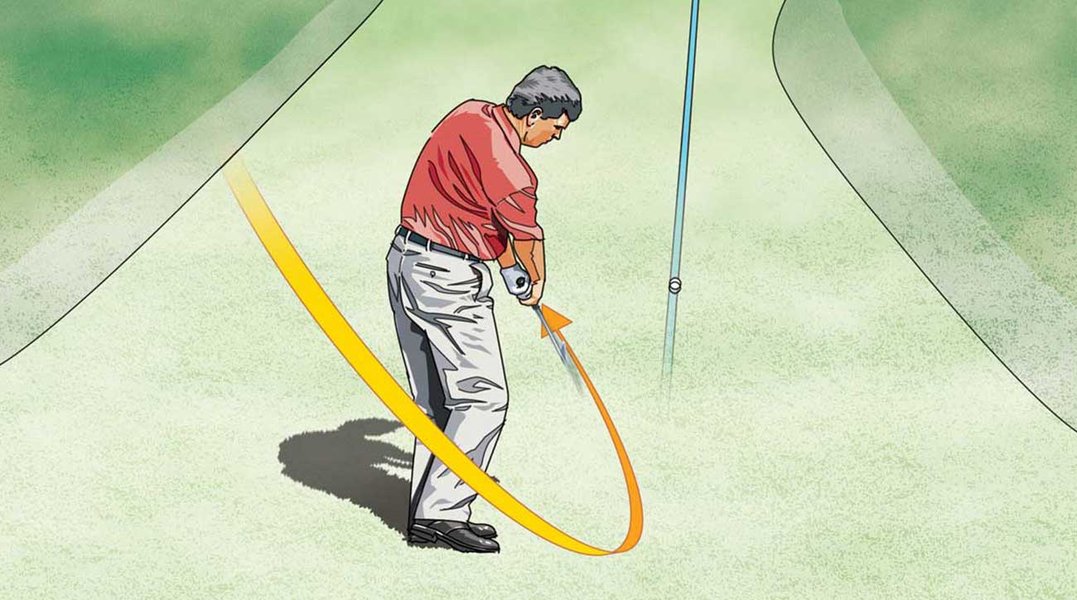
Aligning Shoulders with the Slope
One of the most important adjustments is aligning your shoulders parallel to the slope. This helps you maintain balance and swing along the natural plane of the slope. For uphill lies, this means tilting your shoulders so your right shoulder is lower (for right-handed golfers). For downhill lies, tilt your shoulders so your left shoulder is lower. This alignment helps prevent you from digging the club into the ground or topping the ball.
Weight Distribution
Proper weight distribution is crucial for maintaining balance and control. On uphill lies, keep more of your weight on your back foot to prevent falling forward. On downhill lies, shift more weight to your front foot to maintain balance and prevent hitting behind the ball. For sidehill lies, distribute your weight to counteract the slope, leaning slightly towards or away from the hill as needed.
Foot Placement
Adjusting your foot placement can also improve your stability and swing path. For uphill lies, position the ball slightly forward in your stance to promote an upward strike. For downhill lies, position the ball slightly back in your stance to ensure clean contact. When the ball is above your feet, stand a little taller and grip down on the club. When the ball is below your feet, bend your knees more and stand closer to the ball.
Club Selection for Uneven Lies
Uneven lies can significantly affect the distance and trajectory of your shots. Understanding how each type of lie impacts the ball flight will help you select the appropriate club and adjust your swing accordingly. The slope can effectively change the loft of your club, so choosing the right club is essential for achieving the desired distance and accuracy.
Uphill Lies
Uphill lies effectively add loft to the club, causing the ball to launch higher and travel a shorter distance. To compensate, select one or two clubs more than you normally would for the distance. For example, if you would typically use a 7-iron, consider using a 6-iron or even a 5-iron. Additionally, aim slightly to the right of your target, as the uphill slope tends to cause the ball to draw or hook to the left.

Downhill Lies
Downhill lies decrease the effective loft of the club, causing the ball to launch lower and travel a greater distance. Select one or two clubs less than you normally would for the distance. For example, if you would typically use a 7-iron, consider using an 8-iron or even a 9-iron. Aim slightly to the left of your target, as the downhill slope tends to cause the ball to fade or slice to the right.
Ball Above Feet
When the ball is above your feet, the lie tends to cause the ball to hook to the left (for right-handed golfers). To compensate, grip down on the club to adjust for the shorter distance to the ball and aim slightly to the right of your target. Maintain good balance by keeping your weight on your heels.
Ball Below Feet
When the ball is below your feet, the lie tends to cause the ball to slice to the right (for right-handed golfers). To compensate, bend your knees more to get closer to the ball and aim slightly to the left of your target. Maintaining balance can be challenging, so focus on keeping your weight centered.
Swing Techniques for Uneven Lies
Adjusting your swing technique is crucial for making solid contact and controlling the ball flight on uneven lies. The goal is to maintain your balance and swing along the natural plane of the slope.
Uphill Lies
On uphill lies, focus on swinging up the slope. This means allowing your body to follow the incline as you swing through the ball. Keep your weight on your back foot and try to maintain a smooth, balanced swing. Avoid trying to lift the ball, as this can lead to inconsistent contact.
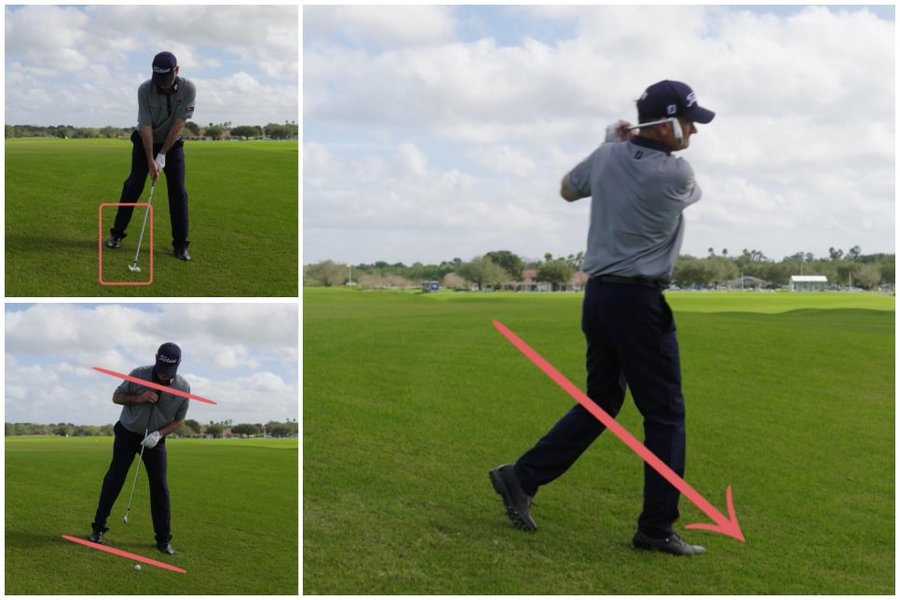
Downhill Lies
On downhill lies, focus on swinging down the slope. This means allowing your body to follow the decline as you swing through the ball. Keep your weight on your front foot and maintain a stable lower body. Avoid leaning back, as this can cause you to hit behind the ball.
Sidehill Lies
For sidehill lies, maintain your balance and swing along the natural plane of the slope. This may require adjusting your stance and grip to compensate for the tilt. Focus on making a smooth, controlled swing and avoid swaying or losing your balance.
Essential Adjustments for Different Lies
Here's a breakdown of the key adjustments for each type of uneven lie:
| Lie Type | Shoulder Alignment | Weight Distribution | Ball Position | Club Selection | Aim |
|---|---|---|---|---|---|
| Uphill | Parallel to slope (right shoulder lower) | More on back foot | Slightly forward | More club | Right of target |
| Downhill | Parallel to slope (left shoulder lower) | More on front foot | Slightly back | Less club | Left of target |
| Ball Above Feet | Taller stance | Weight on heels | Normal | Grip down | Right of target |
| Ball Below Feet | Bend knees more | Centered | Normal | Normal | Left of target |
This table summarizes the adjustments needed for different uneven lies, covering stance, weight distribution, ball position, club selection, and aim.
Additional Tips for Mastering Uneven Lies
-
Practice: Spend time practicing on different types of uneven lies to develop a feel for the necessary adjustments.
-
Balance: Always prioritize balance to maintain control and consistency.
-
Visualization: Visualize the shot before you swing to mentally prepare for the adjustments.
-
Experiment: Don't be afraid to experiment with different techniques to find what works best for you.
The Youtube video above, titled "SLOPING LIES: The ultimate guide on how to play them ...", provides a comprehensive tutorial on how to handle various uneven lies in golf. It covers techniques for ball above feet, ball below feet, uphill, and downhill shots, offering practical tips to adjust your stance, swing, and club selection for better accuracy and consistency. This video is highly relevant as it visually demonstrates the adjustments needed to master these challenging lies, helping golfers improve their performance on the course.
FAQ: Frequently Asked Questions
What is an uneven lie in golf?
An uneven lie in golf refers to any situation where the golf ball is not resting on a flat surface. This can include uphill slopes, downhill slopes, or when the ball is positioned above or below your feet.
How do I adjust my stance for an uphill lie?
For an uphill lie, align your shoulders parallel to the slope, place more weight on your back foot, and position the ball slightly forward in your stance. This helps maintain balance and promotes an upward strike.
What club should I use for a downhill lie?
On a downhill lie, the slope decreases the effective loft of the club, so select one or two clubs less than you normally would for the distance. Aim slightly to the left of your target to compensate for the tendency of the ball to fade or slice to the right.
How do I maintain balance when the ball is below my feet?
When the ball is below your feet, bend your knees more to get closer to the ball and maintain a centered weight distribution. This helps prevent you from losing your balance during the swing.
Why does the ball tend to hook when it is above my feet?
When the ball is above your feet, the lie tends to cause the ball to hook to the left (for right-handed golfers) because the clubface is more likely to close during the swing. To compensate, grip down on the club and aim slightly to the right of your target.
References
Last updated April 13, 2025