
Discovering the Intricate Parallels between the GPU and the Cerebellum
Exploring structure, function, and innovative parallels in biological and electronic systems
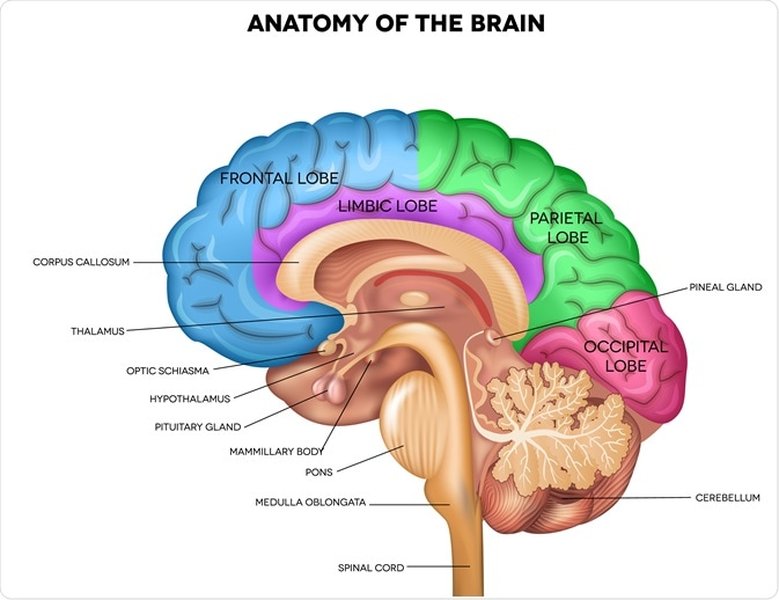
Key Insights
- Parallel Processing Capabilities: Both the cerebellum and GPUs are engineered to perform many computations simultaneously, leveraging modular structures.
- Distinct Structural Designs: While the cerebellum features layered, cell-based architectures for motor coordination, GPUs consist of thousands of cores optimized for graphic rendering and calculations.
- Functional Specializations: The cerebellum excels in motor control and cognitive refinement, whereas GPUs dominate graphics processing, AI computations, and machine learning tasks.
Detailed Comparative Analysis
Introduction
The cerebellum, a major component of the brain's neural network, plays a pivotal role in orchestrating motor control, balance, and cognitive functions. In contrast, the Graphics Processing Unit (GPU) is an electronic circuit specially designed to execute a plethora of calculations in parallel, primarily for rendering graphics and accelerating computations in fields such as artificial intelligence.
Foundational Structures
Anatomical Overview of the Cerebellum
Located at the base of the brain, the cerebellum occupies a relatively small volume of the overall brain but is densely packed with neurons. Its intricate architecture comprises:
- Three-layered Cortex: The cerebellar cortex has three distinct layers—the molecular layer, the Purkinje cell layer, and the granular layer. Each layer is characterized by its unique cell types and connectivity patterns, ensuring efficient processing of sensory and motor information.
- Microzones and Modules: The cerebellum is subdivided into numerous small, functionally independent modules (microzones) that work in synchrony. Each module processes specific input data, providing real-time modulation of motor control and cognitive functions such as language, attention, and spatial memory.
- Neuronal Density: Although the cerebellum is only about 10% of the brain's mass, it contains over 50-80% of the total neurons, highlighting its complex and dense networking essential for high-speed data processing.
Structural Design of the GPU
GPUs are engineered with a distinct emphasis on high-throughput parallel computing:
- Core Architecture: Modern GPUs comprise thousands of small, efficient cores dedicated to simultaneously processing multiple tasks. This parallel architecture is crucial for rendering detailed graphics and executing compute-intensive algorithms.
- Specialized Memory: Equipped with dedicated VRAM (Video RAM), GPUs can swiftly access and process large data sets needed for high-definition graphics and complex simulations.
- Optimization for Vector Operations: GPUs are fine-tuned to handle matrix and vector calculations, central to digital image rendering, scientific computations, and, increasingly, machine learning.
Parallel Processing and Modularity
Parallel Processing in the Cerebellum
The cerebellum is uniquely designed for parallel processing which is crucial in the regulation of motor coordination:
- Independent Modules: Thousands of microzones operate in parallel to process sensory stimuli concurrently. This modular organization enables the fine-tuning of motor commands, ensuring fluid and precise movements.
- Sensory-Motor Integration: By simultaneously processing inputs from various sensory systems (visual, auditory, vestibular), the cerebellum can integrate and coordinate adaptive motor responses. This integration allows for rapid feedback correction and motor learning.
Parallel Processing in GPUs
GPUs leverage parallelism at a hardware level to accelerate compute-heavy tasks:
- Massive Cores Array: The architecture includes thousands of cores that execute computations concurrently. This structure is ideal for tasks that involve repetitive and data-intensive computations.
- Graphics and Data Processing: In addition to graphics rendering, the parallel architecture makes GPUs powerful in various computational domains like simulation, cryptography, and machine learning.
- General-purpose Computing: The transition from purely graphics-related tasks to general-purpose GPU (GPGPU) tasks showcases the versatility derived from their inherent parallel processing capabilities.
Functional Specializations
Motor Control and Cognitive Functions of the Cerebellum
While traditionally recognized for its role in motor functions, recent studies reveal the cerebellum's involvement in several non-motor tasks:
- Motor Coordination: The cerebellum refines voluntary movements, ensuring motor precision, balance, and postural adjustments. It processes real-time sensory feedback, significantly impacting coordination and timing.
- Motor Learning: It facilitates learning through practice by fine-tuning movement strategies based on trial and error, which is vital for skill acquisition.
- Cognitive Processing: Beyond motor control, the cerebellum is implicated in attention, language processing, and even certain aspects of executive function. Its dense network aids in consolidating learned behaviors and adjusting cognitive responses.
Graphics Rendering and Computing Functions of GPUs
GPUs have evolved far beyond their original purpose of rendering graphics:
- Visual Rendering: Initially designed to accelerate the creation of visual images, GPUs now handle high-resolution rendering and intricate visual effects in video games, simulations, and cinematic productions.
- Scientific and Mathematical Computations: The breadth of GPU applications has expanded into fields such as deep learning, data analytics, and simulation due to their competence in rapidly processing matrices and vectors.
- Machine Learning and AI: The ability of GPUs to process data in parallel has made them indispensable in artificial intelligence (AI) and machine learning, where they reduce training times and improve model performance.
Visual Representations
Diagrammatic Representation: Conceptual Mindmap
The following simplified mindmap illustrates the conceptual similarities and differences between the GPU and the cerebellum:
The mindmap highlights two primary branches: structure and function. Each branch subdivides into unique attributes specific to either the GPU or the cerebellum. This visual tool reinforces the comparative analysis and operational parallels of both systems.
Performance and Processing Comparison: Radar Chart Analysis
The radar chart below provides an analytical view of performance metrics comparing these two systems on various dimensions. The datasets represent parallel processing efficacy, task specialization, energy efficiency, adaptability, and computational throughput.
Comparative Analysis Table
The following table summarizes the core differences and similarities between the cerebellum and the GPU, focusing on structural features and functionality.
| Aspect | Cerebellum (Biological) | GPU (Electronic) |
|---|---|---|
| Structure |
- Layered cortex (molecular, Purkinje, granular layers) - Composed of thousands of microzones - Contains a high density of neurons, especially Purkinje and granule cells |
- Thousands of small, specialized cores - Dedicated VRAM for high-speed data access - Uniform parallel processing architecture |
| Function |
- Controls motor coordination, balance, and learning - Involved in cognitive processes such as attention and language - Integrates multisensory feedback for continuous motor adjustment |
- Renders graphics and visual effects - Performs intensive parallel computations for AI and machine learning - Excels in performing matrix and vector operations quickly |
| Energy Efficiency |
- Biological energy efficiency at 10-20 watts - Adaptable through learning and neuroplasticity |
- Consumes hundreds of watts under full load - Designed for high performance rather than energy conservation |
Interactive FAQ Section
Frequently Asked Questions
References
- Cerebellum Anatomy - Physio-Pedia
- Understanding the Cerebellum - Simply Psychology
- Introduction to GPU - GeeksforGeeks
- GPU Technology - SemiEngineering
- Graphics Processing and Technology - IBM Think
Recommended Related Queries
 aws.amazon.com
Last updated March 30, 2025