
Understanding Graph Theory: Core Concepts and Essential Facts
A comprehensive exploration of graph theory’s fundamental principles and applications.
Key Takeaways
- Graph theory provides a robust framework for modeling and analyzing relationships in diverse fields such as computer science, biology, and social sciences.
- Understanding the types, properties, and theorems of graphs is crucial for solving complex problems related to networks, optimization, and connectivity.
- Graph algorithms like Dijkstra’s and Kruskal’s play a pivotal role in practical applications, including route optimization and network design.
Basic Concepts
Graph theory is a branch of mathematics that focuses on the study of graphs, which are structures used to model pairwise relations between objects. A graph is defined as \( G = (V, E) \), where \( V \) is a set of vertices (also known as nodes) and \( E \) is a set of edges that connect pairs of vertices. These edges can be either directed, indicating a one-way relationship, or undirected, indicating a two-way relationship.
Vertices and Edges
Vertices (Nodes): Represent entities or points in a graph. Each vertex can be uniquely identified and labeled.
Edges: Represent the connections or relationships between vertices. An edge can connect a vertex to itself, known as a loop, or can connect two different vertices. In directed graphs, edges have a direction from one vertex to another, while in undirected graphs, edges have no direction.
Types of Graphs
Classification Based on Structure
- Simple Graph: Contains no loops and no multiple edges between the same pair of vertices.
- Multigraph: Allows multiple edges between the same pair of vertices.
- Directed Graph (Digraph): Edges have a specific direction, indicating a one-way relationship.
- Undirected Graph: Edges have no direction, indicating a bidirectional relationship.
- Weighted Graph: Edges carry weights or values, often representing costs, distances, or capacities.
- Bipartite Graph: Vertices can be divided into two disjoint sets such that every edge connects a vertex from one set to the other.
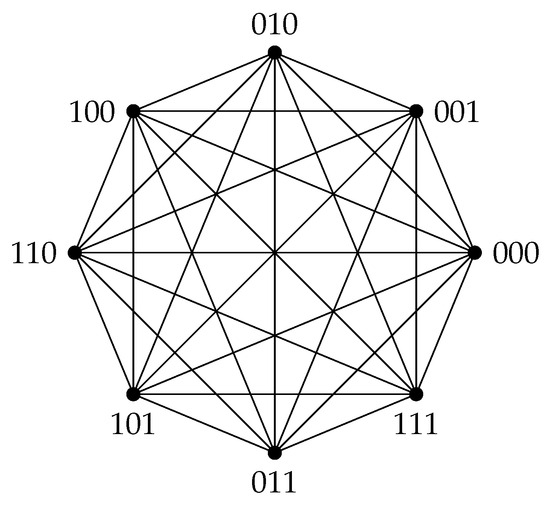
- Complete Graph: Every pair of distinct vertices is connected by a unique edge.
- Planar Graph: Can be drawn on a plane without any edges crossing.
Key Properties
Understanding Vertex Degrees and Connectivity
- Degree of a Vertex: The number of edges incident to a vertex. In directed graphs, this is divided into in-degree (incoming edges) and out-degree (outgoing edges).
- Path: A sequence of vertices where each consecutive pair is connected by an edge. Paths can be simple (no repeated vertices) or can include repeated vertices and edges.
- Cycle: A path that starts and ends at the same vertex with no repeated edges or vertices (except for the starting/ending vertex).
- Connected Graph: In an undirected graph, a graph is connected if there is a path between every pair of vertices. In directed graphs, this concept is extended to strong and weak connectivity.
- Subgraph: A subset of a graph’s vertices and edges that forms a graph.
- Tree: A connected graph with no cycles. Trees have applications in data structures, such as binary trees.
- Spanning Tree: A subgraph that includes all the vertices of the original graph and is a single tree.
Important Theorems and Algorithms
Fundamental Principles and Computational Methods
| Theorem/Algorithm | Description | Applications |
|---|---|---|
| Handshaking Lemma | States that the sum of the degrees of all vertices in a graph is twice the number of edges. | Used in proofs and to determine the existence of Eulerian paths. |
| Euler’s Formula | For a connected planar graph, \( V - E + F = 2 \), where \( V \) is vertices, \( E \) is edges, and \( F \) is faces. | Applied in topology and for solving problems like the Königsberg bridge problem. |
| Four Color Theorem | Any planar graph can be colored with no more than four colors such that no two adjacent regions share the same color. | Used in map coloring and scheduling problems. |
| Dijkstra’s Algorithm | Finds the shortest path between two vertices in a weighted graph. | Used in GPS navigation, network routing, and robotics. |
| Kruskal’s Algorithm | Finds the minimum spanning tree for a connected weighted graph. | Used in designing network infrastructures like computer networks and electrical grids. |
| Prim’s Algorithm | Also finds the minimum spanning tree for a connected weighted graph using a different approach than Kruskal’s. | Similar applications as Kruskal’s, optimized for different types of graphs. |
| Depth-First Search (DFS) | Explores as far as possible along each branch before backtracking. | Used in topological sorting, cycle detection, and solving puzzles. |
| Breadth-First Search (BFS) | Explores all neighbors of a vertex before moving to the next level. | Used in shortest path problems, network broadcasting, and peer-to-peer networking. |
Graph Representations
Adjacency Structures and Their Uses
- Adjacency Matrix: A two-dimensional matrix where each cell \( (i, j) \) indicates the presence (and possibly the weight) of an edge between vertices \( i \) and \( j \). It's efficient for dense graphs.
- Adjacency List: Each vertex stores a list of adjacent vertices. This representation is more space-efficient for sparse graphs.
- Incidence Matrix: A matrix that shows the relationship between vertices and edges, indicating which edges are incident to which vertices.
Applications of Graph Theory
Real-World Uses Across Various Disciplines
- Computer Networks: Modeling and optimizing communication networks, including the internet, where vertices represent nodes and edges represent connections.
- Social Networks: Analyzing relationships and interactions between individuals or organizations.
- Transportation and Logistics: Optimizing routes for transportation systems, such as airline routes, shipping logistics, and public transit systems.
- Biology: Modeling biological networks, such as neural networks in the brain or the spread of diseases through populations.
- Chemistry: Representing molecular structures where atoms are vertices and chemical bonds are edges.
- Database Design: Structuring complex databases and understanding relationships between different data entities.
- Artificial Intelligence and Machine Learning: Utilizing graph-based algorithms for tasks like recommendation systems and semantic networks.
- Operations Research: Solving optimization problems related to logistics, scheduling, and resource allocation using graph algorithms.
Modern Extensions and Advanced Topics
Evolving Areas in Graph Theory
-
Dynamic Graphs: Graphs that change over time, useful for modeling networks where connections evolve, such as social media interactions.
-
Spectral Graph Theory: Studies properties of graphs through the eigenvalues and eigenvectors of matrices associated with the graph, like the adjacency matrix.
-
Graph Isomorphism: Determines whether two graphs are structurally identical, a key concept in chemistry for comparing molecular structures.
-
Random Graphs: Studies graphs where edges are placed based on some probability distribution, important in modeling real-world networks.
-
Hypergraphs: Generalizes the concept of edges to connect more than two vertices, used in areas like database theory and machine learning.
Conclusion
Graph theory is an indispensable tool in both theoretical and applied mathematics, providing critical insights into the structure and behavior of complex systems. Its concepts and theorems form the backbone of many algorithms that drive modern technology, from efficient network routing to innovative solutions in biology and social sciences. Understanding the fundamental principles of graph theory enables the development of sophisticated models and algorithms that solve real-world problems, demonstrating its enduring relevance and versatility.
References
Last updated January 24, 2025