
Gravitational Waves: Ripples in the Fabric of Spacetime
Exploring the discovery, detection, and implications of these cosmic phenomena
Key Highlights
- Nature and Origin: Gravitational waves are ripples in spacetime caused by accelerated massive objects.
- Detection and Technology: Cutting-edge detectors like LIGO have confirmed Einstein’s century-old prediction, while modern AI and neural networks play a role in rapid analysis.
- Scientific Impact: These waves offer a unique view into events such as black hole and neutron star mergers, broadening our understanding of the universe.
Understanding Gravitational Waves
What Are Gravitational Waves?
Gravitational waves are dynamic disturbances in the fabric of spacetime that occur when massive objects, like black holes or neutron stars, accelerate. They travel outward from their source at the speed of light, causing an extremely subtle stretching and compressing of space itself. These phenomena were first predicted by Albert Einstein in 1916 under his general theory of relativity, which redefined our understanding of gravity not as a force, but as the curvature of spacetime induced by mass and energy.
In contrast to electromagnetic waves, gravitational waves interact weakly with matter, allowing them to pass through intervening material with little attenuation. This attribute makes them invaluable for observing cosmic events that are often hidden from conventional telescopes.
Historical Context and Discovery
Einstein’s Prediction
In 1916, Einstein’s equations of general relativity suggested that any acceleration of mass should produce ripples in spacetime. Despite early skepticism about whether these waves could be observable, the theoretical framework laid the foundation for what would become one of the most revolutionary discoveries in astrophysics.
First Detection
The first direct detection of gravitational waves was achieved in September 2015 by the Laser Interferometer Gravitational-Wave Observatory (LIGO). This discovery was monumental, as it not only validated Einstein's hypothesis but also inaugurated a new era in astronomy by providing a novel way to observe and measure diverse cosmic phenomena.
Sources and Characteristics
Primary Sources of Gravitational Waves
Gravitational waves are primarily produced by some of the most energetic and cataclysmic events in the cosmos. Among these, binary black hole mergers and neutron star collisions are particularly notable:
- Binary Black Hole Mergers: When two black holes spiral into each other and merge, they create intense gravitational waves that propagate through the universe. These mergers were the source of the first detected waves.
- Neutron Star Collisions: The coalescence of two neutron stars generates gravitational waves along with a burst of electromagnetic radiation, offering insights into the synthesis of heavy elements.
- Supernovae: Asymmetric explosions of massive stars can also produce gravitational waves, though these are more challenging to detect.
Fundamental Characteristics
Speed and Amplitude
Gravitational waves travel at the speed of light (approximately 186,000 miles per second or 300,000 km/s). Their amplitudes are extremely small, typically measured as strains (\( h \)) on the order of \( \text{\(10^{-21}\)} \) to \( \text{\(10^{-20}\)} \), making their detection a formidable challenge requiring extremely sensitive instrumentation.
Frequency and Wavelength
The relationship between frequency (\( f \)) and wavelength (\( \lambda \)) of gravitational waves is given by the equation \( \lambda f = c \), where \( c \) is the speed of light. Depending on the source, frequencies may range from a few Hz for massive black hole mergers to several kHz for neutron star events.
Polarization
Gravitational waves exhibit two primary polarization modes, known as “plus” and “cross.” These modes describe the directional manner in which the wave deforms spacetime, typically at 45 degrees relative to one another.
Detection and Technological Advancements
The Evolution of Detection Methods
The detection of gravitational waves is a testament to the ingenuity of modern science and engineering. Facilities like LIGO, along with its European counterpart Virgo, use laser interferometry to measure minute differences in arm lengths as gravitational waves pass by. Each detector consists of long, perpendicular arms along which laser beams travel. When a gravitational wave stretches one arm while compressing the other, it leads to an interference pattern that can be measured with extraordinary precision.
Recent advancements have seen the integration of artificial intelligence and machine learning into the process of interpreting gravitational wave data. Neural networks are now capable of identifying and classifying gravitational wave signals from merging neutron stars in nearly real-time. This enhancement in detection speed and accuracy opens up the possibility for rapid follow-up observations with telescopes, thereby correlating gravitational wave data with electromagnetic counterparts.
Advances in Machine Learning
Real-Time Analysis
One of the most exciting developments in gravitational wave astronomy is the ability of neural networks to process data quickly. This technology allows for the detection of gravitational wave sources within seconds, enabling astronomers to coordinate immediate observational campaigns. The integration of machine learning not only streamlines data processing but also significantly enhances the sensitivity and range of gravitational wave detectors.
Gravitational Memory
An intriguing aspect of gravitational wave research is the concept of gravitational memory. This theory posits that spacetime retains a permanent record of passing gravitational waves, which could provide new insights into the behavior of gravity over cosmic timescales. While gravitational memory remains a subject of active research, early studies suggest that detecting such residual imprints might offer a deeper understanding of the universe's evolution.
Scientific Impact and Implications
A New Window on the Universe
The study of gravitational waves has revolutionized our understanding of the cosmos. Traditionally, our observations were limited to electromagnetic radiation—light, radio waves, X-rays, and so forth—which can be absorbed or scattered by interstellar matter. Gravitational waves, however, pass virtually unimpeded through space, allowing us to peer into regions and phenomena that were once hidden from view. This breakthrough has led to several important scientific outcomes:
- Understanding Extreme Astrophysical Events: By analyzing gravitational waves, scientists can derive detailed properties of black holes, neutron stars, and other compact objects, such as their masses, spins, and dynamics during collisions.
- Testing Theories of Gravity: Observations of gravitational waves provide critical tests for general relativity and alternative theories of gravity, especially under conditions of intense gravitational fields.
- Cosmological Insights: Gravitational waves contribute to our knowledge of the early universe, potentially offering clues about the conditions just after the Big Bang and the evolution of cosmic structures.
Complementing Electromagnetic Observations
Gravitational wave astronomy is often described as complementary to electromagnetic observations. While traditional telescopes capture light from a variety of cosmic events, gravitational wave detectors reveal information about processes that may not emit detectable light or that occur deep within opaque regions of space. Together, these methods provide a more holistic understanding of the universe.
Gravitational Wave Parameters and Data
Key Parameters and Their Measurement
Gravitational wave events are characterized by several parameters that scientists extract from the data provided by detectors. The following table summarizes the key parameters involved:
| Parameter | Description | Typical Value or Range |
|---|---|---|
| Speed | The velocity at which gravitational waves travel | \( c \approx 3 \times 10^8 \, \text{m/s} \) |
| Amplitude | Strain on spacetime measured by detectors | \( h \sim 10^{-21} \text{ to } 10^{-20} \) |
| Frequency | Rate of oscillation of the wave | Varies from Hz to kHz depending on source |
| Wavelength | Distance between successive wave peaks | \( \lambda = \frac{c}{f} \) |
These parameters not only guide the design and calibration of detectors but also help astrophysicists decode the physical properties of the systems that generate gravitational waves.
The Future of Gravitational Wave Astronomy
Emerging Technologies and Research Directions
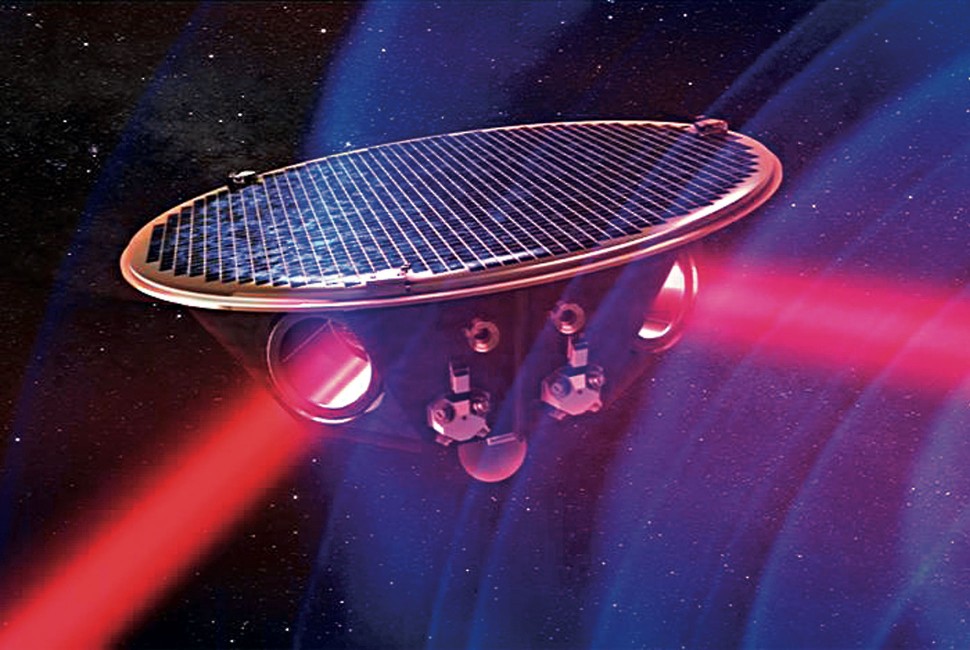
The field of gravitational wave astronomy is rapidly evolving, with continuous improvements in detection technology and data analysis techniques. Upcoming projects, such as space-based detectors, promise to extend our observational capabilities to lower frequencies. These detectors will allow scientists to investigate supermassive black hole mergers and the gravitational wave background from the early universe.
Ongoing research is also focused on refining theoretical models to better explain the aftermath of gravitational wave events. Advancements in numerical relativity and the integration of high-performance computing are enabling scientists to simulate complex gravitational scenarios with unprecedented detail. This synergy between observation and simulation is driving forward our understanding of phenomena that were, until recently, purely theoretical.
Implications for Fundamental Physics
Gravitational waves are not merely astronomical curiosities; their study has profound implications for fundamental physics. By providing direct evidence of the dynamics of spacetime, they help us test and refine our understanding of gravity. Moreover, they pave the way for exploring new gravitational phenomena such as gravitational memory, which may reveal long-term imprints left on spacetime by cataclysmic events.
As our detection capabilities improve and the observational catalog of gravitational wave events grows, we can expect to uncover deeper connections between these waves and other fundamental forces, bridging gaps between theoretical predictions and empirical evidence.
References and Further Exploration
- What are Gravitational Waves? | LIGO Lab | Caltech
- What Is a Gravitational Wave? - NASA Space Place
- Gravitational wave - Wikipedia
- Understanding gravitational waves: Ripples in spacetime explained
- Unproven Einstein Theory of ‘Gravitational Memory’ Could Be Correct, Study Claims
-
Gravitational Waves - latest research news and features - Phys.org
- Nature Article on Gravitational Waves
- AI and Gravitational Waves - MPG
Recommended Topics for Further Research
Last updated March 8, 2025