
Unraveling Gatsby's Fixation: Key Moments of Obsession in Fitzgerald's Masterpiece
Exploring pivotal scenes, quotes, and analysis through the lens of the AQA A-Level specification.
Highlights: Understanding Gatsby's Obsession
- The All-Consuming Dream: Gatsby's obsession with Daisy Buchanan is intrinsically linked to his desire to recapture an idealized past, driving his every action and shaping his identity.
- Wealth as a Means: His relentless pursuit of wealth and extravagant displays are not merely for show but calculated efforts fueled by the obsessive belief that status can win Daisy's love and erase time.
- Illusion vs. Reality: A critical aspect of Gatsby's obsession is his inability to distinguish the real Daisy from the flawless, almost mythical figure he constructed in his mind, ultimately leading to tragedy.
Introduction: Obsession as a Driving Force
In F. Scott Fitzgerald's The Great Gatsby, the theme of obsession permeates the narrative, acting as a powerful, destructive force. For the AQA A-Level English Literature specification, understanding this theme is crucial, as it intersects with key assessment objectives concerning character motivation, symbolism, the critique of the American Dream, and the elements of tragedy. Jay Gatsby's overwhelming fixation on Daisy Buchanan, his past with her, and the life he believes she represents, drives the plot and ultimately leads to his downfall. His obsession is not presented as simple love, but as a consuming force that distorts reality, fuels immense ambition, and highlights the hollowness of the era's values.
Key Moments Illustrating Obsession
Chapter 1: The Green Light – A Symbol of Unattainable Desire
Gatsby's First Appearance
Our introduction to Gatsby is shrouded in mystery, culminating in Nick Carraway's observation of him at the end of Chapter 1. Gatsby stands alone in the dark, reaching towards the water.
Quote:
"He stretched out his arms toward the dark water in a curious way... I could have sworn he was trembling. Involuntarily I glanced seaward—and distinguished nothing except a single green light, minute and far away, that might have been the end of a dock." (Chapter 1)
Analysis for AQA Specification
This initial image powerfully establishes Gatsby's obsessive longing. The green light, positioned across the bay at the end of Daisy's dock, becomes the primary symbol of his dream: Daisy herself, the wealth she represents, and the idealized past he desperately seeks to reclaim. His trembling signifies the intense emotion invested in this distant goal. For AQA, this moment is key for analyzing:
- Symbolism: The green light represents hope, aspiration, the future, and the "orgastic future" Gatsby believes in, yet it also signifies the unattainability and illusory nature of his dream.
- Character Introduction: It immediately portrays Gatsby as a figure driven by a profound, almost spiritual yearning, setting up his central motivation.
- Foreshadowing: The distance and faintness of the light foreshadow the ultimate failure of Gatsby's quest. His obsession is introduced as something vast but fundamentally out of reach.

The opulent settings of Long Island's Gold Coast, the backdrop for Gatsby's obsessive pursuit.
Chapter 5: The Reunion – Illusion Confronts Reality
Gatsby and Daisy Meet Again
After years of meticulous planning and wealth accumulation driven by his obsession, Gatsby finally orchestrates a reunion with Daisy at Nick's bungalow. The meeting is fraught with Gatsby's overwhelming anticipation and anxiety.
Quotes:
"He hadn’t once ceased looking at Daisy, and I think he revalued everything in his house according to the measure of response it drew from her well-loved eyes." (Chapter 5)
"There must have been moments even that afternoon when Daisy tumbled short of his dreams—not through her own fault, but because of the colossal vitality of his illusion. It had gone beyond her, beyond everything." (Chapter 5)
Analysis for AQA Specification
This chapter is pivotal in exposing the nature of Gatsby's obsession. It's not necessarily Daisy, the person, he desires, but the idealized version constructed over five years.
- Idealization vs. Reality: Nick's observation highlights the central tragedy: Gatsby's dream is so immense ("colossal vitality of his illusion") that no real person could fulfill it. His obsession is with an idea, not the woman.
- Materialism and Love: Gatsby measures his possessions, his very worth, by Daisy's reaction. This intertwines his obsession with Daisy with his obsession for wealth and status, seeing them as prerequisites for her love.
- Emotional Intensity: Gatsby's near-hysterical behaviour before and during the reunion underscores the consuming nature of his fixation. His life has been building to this single moment.
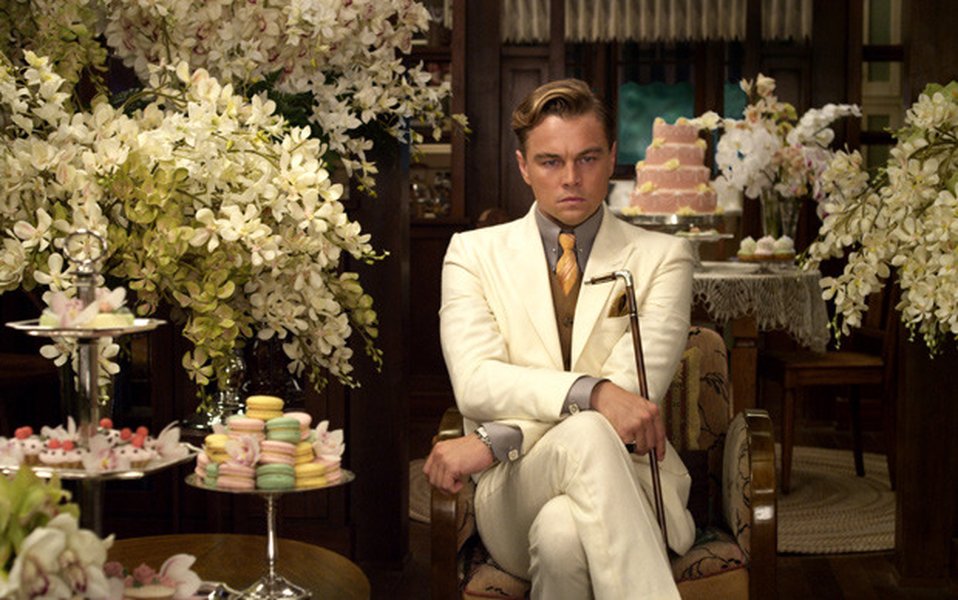
Gatsby's intense focus on Daisy during their reunion, revealing the depth of his long-held obsession.
Chapter 6: Rewriting History – The Impossibility of Repeating the Past
Gatsby's Denial of Time
Following a party at his mansion attended by Tom and Daisy, Gatsby speaks with Nick, revealing the true extent of his desire not just to reunite with Daisy, but to erase the intervening years entirely.
Quote:
"'Can’t repeat the past?' he cried incredulously. 'Why of course you can!'" (Chapter 6)
Gatsby's Self-Conception
This chapter also delves into Gatsby's past as James Gatz, revealing his self-transformation driven by ambition and his early encounters with wealth, ultimately tied to his desire for Daisy.
Quote Context:
"The truth was that Jay Gatsby, of West Egg, Long Island, sprang from his Platonic conception of himself... He invented just the sort of Jay Gatsby that a seventeen-year-old boy would be likely to invent, and to this conception he was faithful to the end." (Chapter 6)
Analysis for AQA Specification
Gatsby's infamous declaration about repeating the past encapsulates the delusion at the heart of his obsession. For AQA, this highlights:
- Obsession with Time: Gatsby's refusal to accept the passage of time and the changes it brings (Daisy's marriage, her child) is central to his tragedy. He wants to control time itself.
- Idealism and Delusion: His belief is not just romantic but fundamentally delusional, demonstrating how obsession can warp one's perception of reality.
- Identity Formation: His transformation from Gatz to Gatsby is itself an act of obsessive self-creation, driven by the need to be worthy of his idealized Daisy and the status she represents. His entire identity is built around this obsessive quest.
Mapping Gatsby's Obsession
Gatsby's obsession is multifaceted, extending beyond Daisy to encompass the past, wealth, status, and the very idea of self-creation. The mindmap below illustrates the interconnected nature of these fixations, all stemming from his core desire.
(Symbol of Perfection)"] id1b["Reunion & Possession"] id1c["Ignoring Her Flaws"] id2["Repeating the Past"] id2a["Erasing Five Years"] id2b["Recapturing Lost Youth"] id2c["Denial of Present Reality
(Marriage, Child)"] id3["Wealth & Status"] id3a["Means to Win Daisy"] id3b["Symbol of Success/Worthiness"] id3c["Lavish Parties as Lures"] id3d["Materialism"] id4["Self-Invention"] id4a["Jay Gatsby Persona"] id4b["'Platonic Conception'"] id4c["Escaping James Gatz"] id4d["Living the Dream"]
This visualization helps clarify how Gatsby's central fixation on Daisy fuels secondary obsessions with controlling time, acquiring immense wealth, and maintaining a carefully constructed identity – all key aspects for AQA analysis.
Chapters 3 & 4: Wealth and Parties – The Strategy of Obsession
Extravagance as a Tool
Gatsby's legendary parties, detailed vividly in Chapter 3, are not merely acts of hedonism. As revealed later (primarily through Jordan in Chapter 4 and Gatsby himself), they serve a singular, obsessive purpose: to attract Daisy.
Contextual Insight:
Gatsby bought his mansion specifically because it was across the bay from Daisy's house. The parties are elaborate displays designed with the hope that she might wander in one night. His entire lifestyle is a performance staged for an audience of one.
Analysis for AQA Specification
The parties and the wealth behind them are manifestations of Gatsby's obsession:
- Calculated Display: The extravagance isn't random; it's a strategy born of obsession, demonstrating the lengths Gatsby will go to.
- Wealth as Prerequisite: Gatsby obsessively pursued wealth (through often illicit means) because he believed it was essential to win Daisy, who embodies the allure of 'old money' and social status.
- Critique of the American Dream: Gatsby's obsessive pursuit of wealth reflects a corrupted version of the American Dream, where immense riches are sought not for their own sake, but as a means to attain an idealized, unattainable love object from the past.
- Isolation Amidst Crowds: Despite hosting huge gatherings, Gatsby remains isolated, singularly focused on his goal, highlighting the alienating nature of intense obsession.

Gatsby's extravagant parties, symbols of wealth used obsessively to capture Daisy's attention.
Visualizing the Intensity of Gatsby's Obsessions
Gatsby's obsession isn't static; its different facets vary in intensity throughout the narrative. This chart offers an interpretation of how his fixation on Daisy, the Past, Wealth, Status, and maintaining his Illusion might fluctuate across key stages of the novel, providing a visual aid for analyzing the progression of his central theme.
This chart suggests that while the focus shifts (e.g., obsession with the past peaks during the confrontation), the core obsession with Daisy and the illusion surrounding her remains intensely high throughout, reinforcing its centrality to Gatsby's character and fate.
Chapter 7: The Confrontation – Obsession's Destructive Climax
The Plaza Hotel Showdown
The stifling heat of the New York summer mirrors the boiling point of tensions as Gatsby confronts Tom Buchanan in a suite at the Plaza Hotel. Here, Gatsby's obsession compels him to force a choice and rewrite history.
Quote:
"'Your wife doesn’t love you,' said Gatsby. 'She’s never loved you. She loves me.'... He wanted to recover something, some idea of himself perhaps, that had gone into loving Daisy. His life had been confused and disordered since then, but if he could once return to a certain starting place and go over it all slowly, he could find out what that thing was..." (Chapter 7)
Gatsby demands Daisy tell Tom: "Just tell him the truth—that you never loved him—and it’s all wiped out forever." (Chapter 7)
Analysis for AQA Specification
This scene represents the catastrophic climax of Gatsby's obsession:
- Demand for Absolute Possession: Gatsby needs Daisy's entire past, not just her present. His obsession requires the annihilation of her history with Tom.
- Loss of Control: When Daisy cannot fulfill his demand ("Oh, you want too much!"), Gatsby's carefully constructed world begins to crumble. His obsession cannot withstand the complexities of real human emotion and history.
- Tragic Turning Point: This confrontation directly leads to Myrtle's death and subsequently Gatsby's own. His obsessive actions set in motion the final tragic events. It demonstrates the destructive consequences of refusing to accept reality, a key element in tragedy studies for AQA.
This clip depicts the intense confrontation scene from Baz Luhrmann's 2013 film adaptation, showcasing the raw emotion and destructive nature of Gatsby's obsessive demands as described in Chapter 7.
Chapter 8: The Final Vigil – Obsession Until Death
Clinging to the Dream
After the accident where Daisy hits and kills Myrtle, Gatsby remains obsessively protective of Daisy. He waits outside her house all night, clinging to the hope that she needs him, that their dream is still alive.
Quote Context:
Nick finds Gatsby lurking outside the Buchanans' house, determined to ensure Tom doesn't harm Daisy. He is described as looking "as if he had 'killed a man.'" (Chapter 8)
Gatsby recounts his early relationship with Daisy, framing his commitment as absolute: "He had committed himself to the following of a grail." (Chapter 8)
The Price of a Single Dream
Before his death, Nick reflects on Gatsby's state:
Quote:
"He must have felt that he had lost the old warm world, paid a high price for living too long with a single dream." (Chapter 8)
Analysis for AQA Specification
Gatsby's final hours demonstrate the totality of his obsession:
- Unwavering Devotion: Even after Daisy's implicit betrayal and the catastrophe she caused, Gatsby's focus remains solely on her perceived well-being and the preservation of their connection.
- The "Grail" Metaphor: This elevates his obsession to a quasi-religious quest, highlighting its all-consuming, idealized, and ultimately self-destructive nature.
- Tragic Consequences: His loyalty makes him vulnerable, leading directly to his murder by George Wilson. His death is the ultimate price for his unwavering obsession with an illusion. This aligns perfectly with AQA's focus on tragic inevitability and the protagonist's fatal flaw (hamartia), which in Gatsby's case is his inability to let go of the past.
Key Quotes on Obsession: A Summary Table
This table summarizes some of the most pertinent quotes related to obsession in The Great Gatsby, noting their chapter and significance for analysis within the AQA framework.
| Chapter | Quote | Significance for Obsession Theme (AQA Focus) |
|---|---|---|
| 1 | "...distinguished nothing except a single green light..." | Establishes the central symbol of Gatsby's obsessive longing and unattainable dream. |
| 5 | "...Daisy tumbled short of his dreams...because of the colossal vitality of his illusion." | Highlights the disparity between Gatsby's idealized vision (obsession) and reality; the dream exceeds the person. |
| 6 | "'Can’t repeat the past? ... Why of course you can!'" | Encapsulates Gatsby's delusional belief central to his obsession; denial of time and reality. |
| 6 | "...sprang from his Platonic conception of himself..." | Links Gatsby's obsessive quest for Daisy to his obsessive self-creation and ambition. |
| 7 | "'Just tell him the truth—that you never loved him—and it’s all wiped out forever.'" | Shows the destructive demand of Gatsby's obsession – requiring the erasure of history for absolute possession. |
| 8 | "He had committed himself to the following of a grail." | Elevates Gatsby's obsession to a consuming, quasi-religious quest, emphasizing its depth and fatal nature. |
| 8 | "...paid a high price for living too long with a single dream." | Nick's final reflection linking Gatsby's tragic end directly to his prolonged, singular obsession. |
Frequently Asked Questions (FAQ)
Is Gatsby's feeling for Daisy love or obsession?
While Gatsby's feelings may have originated in love, the novel strongly suggests they develop into a profound obsession. Key indicators include his inability to see Daisy's flaws, his desire to repeat the past exactly, his linking of her to wealth and status, and the sheer scale of his life choices dedicated solely to winning her back. His focus is less on Daisy as a person and more on what she represents: an idealized past and the ultimate prize. The AQA specification encourages analysis of this distinction, often framing obsession as a destructive force contrasted with genuine connection.
How does Gatsby's obsession relate to the American Dream?
Gatsby's obsession with Daisy is deeply intertwined with his pursuit of the American Dream. He believes that acquiring immense wealth and status (key elements of the Dream) will allow him to win Daisy and recapture the past. However, his obsessive methods (implied illegal activities) and the hollowness of his goal (an idealized illusion) critique the Dream itself, suggesting it can become corrupted, materialistic, and ultimately unattainable or destructive when pursued obsessively. For AQA, analyzing this link explores Fitzgerald's commentary on American society and values.
What is the significance of Gatsby's obsessive self-invention?
Gatsby's transformation from James Gatz to Jay Gatsby is an act of obsessive self-creation, fundamental to achieving his dream. He believes his original identity is insufficient to win Daisy or the status he craves. This reinvention ("Platonic conception of himself") demonstrates the depth of his obsession: he is willing to erase his own past and adopt a fabricated persona entirely dedicated to his singular goal. This links to themes of identity, social mobility, and the illusionary nature of the world Gatsby inhabits, all relevant for AQA analysis.
How does obsession contribute to the novel's tragic elements?
Gatsby's obsession serves as his fatal flaw (hamartia) in the context of tragedy, a key genre focus for the AQA specification. His inability to let go of the past and his idealized vision of Daisy blinds him to danger and reality. It leads him to make reckless decisions (like the confrontation with Tom) and ultimately makes him take the blame for Myrtle's death, resulting in his murder. The novel portrays obsession not just as a personal failing but as a destructive force that inevitably leads to downfall when confronted with the unyielding realities of time and human nature.
Recommended Further Exploration
- How does symbolism reinforce the theme of obsession in The Great Gatsby?
- Compare Gatsby's obsession with other characters' desires in the novel.
- Analyze the role of social class in fueling Gatsby's obsession.
- Explore critical interpretations of Gatsby's obsession according to the AQA specification.
References
Last updated May 1, 2025