
Unlocking the Enigmas of Antiquity: What Are the Greatest Unsolved Ancient Mysteries?
Journey through colossal structures, cryptic texts, and vanished civilizations that continue to baffle experts and ignite our imagination.
The annals of ancient history are filled with captivating puzzles—enigmatic events, perplexing artifacts, and lost knowledge that continue to challenge our understanding of the past. These mysteries, spanning diverse cultures and millennia, offer tantalizing glimpses into the ingenuity and complexities of early civilizations. Despite advances in science and archaeology, many of these ancient riddles remain unsolved, fueling ongoing debate and exploration.
Highlights of Ancient Enigmas
- Enduring Puzzles: Many ancient mysteries, from the true purpose of Stonehenge to the meaning encoded within the Voynich Manuscript, have resisted definitive explanations despite centuries of scholarly investigation and modern technological analysis.
- Advanced Ancient Capabilities: Remarkable sites like the Nazca Lines and sophisticated artifacts such as the Antikythera Mechanism reveal surprisingly advanced knowledge and engineering prowess in ancient cultures, often prompting a re-evaluation of their technological development.
- A Global Tapestry of Unanswered Questions: These intriguing mysteries are not confined to one region but are found across the globe, from the monumental Moai of Easter Island to the mysterious Plain of Jars in Laos, painting a rich and complex picture of humanity's unsolved historical chapters.
Monumental Structures and Their Secrets
Across the globe, ancient civilizations erected awe-inspiring structures whose purpose, construction, or symbolism remains shrouded in mystery. These monuments stand as silent testaments to human ambition and ingenuity.
The Nazca Lines (Peru)
Giants Etched in the Desert
Stretching across the arid plains of southern Peru, the Nazca Lines are a breathtaking collection of enormous geoglyphs created by the Nazca culture between approximately 200 BCE and 600 CE. These designs, some spanning up to 1,200 feet, depict a variety of subjects including animals (like hummingbirds, spiders, and monkeys), plants, and intricate geometric shapes. The lines were formed by removing the reddish-brown iron oxide-coated pebbles that cover the surface of the Nazca desert, revealing the lighter-colored earth underneath. Their colossal scale means they are best appreciated from the air, a fact that has fueled much speculation about their purpose. Theories abound:
- Astronomical Alignments: Some researchers propose they served as an astronomical calendar, aligning with constellations or celestial events.
- Ritual Pathways: Others suggest they were ceremonial pathways for religious rituals, possibly related to prayers for water or fertility, crucial in such an arid environment.
- Water Source Markers: Another theory posits they could be related to water sources or irrigation systems.
Despite numerous studies, no single theory has gained universal acceptance, leaving the true intention behind these magnificent desert etchings an enduring puzzle.
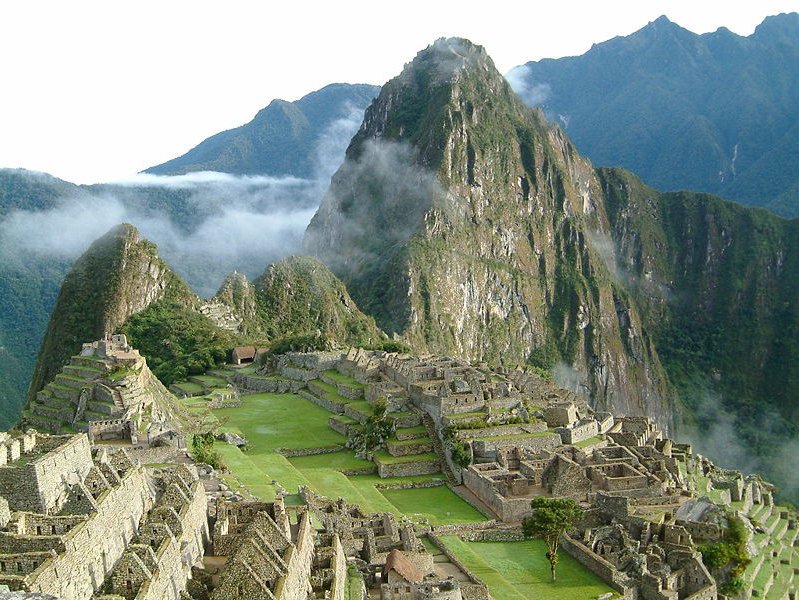
The enigmatic ruins of Machu Picchu, Peru, another testament to ancient engineering and mystery.
Stonehenge (England)
The Prehistoric Enigma of Salisbury Plain
Stonehenge, the iconic prehistoric monument located in Wiltshire, England, is a masterpiece of ancient engineering. Constructed in several phases from around 3000 BCE to 1500 BCE, it consists of a ring of massive standing stones, some weighing over 25 tons (the sarsens) and others (the bluestones) transported from quarries over 150 miles away in Wales. The precision of its construction and its alignment with solar events, particularly the summer and winter solstices, are remarkable. However, its primary purpose remains a subject of intense debate:
- Astronomical Observatory: Its celestial alignments suggest it may have been used to track solar and lunar cycles.
- Burial Ground: Excavations have revealed human remains, indicating it served as a cemetery for centuries.
- Ceremonial or Healing Center: Theories also propose it was a site for religious ceremonies, healing rituals, or a place of ancestral worship.
The methods used to transport and erect these colossal stones with prehistoric technology also continue to fascinate and perplex researchers.
The Moai Statues (Easter Island / Rapa Nui)
Colossal Sentinels of a Remote Island
Easter Island, or Rapa Nui, one of the most isolated inhabited islands on Earth, is famed for its nearly 1,000 monumental statues called Moai. Carved by the Rapa Nui people primarily between 1250 CE and 1500 CE, these monolithic human figures, some towering over 30 feet and weighing many tons, are believed to represent deified ancestors. The mystery surrounding the Moai includes:
- Transportation and Erection: How the Rapa Nui people, with limited resources and no wheels or large animals, managed to carve, transport, and erect these massive statues remains a significant debate. Theories range from using wooden sledges and ropes to a "walking" method.
- Purpose and Symbolism: While generally accepted as representations of ancestors, the specific rituals and beliefs associated with them are not fully understood.
- The Island's Ecological Collapse: The creation of the Moai is often linked to the island's subsequent environmental degradation and societal changes, adding another layer to their story.
The Plain of Jars (Laos)
Megalithic Vessels on an Ancient Landscape
Scattered across the Xiangkhoang Plateau in central Laos are thousands of massive stone jars, giving the area its name, the Plain of Jars. These megalithic structures, some reaching up to 3 meters in height and weighing several tons, date from the Iron Age (around 500 BCE to 500 CE). Their exact purpose and the identity of the civilization that created them are unknown. Prevailing theories suggest:
- Burial Practices: Archaeological findings, including human remains and funerary objects found near some jars, support the theory that they were used in prehistoric burial rituals, possibly as primary or secondary burial containers.
- Food or Liquid Storage: Local legends and some interpretations suggest they might have been used for storing food, water, or rice wine.
The sheer scale of the sites and the effort required to create and position these jars make them a significant archaeological enigma in Southeast Asia.
Cryptic Texts and Lost Knowledge
Some of the most tantalizing ancient mysteries are locked within undeciphered scripts or artifacts that hint at knowledge or technologies seemingly beyond their time.
The Voynich Manuscript
The World's Most Mysterious Book
The Voynich Manuscript is a lavishly illustrated codex, carbon-dated to the early 15th century CE. Its pages are filled with an unknown script and bizarre drawings of unidentified plants, astronomical charts, and enigmatic human figures. Despite the efforts of countless cryptographers, linguists, and historians, its language remains undeciphered, and its purpose unknown. Speculation ranges from:
- An elaborate hoax designed to deceive.
- The lost work of an alchemist or herbalist.
- A coded text containing secret knowledge.
- An example of an extinct, unknown natural language.
The manuscript's unique and uncrackable nature makes it one of history's most baffling literary puzzles.
The Antikythera Mechanism (Greece)
An Ancient Analog Computer
Discovered in a Roman-era shipwreck off the coast of Antikythera, Greece, in 1901, the Antikythera Mechanism is an astonishingly complex astronomical calculator. Dating to around 100 BCE, this bronze device contains an intricate system of over 30 gears, far more sophisticated than any known technology from that period. It was used to:
- Predict astronomical positions and eclipses decades in advance.
- Track the four-year cycle of athletic games (similar to the Olympiad).
- Model the irregular orbit of the Moon.
The Antikythera Mechanism radically altered our understanding of ancient Greek technological capabilities, demonstrating a level of mechanical engineering not seen again for over a thousand years. How such a device was conceived and constructed remains a profound mystery.
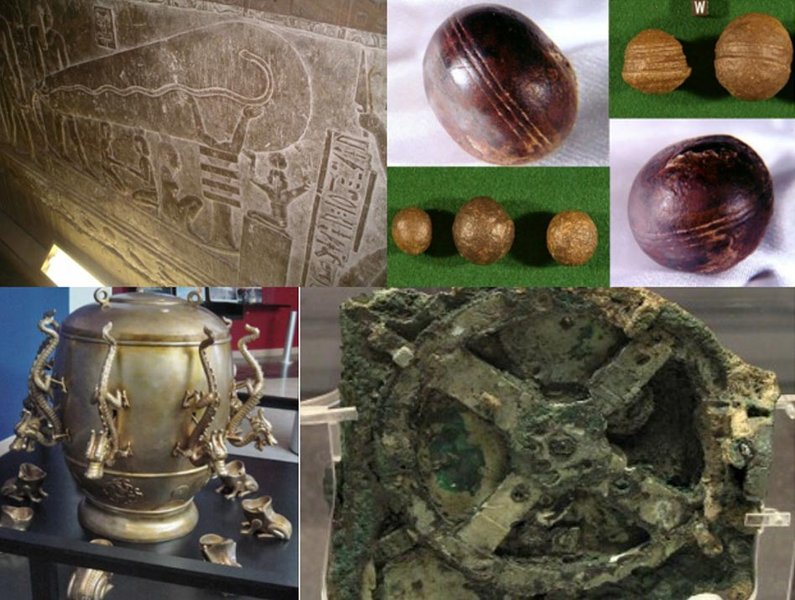
Examples of "out-of-place artifacts" that challenge conventional historical timelines, similar to the Antikythera Mechanism.
Linear A (Minoan Crete)
An Undeciphered Minoan Script
Linear A is one of two primary writing systems used in ancient Crete by the Minoan civilization (c. 2500–1450 BCE). While its successor, Linear B (used by the Mycenaeans), was famously deciphered in the 1950s as an early form of Greek, Linear A remains untranslated. Numerous inscriptions have been found on clay tablets and other objects, primarily administrative records. The inability to decipher Linear A means that a significant portion of Minoan culture, beliefs, and societal structure remains obscure, locking away insights into one of Europe's earliest advanced civilizations.
Comparative Analysis of Ancient Mysteries
To better understand the varying natures of these enigmas, the following chart provides a subjective comparison across several dimensions for some of the most prominent ancient mysteries. These scores reflect general perceptions and the intensity of scholarly debate surrounding each.
Lost People and Places
Some ancient mysteries concern entire civilizations that vanished, legendary figures whose final resting places are unknown, or armies that disappeared without a trace.
The Tomb of Cleopatra VII (Egypt)
The Undiscovered Resting Place of Egypt's Last Pharaoh
Cleopatra VII, the last pharaoh of Ptolemaic Egypt, and her Roman consort Mark Antony, met their demise in 30 BCE. Ancient writers, notably Plutarch, described their tomb as a "lofty and beautiful" monument near a temple of Isis, likely in or around Alexandria, filled with treasures. Despite centuries of fascination and numerous archaeological searches, the precise location of their tomb remains one of history's most sought-after discoveries. Finding it would provide invaluable insights into the dramatic end of Egyptian Pharaonic rule and the rise of Roman Egypt.
The Olmec Civilization (Mesoamerica)
The Mysterious "Mother Culture" of Mesoamerica
The Olmec flourished in the tropical lowlands of south-central Mexico from approximately 1400 BCE to 400 BCE. They are renowned for their colossal carved stone heads, sophisticated artwork, and significant cultural influence on later Mesoamerican civilizations like the Maya and Aztecs. However, the reasons for the decline and eventual disappearance of Olmec centers around 400-350 BCE are not fully understood. Theories include environmental changes such as drought or volcanic eruptions, internal strife, or shifting trade routes. Their origins and the full extent of their societal structure also remain subjects of study.
The Lost Army of Cambyses II (Egypt)
A Persian Army Swallowed by the Desert
According to the Greek historian Herodotus, in 524 BCE, the Persian King Cambyses II dispatched an army of 50,000 soldiers from Thebes to attack the Oasis of Siwa and destroy the Oracle of Amun. Herodotus recounts that the army marched into the Western Desert of Egypt but was overwhelmed and vanished completely, supposedly swallowed by a massive sandstorm. While some scholars question the historical accuracy of Herodotus's account, the fate of this vast army remains an enduring legend. Occasional claims of discovering remnants of the army have surfaced but have yet to be definitively substantiated.
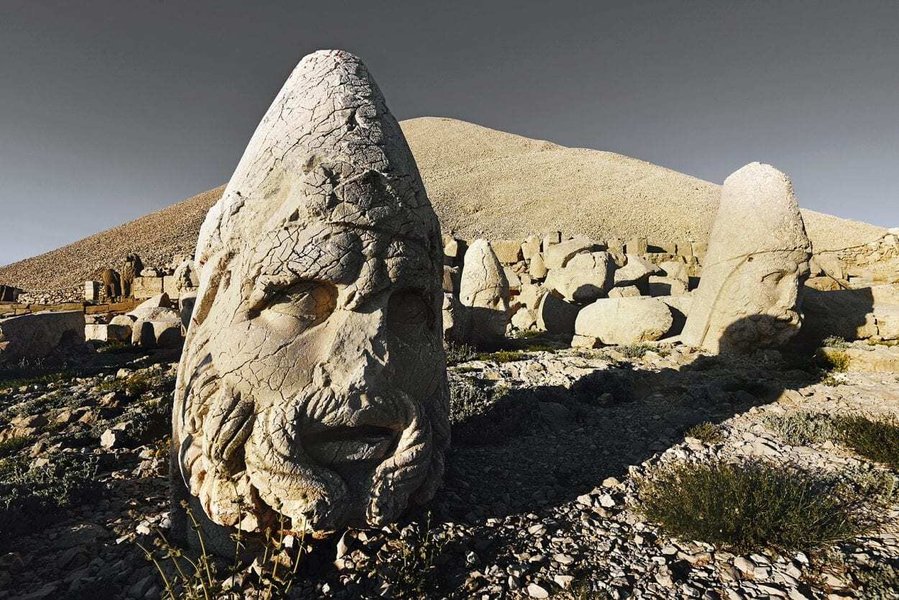
The ruins of the Commagene Kingdom, a reminder of civilizations and stories lost to time.
Exploring Connections: A Mindmap of Ancient Mysteries
Ancient mysteries can be interconnected through themes such as enigmatic structures, undeciphered texts, or lost civilizations. This mindmap provides a visual overview of how these diverse puzzles relate to broader categories of historical inquiry.
(Purpose, Construction)"] id1b["Nazca Lines
(Purpose, Creation)"] id1c["Moai Statues
(Transportation, Erection)"] id1d["Plain of Jars
(Purpose, Creators)"] id1e["Sacsayhuamán
(Construction Technique)"] id1f["Paracas Candelabra
(Meaning, Builders)"] id2["Undeciphered Texts & Artifacts"] id2a["Voynich Manuscript
(Language, Content)"] id2b["Linear A
(Minoan Language)"] id2c["Antikythera Mechanism
(Origin, Full Capabilities)"] id2d["Piri Reis Map
(Source of Knowledge)"] id2e["Roman Dodecahedrons
(Function)"] id2f["Copper Scroll
(Treasure Location, Authenticity)"] id2g["Emerald Tablet
(Origin, Content)"] id3["Lost Civilizations & People"] id3a["Olmec Civilization
(Decline, Origins)"] id3b["Cleopatra's Tomb
(Location)"] id3c["Lost Army of Cambyses
(Fate, Location)"] id3d["Maya Civilization Collapse
(Causes)"] id3e["Thonis-Heracleion
(Reason for Submergence)"] id4["Historical & Mythical Records"] id4a["Sumerian King List
(Fact vs. Myth)"] id4b["Date of Jesus' Birth
(Exact Chronology)"] id4c["Devil's Bible (Codex Gigas)
(Authorship, Legend)"]
A Glimpse into Ancient Enigmas
The following table summarizes key aspects of several enduring ancient mysteries, highlighting their location, approximate era, and the central puzzle they present to modern researchers.
| Mystery | Location | Approximate Date | Key Enigma |
|---|---|---|---|
| The Nazca Lines | Peru | 200 BCE - 600 CE | Purpose and creation method of the massive geoglyphs. |
| Stonehenge | England | 3000 BCE - 1500 BCE | Primary function and exact construction techniques for the megalithic structure. |
| The Voynich Manuscript | Unknown (Likely Europe) | Early 15th Century CE | Undeciphered script, unknown language, and perplexing illustrations. |
| Cleopatra's Tomb | Egypt (Likely Alexandria area) | c. 30 BCE | The precise location of the final resting place of Cleopatra VII and Mark Antony. |
| The Antikythera Mechanism | Greece (Found off Antikythera) | c. 100 BCE | The origin, full capabilities, and technological context of this complex analog computer. |
| The Plain of Jars | Laos | 500 BCE - 500 CE | The purpose of thousands of massive stone jars and the identity of their creators. |
| Moai Statues | Easter Island (Rapa Nui) | 1250 CE - 1500 CE | Methods used to transport and erect the colossal statues across the island. |
| The Piri Reis Map | Ottoman Empire (Constantinople) | 1513 CE | The source of its surprisingly accurate (for its time) geographical details, particularly of coastlines. |
Delving Deeper into Ancient Riddles
The allure of ancient mysteries often lies in the tantalizing possibility of uncovering lost knowledge or gaining a deeper understanding of human history. Many documentary efforts explore these enigmas. The following video delves into some of the greatest unsolved mysteries from ancient times, offering various perspectives and exploring the evidence that continues to puzzle researchers.
This video, "9 GREATEST UNSOLVED MYSTERIES OF ANCIENT...", explores several significant ancient enigmas. It touches upon themes such as secret sunken cities and unknown texts, reflecting the broad spectrum of puzzles left behind by past civilizations. Such explorations highlight the ongoing quest to piece together fragments of history and shed light on what remains unknown, from incredible feats of engineering to sophisticated understandings of the cosmos that challenge our perception of ancient capabilities.
Frequently Asked Questions about Ancient Mysteries
What makes an ancient mystery "unsolved"? +
An ancient mystery is considered "unsolved" when there is no definitive, universally accepted explanation for a particular artifact, site, text, event, or civilization despite extensive research and investigation. This often means that crucial evidence is missing, interpretations of existing evidence are conflicting, or the available information is too ambiguous to draw firm conclusions. For example, the purpose of Stonehenge or the language of the Voynich Manuscript remain subjects of ongoing debate with multiple competing theories.
How do archaeologists and historians investigate these mysteries? +
Investigators use a multidisciplinary approach. Archaeologists conduct excavations, analyze material remains (artifacts, structures, human/animal bones), and use scientific dating techniques like radiocarbon dating. Historians scrutinize ancient texts, inscriptions, and oral traditions. Linguists attempt to decipher unknown scripts. Scientists may employ advanced imaging technologies (like ground-penetrating radar or satellite imagery), chemical analysis, and DNA studies. They formulate hypotheses based on the evidence, compare findings with known historical and cultural contexts, and often engage in peer review and scholarly debate to refine understanding.
Are new ancient mysteries still being discovered? +
Yes, new ancient mysteries are continually being uncovered. Archaeological discoveries happen frequently, revealing previously unknown sites, artifacts, or inscriptions that can raise new questions or challenge existing theories. For instance, submerged cities like Thonis-Heracleion were only rediscovered in recent decades. Advances in technology also allow researchers to re-examine old findings in new ways, sometimes revealing previously unseen details that create new enigmas or offer new paths to solving old ones.
Why are we so fascinated by ancient mysteries? +
Ancient mysteries tap into our innate curiosity about the past and our origins. They represent gaps in our knowledge, challenging our intellect and imagination. These enigmas often involve incredible feats of engineering, sophisticated knowledge, or dramatic events that resonate with human experience. The possibility of discovering lost wisdom, understanding forgotten cultures, or simply solving a complex puzzle drives this fascination. They remind us that history is not a closed book and that there is still much to learn about the ingenuity and lives of those who came before us.
Recommended Further Exploration
If these ancient enigmas have piqued your interest, consider exploring these related queries for deeper insights:
- What are the latest theories about the construction of Stonehenge?
- Has anyone made progress in deciphering the Voynich Manuscript?
- What technologies did ancient civilizations possess that still baffle us?
- Learn more about the ongoing search for Cleopatra's lost tomb.
References

Last updated May 9, 2025