
Blueprint for Gaia Secunda: Engineering an Eco-Parallel World
Imagine a thriving civilization interwoven with nature, powered by renewables, and built on principles of true sustainability.
The concept of a parallel world dedicated entirely to green and eco-friendly principles offers a powerful vision for humanity's future. Instead of a hypothetical scenario, let's explore what such a world – perhaps named 'Gaia Secunda' – might look like, drawing inspiration from current sustainable practices, future projections for 2025 and beyond, and innovative environmental strategies. This isn't mere fantasy; it's a blueprint built on integrating technology, community, and ecology into a harmonious whole.
Key Highlights of Gaia Secunda
- Radical Sustainability Integration: Every facet of life, from urban planning and energy production to daily consumption and transportation, is fundamentally designed around ecological balance and resource efficiency.
- Technology in Service of Nature: Advanced green technologies, including 100% renewable energy grids, circular economy systems, and smart eco-architecture, are seamlessly integrated to support, rather than exploit, the natural world.
- Community and Consciousness Shift: A deeply ingrained culture of environmental stewardship, shared responsibility, and mindful consumption defines societal values, supported by robust education and community engagement.
The Fabric of an Eco-Conscious Civilization
Gaia Secunda operates on principles radically different from our current trajectory. It leverages the best of human ingenuity to create a symbiotic relationship with the planet, prioritizing long-term ecological health and societal well-being over short-term economic gains.
Urban Ecosystems: Cities Alive with Nature
Cities in Gaia Secunda are reimagined as living ecosystems, blending architecture, technology, and nature seamlessly.
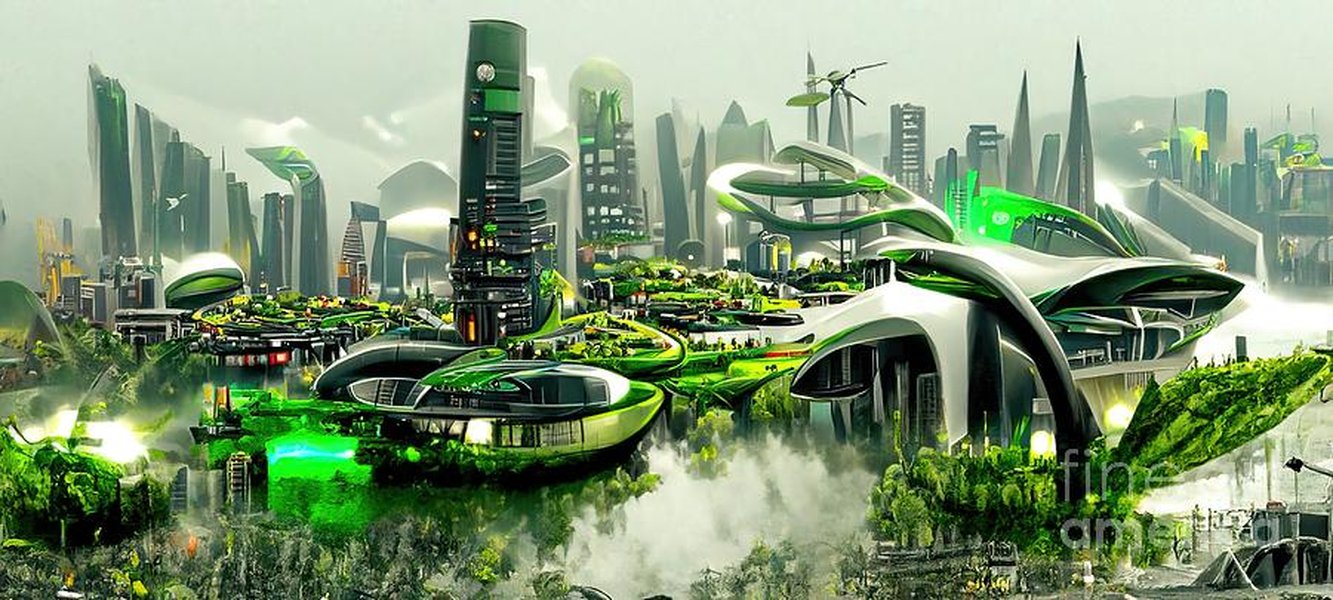
Futuristic city designed with integrated green spaces and sustainable infrastructure.
Green Building and Biophilic Design
Architecture prioritizes sustainable and recycled materials like reclaimed wood, bamboo, and recycled steel. Buildings are designed for maximum energy efficiency using passive solar heating, natural ventilation, advanced insulation, and smart energy management systems. Green roofs and vertical gardens are standard, improving air quality, providing insulation, managing stormwater, and fostering urban biodiversity. Biophilic design principles ensure constant connection with nature within the built environment, enhancing well-being.
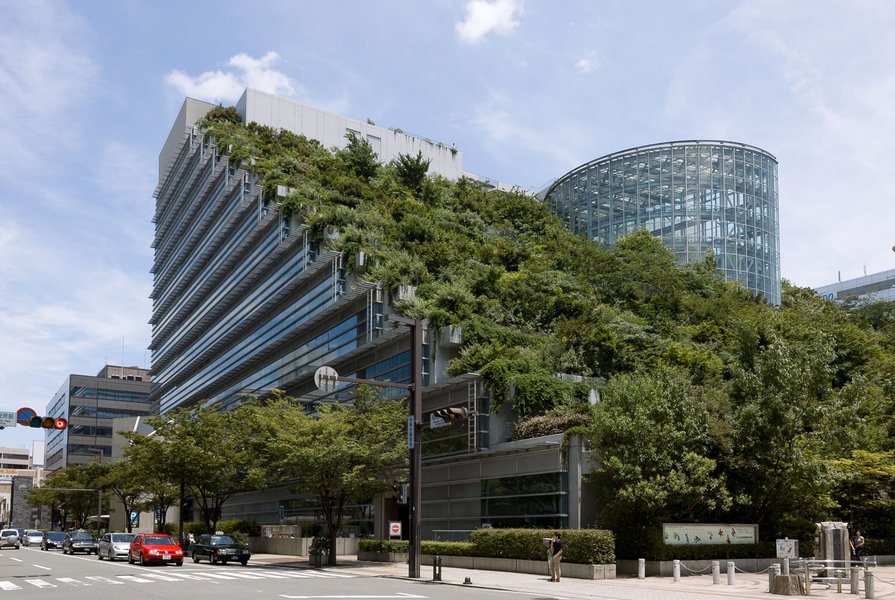
The ACROS Fukuoka building in Japan exemplifies large-scale integration of greenery into architecture.
Walkable, Connected Communities
Urban planning focuses on creating compact, mixed-use neighborhoods where daily necessities are within walking or cycling distance. Extensive networks of pedestrian pathways, cycle lanes (including dedicated lanes for cargo bikes), and efficient, free public transportation systems eliminate the need for private fossil-fuel vehicles. Cities are designed for people, not cars, with abundant public green spaces, parks, and community hubs fostering social interaction and connection to nature.
Powering the World: 100% Renewable Energy
The energy landscape is entirely transformed, running exclusively on clean, renewable sources. This reflects projections that see renewables comprising a significant portion (around one-third by 2025 in our world) of electricity generation, taken to its ultimate conclusion.
Decentralized Smart Grids
Energy generation is decentralized, combining large-scale solar farms, wind turbines (onshore and offshore), geothermal plants, and hydropower with localized microgrids. Buildings often generate their own power via integrated solar panels or small wind turbines. Smart grids manage energy flow efficiently, balancing supply and demand in real-time, supported by advanced energy storage solutions like large battery arrays and green hydrogen systems.
Efficiency as Standard
Energy conservation is paramount. Homes and industries utilize ultra-efficient appliances and machinery. Practices like using compact fluorescent or LED lighting, smart thermostats, and optimizing building insulation are universal, significantly reducing overall energy demand.
Mobility Reimagined: Clean and Connected Transport
Transportation is redefined to prioritize efficiency, clean energy, and accessibility, drawing inspiration from leading eco-cities like Copenhagen and Amsterdam.
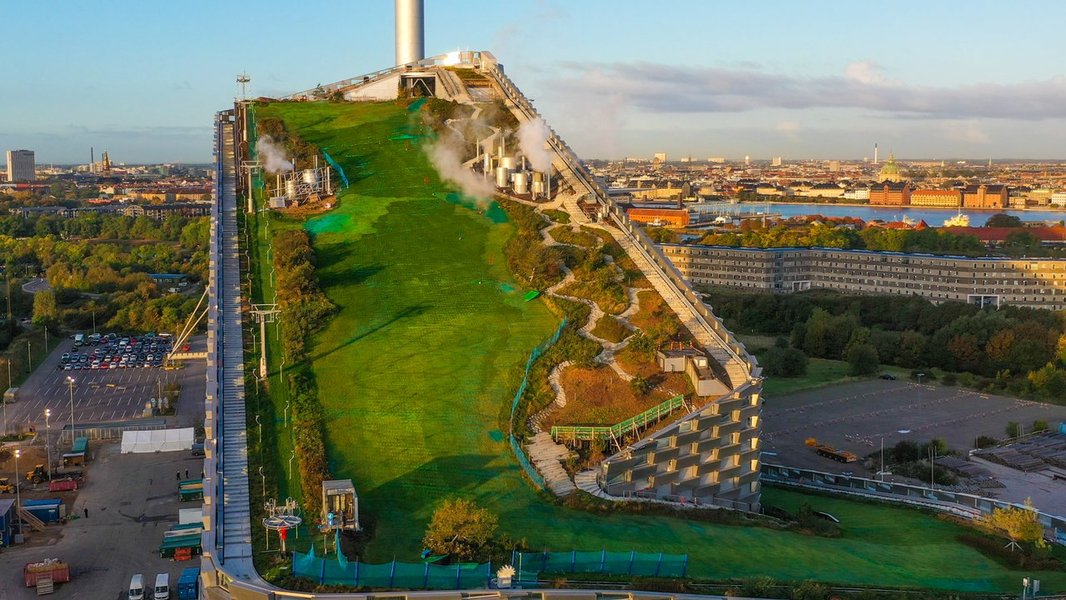
Copenhagen exemplifies sustainable urban solutions, integrating recreation with infrastructure like the Copenhill waste-to-energy plant.
Dominance of Public and Active Transport
High-speed rail networks connect regions, while within cities, autonomous electric buses, trams, and on-demand electric shuttles provide seamless public transit. Cycling and walking are the primary modes for shorter distances, supported by safe and extensive infrastructure. Cargo bikes are widely used for transporting goods and children, replacing delivery vans and family cars in urban settings.
Zero-Emission Vehicles
Where private or specialized vehicles are necessary, they are exclusively electric or hydrogen-powered, charged using renewable energy sources. Fossil fuel vehicles are obsolete relics of a less sustainable past.
Nourishing the Planet: Regenerative Food Systems
Agriculture shifts from industrial monocultures to diverse, regenerative systems that heal the land and provide healthy, local food.
Sustainable Farming Practices
Techniques like organic farming, permaculture, agroforestry, crop rotation, and integrated pest management are standard. These methods restore soil health, enhance biodiversity, conserve water, and sequester carbon. Meat consumption is significantly reduced, replaced by plant-based diets and ethically raised livestock integrated into regenerative systems.
Local Food Networks and Urban Agriculture
Food production is localized. Community-supported agriculture (CSA), farmers' markets, and extensive urban farming networks (rooftop gardens, vertical farms, community plots) drastically reduce food miles and increase access to fresh, seasonal produce. Food waste is minimized through efficient distribution, composting programs, and anaerobic digestion facilities that convert organic waste into biogas and fertilizer.
Resource Wisdom: Circular Economy and Zero Waste
The concept of "waste" is largely eliminated through a closed-loop, circular economy.
Designing Out Waste
Products are designed for durability, repairability, and eventual disassembly and recycling. Single-use items, especially plastics, are replaced with reusable alternatives or biodegradable materials. Packaging is minimal, reusable, or compostable.
Comprehensive Reuse and Recycling
Extensive systems facilitate the repair, refurbishment, sharing, and redistribution of goods. Repair cafes and tool libraries are common community resources. What cannot be reused is efficiently sorted and recycled back into high-value materials. Water management includes widespread rainwater harvesting, greywater recycling, and natural filtration systems.
Comparing Gaia Secunda to Our World
To better understand the fundamental shifts embodied by Gaia Secunda, the radar chart below contrasts key sustainability metrics between this envisioned parallel world and the average performance of our current world. The values are illustrative, representing ambitious yet achievable goals based on scaling up best practices.
This chart visually emphasizes the transformative difference in Gaia Secunda, particularly in areas like renewable energy reliance, circularity, biodiversity protection, and sustainable urban living compared to current global averages.
Interconnected Systems: A Mindmap View
The success of Gaia Secunda lies in the interconnectedness of its systems. No single element operates in isolation. The mindmap below illustrates how different facets of this eco-friendly world support and reinforce each other, creating a resilient and holistic sustainable society.
(Solar, Wind, Geo, Hydro)"] id1b["Smart Grids & Storage"] id1c["Energy Efficiency
(Buildings, Industry)"] id2["Green Urbanism"] id2a["Biophilic Design"] id2b["Sustainable Materials"] id2c["Walkable Cities"] id2d["Green Spaces & Biodiversity"] id3["Clean Transportation"] id3a["Public Transit Focus
(Electric, Autonomous)"] id3b["Cycling & Walking Infrastructure"] id3c["Zero-Emission Vehicles"] id3d["Reduced Need for Travel"] id4["Regenerative Food & Agriculture"] id4a["Organic & Permaculture"] id4b["Local Food Systems"] id4c["Reduced Meat Consumption"] id4d["Urban Farming"] id4e["Minimal Food Waste"] id5["Circular Economy"] id5a["Zero Waste Principles"] id5b["Product Durability & Repair"] id5c["Advanced Recycling & Upcycling"] id5d["Water Conservation & Reuse"] id6["Eco-Conscious Society"] id6a["Environmental Education"] id6b["Community Engagement"] id6c["Sustainable Lifestyles"] id6d["Green Jobs & Economy"] id7["Ecosystem Health"] id7a["Biodiversity Conservation"] id7b["Reforestation & Rewilding"] id7c["Clean Air & Water"] id7d["Climate Resilience"]
This mindmap highlights the core pillars and their key components, demonstrating the integrated approach necessary to build and maintain such a world.
Lifestyle and Values in Gaia Secunda
Life in Gaia Secunda is characterized by a different set of values and daily practices, emphasizing community, well-being, and connection to the environment over material accumulation.
Shift in Consumption
Consumerism as we know it doesn't exist. People prioritize experiences, relationships, and personal growth. Needs are met through access rather than ownership (sharing economies), and purchases are mindful, focusing on quality, durability, and ethical production. Repairing, repurposing, and swapping goods are common practices.
Education and Awareness
Environmental literacy and ecological ethics are core components of education from a young age. Lifelong learning opportunities focus on sustainability skills, nature connection, and community resilience. This fosters a deep understanding and commitment to maintaining the planet's health.
Community Focus
Strong local communities are the bedrock of society. People actively participate in local governance, community projects (like gardening or conservation efforts), and mutual support networks. Technology facilitates connection but doesn't replace face-to-face interaction and shared activities.
Work and Economy
The economy is geared towards well-being and ecological regeneration. Green jobs dominate – in renewable energy, ecosystem restoration, sustainable agriculture, green building, circular economy services, education, and healthcare. Work-life balance is valued, allowing time for community, creativity, and connection with nature.
Comparing Lifestyles: Gaia Secunda vs. Today
The following table summarizes some key differences in everyday life and societal structure between the envisioned Gaia Secunda and the typical experience in many parts of our current world.
| Aspect | Gaia Secunda (Eco-Parallel World) | Current World (Typical) |
|---|---|---|
| Primary Energy Source | 100% Renewable (Solar, Wind, Geothermal, Hydro) | Predominantly Fossil Fuels (Coal, Oil, Gas) with growing Renewables |
| Urban Transport | Walking, Cycling, Free Electric Public Transit | Private Cars (often fossil fuel), Paid Public Transit, Limited Cycling Infrastructure |
| Food System | Local, Organic, Plant-forward, Minimal Waste | Globalized, Industrial Agriculture, High Meat Consumption, Significant Waste |
| Housing | Energy-positive/Net-zero, Green Materials, Integrated Nature | Varied Efficiency, Conventional Materials, Limited Green Integration |
| Consumption Pattern | Needs-based, Durability, Repair, Sharing Economy | Wants-based, Disposable, Ownership-focused |
| Waste Management | Circular Economy, Near-zero Waste, High Reuse/Recycling | Linear (Take-Make-Dispose), Landfills, Moderate Recycling |
| Dominant Values | Ecological Harmony, Community, Well-being, Sufficiency | Economic Growth, Individualism, Materialism |
| Relationship with Nature | Integrated, Respected, Actively Regenerated | Often Exploited, Separated, Conservation Efforts Fragmented |
Inspiring Sustainable Change
While Gaia Secunda is a conceptual parallel world, the principles it embodies are rooted in real-world efforts and aspirations. Individuals and communities are already taking steps towards a more sustainable future. The following video shares inspiring stories of people living the change.
Living the Change: Inspiring Stories for a Sustainable Future (Full Documentary)
This documentary highlights individuals and communities making tangible changes towards sustainability, demonstrating that the transition towards a greener lifestyle is not only possible but already underway. It reinforces the idea that collective action and individual choices are powerful drivers for creating a better future, mirroring the community spirit envisioned in Gaia Secunda.
Frequently Asked Questions (FAQ)
How is energy generated in this parallel world?
What happens to waste? Is it truly zero-waste?
How does transportation work without personal cars?
Is such a world realistically achievable?
Recommended
- What are the key features of the most sustainable cities in the world?
- How can regenerative agriculture transform our food systems?
- Explore the principles of circular economy and zero waste living.
- What technologies are crucial for transitioning to 100% renewable energy?
References
Last updated May 4, 2025