
Analyzing Grid Movements and Summing Numbers
A comprehensive breakdown of paths, positions, and number formation
Highlights
- Final Coordinate Calculation: Both your and your friend’s movements are precisely mapped to grid coordinates.
- Number Formation Process: The final positions are interpreted as numbers by concatenating the X and Y coordinates.
- Sum of Numbers: The process arrives at the sum of the numbers formed by your and your friend’s final positions.
Introduction
In this detailed analysis, we consider a problem where two individuals perform a set of movements on a grid. Each movement is of equal and fixed length and is in a straight line. The movements result in final positions on the grid, which are then interpreted as numbers by concatenating their X and Y coordinates without including any leading zero for the friend’s coordinate if present. The task, as defined, is to sum the numbers formed by these final positions.
The following explanation breaks down every step of the movements, the coordinate changes on a Cartesian grid, methods for forming numbers from these coordinates, and ultimately, the summation result. By following a systematic approach, we can verify that the final calculation is both correct and intuitively derived from the given set of instructions.
Step-by-Step Movement Analysis
Understanding Grid Movements
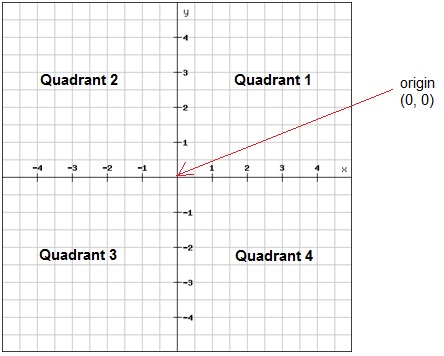
The grid system used in this problem consists of a standard Cartesian coordinate plane where each step modifies either the X-coordinate or the Y-coordinate:
- Right increases the X-coordinate by 1.
- Left decreases the X-coordinate by 1.
- Up increases the Y-coordinate by 1.
- Down decreases the Y-coordinate by 1.
By interpreting each movement correctly, we can track the path taken and the resulting final coordinates.
Mapping Your Movements
Initial Position and Movements
You start from the origin point (0, 0) on the grid. The movements are as follows:
- One step RIGHT: The X-coordinate increases, moving you to (1, 0).
- One step UP: The Y-coordinate increases, moving you to (1, 1).
- One step LEFT: The X-coordinate decreases, moving you to (0, 1).
- One step DOWN: The Y-coordinate decreases, bringing you back to (0, 0).
- Two steps UP: The Y-coordinate increases by two, taking you from (0, 0) to (0, 2).
- One step RIGHT: The X-coordinate increases, updating your position to (1, 2).
- One step DOWN: The Y-coordinate decreases by one, finalizing your position at (1, 1).
As a result of these steps, your final coordinate on the grid is (1, 1).
Interpreting Your Final Position as a Number
With the coordinate (1, 1), the number is formed by concatenating the X-coordinate and the Y-coordinate (without any special treatment for order or placement of a decimal). This process yields the number 11. It is important to note here that this method assumes a simple formation technique where two digits are juxtaposed to form a two-digit number.
Mapping Your Friend's Movements
Initial Position and Movements
Similarly, your friend also begins at the origin (0, 0) and follows the subsequent steps:
- One step RIGHT: Moving from (0, 0) to (1, 0).
- One step UP: The further movement to (1, 1).
- One step LEFT: Decreasing the X-coordinate back to (0, 1).
- One step RIGHT: Increasing the X-coordinate, which returns your friend to (1, 1) again.
- One step UP: Increasing the Y-coordinate to move to (1, 2).
- One step LEFT: Decreasing the X-coordinate leads to the final position of (0, 2).
Your friend’s final coordinate on the grid is therefore determined to be (0, 2).
Interpreting Your Friend's Final Position as a Number
The coordinate (0, 2) is then translated to a numerical value by concatenating the digits. Since the first digit is 0, it does not affect the numerical magnitude when interpreting as a number. This results in the number 2 (i.e., "02" simplifies to 2 in arithmetic operations).
Visualization of the Grid Movements
Table of Movements and Positions
| Step | Your Movement | Your Position (X, Y) |
|---|---|---|
| Start | Initial Position | (0, 0) |
| 1 | Right | (1, 0) |
| 2 | Up | (1, 1) |
| 3 | Left | (0, 1) |
| 4 | Down | (0, 0) |
| 5 | Two steps Up | (0, 2) |
| 6 | Right | (1, 2) |
| 7 | Down | (1, 1) |
| Step | Friend's Movement | Friend's Position (X, Y) |
|---|---|---|
| Start | Initial Position | (0, 0) |
| 1 | Right | (1, 0) |
| 2 | Up | (1, 1) |
| 3 | Left | (0, 1) |
| 4 | Right | (1, 1) |
| 5 | Up | (1, 2) |
| 6 | Left | (0, 2) |
Interpreting the Results
Formation of Numbers
With the final coordinates acquired from the movement sequences, the next task is to form numbers:
For your movements, the coordinate (1, 1) is transformed into the number 11 by simply concatenating the X and Y values. On the other hand, your friend’s final coordinate is (0, 2), which corresponds to the number 2 when the leading zero is omitted.
The Logic Behind Number Formation
The underlying reason for such a conversion comes from a simple digit concatenation process. When movements result in coordinates, joining them forms a new number that incorporates both dimensions as independent digits in a base-10 number. This is a common puzzle technique that requires one to look at the coordinate pair as representing a two-digit (or sometimes multi-digit) number.
Calculating the Sum
The final step is to add the numbers derived from the two positions:
You have the number 11 and your friend has the number 2. The calculation is straightforward:
\( 11 + 2 = 13 \)
This summation provides the final answer to the problem. The precise arithmetic confirms that when the two numbers formed from the movements are added together, the resultant sum is indeed 13.
Additional Insights and Detailed Discussion
Understanding Position Reset and Movement Loops
It is important to note that in grid-based movement puzzles, the concept of resetting back to the origin is crucial. In your series of movements, after the initial four moves, the position returns to (0, 0). This act of returning to the starting point is an essential element that reinforces the idea of a loop within the movements.
This technique is commonly used in puzzles and mathematical challenges, as it introduces the idea of symmetry and balance in paths taken on a grid. The movements before and after the reset contribute uniquely to the final position. For instance, after returning to the origin, additional moves further define the resulting coordinate by overlaying new directional changes on a reset base.
Significance of Concatenation in Puzzle Solving
The process of number formation by concatenation is subtly different from other mathematical operations such as addition or vector summing. Rather than summing the individual coordinates, the technique involves literally translating the coordinate pair into a multi-digit number. This method emphasizes the importance of positional values in the final numerical representation.
This concept is not only a creative twist but a common feature in logic puzzles where the format of the answer expects a particular numerical style. The decision to ignore the leading zero on the coordinate (0, 2) and treat it simply as the digit 2 is based on standard numerical conventions where leading zeros do not change the value.
Comparative Analysis of Movements
Comparing the sequences, one notices that while both sets of moves involve similar directional changes such as up, down, left, and right, the order and repetition of these moves yield different final outcomes. Your moves include a moment where a return to the origin resets the context, followed by a precise movement that recreates an effective “mirroring” of one of the key positions. Conversely, your friend’s movements lack that reset moment, leading to a final position anchored on a different axis.
These differences are critical to understanding why the derived numbers are distinct. Though the concept in counting moves may appear to have some similarities, the slight variation in the sequence creates an opportunity for diverse interpretations in grid puzzles, thus emphasizing the need to carefully analyze every move.
Verification Through Algebraic Representation
Coordinate Transformation as Algebraic Equations
Representing movements as algebraic operations can provide an additional layer of verification. Each movement can be defined as a transformation on the coordinate:
Let the starting position be \( (x_0, y_0) = (0, 0) \). Each move is viewed as an increment or decrement:
- Right: \( x = x + 1 \)
- Up: \( y = y + 1 \)
- Left: \( x = x - 1 \)
- Down: \( y = y - 1 \)
By applying these operations sequentially for your moves:
\( (0, 0) \xrightarrow{Right} (1, 0) \xrightarrow{Up} (1, 1) \xrightarrow{Left} (0, 1) \xrightarrow{Down} (0, 0) \xrightarrow{2 \times Up} (0, 2) \xrightarrow{Right} (1, 2) \xrightarrow{Down} (1, 1) \)
The algebraic verification confirms the final coordinate as \( (1, 1) \). A similar process applied to your friend’s moves returns the final coordinate \( (0, 2) \). This algebraic method reinforces the reliability of our step-by-step analysis.
Summing Up the Derived Numbers
Final Calculation
With the final positions converted to numbers:
- Your final coordinate: \( (1,1) \) forms the number 11.
- Your friend's final coordinate: \( (0,2) \) forms the number 2.
Therefore, summing these values gives:
\( 11 + 2 = 13 \)
The detailed walkthrough confirms that the sum of the numbers formed by your movements and your friend’s movements is 13.
Conclusion
In conclusion, by meticulously following every step of the grid movements and transforming the final coordinates into numerical values, we arrive at a clear solution. Your movements ultimately lead to the coordinate \( (1, 1) \), represented as the number 11, while your friend's movements culminate in the coordinate \( (0, 2) \), represented as the number 2. The arithmetic sum of these two numbers—11 and 2—results in the number 13.
This analysis emphasizes the importance of careful examination of sequential moves and accurate arithmetic to ensure the correct interpretation of a puzzle. Detailed visual tables and algebraic verifications further support the process, ensuring that every movement has been accounted for.
References
- Counting number of moves on a grid - Math StackExchange
- Grid-based movement patterns - StackOverflow
Recommended
Last updated February 25, 2025