
Beyond Desire: Unpacking How Groping Breasts Is an Act of Power
Exploring the complex link between non-consensual touching and the assertion of dominance and control.
The act of groping, specifically touching someone's breasts without their explicit consent, is a deeply violating experience. While often misconstrued as a crude expression of sexual interest, extensive analysis across psychology, sociology, and legal studies reveals a much darker motivation: the assertion of power and control. Understanding this connection is crucial to recognizing the true nature of such acts and addressing the underlying dynamics that enable them.
Key Insights: Groping and Power Dynamics
- Power Over Desire: Experts widely agree that non-consensual acts like groping are primarily driven by a need to exert dominance, control, and intimidation, rather than genuine sexual attraction.
- Violation of Autonomy: Groping is an intentional act meant to undermine a person's sense of safety, bodily autonomy, and self-worth, reinforcing the perpetrator's perceived superiority.
- Reinforcing Hierarchies: In social and professional settings, groping often serves to maintain existing power imbalances, particularly gender-based hierarchies, by objectifying and demeaning the target.
Understanding Groping as Power-Based Personal Violence
More Than Just Unwanted Touch
Groping falls under the umbrella of "power-based personal violence." This term encompasses behaviors like sexual assault, relationship violence, stalking, and sexual harassment, all characterized by the assertion of power, control, or intimidation with the intent to harm. When someone gropes another person, especially sensitive areas like the breasts, the act transcends simple physical contact. It becomes a deliberate message that the perpetrator holds power over the victim's body and personal space.
Control and Intimidation Tactics
The core motivation is often the desire to dominate. By invading personal boundaries in such an intimate and violating way, the perpetrator seeks to induce feelings of vulnerability, fear, and powerlessness in the victim. This act communicates that the victim is not in control of their own body and is subject to the perpetrator's whims. It's a tactic used to diminish the victim's sense of self and agency.

Power imbalances can manifest in various harmful ways, including harassment.
Psychological Drivers: Insecurity and Dominance
What Motivates the Act?
Psychologically, the impulse to grope often stems from the perpetrator's own insecurities or a distorted need to assert dominance. It's less about the person being targeted and more about the perpetrator's internal state.
Compensating for Perceived Weakness
Some individuals may engage in groping to bolster their own sense of potency or self-worth, especially if they feel inadequate or powerless in other aspects of their lives. The act of controlling and violating another person provides a fleeting, albeit perverse, sense of power. This is sometimes linked to "power insecurity," where individuals use physical intrusion or harassment to feel dominant.
Objectification and Devaluation
Groping breasts specifically targets a part of the body often sexualized and linked to femininity. By non-consensually touching this area, the perpetrator objectifies the victim, reducing them to a sexual object rather than recognizing their full humanity. This act serves to devalue the individual, particularly in professional or social contexts where it can undermine their standing and authority.
Social and Workplace Contexts: Exploiting Power Imbalances
Where Power Dynamics Fuel Harassment
Groping frequently occurs in environments where pre-existing power imbalances can be easily exploited. Workplaces, public transportation, crowded venues, and social gatherings can become sites where perpetrators feel emboldened to assert dominance through unwanted touching.
Workplace Harassment
In the workplace, sexual harassment, including groping, is legally recognized as a form of discrimination (e.g., under Title VII of the Civil Rights Act of 1964 in the US). It's often used to maintain hierarchical structures, intimidate colleagues (particularly women or those in subordinate positions), and create a hostile environment. Studies show that individuals in positions of power may sometimes use harassment to "equalize" perceived threats from subordinates or peers, reinforcing their own status.
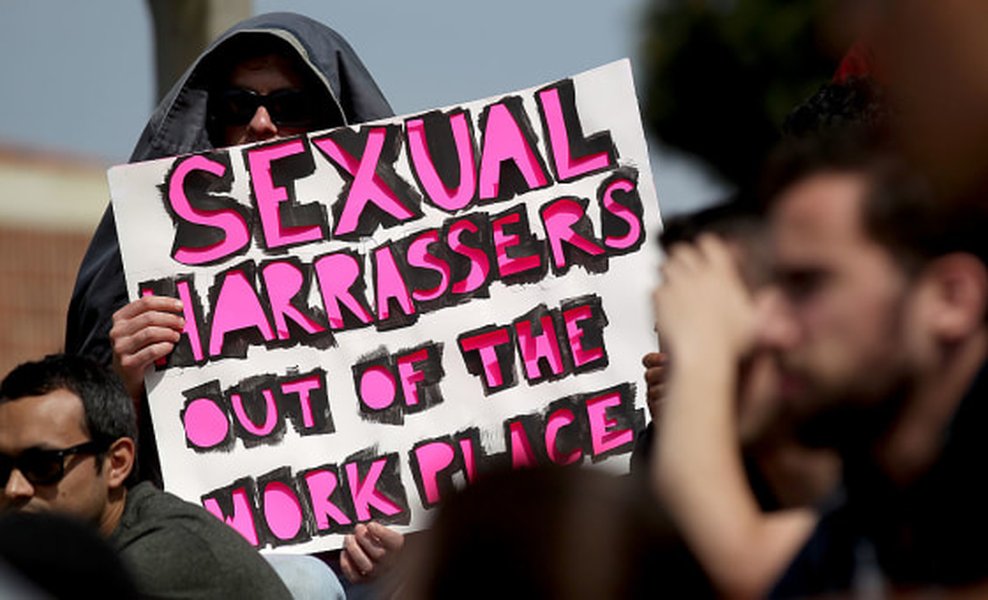
Workplace harassment is often rooted in power dynamics.
Public Spaces and Social Settings
In public or social settings, anonymity or crowd dynamics can sometimes lower inhibitions. Groping in these contexts serves as a blunt assertion of power, reminding the victim of their vulnerability even in seemingly neutral spaces. It's an act designed to control the victim's experience and assert the perpetrator's dominance in that interaction.
Visualizing the Motivations Behind Groping
A Comparative Look at Driving Factors
While individual motivations can vary, research and analysis suggest that power-related factors significantly outweigh genuine sexual desire in cases of non-consensual groping. The following chart illustrates the relative perceived importance of different motivations often associated with this act. Note that this is an illustrative representation based on expert consensus, not precise quantitative data.
As the chart suggests, factors like asserting power, exerting control, intimidation, objectification, and compensating for insecurity are considered far more significant drivers of groping than genuine sexual attraction. This underscores the understanding of groping as primarily an act of dominance.
Mapping the Concepts: Groping and Power
Interconnected Elements
The relationship between groping and power involves several interconnected elements, from the perpetrator's motivations to the impact on the victim and the social contexts that enable it. This mindmap outlines these key connections:
This mindmap illustrates how groping is deeply embedded in dynamics of power, affecting individuals psychologically and socially, and recognized legally as a serious violation often distinct from sexual desire.
Facets of Groping as a Power Play
A Summary Table
The following table summarizes the key aspects connecting groping to the assertion of power across different dimensions:
| Aspect | Connection to Power Assertion |
|---|---|
| Nature of the Act | Non-consensual physical violation used to exert control over another's body and space. |
| Primary Motivation | Dominance, intimidation, control, reinforcing superiority, compensating for insecurity (rather than sexual desire). |
| Psychological Impact on Victim | Induces fear, vulnerability, helplessness, violation of autonomy, diminished self-worth. |
| Social Context | Often occurs where power imbalances exist (e.g., workplace, public spaces); used to reinforce social/gender hierarchies. |
| Objectification | Reduces the person to a sexual object, devaluing their identity and status, especially targeting areas like breasts. |
| Legal Recognition | Considered a form of sexual harassment/assault, legally understood as power-based violence and discrimination. |
Frequently Asked Questions
Is groping always about asserting power? +
While motivations can be complex and sometimes involve misplaced sexual cues or disorders like frotteurism, the overwhelming consensus among experts is that non-consensual groping is fundamentally rooted in power dynamics. The act itself inherently involves exerting control over someone else's body without consent, which is an assertion of power, regardless of other underlying factors.
How is groping different from accidental touching? +
Groping is intentional, non-consensual touching, often targeting sensitive or private areas of the body. It is done with the intent (conscious or subconscious) to violate, control, or demean. Accidental touching, like bumping into someone in a crowd, lacks this intent and is usually brief and impersonal. The context, duration, location of the touch, and the perpetrator's behavior clearly distinguish groping from accidental contact.
Why is groping considered a form of violence? +
Groping is considered power-based personal violence because it uses physical force or intrusion (unwanted touching) to assert power and control, causing harm to the victim. Violence isn't limited to acts causing visible physical injury; it includes actions that violate personal autonomy, cause psychological distress, and create an environment of fear and intimidation. Groping achieves all of these, making it a form of violence.
Does the perpetrator's gender change the power dynamic? +
While statistics show men are more often perpetrators of groping against women, reflecting broader societal gender power imbalances, anyone can be a perpetrator or victim. The core issue remains the assertion of power and violation of consent. The specific power dynamics might shift based on gender, status, age, or other factors, but the fundamental nature of the act as an abuse of power persists regardless of the genders involved.
Recommended
- What are the long-term psychological effects of being groped?
- How do legal systems define sexual harassment versus sexual assault regarding unwanted touching?
- In what other ways do power dynamics influence behavior in the workplace?
- What strategies can individuals and communities use to address and prevent groping?
References
Last updated April 30, 2025