
Introducing Regular Branches in Polyethylene Using Dual Catalyst Systems
Utilizing Group VIa Transition Metals and Specific Activators in Homogeneous Catalysis
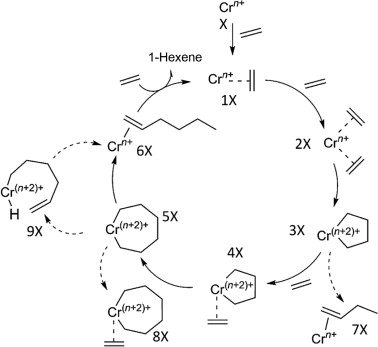
Key Takeaways
- Group VIa transition metals effectively introduce regular branches in polyethylene when combined with specific activators.
- Aluminum-based activators may be ineffective for the essential branching steps in certain catalyst systems.
- Noble metal catalysts can induce branching but are often too expensive for industrial applications.
Background on Ethylene Polymerization
Ethylene polymerization is a cornerstone of the polymer industry, producing polyethylene—a material ubiquitous in packaging, containers, and countless other applications. The physical properties of polyethylene are highly dependent on its molecular structure, particularly the degree and pattern of branching within the polymer chains. High-density polyethylene (HDPE) is characterized by minimal branching, resulting in a linear structure that imparts rigidity and high tensile strength. Conversely, introducing branches into the polymer backbone reduces crystallinity, enhancing flexibility and toughness, as seen in low-density polyethylene (LDPE) and linear low-density polyethylene (LLDPE).
Controlling the branching of polyethylene is essential for tailoring its properties to specific applications. This control is achieved through the manipulation of catalyst systems during polymerization. Homogeneous organometallic catalysts offer precision in controlling polymer architecture, making them invaluable in research and industrial settings aiming to produce polyethylene with specific branching patterns using only ethylene as the monomer.
Dual Catalyst Systems for Regular Branching
Introducing regular branches into polyethylene using only ethylene monomers can be accomplished through the use of dual catalyst systems. These systems employ two catalysts simultaneously:
- Primary Catalyst: Facilitates the polymerization of ethylene into high-density polyethylene chains.
- Secondary Catalyst: Introduces branches by enabling secondary reactions such as chain walking or intermittent chain transfer, resulting in regular branching along the polymer backbone.
The combination of these catalysts allows for the synthesis of polymers with a controlled degree of branching without the need for comonomers. This is advantageous in producing materials with specific mechanical and physical properties, expanding the versatility of polyethylene in various applications.
Role of Group VIa Transition Metals
Group VIa transition metals, including chromium (Cr), molybdenum (Mo), and tungsten (W), play a significant role in the development of catalysts for ethylene polymerization. Chromium-based catalysts, in particular, have been extensively studied and utilized due to their ability to produce polyethylene with tailored properties. When combined with specific activators, these catalysts can introduce regular branches into the polymer chains even when only ethylene is used as the monomer.
Mechanism of Branch Formation
The use of Group VIa transition metal catalysts facilitates branching through mechanisms such as:
- Chain Walking: The catalyst migrates along the growing polymer chain, allowing the insertion of ethylene units at different positions and creating side chains.
- Secondary Insertion Reactions: The catalyst enables the insertion of ethylene into existing polymer chains, forming branches.
The effectiveness of these catalysts in introducing branches depends on their interaction with specific activators, which modify the electronic and steric properties of the catalyst, enhancing its ability to facilitate branching reactions.
Specific Activators
Specific activators are essential in the catalytic system to achieve the desired branching. These activators:
- Modify the oxidation state of the metal center.
- Adjust the ligand environment around the metal.
- Enhance the solubility and stability of the catalyst.
Activators such as non-aluminum-based compounds are often used with Group VIa catalysts to promote the necessary reactions for branching. These may include organoboranes, alkyl halides, or other Lewis acids that are compatible with the catalyst system and effective in promoting chain walking or secondary insertion mechanisms.
Aluminum-Based Activators and Their Limitations
Aluminum-based activators, like methylaluminoxane (MAO) and other alkylaluminum compounds, are widely used in olefin polymerization with metallocene catalysts due to their effectiveness in activating the catalyst and controlling polymerization rates. However, in the context of introducing regular branches using Group VIa transition metal catalysts, these activators may not be suitable for the essential additional reaction steps required for effective branching.
Limitations of aluminum-based activators in this scenario include:
- Incompatibility: They may not form the necessary active species with Group VIa metal catalysts.
- Insufficient Activation: They might not facilitate the chain walking mechanisms required for regular branching.
- Side Reactions: They could lead to undesirable side reactions that affect polymer properties.
Therefore, aluminum-based activators may "not work for the essential additional reaction step" when the goal is to introduce regular branching using a dual catalyst system with Group VIa metals.
Use of Noble Metal Catalysts
Noble metal catalysts, particularly those based on palladium (Pd) and platinum (Pt), have demonstrated the capability to catalyze ethylene polymerization and introduce branching through chain walking mechanisms. These catalysts are highly active and can produce polymers with unique properties. However, their application is limited in industrial settings due to several factors:
- Cost: Noble metals are expensive, making large-scale use economically unfeasible.
- Availability: Limited natural abundance of noble metals restricts their widespread industrial application.
- Sensitivity: Noble metal catalysts may be sensitive to impurities and require stringent reaction conditions.
While "certain noble metal catalysts can be used," their high cost renders them impractical for industrial production of branched polyethylene using only ethylene monomers.
Industrial Implementation of Dual Catalyst Systems
Industrial-scale production of branched polyethylene typically involves copolymerization of ethylene with comonomers like 1-butene or 1-hexene using Ziegler-Natta or metallocene catalysts. These methods are well-established and widely implemented in the United States and globally. However, the specific use of homogeneous dual catalyst systems employing only ethylene and Group VIa transition metals to introduce regular branching is not commonly practiced on an industrial scale.
Challenges to industrial implementation include:
-
Catalyst Separation: Homogeneous catalysts are dissolved in the reaction mixture, making separation and recycling difficult.
-
Process Complexity: Dual catalyst systems require precise control over reaction conditions to maintain catalyst activity and selectivity.
-
Economic Viability: Scaling up novel catalyst systems involves significant investment and risk.
Therefore, while research and pilot-scale studies have demonstrated the feasibility of such systems, "such combined systems are already implemented on an industrial scale in the US" may be an overstatement.
Evaluating the Senior Scientist's Statements
Based on the detailed analysis of catalyst systems and their roles in ethylene polymerization, each of the senior scientist's statements can be assessed as follows:
- "Such combined systems are already implemented on an industrial scale in the US."
- "One can use a catalyst of a group VIa transition metal in combination with specific activators."
- "Aluminum-based activators do not work for the essential additional reaction step."
- "Certain noble metal catalysts can be used but are too expensive."
This statement is partially incorrect. While dual catalyst systems are a topic of research and have potential, their implementation on an industrial scale, specifically for introducing regular branches using only ethylene with homogeneous catalysts, is not prevalent in the United States. Industrial processes typically use copolymerization techniques with comonomers or heterogeneous catalysts for branching.
This statement is correct. Group VIa transition metals, notably chromium catalysts, can be used with specific activators to introduce regular branches in polyethylene from ethylene monomers. This approach leverages the unique catalytic properties of these metals and the activators to facilitate branching mechanisms.
This statement is valid in context. While aluminum-based activators are effective in many polymerization processes, they may not be suitable for the critical reactions required to introduce regular branches when using Group VIa metal catalysts. Their inability to promote the necessary mechanisms makes them less effective for this specific application.
This statement is correct. Noble metal catalysts can indeed facilitate the introduction of branches in polyethylene; however, their high cost and other practical limitations make them unsuitable for industrial-scale applications focused on cost-efficiency and scalability.
Conclusion
Considering the analysis above, the correct statement regarding the formation of a polymer with regular branches using only ethylene as the monomer and a dual catalyst system is:
"One can use a catalyst of a group VIa transition metal in combination with specific activators."
This approach is scientifically sound, leveraging the capabilities of Group VIa transition metals and specific activators to introduce regular branching in polyethylene through homogeneous catalysis. It addresses the scientist’s goal of modifying the polymer architecture without introducing additional monomers.
The statement about aluminum-based activators not working is contextually valid, highlighting the need for alternative activators better suited for the required reactions. While noble metal catalysts are effective, their cost constraints limit their practicality. The assertion that such systems are already implemented industrially in the U.S. is not fully accurate, given the current industrial practices favoring different methods for introducing branching.
References
Last updated January 26, 2025