
Detailed Discussion on Potting Media Effects on Leaf Production of Codiaeum variegatum
Analyzing the Impact of Different Growing Media on Croton Leaf Growth
Key Takeaways
- Optimized Media Composition: Specific ratios combining coco coir, rice hulls, and either sugarcane pressmud or silt significantly enhance leaf production.
- Nutrient and Structure Dynamics: Organic amendments boost nutrient availability and microbial activity, while inert components ensure proper aeration and drainage.
- Statistical Significance: Highly significant differences (P < 0.01) in leaf count emphasize that even minor variations in media ratios can alter the morphogenesis and vigor of Codiaeum variegatum.
Introduction
The study on Codiaeum variegatum (commonly known as Croton) has provided extensive data on the influence of various potting mixtures on the number of leaves produced by the plant. The data, which have been analyzed and presented in Table 4.1.5 and corresponding Figure 4.1.5, reveal highly statistically significant differences (P < 0.01) in leaf production among the tested media. This discussion synthesizes the experimental findings and critically assesses how the physical and chemical properties of different substrate mixtures can drive robust vegetative growth in Croton. In this discussion, we break down the role of each component in the media, the synergistic effects of combining organic and inert materials, and the broader implications of these findings for horticultural practices and future research.
Understanding the Media Components
Characteristics of Individual Components
The research involved several potting mixtures designed to optimize the growth of Codiaeum variegatum by balancing water retention, drainage, nutrient availability, and soil aeration. The primary components include:
Coco Coir
Coco coir, derived from the fibrous husks of coconuts, is known for its excellent water retention capacity and sustainable properties. Its fiber structure offers optimal moisture absorption while maintaining a porous matrix that facilitates efficient water distribution to the root zone. When used as a part of a growing medium, coco coir improves the substrate’s ability to hold moisture without creating a waterlogged environment.
Rice Hulls
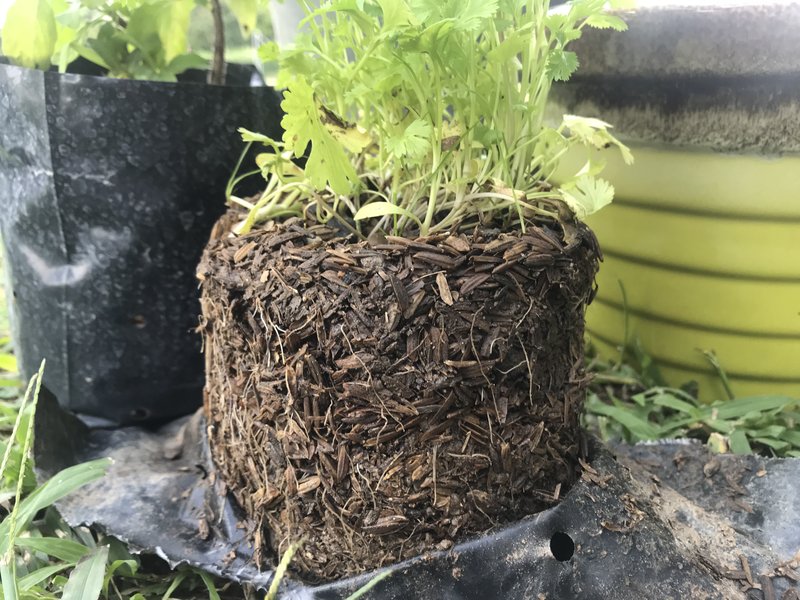
Rice hulls serve as an inert amendment that contributes significantly to the physical integrity of the growing media. Their inclusion primarily benefits the drainage and aeration of the soil by preventing compaction. The fibrous texture of rice hulls ensures that excess water is channeled away, reducing the risk of root rot and creating a microenvironment conducive to healthy root expansion.
Sugarcane Pressmud
Sugarcane pressmud provides a rich source of organic matter and nutrients, including essential minerals that promote rapid vegetative growth. The organic nature of this component encourages microbial activity in the soil, which in turn enhances nutrient cycling and availability to the plant roots.
Silt
Silt, characterized by its fine particles, improves the water-holding capacity of the substrate while contributing to a uniform texture. Its inclusion in a growing medium can strike a balance between moisture retention and aeration, ensuring that crop roots receive a steady supply of water and dissolved nutrients.
Composted Farmyard Manure (FYM)
Composted FYM is nutrient-dense, providing organic compounds and micronutrients essential for plant growth. Although it promotes vegetative growth, its effect on the physical structure must be carefully managed. In the tested mixtures, FYM was combined with other components to mitigate any potential negative impact on drainage and aeration.
Analysis of the Tested Media Mixtures
High-Performing Mixtures
The experimental data point to two specific media formulations leading to the highest leaf numbers in Codiaeum variegatum:
-
Coco Coir: Rice Hulls: Sugarcane Pressmud (50:30:20)
-
Silt (30:40:30)
In these formulations, the measured mean leaf counts reached 85.3 and 81.3, respectively. The superior performance of these media can be attributed to several factors:
Synergistic Effect of Organic and Inert Components
The first formulation emphasizes a balanced combination of organic material (coco coir and sugarcane pressmud) with rice hulls. Coco coir retains moisture effectively, and sugarcane pressmud, rich in organic nutrients, provides a burst of essential elements while stimulating microbial activity. Rice hulls complement this mix by ensuring proper structural stability, preventing excessive water retention, and enhancing aeration.
Role of Silt in Physical Uniformity
The second high-performing formulation primarily involving silt underscores its ability to create a finely textured and homogenous medium. Silt, by virtue of its fine particles, helps in maintaining a consistent moisture profile across the substrate. When combined in the 30:40:30 ratio, silt likely offers not only improved water-holding capacity but also an ideal balance with any added amendments, ensuring sustained leaf development.
Secondary Media Mixtures
While the performance of the best mixtures stands out, the experimental study also evaluated two other formulations:
- Coco Coir: Rice Hulls: Composted FYM (40:30:30) with a mean leaf count of 73.1
- Silt: Coco Coir: Composted FYM (50:20:30) with a mean leaf count of 73.0
These formulations also provided robust vegetative growth, though the leaf numbers were slightly lower compared to the top-performing mixtures. The observed differences may be a function of the specific physical and chemical dynamics introduced by composted FYM.
Nutrient Availability and Release Dynamics
The nutrient-rich composted FYM releases nutrients at a rate determined by its decomposition kinetics. Although FYM supplies an abundance of nutrients that help in biomass accumulation, its influence on substrate porosity and water retention properties may not be as optimal as sugarcane pressmud or silt when combined with coco coir and rice hulls. The slightly diminished performance, in this case, might be explained by a possible imbalance in moisture retention versus aeration, leading to conditions that are marginally less ideal for leaf proliferation.
Factors Influencing Media Performance
Physical Properties of the Growing Media
Water Retention and Drainage Balance
One of the principal determinants of plant health is the ability of the growing medium to manage water effectively. A medium that retains sufficient water without causing waterlogging is critical. In this context, coco coir contributes by holding onto moisture, while rice hulls and silt enhance drainage. When the balance of these properties is finely tuned – as evidenced in the top-performing media – the root system benefits from both steady moisture availability and adequate air space.
Soil Aeration and Structural Integrity
Proper aeration is essential to avoid hypoxic conditions that can lead to root stress and reduced nutrient uptake. Rice hulls and silt are particularly influential in maintaining a porous network within the potting mix. Their role is critical in ensuring that water does not stagnate, thereby preventing potential issues such as root rot while fostering a robust root system that directly influences leaf production.
Chemical Properties and Nutrient Dynamics
Organic Matter and Microbial Activity
The inclusion of organic amendments like sugarcane pressmud and composted FYM not only adds essential nutrients but also stimulates microbial activity in the substrate. Beneficial microbes break down organic matter to release plant-available nutrients, thereby facilitating a continuous cycle of nutrient replenishment. In the highest-performing mixture, the organic nutrients provided by sugarcane pressmud likely resulted in more efficient nutrient turnover compared to the composted FYM formulations.
pH and Nutrient Solubility
The pH of the growing medium plays a pivotal role in nutrient solubility and uptake. Both sugarcane pressmud and composted FYM can buffer pH fluctuations, but the precise ratio and interaction with inert materials like rice hulls and silt determine the overall pH stability. A stable pH promotes optimal nutrient availability for the plant, leading to improved metabolic functions and ultimately greater leaf development.
Comparative Analysis Through a Table
The table below summarizes the tested media formulations and their corresponding mean leaf counts, providing a clear visual comparison of the effectiveness of each mixture.
| Media Composition | Component Ratios | Mean Leaf Count |
|---|---|---|
| Coco Coir, Rice Hulls, Sugarcane Pressmud | 50:30:20 | 85.3 |
| Silt (with other amendments) | 30:40:30 | 81.3 |
| Coco Coir, Rice Hulls, Composted FYM | 40:30:30 | 73.1 |
| Silt, Coco Coir, Composted FYM | 50:20:30 | 73.0 |
Implications for Horticultural Practices and Future Research
Optimizing Cultivation Techniques
The significant differences (P < 0.01) in leaf production among the treatments underscore the necessity for horticulturists to choose and fine-tune growing media with precision. For practitioners cultivating Codiaeum variegatum, employing the Coco Coir: Rice Hulls: Sugarcane Pressmud (50:30:20) mix or a silt-based substrate (30:40:30) can lead to notably enhanced leaf production. These media not only promote better vegetative growth but also potentially improve the overall health and aesthetic appearance of the plant – a crucial factor given the ornamental value of Croton.
Harnessing Nutrient Use Efficiency
The interplay between organic amendments and physical media is central to achieving high nutrient use efficiency. In the preferred media combinations, the release of nutrients from organic amendments is well synchronized with the plant’s absorption patterns. This leads to enhanced biomass production and improved physiological functions, such as improved chlorophyll synthesis and photosynthetic efficiency, which are essential for sustaining vigorous leaf growth. Future research could delve deeper into the specific microbial communities that flourish in these optimized substrates, thereby offering insights into developing even more efficient bioactive growing media.
Addressing Environmental and Economic Efficiency
In addition to promoting optimal plant growth, the selection of a suitable growing medium has broader ecological and economic implications. Utilizing organic wastes like sugarcane pressmud and composted FYM not only reduces reliance on non-renewable substrates but also enhances recycling of agricultural byproducts. Furthermore, the incorporation of locally available inert materials such as rice hulls and silt can reduce costs and environmental impacts associated with substrate transport and production. This holistic approach to substrate formulation aligns with sustainable horticultural practices, making it imperative to integrate both performance and sustainability considerations in media selection.
Statistical Considerations and the Significance of Observations
Understanding P-Values and Media Impact
The evidence presented comes with a high statistical significance (P < 0.01), meaning that the differences observed in leaf counts between these various media formulations are not by chance. Statistical significance here emphasizes that even small alterations in the media composition affect the basic physiological processes in the plant. It validates the experiment's design and the rigor of the methods used to prepare and analyze the substrates.
Interpreting the Role of Each Media Component
In essence, the study indicates that adjusted proportions of coco coir, rice hulls, sugarcane pressmud, silt, and composted FYM contribute distinctly to the microenvironment around the roots. The mixtures with sugarcane pressmud appear to enable a more dynamic nutrient delivery system coupled with optimal water management, translating into a significantly higher number of leaves on Croton. In contrast, media enriched using composted FYM, though beneficial, suggest that the interplay of nutrient release and physical properties might require further tuning to match the performance of the best formulations.
Broader Context and Future Directions
Integrative Approaches in Substrate Research
The findings on Codiaeum variegatum have broader implications for the field of horticultural substrate research. Optimizing plant growth media is a multidimensional challenge that involves understanding the interactions between physical, chemical, and biological properties. In recent years, researchers have moved towards an integrative approach to study these interactions, balancing the benefits of both organic (e.g., sugarcane pressmud, composted FYM) and inert (e.g., rice hulls, silt) components. The current analysis reinforces these notions by providing empirical evidence that the right mixtures can substantially enhance plant vigor.
Adapting Media Formulations by Crop Type
While the focus here is on Croton, or Codiaeum variegatum, the strategies developed through these experiments can be adapted to other ornamental and agricultural crops. The underlying principles of water retention, aeration, and nutrient availability are fundamental to plant growth across species. Future research may focus on tailoring similar substrate formulations to meet crop-specific needs, particularly in terms of root architecture, water requirements, and nutrient demand. This would not only optimize growth but could also improve resistance to diseases and environmental stress.
Potential for Environmental Sustainability in Horticulture
Finally, the study highlights that by incorporating sustainable and locally sourced components like coco coir, rice hulls, and sugarcane pressmud, the horticulture industry can aim for a more environmentally resilient practice. Encouraging the use of recycled organic materials reduces waste and promotes a circular economy. For example, advanced research into the decomposition and nutrient release kinetics from these organic amendments may further refine the formulation process, ensuring that plant growth not only reaches new heights but does so in a way that minimizes environmental impact.
Final Thoughts and Conclusion
In summary, the study under discussion provides a comprehensive insight into how specific growing media can drastically affect leaf production in Codiaeum variegatum. The media formulations with coco coir, rice hulls, and sugarcane pressmud, along with the silt-based variant, have demonstrated significantly higher leaf counts compared to those incorporating composted FYM. These findings are attributed to the synergistic impact of optimized water retention, enhanced drainage, nutrient availability, and boosted microbial activity. The rigorous statistical significance (P < 0.01) reinforces the reliability of these observations, making them highly relevant for both ornamental horticulture and broader substrate research. Moving forward, fine-tuning these formulations and expanding their application across different crop types remains a promising avenue for research, one that aligns modern horticulture with sustainability and resource efficiency.
References
https://www.groworganic.com/blogs/articles/how-to-use-soil-amendments-rice-hulls?srsltid=AfmBOopgpZxMJe4VGoduIXzmsABuEINY_ZlW6jV1Jd4W0UuTFNcua3Sh
https://davesgarden.com/guides/articles/view/2464
https://www.quora.com/How-does-adding-rice-hulls-to-garden-soil-affect-the-growth-of-potted-plants
https://www.researchgate.net/profile/Oliver-Grunert/publication/340477345_Suitability_of_rice_hulls_and_coco_peat_as_alternatives_to_peat/links/5e8c22a292851c2f5286874f/Suitability-of-rice-hulls-and-coco-peat-as-alternatives-to-peat.pdf
https://www.kristykorganics.com/coconut-coir-rice-hulls
https://www.reddit.com/r/Permaculture/comments/vi49a0/coconut_coir_in_outdoor_planter_good_or_bad_idea/
https://www.echocommunity.org/en/resources/1817795b-7a29-40dc-b5ba-b3b33b82b7eb
https://link.springer.com/article/10.1007/s10163-023-01854-x
https://hydroponicway.com/rice-hulls-bad-for-environment/
https://www.kristykorganics.com/coconut-coir-rice-hulls
Last updated February 17, 2025