
Beyond a Simple "Hi There": Unlocking the Art of the Perfect Greeting!
From casual chats to formal settings and digital hellos, discover countless ways to make your greetings count.
Hello there! Responding to your friendly "HI there" – a warm and versatile greeting perfect for many situations. While simple and effective, the world of greetings is vast and fascinating. How we say "hello" can shape perceptions, build connections, and set the tone for entire interactions, whether in person or online. Let's explore the diverse landscape of greetings together!
Highlights: Mastering the First Impression
- Context is King: The most effective greetings adapt significantly based on the situation, your relationship with the person, and the communication medium (in-person, text, email).
- Variety Adds Spice: Moving beyond standard hellos with creative, humorous, or culturally diverse options can make your interactions more memorable and engaging.
- Digital Greetings Evolved: Online communication offers unique ways to say hi, from expressive emojis and GIFs to personalized digital greeting cards (eCards) that add a visual and emotional touch.
The Spectrum of Salutations: More Than Just "Hi"
Exploring Different Ways to Greet
The English language offers a rich tapestry of greetings, ranging from the quick and casual to the formal and elaborate. The word "hi" itself, considered informal, is thought to have emerged from Middle English around the 1500s. Choosing the right greeting depends heavily on context.

A simple 'Hello' can open doors to communication.
Informal Greetings: Casual and Friendly
These are typically used with friends, family, peers, or in relaxed settings. They convey warmth and familiarity.
- Hey! / Hey there!
- What's up? / Sup?
- How's it going?
- Yo!
- Howdy!
- Hiya!
Among younger generations (like Millennials and Gen Z), text-speak, slang ("What's cracking?"), emojis (👋, 😊), and even animated GIFs are popular informal greetings in digital communication.
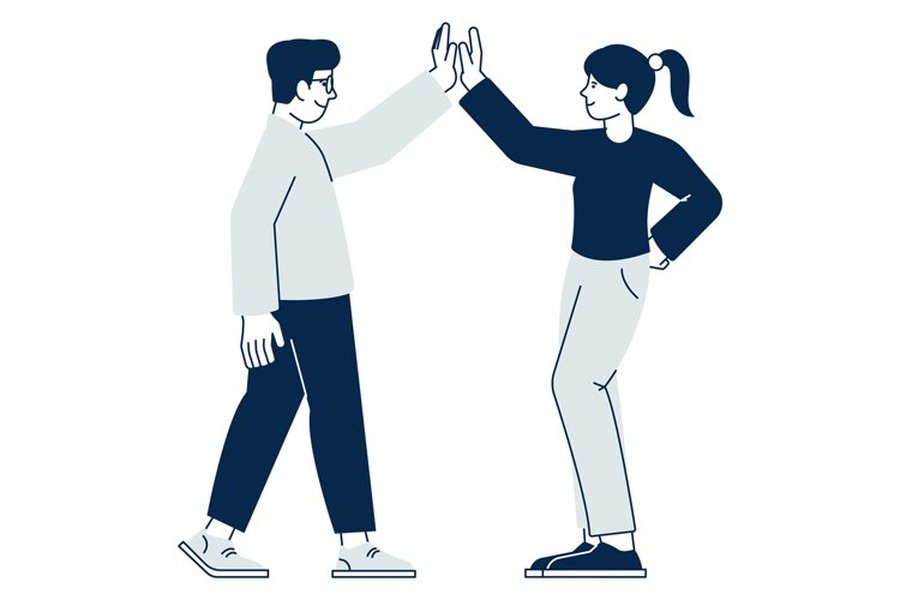
Informal greetings like a high-five are common among friends and peers.
Formal Greetings: Respectful and Professional
Reserved for professional environments, official occasions, meeting someone for the first time in a formal context, or addressing elders or superiors. These greetings convey respect and politeness. Older generations (like Baby Boomers and Gen X) might prefer these more traditional forms.
- Hello.
- Good morning / Good afternoon / Good evening.
- It's a pleasure to meet you.
- How do you do? (Often rhetorical, expecting the same in return)
- Greetings.
In very formal settings, like conferences, greetings can be much more elaborate: "Ladies and gentlemen, distinguished speakers, industry experts, and esteemed attendees, it is my honor to address you today and extend my heartfelt greetings."
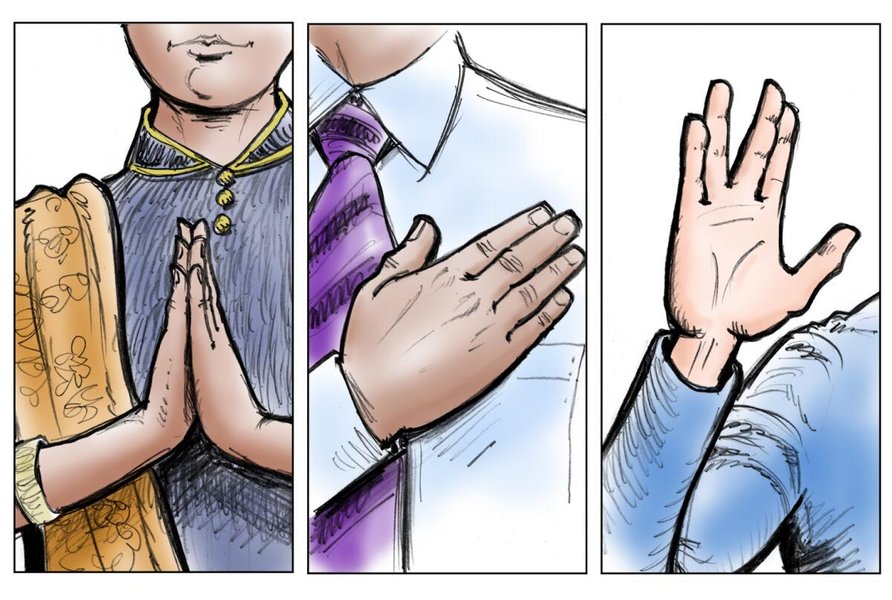
Contactless greetings like 'Namaste' offer respectful alternatives, especially in formal or health-conscious situations.
Creative & Fun Greetings: Adding Personality
Injecting creativity can make greetings more memorable, especially with people you know well or in informal digital chats.
- Ahoy! / Ahoy, matey!
- Salutations!
- Greetings and salutations!
- [Your Name] reporting for duty!
- Using foreign language greetings like 'Hola!' (Spanish), 'Ciao!' (Italian), or 'Bonjour!' (French).
- Playful variations like "Howdy partner!" or "'Sup, my homeslice?"
Digital-Specific Greetings: Tailored for Online
Online interactions have their own nuances.
- Using emojis: 👋, 😊, ✨
- Using text actions: *waves*
- Sending a relevant GIF or meme.
- Shortened forms: Wsg? (What's good?)
- Combining with context: "Hey! Saw your post about..."
Greeting Examples at a Glance
This table provides a quick overview of different greeting types and where you might use them:
| Category | Examples | Typical Use Case |
|---|---|---|
| Informal | Hey, What's up?, Howdy?, Yo!, Hiya | Friends, family, peers, casual settings, texts |
| Formal | Hello, Good morning/afternoon/evening, It's a pleasure to meet you, How do you do? | Business meetings, professional emails, formal events, meeting elders/superiors |
| Creative/Fun | Ahoy!, Salutations!, Hola!, 'Sup homeslice? | Close friends, themed parties, informal chats where humor is appropriate |
| Digital/Text | Hey there 👋, *waves*, Sup?, Wsg? | Text messages, social media DMs, online chats |
| Neutral/Versatile | Hi, Hi there, Hello | Can often bridge formal/informal depending on tone and context |
Decoding the Context: Choosing Your Greeting Wisely
Factors Influencing Your Choice
Selecting the appropriate greeting isn't always straightforward. It involves navigating social cues, understanding relationships, and considering the medium of communication. A greeting that works perfectly for a close friend via text might be completely out of place in a formal business email.
This mindmap illustrates the key factors that influence how we choose to greet someone:
(Work, Official Event)"] id2["Informal
(Social Gathering, Friends)"] id3["Semi-Formal
(Networking, Casual Business)"] Relationship["Relationship"] id4["Stranger"] id5["Acquaintance"] id6["Friend / Family"] id7["Colleague / Superior"] id8["Client / Customer"] Medium["Communication Medium"] id9["In-Person"] id10["Phone Call"] id11["Text Message / Chat"] id12["Email"] id13["Social Media"] id14["Video Call"] Purpose["Purpose of Interaction"] id15["First Introduction"] id16["Quick Check-in"] id17["Requesting Something"] id18["Responding to Inquiry"] id19["Special Occasion"] Tone["Desired Tone"] id20["Friendly / Warm"] id21["Respectful / Polite"] id22["Humorous / Playful"] id23["Enthusiastic / Energetic"] id24["Neutral / Professional"] Culture["Cultural Norms"] id25["Regional Variations"] id26["International Differences"]
Understanding these factors helps you tailor your greeting for maximum impact and appropriateness. For instance, generational preferences might mean a Baby Boomer prefers a "Good morning," while a Gen Z individual might respond better to a "Hey!" in a casual context.
Greetings Go Digital: Emojis, GIFs, and eCards
Enhancing Hellos in the Online World
Digital communication allows for greetings that go beyond words. Emojis (like the waving hand 👋) add emotional nuance, while GIFs can inject humor and personality. Sending a quick photo or video message can also be a dynamic way to say hi.
Another popular way to send greetings digitally is through eCards (electronic greeting cards). These offer a more substantial and often personalized way to convey messages for birthdays, holidays, or just to say hello.
The Rise of eCards
Numerous platforms allow you to send digital greetings, often with customization options:
- Variety and Convenience: Websites like 123Greetings.com and American Greetings offer vast libraries of free and paid eCards for nearly any occasion, often featuring animations, music, and interactive elements.
- Personalization: Services such as Greetings Island, Moonpig, Blue Mountain, Hallmark, and Paperless Post allow you to upload photos, write custom messages, and sometimes even choose fonts or music, turning a simple greeting into a personalized digital keepsake.
- Group Greetings: Platforms like GroupGreeting enable multiple people to sign a single virtual card, perfect for office celebrations or group messages to friends.
- Eco-Friendly: eCards are a sustainable alternative to traditional paper cards.
Comparing eCard Platform Features
Choosing an eCard platform depends on your needs – are you looking for free options, high artistic quality, or deep customization? This radar chart provides an opinionated comparison based on common features across popular platforms:
Note: This chart reflects a general assessment based on typical platform features; specific offerings may vary.
Video Overview: Exploring eCard Websites
For a visual guide on navigating and utilizing eCard platforms, this video provides insights into some of the best options available for sending personalized digital greetings.
Teen tech mentors demonstrate features of popular eCard websites.
Navigating Online Greeting Etiquette
Making the Right First Impression Digitally
Saying "hi" online, whether for the first time on a dating app, social media, or in a casual text, requires a bit of finesse to avoid coming across as low-effort, awkward, or overly familiar.
Beyond the Basic "Hi"
Simply sending "Hi" or "Hey" with nothing else can sometimes fall flat. It puts the burden on the recipient to carry the conversation. Experts and online communities often suggest adding more context or substance:
- State Your Intent: Combine your greeting with a reason for reaching out. Instead of just "Hi," try "Hi! I saw your comment on X post and wanted to connect," or "Hey, just checking in to see how you're doing."
- Ask an Open-Ended Question: Follow up your greeting immediately with a question that requires more than a yes/no answer. "Hi there! How was your weekend?" or "Hey, what did you think of that movie?"
- Reference Shared Interests: Especially on dating sites or social media, mentioning a common interest from their profile makes the greeting feel less generic. "Hey! I see you're also a fan of [Band/Hobby]. Cool!"
Platform-Specific Tips
- Text Messages: With friends, casual is key. Emojis, GIFs, and brevity are fine. With newer acquaintances, slightly more substance than just "Hi" is usually appreciated.
- Social Media (DMs): Avoid generic greetings to people you don't know well. Reference their content or a mutual connection if initiating contact.
- Dating Apps: Keep it light, friendly, and show you've read their profile. Avoid overly generic or creepy openers. A simple "Hey [Name]! Loved your pictures from [Location]. How was the trip?" works better than just "Hi."
- Professional Platforms (like LinkedIn): Always opt for more formal greetings like "Hello [Name]," or "Dear [Name]," and state your purpose clearly.
The key is to be genuine, respectful of boundaries, and aim to start a real conversation, not just announce your presence.
Frequently Asked Questions (FAQ)
What's the difference between formal and informal greetings?
Formal greetings (e.g., "Good morning," "It's a pleasure to meet you") are used in professional settings, official events, or when addressing someone with respect due to age or status. They convey politeness and maintain professional distance. Informal greetings (e.g., "Hey," "What's up?," "Howdy") are used with friends, family, and peers in relaxed settings. They signal familiarity and warmth.
Is it okay to just say "Hi" in a text message?
It depends on the context and your relationship with the person. For close friends, a simple "Hi" is often fine. However, for initiating a conversation, especially with someone you don't know as well or on a dating app, it's generally better to add more substance. Following "Hi" with a question, a comment, or the reason you're texting makes the greeting more engaging and less likely to be perceived as low-effort.
Are eCards still popular?
Yes, eCards remain a popular choice for sending greetings digitally. They offer convenience, variety, personalization options (like adding photos or music), and are an eco-friendly alternative to paper cards. Many websites offer extensive free and paid collections for various occasions, making it easy to send a thoughtful message online.
How do I choose the right greeting for a professional email?
For professional emails, err on the side of formality, especially if you don't know the recipient well. Safe options include "Dear [Mr./Ms./Dr. Last Name]," or "Hello [First Name]," if the workplace culture is more informal. "Good morning/afternoon," is also acceptable. Avoid overly casual greetings like "Hey" or "Hi there" unless you have an established informal relationship with the recipient.
Recommended Further Exploration
Curious to learn more? Explore these related topics:
- How do greetings differ across cultures?
- What are the best opening lines for online dating messages?
- Can you suggest creative ways to say goodbye?
- How to design and send your own custom eCards?
References
This response integrated information from the following sources:
Last updated May 5, 2025