
Unlocking Insights: A Comprehensive Guide to Crafting Powerful Analyses
Master the art of dissecting subjects, uncovering meanings, and presenting compelling interpretations.
Writing an analysis is a critical skill that involves a systematic examination of a subject to understand its components, explore its meaning, and offer insightful interpretations. Unlike a simple summary that recounts information, an analysis delves into the 'how' and 'why,' breaking down a topic—be it a text, dataset, event, or concept—to reveal underlying structures, patterns, and significance. This guide will walk you through the essential steps and techniques to produce a thorough and impactful analysis.
Highlights: Mastering Analytical Writing
- Formulate a Strong Thesis: Your analysis hinges on a clear, arguable thesis statement that presents your main interpretation or claim about the subject. This acts as the guiding force for your entire examination.
- Evidence-Based Interpretation: Go beyond surface-level descriptions by dissecting the subject into its core components and using specific evidence (quotes, data points, examples) to support your interpretations and explain their significance.
- Structured and Coherent Argumentation: Organize your thoughts logically with a clear introduction, well-developed body paragraphs (each focusing on a distinct point), and a conclusion that synthesizes your findings and reinforces your thesis.
The Core Process: Steps to an Effective Analysis
Regardless of the subject matter, a robust analysis generally follows a structured process, moving from initial understanding to sophisticated interpretation and presentation.
1. Define and Understand Your Subject
Clarify Your Focus
The first crucial step is to clearly identify and define what you are analyzing. Is it a literary text, a historical event, a set of scientific data, a business problem, or a social phenomenon? Understanding the scope and boundaries of your subject is essential. For instance, if analyzing a document, understanding its existing thesis or main purpose is vital.
2. Formulate a Central Argument (Thesis Statement)
Craft Your Guiding Claim
Your thesis statement is the cornerstone of your analysis. It's a concise, arguable claim that presents your main interpretation or argument about the subject. This statement should be specific and provide a clear direction for your analysis. For example, instead of "Social media has effects on teenagers," a stronger thesis might be, "Excessive use of image-focused social media platforms negatively impacts teenagers' self-esteem by promoting unrealistic beauty standards and fostering social comparison."
3. Gather and Examine Evidence
Collect Supporting Details
Once you have a working thesis, gather relevant evidence from your subject.
- For textual analysis, this involves collecting quotes, noting literary devices, identifying themes, and observing structural elements.
- For data analysis, this means compiling relevant datasets, statistics, and observed trends.
4. Break Down the Subject and Analyze Components
Deconstruct to Understand
Dissect your subject into smaller, manageable parts. For a text, this could mean analyzing specific chapters, characters, rhetorical strategies, or recurring motifs. For data, it might involve segmenting data by variables, time periods, or demographic groups. Examine each component critically:
- How does this part function individually?
- How does it relate to other parts?
- What is its contribution to the whole subject?
- What patterns, anomalies, or significant features emerge?
5. Interpret Findings and Synthesize Insights
Connect the Dots
Interpretation moves beyond mere observation to explain the significance of your findings. What do the patterns, relationships, or characteristics you've identified reveal about the subject? How do they support, refine, or challenge your thesis? Synthesize these individual interpretations into a cohesive understanding. Show how the different components work together to create the overall meaning, effect, or function of the subject.
6. Structure Your Analysis
Organize for Clarity
A well-structured analysis is easier to follow and more persuasive. The typical structure includes:
- Introduction: Introduce the subject, provide necessary context, and clearly state your thesis.
- Body Paragraphs: Each paragraph should focus on a specific aspect of your analysis, presenting a point that supports your thesis. Start with a topic sentence, provide evidence from your subject, and then analyze that evidence, explaining how it supports your point and the overall thesis.
- Conclusion: Summarize your main points and restate your thesis in a new way. You might also discuss the broader implications of your findings or suggest areas for further inquiry, but avoid introducing new evidence or arguments.
7. Refine and Revise
Polish Your Work
After drafting your analysis, revise it for clarity, coherence, and strength of argument. Ensure that your claims are well-supported by evidence and that your reasoning is logical. Check for any assumptions, generalizations, or areas where your analysis could be more specific or nuanced. Proofread carefully for errors in grammar, spelling, and punctuation.
Mindmap: Visualizing the Analytical Process
The following mindmap illustrates the interconnected steps and considerations involved in crafting a thorough analysis. It highlights the journey from initial subject selection to the final presentation of your well-supported insights.
(Central Argument)"] id1c["Preliminary Research & Brainstorming"] id2["2. Evidence Gathering & Examination"] id2a["Collect Data / Textual Evidence"] id2b["Break Down Subject into Components"] id2c["Detailed Examination of Each Part
(Ask 'How' & 'Why')"] id3["3. Interpretation & Synthesis"] id3a["Identify Patterns & Relationships"] id3b["Interpret Significance of Findings"] id3c["Connect Insights to Thesis"] id3d["Develop Supporting Arguments"] id4["4. Structuring & Writing"] id4a["Outline the Analysis"] id4b["Write Introduction
(Context + Thesis)"] id4c["Develop Body Paragraphs
(Point, Evidence, Analysis)"] id4d["Write Conclusion
(Summarize, Reiterate Thesis, Implications)"] id5["5. Refinement"] id5a["Review for Clarity & Coherence"] id5b["Strengthen Arguments & Evidence"] id5c["Check for Logical Flow"] id5d["Proofread & Edit"]
Types of Analysis: Tailoring Your Approach
Analysis can take many forms depending on the subject and your objectives. Two broad categories are textual analysis and data analysis.
Textual Analysis
Textual analysis involves examining written, visual, or spoken texts to understand their messages, purposes, and effects. Examples include literary analysis, rhetorical analysis, and film analysis.
Key Elements in Textual Analysis:
- Themes: The underlying messages or ideas explored in the text.
- Structure: How the text is organized and how this organization contributes to its meaning.
- Language and Style: Word choice (diction), sentence structure (syntax), tone, and figurative language.
- Rhetorical Devices: Techniques used to persuade or influence an audience (e.g., ethos, pathos, logos).
- Authorial Intent vs. Reader Interpretation: Considering what the author might have intended versus how audiences might receive the text.
- Context: The historical, cultural, or social background in which the text was created and is received.
For example, a literary analysis of a novel might examine how character development reflects broader societal themes, using specific quotations as evidence.
Data Analysis
Data analysis involves inspecting, cleaning, transforming, and modeling data to discover useful information, draw conclusions, and support decision-making. It encompasses a wide range of techniques applicable in science, business, social sciences, and more.
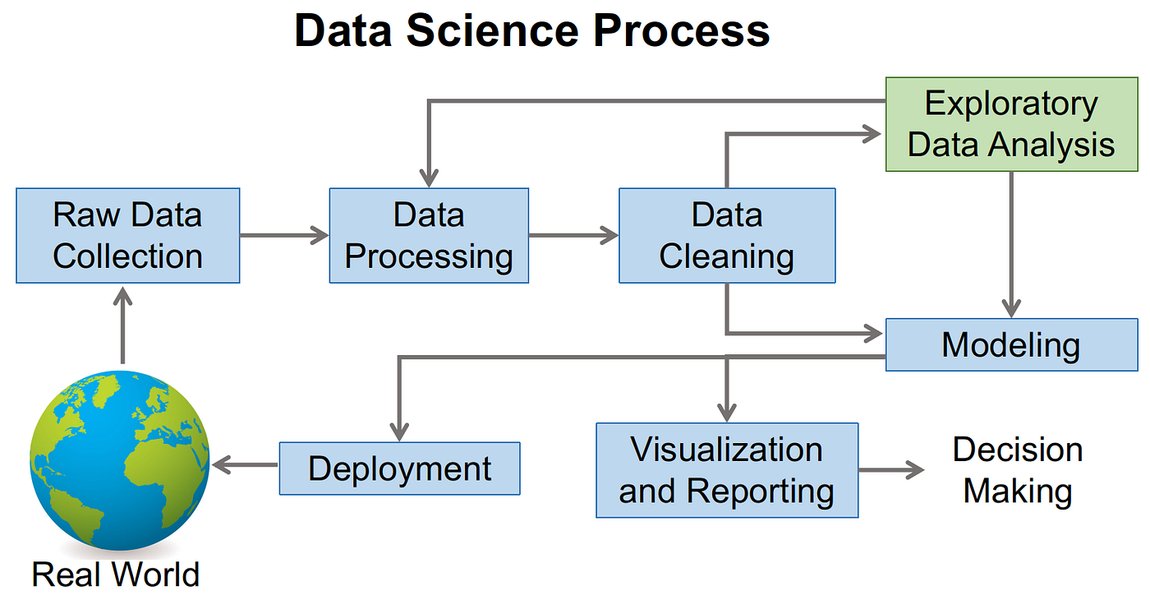
A typical data science process, involving multiple stages of analysis.
Common Data Analysis Techniques:
Below is a table summarizing some widely used data analysis techniques:
| Technique | Description | Purpose/Use Case | Example |
|---|---|---|---|
| Descriptive Analytics | Summarizes raw data to describe its main features. Uses measures like mean, median, mode, standard deviation, range. | To understand what happened in the past; provide an overview. | Calculating the average sales revenue for the last quarter. |
| Exploratory Data Analysis (EDA) | An approach to analyzing datasets to summarize their main characteristics, often with visual methods. | To uncover patterns, anomalies, test hypotheses, or check assumptions before formal modeling. | Using histograms and scatter plots to understand data distributions and relationships between variables. |
| Diagnostic Analytics | Focuses on understanding why something happened by identifying root causes. | To explain past performance or events. | Investigating why website traffic dropped after a new update by looking at server logs and user feedback. |
| Regression Analysis | A statistical method to determine the relationship between a dependent variable and one or more independent variables. | For forecasting, prediction, and understanding the impact of variables. | Predicting house prices based on features like size, location, and number of bedrooms. |
| Time Series Analysis | Analyzes sequences of data points collected over time. | To identify trends, seasonality, cycles, and make forecasts. | Forecasting stock prices or monthly rainfall. |
| Clustering | An unsupervised machine learning technique that groups similar data points together. | For market segmentation, anomaly detection, and pattern recognition. | Grouping customers into different segments based on their purchasing behavior. |
| Text Analysis (NLP) | Extracts meaningful information from textual data. | For sentiment analysis, topic modeling, information retrieval. | Analyzing customer reviews to gauge overall product satisfaction. |
Quantitative Data Analysis Insights
The following video provides an excellent overview of quantitative data analysis, particularly distinguishing between descriptive and inferential statistics, which are foundational concepts in many data-driven analytical tasks. Understanding these methods can greatly enhance your ability to interpret numerical data effectively.
An introduction to quantitative data analysis, covering descriptive versus inferential statistics.
Key Skills for Effective Analysis
Conducting a powerful analysis relies on a blend of skills. The radar chart below illustrates the perceived importance of various analytical competencies across different hypothetical analysis domains. While all skills are valuable, their relative emphasis can shift based on the specific type of analysis being performed. For example, methodological rigor might be paramount in scientific data analysis, whereas nuanced interpretation of language might be more central to literary analysis.
This chart visualizes how skills such as Critical Thinking (evaluating information logically), Evidence Gathering (collecting relevant data/facts), Clarity of Argument (presenting ideas clearly), Subject Knowledge (understanding the topic area), Methodological Rigor (applying sound methods), Interpretive Skill (drawing meaning from evidence), and Objectivity (minimizing bias) are valued across different analytical contexts.
Frequently Asked Questions (FAQ)
What is the difference between an analysis and a summary?
A summary restates the main points or plot of a subject in a condensed form, essentially answering "what" happened or "what" was said. An analysis, on the other hand, goes deeper by breaking down the subject into its constituent parts to examine how they work, why they are significant, and what underlying meanings or implications they convey. Analysis focuses on interpretation and explanation, aiming to answer "how" and "why" questions, supported by evidence.
How do I choose a strong thesis statement for my analysis?
A strong thesis statement is specific, arguable, and focused. It should present your unique interpretation or claim about the subject that you intend to support with evidence. To develop one:
- Start with a focused question about your subject.
- Brainstorm potential answers or interpretations.
- Choose an interpretation that you can support with evidence from the subject.
- Ensure it's not just a statement of fact but an assertion that requires explanation and defense. For example, instead of "The Great Gatsby is about wealth," a stronger thesis would be "In The Great Gatsby, Fitzgerald uses the pursuit of wealth to critique the emptiness of the American Dream."
What are common mistakes to avoid when writing an analysis?
Common mistakes include:
- Summarizing instead of analyzing: Simply retelling what happened rather than interpreting its meaning or significance.
- Vague thesis statement: Lacking a clear, arguable claim to guide the analysis.
- Insufficient evidence: Making claims without adequate support from the subject matter.
- Ignoring counter-evidence: Failing to acknowledge or address aspects that might challenge your interpretation.
- Lack of organization: Presenting ideas in a disjointed or illogical manner.
- Overgeneralization: Making broad claims that are not fully supported by the specific evidence.
- Personal opinion without support: Relying on feelings or unsupported beliefs rather than evidence-based interpretation.
How much evidence is enough in an analysis?
The amount of evidence needed depends on the scope of your claim and the complexity of your subject. Each significant claim or point in your analysis should be supported by specific, relevant evidence. It's not just about the quantity of evidence but its quality and how well you use it to support your interpretation. Ensure that your evidence is directly relevant to the point you are making and that you thoroughly explain the connection between the evidence and your claim. Too little evidence can make your argument seem weak or unsubstantiated, while too much unfocused evidence can obscure your main points.
Recommended Further Exploration
- Explore the specific steps and considerations for conducting a detailed literary analysis of a novel.
- Understand the fundamental distinctions and applications of qualitative versus quantitative data analysis methods.
- Learn the techniques for analyzing the persuasive strategies used in speeches and other rhetorical texts.
- Delve into more complex statistical techniques used for forecasting and predictive modeling in data analysis.
References
Last updated May 11, 2025