
Unveiling Hades: A Biblical Exploration of the Realm of the Dead in the New Testament
Understanding the Nuances of the Afterlife as Depicted in Scripture
The term "Hades" carries a rich and complex meaning within the New Testament, distinct yet related to its origins in Greek mythology and its Old Testament counterpart, "Sheol." Far from being a simple synonym for eternal punishment, Hades in the biblical context primarily refers to the temporary abode or state of the dead, an intermediate realm where souls await the final judgment. Its multifaceted nature encompasses various aspects, from the literal grave to a more developed understanding of the post-mortem existence for both the righteous and the unrighteous.
Key Insights into Hades in the New Testament
- Hades as the Temporary Abode of the Dead: In the New Testament, Hades is consistently presented as a provisional holding place for all deceased individuals, a state or location where souls reside before the ultimate resurrection and judgment. It is not equivalent to the final, eternal punishment often associated with "hell."
- Connection to Old Testament Sheol: The Greek word "Hades" serves as the New Testament equivalent of the Hebrew word "Sheol" from the Old Testament. Both terms broadly refer to the "place of the dead" or "the unseen realm," indicating a continuity of theological understanding regarding the intermediate state.
- Differentiated Compartments within Hades: Notably, the New Testament provides insights into Hades having distinct compartments. The parable of the rich man and Lazarus (Luke 16) illustrates a division between a place of comfort, often referred to as "Abraham's bosom" or "paradise," and a place of torment, suggesting a separation of destinies within this intermediate state.
Etymological Roots and Mythological Context
From Greek Divinity to Biblical Concept
The term "Hades" originates from ancient Greek religion and mythology, where it referred to both the god of the underworld and the underworld itself, the abode of the dead. The name itself is often interpreted as meaning "the unseen one" or "invisible," fitting for a realm associated with death and what lies beyond mortal sight. In Greek mythology, Hades, also known as Pluto, was a formidable deity, brother to Zeus and Poseidon, who ruled over the realm of the departed.
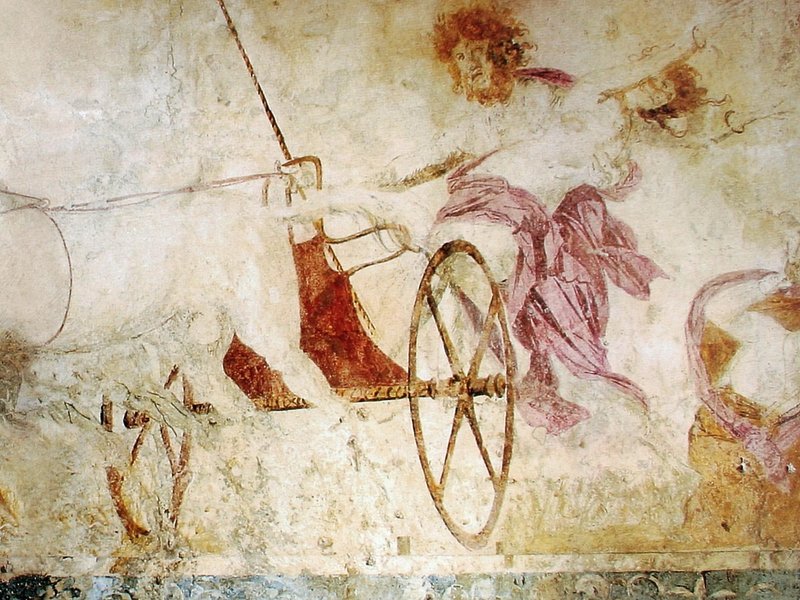
A depiction of Hades abducting Persephone, highlighting the mythological origins of the name.
This mythological background provides a conceptual framework, but the New Testament adapts and recontextualizes the term within its own theological narrative. While drawing on the common understanding of an "underworld," the biblical use of Hades is distinct from the pagan beliefs, primarily focusing on its role in the divine plan of salvation and judgment.
The Septuagint's Bridge: Sheol to Hades
A crucial link between the Old and New Testaments in understanding Hades is the Septuagint (LXX), the ancient Greek translation of the Hebrew Bible. In nearly all instances, the Hebrew word "Sheol" (שאול), which broadly means "the grave," "the pit," or "the realm of the dead," was translated into Greek as "Hades" (ᾅδης). This translation choice indicates that the Jewish translators of the Septuagint saw Hades as the closest Greek equivalent to Sheol, signifying a shared understanding of a general place or state of the dead. This linguistic bridge facilitated the seamless adoption of "Hades" into the Koine Greek of the New Testament.
Hades in the New Testament: A Temporary Reality
More Than Just the Grave: The Unseen Realm
While "Hades" can sometimes refer simply to the grave or the place of bodily decay, its usage in the New Testament often extends beyond this literal meaning to describe the unseen realm where departed souls exist. Peter, in Acts 2:27 and 2:31, quotes Psalm 16:10, stating that Jesus' soul was "not abandoned to Hades, nor did His flesh experience corruption." This passage implies a disembodied existence for Jesus in Hades between His crucifixion and resurrection, demonstrating that Hades is a state of the dead beyond mere physical burial.
The radar chart above illustrates a comparative theological perspective on various concepts related to the afterlife. It highlights how Hades, Sheol, and the Grave represent intermediate states or temporary realms, emphasizing their transitional nature. In contrast, Heaven and the Lake of Fire are depicted as ultimate, permanent destinations for the righteous and the unrighteous, respectively. This visual helps to differentiate Hades from the finality of Heaven or the Lake of Fire, reinforcing its role as a temporary holding place for souls awaiting their ultimate judgment.
Divisions within Hades: Comfort and Torment
One of the most revealing New Testament passages concerning Hades is the parable of the rich man and Lazarus in Luke 16:19-31. This parable explicitly portrays Hades as a place divided into two distinct compartments: a place of comfort, often called "Abraham's bosom," for the righteous, and a place of torment for the unrighteous. This division suggests that while Hades is a temporary destination for all who die, the experience within it differs significantly based on one's earthly life and relationship with God.
The rich man experiences intense suffering in Hades, being "in torment in Hades," while Lazarus is comforted in Abraham's bosom. A "great chasm" separates these two areas, preventing any movement between them. This narrative underscores that, even in the intermediate state, there is a distinction between the saved and the unsaved, and a precursor to their final eternal destinies.
Jesus' Authority Over Hades
A significant theological point regarding Hades in the New Testament is Jesus' triumphant authority over it. In Revelation 1:18, Jesus declares, "I hold the keys of Death and Hades." This proclamation signifies His ultimate victory over death and the grave, asserting His power to open and close the gates of the underworld. His resurrection from Hades, as described in Acts 2, further solidifies this authority, demonstrating that even death could not hold Him captive.
This understanding transforms Hades from a feared, inescapable destination to a realm subject to Christ's sovereign power. It foreshadows the ultimate abolition of Hades at the final judgment, as described in Revelation 20:14, where "Death and Hades were thrown into the lake of fire," signifying their complete and utter destruction.
This video explains the meaning of Hades in the Bible, clarifying its distinction from Hell and its role as a temporary abode for the dead, a key concept in understanding the afterlife in Christian theology.
Hades vs. Hell and the Lake of Fire
Distinguishing Terms of the Afterlife
It is crucial to differentiate Hades from other terms often translated as "hell" in English Bibles, particularly "Gehenna" and "the Lake of Fire." These terms represent distinct concepts of judgment and eternal punishment, separate from the temporary nature of Hades.
Gehenna: The Place of Eternal Punishment
"Gehenna" (γέεννα) is a Greek transliteration of the Hebrew "Ge Hinnom" (Valley of Hinnom), a valley outside Jerusalem where child sacrifices were once performed and later became a place for burning refuse. Jesus frequently used Gehenna to describe the final, eternal punishment for the wicked, characterized by unquenchable fire and torment (e.g., Matthew 5:29, 23:33; Mark 9:43-48). Unlike Hades, Gehenna is consistently depicted as a place of ultimate and irreversible judgment, not an intermediate state.
The Lake of Fire: The Final Destination
The "Lake of Fire" is mentioned exclusively in the Book of Revelation (Revelation 19:20, 20:10, 14-15). It represents the ultimate, eternal destination for all unrepentant rebels against God, including Satan, the Beast, the False Prophet, and eventually, Death and Hades themselves. This signifies the finality of judgment and the complete eradication of evil and death. Hades, as a temporary holding place, is ultimately cast into the Lake of Fire, emphasizing that it is not the final place of punishment but rather a precursor to it for the wicked.
The following table summarizes the distinctions between these important biblical terms:
| Term | Original Language | Primary Meaning | Nature | Relationship to Final Judgment |
|---|---|---|---|---|
| Sheol | Hebrew | The grave, the place of the dead | Temporary abode for all dead (Old Testament concept) | Precursor to resurrection and judgment |
| Hades | Greek (ᾅδης) | The unseen realm, the place of departed souls | Temporary abode for all dead; includes compartments for comfort and torment (New Testament equivalent of Sheol) | Cast into the Lake of Fire at the final judgment |
| Gehenna | Greek (γέεννα) | Valley of Hinnom; symbol of eternal punishment | Permanent place of suffering for the wicked | The ultimate and irreversible hell for the unsaved |
| Lake of Fire | Greek (λίμνη τοῦ πυρός) | Symbolic of ultimate destruction and eternal torment | Final, eternal destination for Satan, demons, and the unsaved | The final hell; Hades is cast into it |
| Paradise/Abraham's Bosom | Greek (παράδεισος/κόλπος Ἀβραάμ) | Place of comfort for the righteous departed | Temporary compartment within Hades for the saved (before Christ's ascension) | Souls now go directly to be with the Lord (2 Cor. 5:8) |
Theological Implications and Christian Views
Christ's Descent and Victory
The New Testament's portrayal of Hades is deeply tied to the salvific work of Jesus Christ. His descent into Hades after His death, as alluded to in passages like Acts 2:27-31, underscores His victory over death itself. This event is not elaborated upon in detail in the New Testament, leading to various interpretations and traditions within Christianity, such as the "harrowing of hell." However, the core message remains: Christ's authority extends even to the realm of the dead, signifying His ultimate triumph over all powers, including the power of death (Hebrews 2:14).
The Hope of Resurrection
The temporary nature of Hades also emphasizes the Christian hope of resurrection. The dead in Hades, both righteous and unrighteous, will eventually be raised for judgment. Revelation 20:13 states, "The sea gave up the dead who were in it, and Death and Hades gave up the dead who were in them, and each person was judged according to what they had done." This highlights that Hades is not the final state of existence but a precursor to a bodily resurrection and the final accounting before God.
Common Questions About Hades in the New Testament
What is the primary difference between Hades and Hell in the New Testament?
Did Jesus go to Hades?
Is Hades a place of eternal suffering?
How does Hades relate to Sheol?
Will Hades exist forever?
Conclusion: Hades as a Transitional Realm
In conclusion, the meaning of Hades in the New Testament is far more nuanced than a simple translation of "hell." It represents the temporary, unseen realm of the dead, a transitional state for all souls awaiting the final resurrection and judgment. While it contains compartments for both comfort and torment, it is distinct from the eternal punishment of Gehenna and the Lake of Fire. Christ's triumphant descent into and subsequent emergence from Hades underscore His ultimate authority over death, offering a profound message of hope and the promise of a future resurrection for all humanity.
Recommended Further Exploration
- Explore the biblical meaning of Sheol and its connection to Hades.
- Delve deeper into the distinction between Hades, Gehenna, and the Lake of Fire.
- Investigate theological interpretations of Jesus' descent into Hades.
- Understand the pivotal role of resurrection in Christian eschatology and the abolition of Hades.
References
Last updated May 21, 2025