
The Evolving Face of 21st-Century Terrorism: Unpacking Hamas's Hybrid Evolution
A Deep Dive into a Multi-Faceted Non-State Actor and Its Global Adaptations
Key Insights into Modern Terrorism and Hamas's Transformation
- Hybrid Warfare Paradigm: Hamas has transcended the traditional insurgency model, becoming a sophisticated hybrid actor that seamlessly blends conventional military capabilities with irregular tactics, terrorist acts, and even criminal disorder.
- Technological Exploitation: The group strategically leverages modern technologies, including information and communication technologies (ICTs), for various purposes like radicalization, recruitment, planning, and information warfare, demonstrating an adaptive approach to contemporary challenges.
- Global Adaptability and Transnational Alliances: Hamas's evolution showcases its capacity to adapt globally and forge transnational alliances, positioning it as a crucial case study for understanding the complex trajectory of violent non-state actors in the 21st century.
The landscape of terrorism has undergone significant transformations in the 21st century, moving beyond conventional insurgency models to embrace more complex and adaptive forms. At the forefront of this evolution stands Hamas, which has emerged as a multi-faceted hybrid actor operating at the intricate intersection of terrorism, governance, and advanced information warfare. This analysis delves into Hamas's strategic exploitation of modern technologies, its cultivation of transnational alliances, and its adept application of hybrid warfare tactics, presenting the group as a critical case study for comprehending the future trajectory of violent non-state actors worldwide.
Hamas's Strategic Evolution: From Insurgency to Hybrid Actor
Hamas, an acronym for the Islamic Resistance Movement (Harakat al-Muqawama al-Islamiya), was founded in 1987 during the First Intifada. Initially rooted in the Palestinian branch of the Muslim Brotherhood, its early purpose was to counter groups like the Palestinian Islamic Jihad (PIJ) and resist Israeli occupation. Over the decades, Hamas has evolved from primarily an armed resistance movement to a political entity that has governed the Gaza Strip since 2007, after securing a majority in the 2006 Palestinian legislative elections and subsequently engaging in a power struggle with Fatah.
The transformation of Hamas into a hybrid actor is a defining characteristic of its 21st-century evolution. This involves a complex blend of traditional military capabilities, irregular tactics, and terrorist acts. This hybrid approach allows Hamas to confront a stronger state actor like Israel by leveraging both conventional and unconventional means, often operating "among the people" in urban environments.
The Genesis of Hamas and its Foundational Ideology
Hamas's origins are deeply intertwined with the first Palestinian Intifada and the broader context of the Muslim Brotherhood's activities in Gaza since the 1950s. Led by Sheikh Ahmed Yassin, the group initially focused on social services and religious outreach before adopting a more militant and nationalist stance. The 1988 Hamas Covenant explicitly articulated its identity and objectives, including the establishment of an independent Islamic state in historical Palestine and the rejection of agreements with Israel.
However, Hamas's ideology has seen significant shifts over time. While the 1988 Charter called for the obliteration of Israel, the 2017 "Document of General Principles and Policies" accepted a Palestinian state within the 1967 borders without explicitly recognizing Israel. This document, while not abrogating the old charter, signaled a strategic evolution, reframing its discourse around "muqawama" (resistance) rather than solely "jihad." This ideological flexibility demonstrates Hamas's adaptability in navigating regional and international political landscapes.
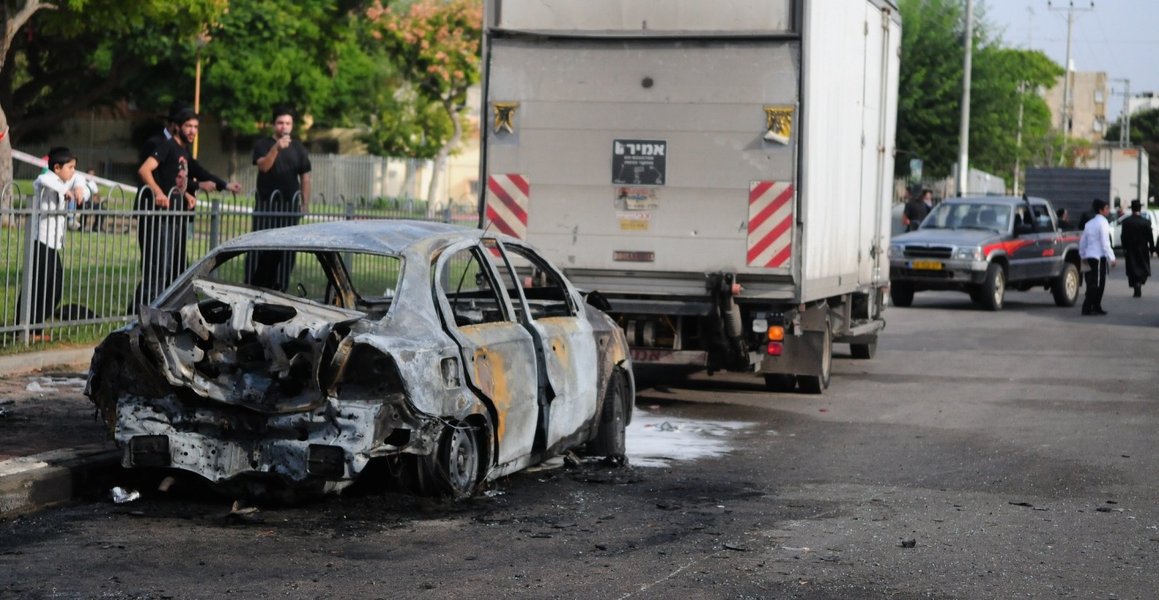
The aftermath of conflict in a densely populated area, highlighting the urban terrain often central to hybrid warfare.
The Blurring Lines: Hybrid Warfare in Practice
The concept of hybrid warfare, as defined by Frank Hoffman in 2007, involves the simultaneous use of multiple types of warfare by flexible adversaries. Hamas embodies this definition by integrating conventional capabilities (like rocket barrages and anti-armor weapons), irregular tactics (such as guerrilla warfare and insurgency operations), terrorist acts (including indiscriminate violence and coercion), and even criminal disorder. Their October 7, 2023, attack on Israel exemplified this multi-modal approach, combining land, air (paragliders), and sea incursions with a massive rocket assault, targeting both military and civilian populations.
This "improvised everything" approach, combining strictly military technologies with widely available commercial ones, underscores the adaptive nature of hybrid threats. Hamas's ability to plan, integrate, and execute military operations across multiple domains, often associated with advanced state actors, highlights its sophisticated operational capacity. The group has historically acquired military capabilities through fighting experience, training, Iranian tutelage, and resource accumulation, allowing it to adapt irregular and terrorist tactics for conventional warfare scenarios.
Key Elements of Hamas's Hybrid Warfare Tactics
- Conventional Capabilities: Despite not possessing traditional military assets like tanks or aircraft, Hamas has accumulated a formidable arsenal of anti-armor weapons and rockets, often sourced from Iran and Russia. Their use of rocket barrages, as seen in the October 7 attack, demonstrates a conventional military aspect.
- Irregular Tactics: Guerrilla warfare remains a core tactic, leveraging the dense urban terrain of Gaza and an extensive tunnel system to facilitate movement, hide assets, and launch surprise attacks. Human shielding, though a violation of international law, is also a reported tactic, allowing them to fight stronger state actors from within civilian populations.
- Terrorist Acts: Hamas's use of suicide bombings, targeted killings of civilians, and hostage-taking are clear manifestations of terrorism, aiming to spread fear and exert pressure. The brutality witnessed on October 7, including the killing of civilians, is a stark example of ISIS-styled barbarity employed to achieve political goals.
- Information Warfare: Hamas actively engages in information warfare to shape narratives, recruit, radicalize, and maintain morale. Their use of propaganda videos and social media is integral to their strategy.
The Intersection of Technology and Terrorism
The 21st century has seen an unprecedented integration of technology into daily life, and terrorist organizations like Hamas are adept at exploiting these advancements. While many terrorist attacks still rely on low-tech means, emerging technologies offer new avenues for radicalization, recruitment, planning, and execution of attacks.
Exploiting Information and Communication Technologies (ICTs)
Terrorist groups, including Hamas, extensively utilize ICTs such as the internet, social media platforms, and encrypted communication applications. These tools are crucial for:
- Incitement and Recruitment: Spreading propaganda, radicalizing vulnerable individuals, and attracting new recruits.
- Planning and Coordination: Facilitating secure communication for operational planning, training, and networking among members.
- Logistical Support and Fundraising: Acquiring resources, weapons, and components, as well as raising funds through various online channels.
- Information Warfare and Psychological Operations: Shaping public opinion, spreading disinformation, and influencing perceptions of conflict.
The ability of organizations to remotely inspire and direct attacks, even using crude tools, has made terrorism more accessible to a wider audience. This "mass-accessible" operational model, while previously confined to certain regions, has the potential to expand geographically as groups like Hamas evolve.
The Dual-Use Nature of Emerging Technologies
Many emerging technologies possess a "dual-use" nature, meaning they can be employed for both benevolent and malicious purposes. This presents a significant challenge in counter-terrorism efforts. Technologies such as Artificial Intelligence (AI), autonomous systems (like drones), and 3D printing are of particular concern:
- AI and Autonomous Systems: AI can enhance cyberattacks, digital disinformation campaigns, and potentially enable adversaries to act with micro-precision at a macro-scale. Autonomous vehicles could be weaponized, replicating vehicular terrorist attacks.
- 3D Printing: This technology allows for the production of components for weapons or even drones with readily available materials, bypassing traditional supply chains.
- Encryption Technology: While vital for privacy, encryption shields terrorists from monitoring and de-platforming efforts on social media, complicating intelligence gathering.
This radar chart illustrates the strategic capabilities of Hamas across various dimensions of hybrid warfare, demonstrating its multifaceted approach. Each axis represents a key area of operational strength, indicating how Hamas balances conventional, irregular, and technological tactics.
Transnational Alliances and Global Adaptability
Hamas's strategic depth is further enhanced by its ability to forge and maintain transnational alliances. While the group was once close to Tehran, their relationship has fluctuated, notably drifting apart after the Syrian civil war where Hamas backed the opposition against the Syrian regime supported by Iran. However, Iran continues to support its proxy organizations, including Hamas and Islamic Jihad, by providing weapons such as rockets and missiles, effectively creating multiple fronts against Israel.
This network of alliances and external support contributes significantly to Hamas's military capabilities and operational resilience. The group's ability to learn from the experiences of other actors, such as Hezbollah's approach to fighting Israel in 2006, demonstrates its adaptive learning curve. Hamas's global adaptability means it constantly observes and incorporates lessons from other conflicts and technological advancements.
This video provides insights into Hamas's military tactics and its evolution into a hybrid military and political organization, offering valuable context on its strategic trajectory.
The YouTube video "What Is The Long-term Future Of Hamas? - Tactical Warfare Experts" delves into the military tactics employed by Hamas and its evolution as a hybrid military and political entity. This directly supports the understanding of Hamas's operational depth and its strategic adaptations beyond a mere insurgency, emphasizing its complex nature in contemporary warfare. The video's focus on future implications is particularly relevant to the overall discussion of the future trajectory of violent non-state actors.
Hamas as a Case Study for Future Non-State Actors
Hamas's evolution offers critical lessons for understanding the trajectory of violent non-state actors globally. Its ability to combine diverse forms of warfare, leverage technology, and engage in governance demonstrates a sophisticated model that challenges traditional counter-terrorism frameworks. This necessitates a rethinking of strategies beyond purely kinetic force, focusing on a comprehensive systems approach that addresses both immediate threats and underlying factors.
The Complexities of Countering Hybrid Threats
Countering hybrid threats like Hamas requires dynamic and flexible strategies. Traditional military forces often struggle to adapt to the fluid and multi-domain nature of hybrid warfare, where adversaries operate below the threshold of open warfare, engage in information campaigns, and exploit civilian infrastructure. Overwhelming force alone is often insufficient, as the conflict frequently evolves "under the radar."
International legal frameworks are also challenged by the evolving nature of hybrid warfare tactics. The tactic of hiding among civilians, while a violation of the law of war, allows weaker actors to fight stronger state militaries on more equal terms. This further complicates responses and necessitates nuanced approaches that uphold international humanitarian law while effectively countering the threat.
Strategic Imperatives for Counter-Terrorism in the 21st Century
The insights derived from Hamas's evolution highlight several strategic imperatives for states and international organizations:
| Strategic Imperative | Description | Relevance to Hamas Case Study |
|---|---|---|
| Multi-Domain Awareness | Develop comprehensive intelligence and analytical capabilities across military, technological, and information domains. | Understanding Hamas's synchronized attacks across land, air, and cyber requires integrated intelligence. |
| Adaptive Military Capabilities | Foster military flexibility to shift tactics, priorities, and objectives constantly in response to hybrid threats. | Hamas's use of improvised technologies and irregular tactics demands agile military responses. |
| Countering Information Warfare | Invest in robust strategies to counter digital disinformation campaigns and psychological operations. | Hamas's effective use of social media and propaganda highlights the need for countering narratives. |
| International Cooperation | Strengthen collaboration among member states and international organizations to combat terrorist exploitation of technology and finance. | Hamas's transnational alliances and funding networks necessitate global cooperation. |
| Legal and Ethical Frameworks | Adapt international legal frameworks to address the complexities of hybrid warfare, particularly concerning non-state actors and civilian protection. | Hamas's disregard for civilian life and use of human shielding underscores legal challenges. |
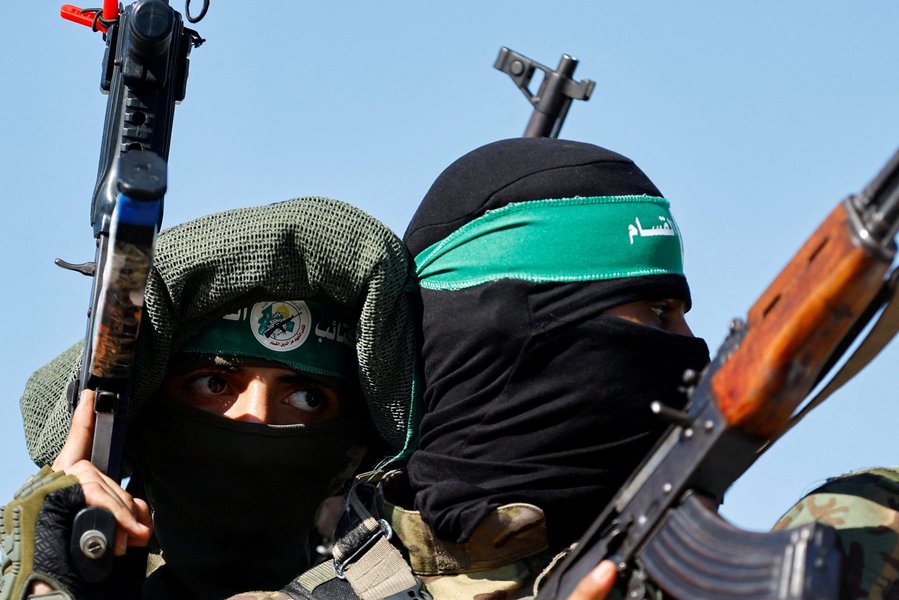
Hamas fighters showcasing organized formations, reflecting their evolving military capabilities.
Frequently Asked Questions (FAQ)
What is "hybrid warfare" in the context of Hamas?
How has Hamas adapted to modern technology?
What is the significance of Hamas's 2017 charter?
How do transnational alliances impact Hamas's operations?
Why is Hamas considered a critical case study for understanding future violent non-state actors?
Recommended Further Exploration
- The impact of social media on terrorist recruitment and radicalization
- Challenges of countering hybrid threats in urban environments
- The role of state sponsorship in the evolution of non-state armed groups
- Emerging technologies and their implications for global security
References
 assets.publishing.service.gov.uk
Last updated May 21, 2025