
Unveiling Hamlet's Fury: What Ignited the Prince's Anger on Elsinore's Chilling Battlements?
A deep dive into the pivotal moments atop the castle walls where grief, betrayal, and supernatural encounters forged Hamlet's vengeful path.
Key Insights: Hamlet's Battlement Rage
- The Ghost's Revelation as Primary Catalyst: While already troubled by his father's death and mother's hasty remarriage, the Ghost's disclosure of Claudius's regicide on the battlements transforms Hamlet's sorrow and suspicion into profound anger and a vow of revenge.
- Symbolism of the Setting: The cold, exposed, and eerie battlements of Elsinore mirror Hamlet's internal turmoil, isolation, and the impending doom facing Denmark, serving as a liminal space between the natural and supernatural.
- Shift in Emotional State: Hamlet's initial state on the battlements is one of agitated anticipation and grief; this dramatically shifts to righteous fury and resolute determination for vengeance upon hearing the Ghost's account.
The Setting the Stage: Elsinore's Ominous Battlements
The battlements of Elsinore Castle in William Shakespeare's *Hamlet* are far more than just a physical location; they are a crucial dramatic space where the seeds of tragedy are sown. These outer walls, exposed to the harsh Danish nights, serve as the initial stage for the unfolding drama, embodying an atmosphere of tension, fear, and foreboding. It is here, in Act 1, that Prince Hamlet's simmering discontent begins to boil over into palpable anger.
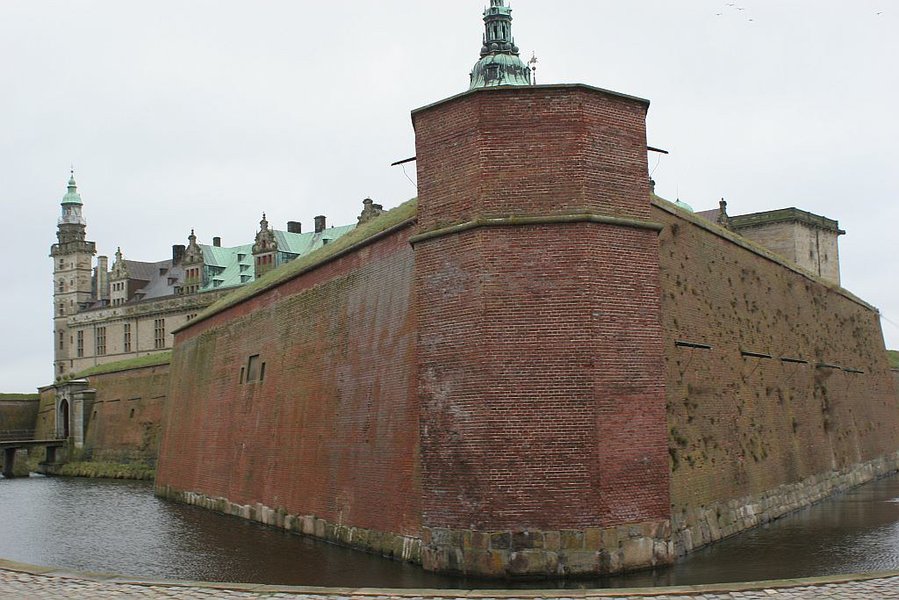
The imposing battlements of Kronborg Castle (Elsinore), a fittingly stark backdrop for supernatural encounters and royal intrigue.
Context of Hamlet's Mounting Disquiet
Before his fateful encounter on the battlements, Prince Hamlet is already a figure consumed by grief and disillusionment. Several factors contribute to his troubled state of mind:
The King's Death and Mother's Hasty Remarriage
The recent death of his father, King Hamlet, has left the prince in deep mourning. This sorrow is grievously compounded by the swift marriage of his mother, Queen Gertrude, to his uncle, Claudius, who has also seized the Danish throne. Hamlet views this union as "o'erhasty" and incestuous, a profound betrayal of his father's memory and a sign of moral decay within the court.
Claudius's Ascendancy and the State of Denmark
Hamlet harbors deep suspicion towards Claudius, viewing his usurpation of the throne as illegitimate and corrupt. The sounds of revelry and drunkenness emanating from Claudius's court, even as Hamlet mourns, further fuel his disdain and sense of alienation. He perceives Denmark as a kingdom in decline, "an unweeded garden," where corruption festers.
The Ghostly Encounter: From Suspicion to Fury
The appearance of his father's Ghost on the battlements is the pivotal event that transforms Hamlet's existing grief and suspicion into a burning anger and a determined quest for revenge.
The Sighting and Hamlet's Vigil (Act 1, Scenes 1 & 4)
The play opens with the guards Bernardo and Marcellus, along with Hamlet's skeptical friend Horatio, witnessing the apparition of the late King Hamlet on the battlements. They resolve to inform Prince Hamlet. In Act 1, Scene 4, Hamlet joins Horatio and Marcellus on their watch, filled with a mixture of anticipation and unease. The cold, eerie setting mirrors his internal state. While waiting, Hamlet expresses his disgust at the carousing within the castle, led by Claudius, viewing it as a national disgrace.
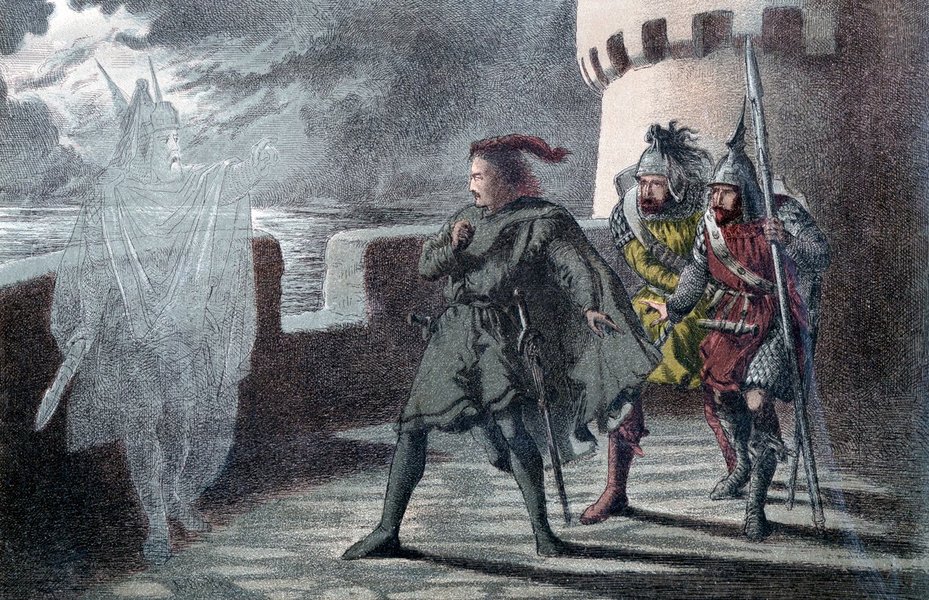
Hamlet confronts the spectral figure of his father on the windswept battlements of Elsinore.
The Ghost's Horrifying Revelation (Act 1, Scene 5)
When the Ghost finally appears and beckons Hamlet to follow, he does so resolutely, despite the desperate pleas of his companions who fear for his life and sanity. Away from Horatio and Marcellus, the Ghost delivers its earth-shattering message: he was not killed by a serpent's bite, as officially reported, but was murdered by his own brother, Claudius. The Ghost recounts how Claudius poured poison into his ear while he slept in his orchard, thus stealing his life, his crown, and his queen. The Ghost charges Hamlet with a solemn duty: "Revenge his foul and most unnatural murder."
This revelation is the spark that ignites Hamlet's profound anger. The confirmation of his darkest suspicions regarding Claudius, coupled with the grotesque details of the murder and the betrayal by his mother (whom the Ghost implies was seduced by Claudius), unleashes a torrent of fury. Hamlet's grief transforms into a passionate resolve for vengeance.
Manifestations of Hamlet's Anger on the Battlements
Hamlet's anger, once fully ignited by the Ghost's tale, is not a quiet, simmering emotion. It manifests actively and intensely on the battlements.
Impatience and Volatility
Even before the Ghost speaks, Hamlet displays impatience. Upon its appearance, he is quick to act, brushing aside the concerns of his friends. His determination to follow the Ghost, threatening to "make a ghost of him that lets me," showcases a volatile temperament, now fueled by a desperate need for truth and justice.
Swearing Vengeance
Upon hearing the full account of the murder, Hamlet's response is immediate and visceral. He swears to remember the Ghost and to dedicate his life to avenging his father. His language is filled with passionate declarations and oaths, reflecting the depth of his rage and newfound purpose. This is not merely a moment of sadness; it is a profound shift towards active, angry retribution.
Emotional Turmoil and Resolve
While anger is the dominant emotion, it is intertwined with deep emotional conflict. The battlements, cold and isolated, become a crucible for Hamlet's grief, frustration, sense of betrayal, and the terrifying burden of the Ghost's command. His anger provides a focal point, a driving force that begins to shape his subsequent actions, including his decision to feign madness.
Factors Fueling Hamlet's Emotional State
Hamlet's emotional state on the battlements is a complex interplay of various powerful feelings and external pressures. The radar chart below visualizes the intensity of these contributing factors, illustrating how grief, betrayal, and the supernatural encounter converge to push Hamlet towards his vengeful path. The scores are based on a qualitative assessment of their impact during the battlement scenes.
As the chart indicates, the command for revenge and the profound sense of betrayal reach peak intensity, driving Hamlet's anger. Grief and the eerie supernatural encounter also play significant roles, while his pre-existing melancholy and disgust with the court provide fertile ground for these more acute emotions to take root and flourish into a consuming rage.
The Significance of Hamlet's Battlement Anger
The scenes on the battlements are pivotal, marking a turning point for Hamlet and setting the tragic trajectory of the play.
Catalyst for the Revenge Plot
Hamlet's anger, solidified by the Ghost's command, becomes the primary engine driving the revenge plot. His vow on the battlements transforms him from a grieving son into an avenger, albeit a complex and often hesitant one. The raw emotion displayed here underscores the depth of his commitment to this dangerous path.
Establishing Mood and Foreshadowing
The chilling, supernatural atmosphere of the battlements, contrasting sharply with the supposed revelry and order within the castle, highlights the theme of appearance versus reality. Hamlet's exposed anger on these outer walls foreshadows the internal chaos and the eventual unravelling of the Danish court.
Character Development
These scenes are crucial for understanding Hamlet's character. They reveal his capacity for intense passion, his impulsiveness when provoked, and the profound internal conflict between his moral sensibilities, his emotional turmoil, and the duty imposed upon him. His anger is not simple; it is layered with grief, intellectual questioning, and a deep sense of injustice.
Visualizing Hamlet's Turmoil: A Mindmap
The following mindmap provides a structured overview of the key elements contributing to and stemming from Prince Hamlet's anger as experienced on the battlements of Elsinore. It connects the causes, manifestations, symbolic setting, and immediate consequences of this pivotal emotional state.
This mindmap illustrates how the revelation of King Hamlet's murder acts as the central catalyst, interacting with Hamlet's prior grievances and the charged atmosphere of the battlements to produce an anger that will define his actions throughout the play.
Hamlet's Emotional Shift: Before and After the Ghost's Revelation
The encounter on the battlements marks a distinct shift in Hamlet's emotional landscape. The table below contrasts his state of mind before and after the Ghost's specific revelations concerning the murder.
| Aspect | Hamlet's State Before Ghost's Revelation (Act 1, Scene 4 - initial wait) | Hamlet's State After Ghost's Revelation (Act 1, Scene 5) |
|---|---|---|
| Primary Emotion | Grief, melancholy, suspicion, impatience, disgust (at Claudius's revelry) | Righteous anger, shock, horror, determination for revenge |
| Focus of Discontent | Mother's hasty marriage, Claudius's general unworthiness and revelry, father's death (cause unknown) | Claudius's specific act of fratricide and usurpation, mother's complicity/weakness |
| Sense of Purpose | Vague unease, seeking understanding, general unhappiness | Clear, albeit burdensome, mission: to avenge his father's murder |
| Interaction with Others | Dismissive of Claudius, somewhat short with Horatio and Marcellus while waiting | Commands Horatio and Marcellus to swear secrecy, hints at "antic disposition" |
| Outlook | Pessimistic, world-weary ("weary, stale, flat, and unprofitable") | Energized by fury, though burdened ("The time is out of joint. O cursed spite, That ever I was born to set it right!") |
This comparison highlights how the Ghost's words transform Hamlet's generalized sorrow and distaste into a focused, actionable rage, setting him on a perilous course.
This video provides a summary and commentary on William Shakespeare's Hamlet Act 1, Scenes 4 and 5, where Hamlet meets his father's Ghost on the battlements and learns the truth about his murder. It directly visualizes and explains the pivotal moments discussed, where Hamlet's anger is ignited by the Ghost's revelations.
The video delves into the critical exchange between Hamlet and the Ghost, capturing the shift in Hamlet's demeanor as he processes the horrifying news. It contextualizes his burgeoning anger within the eerie atmosphere of the battlements and the weight of the Ghost's charge, making it highly relevant to understanding this key turning point in the play.
Frequently Asked Questions (FAQ)
Was Hamlet angry *before* he went to the battlements?
Yes, Hamlet was already deeply melancholic, grieving his father's death, and disgusted by his mother's hasty remarriage to his uncle, Claudius. He expresses his disillusionment and frustration in his soliloquies even before learning about the Ghost. His mood could be described as one of profound sadness, suspicion, and simmering resentment rather than overt, directed anger initially.
What exactly did the Ghost tell Hamlet on the battlements to make him so angry?
The Ghost revealed two critical pieces of information:
- He was murdered by his own brother, Claudius, who poured poison into his ear while he slept in the orchard. This contradicted the official story that he died from a serpent's bite.
- Claudius not only murdered him to seize the throne but also seduced Gertrude, Hamlet's mother, leading to their "incestuous" marriage.
How did Hamlet's friends react to his anger and interaction with the Ghost?
Horatio and Marcellus were deeply concerned. They tried to prevent Hamlet from following the Ghost, fearing it might lead him to harm or madness. After Hamlet's private conversation with the Ghost, they noticed his wildly agitated state. Hamlet made them swear on his sword not to reveal what they had seen or heard, and he hinted that he might adopt an "antic disposition" (feign madness), further unsettling them.
Is the battlements setting significant to Hamlet's anger?
Absolutely. The battlements are a cold, dark, exposed, and liminal space – on the edge of the castle, between the known world and the supernatural. This setting amplifies the tension and eeriness of the Ghost's appearance. It's a place of vigilance and potential danger, reflecting the precarious state of Denmark and Hamlet's own mind. The isolation of the battlements allows for Hamlet's raw, unfiltered emotional reaction, away from the prying eyes of the court, making his anger feel more potent and private before it influences public actions.
Recommended Further Exploration
- Explore the symbolism of ghosts in Shakespearean tragedies beyond Hamlet.
- How does Hamlet's feigned madness connect to his genuine emotional turmoil?
- Investigate the theme of revenge in Hamlet compared to other revenge tragedies of the era.
- What is the significance of Elsinore Castle as a setting throughout the entirety of Hamlet?
References
 shsutextanalysismctier.files.wordpress.com
 missstrachanenglishstudentfacingblog.wordpress.com
Last updated May 12, 2025