
Unraveling the Enigma: What Is the Hardest Question Ever Posed?
Embark on a journey through philosophical depths, scientific frontiers, and existential quandaries to explore humanity's most challenging inquiries.
The quest to identify the "hardest question ever asked" is, in itself, a profound intellectual challenge. There's no single, universally acknowledged question that holds this title, as its perception is deeply subjective and varies across individuals, disciplines, and cultures. What one person finds perplexing, another might find straightforward, and vice-versa. However, across philosophy, science, and personal introspection, certain questions consistently emerge as exceptionally difficult, pushing the boundaries of human understanding, knowledge, and emotional capacity.
Highlights: The Nature of Intractable Questions
- Philosophical Conundrums: Many of the hardest questions delve into abstract concepts like truth, consciousness, free will, and the fundamental nature of reality, often lacking empirical answers.
- Scientific Mysteries: Science grapples with profound unknowns about the universe's origins, its composition (like dark matter and dark energy), the genesis of life, and the limits of physical laws.
- Existential & Personal Dilemmas: Questions concerning life's purpose, happiness, self-worth, and ethical choices force deep personal reflection and often resist simple or universal solutions.
The Labyrinth of Philosophical Inquiry
Philosophy has long been the crucible for humanity's most perplexing questions. These inquiries often challenge our most fundamental assumptions about existence, knowledge, and values. They are "hard" not because they require complex calculations, but because they demand rigorous critical thinking, often involve paradoxes, and seldom yield definitive, universally accepted answers.

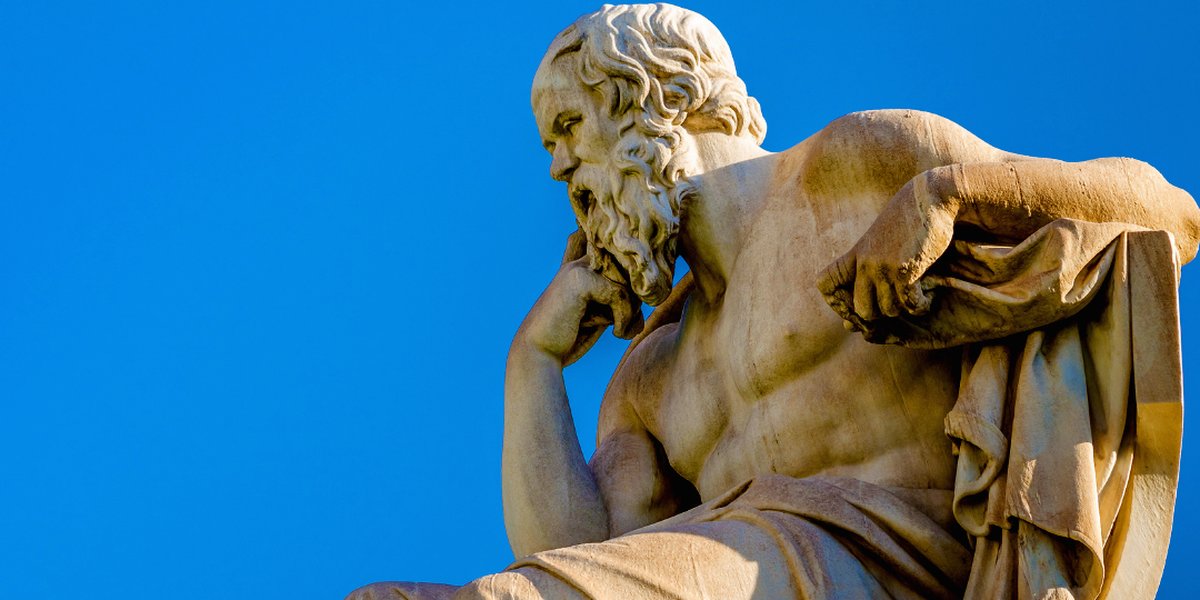
Auguste Rodin's "The Thinker," a timeless symbol of profound contemplation.
What is Truth?
This question, famously posed by Pontius Pilate to Jesus, has reverberated through centuries of philosophical debate. What constitutes "truth"? Is it objective and universal, or subjective and relative? Science can establish facts about the material world, but defining truth itself, especially in moral, ethical, or experiential realms, remains a profound challenge. The nature of truth is central to epistemology, the branch of philosophy concerned with knowledge.
What is Consciousness?
The Hard Problem
How does subjective experience – the feeling of being "I," the redness of red, the pang of sorrow – arise from the physical processes of the brain? This is often termed the "hard problem of consciousness." While neuroscience can map neural correlates of conscious states, the leap from physical activity to subjective awareness remains a deep mystery. Philosophers, neuroscientists, and psychologists continue to grapple with defining consciousness, its origins, and its properties.
Do We Have Free Will?
Are our choices genuinely our own, or are they predetermined by a chain of prior causes, whether genetic, environmental, or even quantum mechanical? This question sits at the intersection of metaphysics, ethics, and neuroscience. If our actions are predetermined, what becomes of moral responsibility, praise, and blame? The debate between determinism, libertarianism, and compatibilism continues, with significant implications for our understanding of human agency.
Why Is There Something Rather Than Nothing?
Perhaps one of the most fundamental metaphysical questions, this inquiry probes the very fact of existence. Why does a universe exist at all? Why are there laws of physics, matter, and energy, instead of an absolute void? Philosophers like Martin Heidegger considered this the ultimate question, touching upon concepts of creation, causality, and the necessary versus contingent nature of reality. Science can describe the universe's evolution from a very early state, but the question of its ultimate origin or the reason for "somethingness" often transcends current scientific methods.
The Uncharted Territories of Science
Science, while providing powerful tools for understanding the universe, also confronts questions that push the limits of our current knowledge and technology. These are not just unsolved problems but deep enigmas that challenge our prevailing theories.

Scientific inquiry often involves grappling with abstract concepts and vast unknowns.
What is the Universe Made Of? (Dark Matter & Dark Energy)
Astronomical observations indicate that the ordinary matter we see and interact with—stars, planets, gas clouds—constitutes only about 5% of the total mass-energy content of the universe. The remaining 95% is believed to be composed of dark matter (about 27%) and dark energy (about 68%). Dark matter, detectable through its gravitational effects, does not emit, absorb, or reflect light, making its nature a profound mystery. Dark energy is an even more enigmatic force, thought to be responsible for the accelerating expansion of the universe. Identifying these entities is a primary goal of modern cosmology and particle physics.
How Did Life Begin?
The transition from non-living chemical compounds to the first self-replicating, metabolizing life forms (abiogenesis) is one of the most significant unsolved problems in science. While experiments like the Miller-Urey experiment demonstrated that amino acids (the building blocks of proteins) could form under early Earth conditions, the precise pathways leading to complex cellular life, including the origin of genetic material like RNA and DNA, remain elusive. This question involves chemistry, biology, and planetary science.
What Happens Inside a Black Hole?
Black holes are regions of spacetime where gravity is so strong that nothing, not even light, can escape. At the center of a black hole lies a singularity, a point of infinite density where the known laws of physics, including general relativity, break down. Understanding the physics of singularities and the fate of information that falls into a black hole (the information paradox) requires a yet-to-be-developed theory of quantum gravity, which would unify general relativity with quantum mechanics.
Navigating the Labyrinth of Hard Questions: A Visual Guide
The following mindmap provides a visual organization of some of the hardest questions, branching from the central theme into philosophical, scientific, and existential categories. Each branch represents a domain of inquiry that challenges human understanding in unique ways, illustrating the multifaceted nature of what we consider "hard" questions.
something rather than nothing?"] id1e["Does God Exist?"] id2["Scientific Enigmas"] id2a["What is Dark Matter/Energy?"] id2b["How Did Life Begin?"] id2c["What Happens Inside a Black Hole?"] id2d["What is the Universe's
Ultimate Fate?"] id3["Existential & Personal Dilemmas"] id3a["What is the Purpose of Life?"] id3b["How Much is Enough?"] id3c["Am I Worth Loving?"] id3d["What is Happiness?"]
Comparing the Challenge: A Radar Chart Analysis
To better understand the diverse nature of these "hardest questions," the radar chart below evaluates different categories of questions across several dimensions. These dimensions include abstractness (how removed they are from concrete, everyday experience), empirical testability (the extent to which they can be investigated through observation and experiment), emotional impact (their potential to evoke strong personal feelings), societal relevance (their implications for society and human interaction), and the likelihood of achieving a definitive answer with current or foreseeable knowledge.
This chart illustrates that philosophical and existential questions often score high on abstractness and emotional impact but low on empirical testability and definitive answer likelihood. Scientific mysteries, while potentially abstract, score higher on empirical testability and the possibility of future answers, though they may currently seem intractable. Ethical conundrums often blend abstract principles with concrete societal implications.
Existential and Personal Quandaries
Beyond grand philosophical and scientific questions, there are inquiries that resonate on a deeply personal level, challenging our sense of self, purpose, and values. These questions are "hard" because they demand introspection, honesty, and often involve navigating complex emotions and life choices.
Contemplating life's profound personal questions is a timeless human endeavor.
What is the Purpose of My Life?
This is a quintessential existential question. While some find purpose in religion, relationships, career, or contributing to society, the search for individual meaning can be a lifelong and sometimes arduous journey. Unlike scientific questions with potentially objective answers, a person's purpose is often subjective and can evolve.
How Much is Enough?
In a world often driven by consumerism and ambition, this question challenges us to define our own measures of sufficiency – in terms of wealth, possessions, achievements, or experiences. The difficulty lies in resisting external pressures and understanding one's true needs versus desires. It can be particularly challenging as "enough" is a moving target for many.
Am I Worth Loving?
This question delves into core issues of self-esteem and self-worth. For individuals who have experienced trauma, neglect, or negative relationships, confronting this question can be incredibly painful and difficult. Answering it affirmatively often requires significant emotional work and self-compassion.
A Deeper Dive: The Profundity of Personal Inquiry
The journey of asking difficult personal questions can lead to profound self-discovery. The following video explores the nature of such deep questions and their impact on our lives. It highlights how personal introspection can be as challenging and rewarding as tackling grand philosophical or scientific mysteries.
This exploration underscores that the "hardest question" isn't always abstract or academic; sometimes, it's the one we must ask ourselves, leading to personal growth and a deeper understanding of our own humanity. The difficulty often lies in the courage to confront uncomfortable truths and the willingness to embrace ambiguity.
Why Are These Questions So Hard?
The common threads that make these diverse questions so challenging include:
- Lack of Definitive or Empirical Evidence: Many philosophical and existential questions operate outside the realm of empirical verification.
- Abstract Nature: They often deal with concepts that are not easily defined or grasped (e.g., consciousness, nothingness, truth).
- Interdisciplinary Complexity: Answering them may require integrating knowledge from multiple fields—philosophy, science, psychology, ethics.
- Challenging Fundamental Assumptions: They force us to question our basic understanding of reality, ourselves, and our place in the universe.
- Emotional and Psychological Depth: Personal and existential questions can require significant introspection, vulnerability, and the confronting of difficult emotions.
- Limits of Human Cognition: Some questions may simply be beyond our current cognitive or technological capacities to answer.
Summary of Key Hard Questions
The table below provides a concise overview of some of the most frequently cited hard questions, their domain, and the core reasons for their difficulty. This helps to categorize and understand the diverse nature of these profound inquiries.
| Question | Domain | Primary Reasons for Difficulty |
|---|---|---|
| What is Truth? | Philosophy (Epistemology) | Subjectivity, lack of universal criteria, varying interpretations. |
| What is Consciousness? | Philosophy of Mind, Neuroscience | The "hard problem" of subjective experience arising from physical matter; definitional challenges. |
| Do We Have Free Will? | Philosophy (Metaphysics, Ethics), Neuroscience | Conflict between determinism and perceived agency; implications for moral responsibility. |
| Why Is There Something Rather Than Nothing? | Philosophy (Metaphysics) | Fundamental nature of existence; beyond empirical investigation. |
| What is the Universe Made Of? (Dark Matter/Energy) | Science (Cosmology, Physics) | Currently undetectable directly; nature unknown; challenges current physical models. |
| How Did Life Begin? | Science (Biology, Chemistry) | Complex transition from non-life to life; lack of direct evidence from early Earth. |
| What is the Purpose of Life? | Existentialism, Philosophy, Personal | Highly subjective; no single objective answer; requires deep personal reflection. |
| Does God Exist? | Theology, Philosophy | Lack of empirical proof or disproof; reliance on faith, reason, or personal experience. |
Frequently Asked Questions (FAQ)
Recommended Further Exploration
- What are the philosophical implications of unresolved scientific mysteries?
- How has the concept of 'truth' evolved throughout history?
- What are the latest theories on the origin of consciousness?
- How do different cultures approach existential questions about life and purpose?
References
Last updated May 7, 2025