
Exploring HARL: A Theching Method Literature Review
An in-depth synthesis of Human Action Recognition and Localization research frameworks
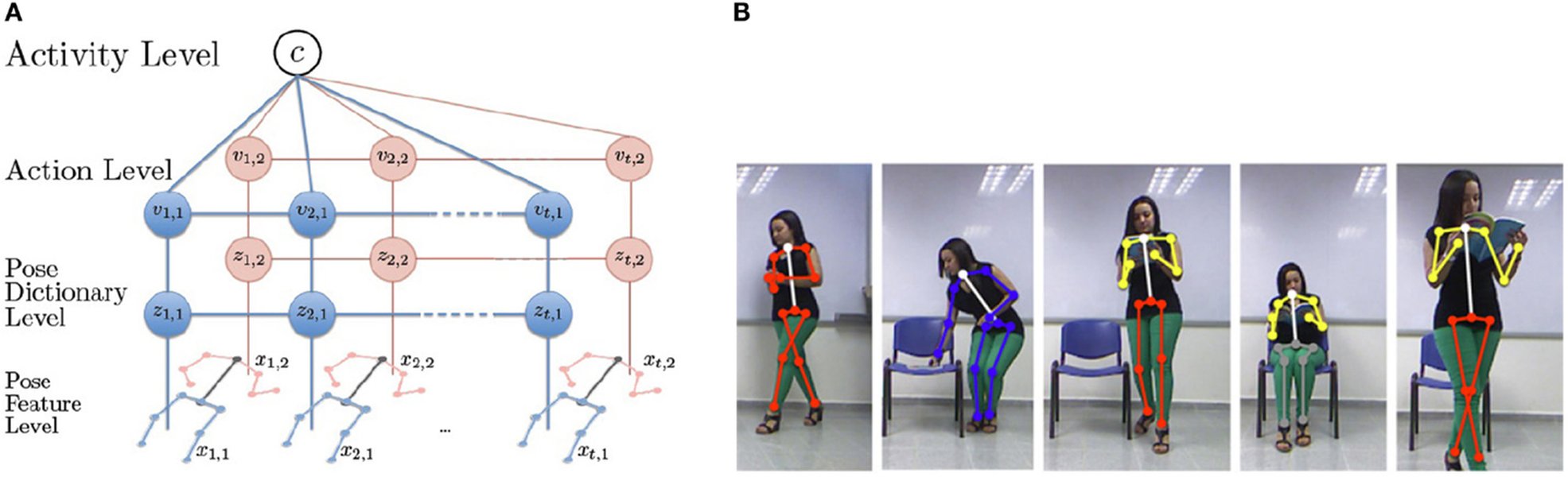
Key Insights
- Integration of Techniques: Combining traditional methods with modern deep learning for precise action recognition.
- Challenges and Adaptability: Addressing data variability, occlusion, and temporal dynamics in complex environments.
- Applicability in Real-world Scenarios: Enhancing robotics, surveillance, healthcare, and smart classroom dynamics.
Introduction
Human Action Recognition and Localization (HARL) spans across diverse domains including surveillance, human-computer interaction, healthcare, and education. This literature review employs the "Theching" method to systematically explore key themes, methodologies, challenges, and future directions in the field of HARL. By integrating insights from a spectrum of research, this review highlights not only traditional and deep learning approaches but also examines their applications in real-world contexts such as smart classrooms and robotics.
Overview of Theching Method
The Theching method is a structured review technique that dissects literature into core components to assess technological trends and challenges. In the context of HARL, this approach ensures clarity in critical themes, including action recognition paradigms, temporal and spatial localization strategies, and innovative future directions. Each section of this review maps distinct elements of the HARL ecosystem, drawn from authoritative research sources.
Key Themes and Components
Action Recognition
Action recognition focuses on the identification of human activities within a video or image frame. Early methods leveraged handcrafted features like Dense Trajectories, HOG, and optical flow combined with classifiers such as SVMs to isolate actions. With the advent of deep learning, convolutional neural networks (CNNs) and recurrent neural networks (RNNs) augmented accuracy and efficiency by directly learning complex feature representations and temporal dynamics from raw data.
Action Localization
Localization extends beyond action recognition by determining the spatial and temporal boundaries of an action. Techniques have evolved from traditional background subtraction methods to sophisticated approaches using region proposal networks (RPNs) and fully convolutional networks (FCNs). Modern approaches, including 3D CNNs and spatio-temporal segmentation models, handle diverse scene complexities, optimize detection precision, and accurately segment overlapping actions.
Contextual Applications
The deployment of HARL extends to various domains:
- Smart classrooms: Monitoring student-teacher interactions and engagement levels.
- Robotics: Assisting in human-robot interactions, enabling intuitive responses and behavior adaptation.
- Healthcare: Monitoring patient movements, particularly in rehabilitation scenarios.
- Surveillance: Enhancing security measures through real-time monitoring of suspicious activities.
Challenges in HARL
Data Variability
HARL systems need to manage diverse data conditions:
- Occlusions: Partial or complete occlusion of subjects complicates detection efforts.
- Background Clutter: Complex, dynamic backgrounds pose a significant challenge in isolating foreground actions.
- Viewpoint Variability: Changes in camera angles make it difficult to maintain consistent feature extraction.
Temporal Dynamics
The variability in action durations and overlapping timing introduces further complexity in segmenting and accurately localizing actions:
- Action Duration: Varies considerably across different activities, requiring adaptive segmentation techniques.
- Overlapping Actions: Concurrent activities necessitate more refined temporal separation methods.
Methodologies in HARL
Traditional Approaches
Early HAR systems relied on handcrafted features to detect and classify actions. Models based on Dense Trajectories and optical flow analysis offered a baseline in performance. However, their dependency on manual feature engineering limited their scalability and efficiency across varied scenarios.
Deep Learning Techniques
Deep learning models have revolutionized HARL by automating feature extraction processes. Convolutional Neural Networks (CNNs) are utilized to capture spatial information, while Recurrent Neural Networks (RNNs) and Long Short-Term Memory (LSTM) networks bridge the gaps in capturing temporal dependencies effectively. The application of 3D CNNs further improves the system by processing spatio-temporal data jointly.
Hybrid and Multi-Modal Models
Modern research emphasizes models that combine both spatial and temporal streams. Two-Stream Networks and attention-based mechanisms effectively localize actions by focusing on dynamic aspects of human activities. Additionally, multi-modal learning involving sensor fusion allows integration of visual data with audio and inertial sensor data, thereby enriching the model performance in diverse environments.
Datasets and Evaluation Metrics
Datasets
Evaluation of HARL systems is contingent on robust datasets. Prominent datasets include:
- UCF101: Encompasses 101 action categories, widely used for benchmarking recognition accuracy.
- Kinetics: Contains over 400 categories, providing a broader spectrum of daily actions.
- THUMOS14: Specializes in temporal action localization with annotated action start and end times.
Evaluation Metrics
Standard metrics used to assess HARL performance include:
- Accuracy: Evaluates the correctness of recognized actions.
- Mean Average Precision (mAP): Measures how closely the detected segments align with ground truth annotations across intersecting frames.
- Intersection over Union (IoU): Assesses spatial accuracy by quantifying the overlap between predicted and actual action regions.
Visualization of Methodological Performance
The radar chart below provides an opinion-based visualization of how various HARL methods stack against key performance indicators, including Spatial Accuracy, Temporal Segmentation, and Multi-modal Efficiency. This chart synthesizes perspectives from different studies to offer a comprehensive comparison.
Mindmap of HARL Themes
The mindmap diagram below visually represents the central ideas of Human Action Recognition and Localization, outlining core components, challenges, methodologies, and application areas.
Healthcare
Robotics"
Comprehensive Data Table
The table below summarizes key datasets and evaluation metrics used across HARL research, providing a quick reference to benchmark standards.
| Dataset / Metric | Description | Reference Implementation |
|---|---|---|
| UCF101 | 101 action categories; common benchmark in HARL. | Widely adopted in academic research. |
| Kinetics | 400+ action categories emphasizing diverse real-world scenes. | Used to train deep models for robust recognition. |
| THUMOS14 | Temporal action annotations; focus on start/end detection. | Benchmark for temporal localization. |
| Accuracy | Correctness of recognized actions. | Standard classification metric. |
| mAP | Mean Average Precision; evaluates detection precision & recall. | Aggregation of IoU-based overlaps. |
| IoU | Intersection over Union for spatial overlap. | Used for localization accuracy. |
Embedded Media Resource
To further enhance the understanding of HARL, please explore the following video lecture that provides a practical overview of deep learning methods in human action recognition:
Frequently Asked Questions (FAQ)
What is Human Action Recognition and Localization (HARL)?
How do deep learning methods improve HARL performance?
What are the current challenges in HARL research?
References
- Human Action Recognition: A Literature Review - IJERT
- A Review of Human Activity Recognition Methods - Frontiers in Robotics and AI
- Human Activity Recognition: A Comprehensive Review - Wiley Online Library
- Human Action Recognition in Smart Classroom - ResearchGate
- Survey of Human Action Recognition Methods - MDPI Sensors
Recommended Further Reading
Last updated March 30, 2025