

Key Insights into Harmonic Analysis
- Dual Nature: Harmonic analysis possesses a fascinating dual identity, serving as a cornerstone in both advanced mathematics for decomposing complex functions and in music theory for understanding melodic and chordal structures.
- Historical Evolution: From ancient Greek studies of vibrations to Fourier's revolutionary work on heat equations and its modern abstraction to group theory, harmonic analysis has continuously evolved, adapting to new challenges and expanding its theoretical depth.
- Ubiquitous Applications: Its principles underpin diverse fields, including signal processing, quantum mechanics, financial market analysis, and medical imaging, demonstrating its profound impact on understanding and manipulating various phenomena.
Harmonic analysis is a fundamental and far-reaching branch of mathematics that explores the decomposition of functions, signals, or phenomena into their constituent frequencies or simpler, oscillatory components. At its heart, it's about understanding the underlying "harmonies" or periodicities that make up complex systems. This discipline offers a powerful lens through which to analyze a vast array of natural and artificial phenomena, revealing hidden structures and enabling prediction and manipulation.
While the term "harmonic" might initially evoke images of music, the mathematical concept of harmonic analysis extends far beyond musical harmony. It provides the mathematical tools to break down any complex waveform or function into a series of simpler waves, typically sines and cosines. This decomposition allows for a deeper understanding of the system's behavior and facilitates various analytical and practical applications.
The Essence of Decomposition: From Waves to Abstraction
The core concept of harmonic analysis revolves around the idea of representing a complex entity as a sum of simpler, fundamental components. This principle is most famously embodied in Fourier series and Fourier transforms.
The Power of Fourier Series
Joseph Fourier's groundbreaking work in the early 19th century laid the foundation for modern harmonic analysis. He demonstrated that any periodic function could be expressed as an infinite sum of sine and cosine functions, each with a specific amplitude and frequency. These constituent sine and cosine waves are often referred to as "harmonics" of the fundamental frequency. This mathematical tool, known as the Fourier series, provided an unprecedented way to analyze and synthesize complex periodic phenomena.
For example, a square wave, which appears as a sharp, abrupt signal, can be perfectly reconstructed by summing an infinite series of smooth sine waves. This ability to decompose a function into its frequency components is invaluable across many disciplines.
Expanding Horizons with Fourier Transforms
Building upon the concept of Fourier series, the Fourier transform extends this decomposition to non-periodic functions and signals. While Fourier series work for functions that repeat over time, the Fourier transform allows for the analysis of transient signals, such as a single sound impulse or a sudden change in an electrical current. It essentially maps a function from its original domain (e.g., time or space) to a frequency domain, revealing the spectrum of frequencies present in the signal.
This transformation is crucial in fields like signal processing, where it's used for filtering out noise, compressing audio and image data, and reconstructing original signals. The mathematical representation of a Fourier Transform is often given as:
\[ \text{F}(\xi) = \int_{-\infty}^{\infty} f(x) e^{-2\pi i x \xi} dx \]
Here, \(f(x)\) is the function in the original domain, and \(\text{F}(\xi)\) is its representation in the frequency domain, where \(\xi\) represents frequency. The exponential term \(e^{-2\pi i x \xi}\) encapsulates the oscillating components.
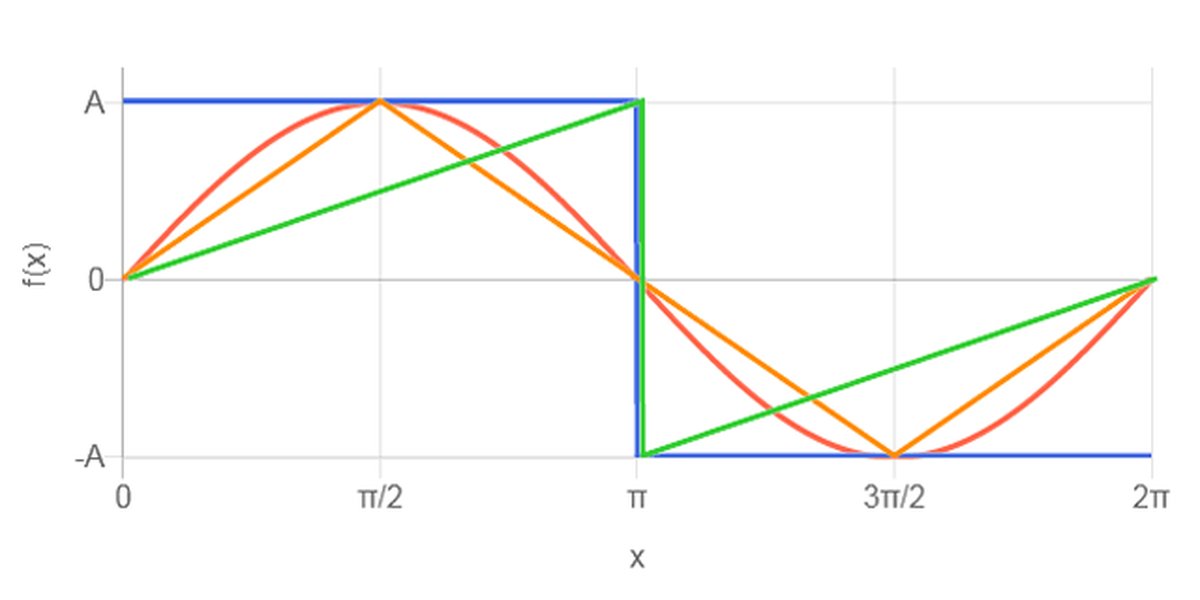
Illustration of a complex waveform being decomposed into its simpler sinusoidal components via Fourier analysis.
Beyond Waves: Abstract Harmonic Analysis
The concepts introduced by Fourier have been generalized significantly over time, leading to the development of abstract harmonic analysis. This advanced field extends the principles of decomposition to more abstract mathematical structures, such as groups and manifolds. It explores how symmetries inherent in these structures can be exploited to understand functions defined on them. This generalization has led to deep connections with other advanced mathematical fields like representation theory and functional analysis, offering a unifying framework for diverse mathematical problems.
A Journey Through Time: The Evolution of Harmonic Analysis
The history of harmonic analysis is a testament to the enduring human quest to understand patterns and periodicities in the world around us. Its roots can be traced back to ancient inquiries into vibrations and musical harmony, yet its modern form is relatively young.
Early Seeds: From Pythagoras to Musical Harmony
While not formalized as harmonic analysis, early investigations into the relationships between musical notes and the lengths of vibrating strings by figures like Pythagoras laid conceptual groundwork. The understanding that musical harmonies correspond to simple integer ratios of frequencies foreshadowed the later mathematical decomposition of complex sounds.
The Fourier Revolution: Heat, Vibrations, and Series
The true genesis of modern harmonic analysis is inextricably linked to Joseph Fourier's work in the late 18th and early 19th centuries. His studies on heat diffusion and vibrating strings compelled him to propose that any arbitrary function could be represented as a sum of trigonometric functions. This radical idea, initially met with skepticism, proved to be profoundly influential, opening new avenues for solving differential equations and analyzing physical phenomena.
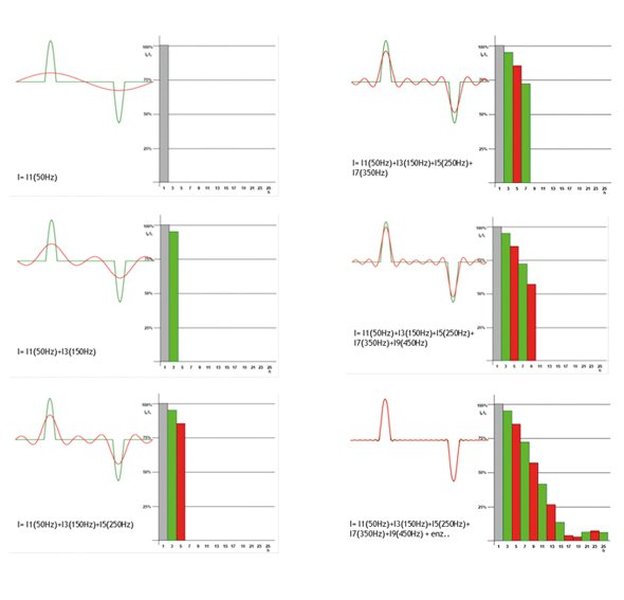
Depiction of harmonic components contributing to a complex waveform, highlighting the concept of higher harmonics in Fourier analysis.
20th Century Abstraction: Symmetry and Generalization
Throughout the 20th century, harmonic analysis evolved beyond its initial focus on trigonometric series. Mathematicians began to generalize Fourier's ideas to functions on groups, leading to the development of abstract harmonic analysis. This shift emphasized the role of symmetry and led to profound connections with representation theory, a field concerned with representing abstract algebraic structures as linear transformations. Key milestones include the Peter-Weyl theorem, which extended Fourier analysis to compact Lie groups, and the development of wavelet theory, offering a multiresolution analysis of signals.
Diverse Applications: Where Harmonic Analysis Makes an Impact
The versatility of harmonic analysis is evident in its widespread applications across an astonishing array of fields, from fundamental science to cutting-edge technology and even financial markets.
Signal Processing: The Backbone of Modern Technology
Perhaps the most immediate and tangible application of harmonic analysis is in signal processing. Whether it's audio, image, or video, virtually all digital signals are processed using techniques rooted in Fourier analysis. It enables:
- Audio Compression: Techniques like MP3 compression work by identifying and selectively removing less perceptible frequency components of sound.
- Image Processing: Image compression (e.g., JPEG) and filtering for noise reduction heavily rely on transforming images into the frequency domain.
- Communications: Modulation and demodulation of signals in radio, television, and mobile communications systems depend on understanding and manipulating frequency components.
- Medical Imaging: Techniques like MRI and CT scans use principles of Fourier transformation to reconstruct detailed images of the body from raw sensor data.
Physics and Engineering: Unveiling Natural Rhythms
In physics, harmonic analysis is essential for understanding phenomena that involve waves and vibrations:
- Quantum Mechanics: Wave functions describing particles are often analyzed in terms of their momentum components, which is a Fourier-related concept.
- Optics: Diffraction patterns and the behavior of light waves are analyzed using Fourier optics.
- Structural Engineering: Analyzing the response of buildings and bridges to periodic forces (like wind or seismic activity) involves harmonic analysis to ensure stability and predict resonance.
- Electrical Engineering: Understanding and mitigating distortions in AC circuits and power grids, particularly concerning higher harmonics, is a crucial application.
Beyond STEM: Finance, Neuroscience, and More
The reach of harmonic analysis extends into unexpected domains:
- Financial Markets: Traders use "harmonic patterns," geometric price structures based on Fibonacci ratios, to predict potential market reversals or continuations. These patterns essentially look for repeating proportionalities in price movements.
- Neuroscience: Analyzing brainwave data (EEG) to identify specific frequency bands associated with different states of consciousness or neurological conditions.
- Seismology: Decomposing seismic waves to understand the Earth's interior and locate earthquakes.
A Tale of Two Harmonies: Mathematics vs. Music
While distinct, the mathematical and musical interpretations of "harmonic analysis" share an underlying theme of decomposition and relationship.
Harmonic Analysis in Music Theory
In music, harmonic analysis refers to the study of chord progressions and their relationships within a musical piece. It involves understanding how chords relate to a key, how they create tension and resolution, and how they contribute to the overall emotional impact and structure of the music. This often involves using Roman numerals to denote chords and their functions (e.g., I for tonic, V for dominant).
This form of analysis helps musicians and composers to:
- Identify cadences (points of musical rest or conclusion).
- Understand chord functions (e.g., tonic for stability, dominant for tension).
- Analyze and create sophisticated chord progressions.
- Aid in improvisation and composition by understanding underlying harmonic structures.
The Interdisciplinary Web of Harmonic Analysis
The principles of harmonic analysis serve as a powerful connector, linking disparate scientific and artistic disciplines. Its ability to decompose complex information into simpler components makes it an indispensable tool for understanding and solving problems across a vast spectrum.
Connecting the Dots: A Mindmap of Influence
The following mindmap illustrates the central role of harmonic analysis and its pervasive influence across various fields. Each node represents a key area directly impacted or fundamentally utilizing its principles.
This mindmap visually represents the vast and intricate web of connections stemming from harmonic analysis. It shows how core mathematical concepts like Fourier analysis serve as foundational tools, branching out to influence a wide array of scientific, engineering, and applied disciplines. The historical development underpins its evolution and expanding relevance.
Bridging Disciplines: Examples of Impact
To further illustrate the breadth of its impact, let's look at how harmonic analysis translates across different areas:
| Area | Application of Harmonic Analysis | Benefit |
|---|---|---|
| Physics (Wave Phenomena) | Decomposition of complex wave forms (e.g., light, sound, water waves) into fundamental frequency components. | Understanding wave propagation, resonance, and energy transfer. Essential for designing acoustic spaces or understanding quantum behavior. |
| Electrical Engineering | Analysis of electrical signals for harmonics (multiples of the fundamental frequency) in power systems. | Identifying and mitigating power quality issues, improving efficiency, and preventing equipment damage due to harmonic distortion. |
| Digital Signal Processing | Using Fourier Transforms to convert audio/image data from time/spatial domain to frequency domain. | Enables compression (e.g., MP3, JPEG), noise filtering, equalization, and synthesis of signals. |
| Financial Analysis | Identifying periodic patterns or "harmonic" structures in market price movements using technical indicators. | Assisting traders in predicting potential price reversals and identifying entry/exit points based on observed patterns. |
| Medical Diagnostics | Analyzing physiological signals like ECG (electrocardiogram) or EEG (electroencephalogram) in the frequency domain. | Detecting abnormalities (e.g., arrhythmias in heart, epileptic activity in brain) that might be hidden in raw time-series data. |
| Mechanical Engineering | Vibration analysis of rotating machinery or structures subject to cyclic loads. | Predicting fatigue, identifying sources of unwanted vibrations, and optimizing designs for quieter and more durable operation. |
This table highlights the remarkable adaptability of harmonic analysis principles, showcasing how a single mathematical framework can yield profound insights and practical solutions across such varied fields.
The Continuous Evolution and Future Directions
Harmonic analysis is not a static field; it continues to evolve, pushing the boundaries of mathematical understanding and finding new applications in emerging domains. Current research explores generalizations to even more complex mathematical spaces, connections to number theory, and its increasing role in the rapidly expanding field of data science.
Emerging Frontiers and Research Themes
New areas of research leverage the core ideas of decomposition and frequency analysis for modern challenges:
- Compressed Sensing: Reconstructing signals from incomplete measurements by exploiting their sparsity in the frequency domain.
- Machine Learning: Utilizing spectral methods for analyzing complex data structures, dimensionality reduction, and feature extraction.
- Graph Signal Processing: Extending harmonic analysis concepts to signals defined on networks and graphs, relevant for social networks, biological networks, and sensor arrays.
- Quantum Information Theory: Applying abstract harmonic analysis to understand symmetries and transformations in quantum systems.
Understanding Harmonic Analysis: A Visual Explanation
To further contextualize the practical application of harmonic analysis, especially in areas like structural engineering, the following video provides an excellent visual and conceptual overview. It explains how harmonic analysis is used to interpret results when dealing with vibrating loads, offering a tangible example of its importance beyond abstract mathematical theory.
Explanation of interpreting harmonic results in engineering, showcasing practical applications of the theory.
This video from Ansys illustrates how harmonic analysis can be employed to study structural responses under dynamic, vibrating loads. Instead of time-history analysis, which can be computationally expensive for such scenarios, harmonic analysis provides an efficient alternative by focusing on the frequency domain. It demonstrates how engineers can predict the behavior of structures when subjected to periodic forces, ensuring safety and optimizing designs. This direct application highlights the power of decomposing complex load patterns into their frequency components to understand the system's susceptibility to resonance and fatigue, a critical aspect in designing everything from automotive components to large-scale civil infrastructure.
Frequently Asked Questions (FAQ)
What is the core idea behind mathematical harmonic analysis?
How does Fourier analysis relate to harmonic analysis?
Is harmonic analysis only about sine and cosine waves?
What is the difference between musical and mathematical harmonic analysis?
Why is harmonic analysis important in signal processing?
Conclusion
Harmonic analysis stands as a pillar of modern mathematics, distinguished by its profound ability to reveal the hidden structures within complex systems. From its historical origins in understanding vibrating strings and heat distribution to its current sophisticated applications in quantum mechanics, financial modeling, and cutting-edge data science, it continues to provide an indispensable framework for decomposing, analyzing, and synthesizing information. Its dual nature—as a rigorous mathematical discipline and a practical tool across myriad fields—underscores its enduring relevance and adaptability. By enabling us to see the fundamental frequencies and periodicities that underpin phenomena, harmonic analysis truly allows us to "unlock the symphony" inherent in the world around us.
Recommended Further Exploration
- How has abstract harmonic analysis evolved since Fourier's time?
- What are the applications of harmonic analysis in modern data science and AI?
- Explore the connection between harmonic analysis and representation theory.
- Detailed examples of harmonic analysis in telecommunications and signal compression.