
Understanding HDD Servo Systems and Shock Impacts
A comprehensive exploration of servo dynamics and shock effects in hard disk drives
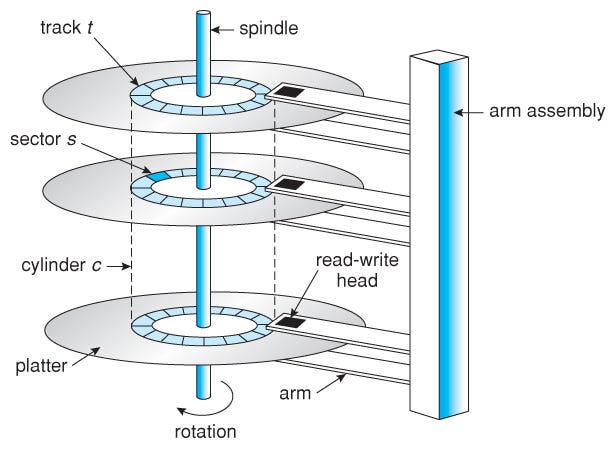
Highlights
- Shock Effects on Read/Write Accuracy: Shocks can displace the read/write head, leading to tracking errors and potential data loss.
- Mechanical Integrity and Components: Delicate mechanical parts, including the head actuator and spindle bearings, are vulnerable to impacts.
- Servo System Operation: Servo systems rely on embedded patterns, closed-loop feedback, and sophisticated control algorithms to maintain precision.
Introduction
The operation of hard disk drives (HDDs) relies on extremely precise mechanical systems, the heart of which is the servo system. This system ensures that the read/write heads of the HDD are accurately positioned over the correct tracks on the disk platters for data retrieval and storage. However, the inherent precision of these systems makes them highly susceptible to external disturbances, particularly shocks and vibrations. In this analysis, we will explore how shocks affect HDD servo systems and fully explain the operation of these systems.
How Shocks Affect the Servo System
Mechanisms of Shock Impact
Shocks are sudden, intense forces acting on an HDD, which can arise from accidental drops, handling mishaps, or unexpected vibrations. They have two primary effects on servo systems: displacing the read/write head and stressing the mechanical components.
Head Displacement
The servo system is responsible for guiding the read/write head along the data tracks. When an HDD experiences a shock, the abrupt movement can physically displace the head from its track. This displacement introduces a deviation known as the Position Error Signal (PES). The PES quantifies the offset of the head from the centerline of the intended data track. If not immediately corrected, even small displacements can cause tracking errors, leading to misreads or miswrites during a read/write cycle.
Mechanical Stress and Damage
Besides causing head displacement, shocks induce mechanical stresses across various components:
- Vibration-Induced Damage: Repetitive shocks generate vibrations that can erode the precision alignment of components on the spindle and head stack assembly.
- Spindle and Bearing Degradation: The spindle, which rotates the platters, relies on ball bearings or similar mechanisms. Sudden shocks may accelerate wear on these bearings, leading to jitter or even permanent damage.
- Head Suspension and Parking Mechanism: The delicate head suspension mechanism, which delicately balances the read/write arm, can become misaligned or damaged, and in severe cases, it may lose its ability to park safely.
Consequences of Shock-Related Disturbances
The consequences of such shock dynamics include:
- Data Corruption: A displaced head may read from adjacent tracks or write data in the wrong location, corrupting existing data.
- Physical Damage: In cases where the head contacts the magnetic platters, there is a risk of scratching or permanent degradation of the surfaces, leading to irreversible data loss.
- Unrecoverable Errors: Although many HDDs are equipped with error correction algorithms, the mechanical realignment error induced by shocks may exceed these algorithms' capabilities, rendering the data irrecoverable.
Servo System Operation in HDDs
The HHD servo system is an intricate closed-loop feedback mechanism that continuously monitors and adjusts the position of the read/write head to ensure it remains precisely over the intended data track. Here, we detail the multiple aspects of the servo system's operation.
Embedded Servo Patterns
During manufacturing, servo patterns are recorded onto the disk surface in dedicated sectors. These patterns serve as reference markers that allow the HDD's servo system to evaluate the exact position of the read/write head. The embedded patterns provide continuous feedback, enabling the system to compute the Position Error Signal (PES):
Understanding Position Error Signal (PES)
The PES is derived by comparing the current head position against the servo pattern’s track center. In mathematical terms, this error signal can be rendered as:
\( PES = Position_{current} - Position_{ideal} \)
Depending on the magnitude of this difference, the servo controller issues commands to adjust the actuator position, thereby realigning the head with the center of the track.
Control Mechanisms: The Closed-Loop Feedback Cycle
The HDD servo system operates on the principle of continuous feedback, which is essential for both stationary and dynamic conditions:
Voice Coil Motor (VCM) Actuator
At the core of the servo system is the Voice Coil Motor (VCM), which converts electrical signals into mechanical movements. The VCM’s rapid responsiveness ensures that any detected deviations (as indicated by the PES) are corrected promptly. When shocks occur and cause displacement, the VCM reacts by repositioning the head in real time.
Feedback and Control Algorithms
The servo system’s accuracy is further enhanced by advanced control algorithms. These algorithms are designed to respond not only to the PES but also to variations in external conditions such as temperature, vibration, and shock. Features of these algorithms include:
- Track-Seeking Control: This function is responsible for moving the head from one track to the next swiftly, especially during transitions.
- Track-Following Control: Once the head reaches the target track, track-following ensures continuous alignment as the disk spins and data is read or written.
- Settling Control: This step smooths out the transitions between the seeking and following states, minimizing overshoots and oscillations.
Protective Mechanisms Against Shocks
Modern HDDs integrate several shock mitigation strategies to protect the precision of the servo system:
Head Parking Mechanisms
When a shock is detected, many HDDs are designed to rapidly retract the read/write head to a safe parking area. This “head parking” reduces the risk of the head coming into contact with the disk surface during times of excessive vibration. The mechanism is almost instantaneous, reacting within milliseconds to sudden movements.
Shock Sensor Integration
HDDs often include shock sensors such as accelerometers or piezoelectric sensors. These sensors detect the magnitude and direction of shocks and then trigger the protective head retraction or adjustment measures. The data gathered by these sensors not only helps in minimizing immediate damage but can also be used to log and predict potential failure modes in servo systems over time.
Detailed Components and Operation
To further understand the operation and shock resilience of HDD servo systems, it is useful to analyze the following critical components. The table below summarizes these components along with their functions and vulnerability to shocks.
| Component | Function | Shock Impact |
|---|---|---|
| Read/Write Head | Accurately accesses data from the platters | Displacement from data track, risk of contact with disk surface |
| Voice Coil Motor (VCM) | Controls the movement of the head actuator | May experience overshoot or lag in response under shock |
| Servo Patterns | Provide reference for head alignment | Integrity may be compromised if disk surface is damaged |
| Spindle and Bearings | Facilitate rotation of the platters | Susceptible to accelerated wear and jitter |
| Shock Sensors | Detect external vibrations or impacts | Trigger rapid head retraction to prevent damage |
This table encapsulates the interplay between the operational mechanics of HDDs and how shocks affect each component. While the system is designed for precision, any abrupt physical disturbance can cascade through multiple subsystems, hampering overall performance.
Operational Workflow of a Servo System
The servo system’s workflow involves a series of steps executed in a continuous loop. The following outline illustrates how the system maintains precise head positioning:
Step 1: Initialization and Calibration
When the HDD is powered on, it goes through an initialization process where the servo patterns are read and used to calibrate the initial head position. During this time, the system establishes the baseline PES which will guide further corrections.
Step 2: Continuous Monitoring
Once the drive is active, the servo system continuously monitors the head’s position by reading the servo sectors. This monitoring is a high-frequency process that ensures even slight deviations are detected.
Step 3: Error Detection and Correction
Upon detection of any displacement—such as that caused by external shocks—the system calculates the PES and signals the VCM to initiate corrective movement. This real-time error correction limits the duration and extent of any misalignment.
Step 4: Protective Interventions
In the event of significant shocks, protective mechanisms kick in. These include rapid head parking and sensor-triggered interventions which temporarily suspend read/write operations while realigning the head after the shock event.
Engineering Improvements and Future Considerations
Research and development in HDD technology have led to several enhancements in servo control systems. One of the main objectives is to design controllers that are increasingly robust against the disturbances caused by shocks. Among these engineering improvements are:
Advanced Control Algorithms
Modern HDDs benefit from adaptive control algorithms that dynamically adjust to environmental changes and shock events. These algorithms integrate both predictive and reactive strategies, ensuring that even sudden movements are corrected almost instantaneously. By constantly monitoring the PES and extrapolating potential disturbances, these algorithms reduce the likelihood of error buildup.
Enhanced Sensor Technology
The integration of high-sensitivity shock sensors such as accelerometers has transformed servo systems from being reactive to anticipating shocks. The sensor data is utilized to preemptively instruct the servo controller to adopt a protective mode, thereby reducing the mechanical stress on the read/write head and associated components.
Innovative Mechanical Designs
Improvements in mechanical design, including better damping materials and refined actuator designs, have increased the shock tolerance of HDD servo systems. These innovations not only enhance the durability of the drive but also contribute significantly to maintaining performance accuracy under adverse conditions.
Data Integrity and Performance Metrics
The robustness of the servo system directly correlates with the overall data integrity and performance of the HDD. In harsh operating environments, a resilient servo system is critical to:
- Minimize Data Errors: By ensuring the head remains aligned, the system prevents misreads and write errors that can lead to data corruption.
- Sustain Operational Speeds: Even in the presence of shocks, rapid corrective actions ensure that the HDD maintains normal operational speed without significant performance degradation.
- Extend Device Lifespan: Preventing physical damage and reducing cumulative wear through effective shock management contributes to a longer lifespan of the HDD.
References
- The Impact of Vibration and Shock on HDD and SSD: Ensuring Protection - DataLeach
- Disk Research - Berkeley MSC
- Adaptive Control of Hard Disk Drive Servo System - ResearchGate
- A Quick Insight into Physical Shock Damage on Hard Disk Drive (HDD) - Datanumen
- How is it Possible that HDDs are Mechanically so Robust? - Electronics StackExchange
-
HDD Servo Control Technologies - ScienceDirect
- HDD from Inside: Tracks and Zones. How Hard it Can Be? - HDDScan
- Design of a Hard Disk Drive Servo System - SpringerLink
- Investigation of Effect of Various HDD Components on Shock Tolerance - ResearchGate
- Vibration and Shock Impact on Storage Devices - DataLeach
Recommended Queries

Last updated March 2, 2025