
Hearty Vegetable Chili: A Comprehensive Guide
Discover the perfect blend of flavors in this nutritious and satisfying vegetarian chili recipe.
Key Takeaways
- Nutritious and Balanced: Packed with a variety of vegetables and beans, providing essential nutrients and fiber.
- Versatile and Customizable: Easily adaptable to include your favorite ingredients or accommodate dietary preferences.
- Flavorful and Comforting: Rich, layered spices create a deep and satisfying flavor profile perfect for any season.
Introduction to Hearty Vegetable Chili
Hearty vegetable chili is a versatile and wholesome dish that brings together a medley of vegetables, beans, and aromatic spices to create a comforting and nutritious meal. Ideal for both vegetarians and those looking to reduce meat consumption, this chili offers a satisfying alternative without compromising on flavor or texture.
Ingredients and Their Benefits
Base Vegetables
The foundation of a hearty vegetable chili typically includes a variety of base vegetables that provide both flavor and nutritional value. Common choices are:
- Onions: Add sweetness and depth to the chili.
- Bell Peppers: Contribute vibrant color and a mild, sweet flavor.
- Garlic: Offers a pungent aroma and enhances overall flavor.
- Carrots and Celery: Provide texture and additional nutrients.
Beans for Protein and Texture
Beans are a crucial component, adding protein, fiber, and a hearty texture to the chili. Popular varieties include:
- Kidney Beans: Firm texture and robust flavor.
- Black Beans: Creamy texture and rich taste.
- Pinto Beans: Soft texture and earthy flavor.
Tomatoes and Liquid Base
Tomatoes serve as the primary liquid base, providing acidity and sweetness that balance the spices. Options include:
- Diced Tomatoes: Offer chunks of tomato for texture.
- Tomato Sauce or Paste: Create a thicker, more concentrated flavor.
- Vegetable Broth: Adds depth without overpowering the other flavors.
Spices and Seasonings
The right blend of spices is essential for achieving a rich and complex flavor profile. Key spices include:
- Chili Powder: Provides the foundational heat and flavor.
- Cumin: Adds a warm, earthy note.
- Smoked Paprika: Introduces a subtle smokiness.
- Oregano: Enhances the overall seasoning with herbal undertones.
- Chipotle Peppers: (Optional) For an extra smoky and spicy kick.
Preparation Steps
1. Sautéing the Vegetables
Begin by heating olive oil in a large pot over medium heat. Add the onions and garlic, sautéing until they become translucent and fragrant. Incorporate firmer vegetables like carrots and celery, cooking until they soften. This step builds the foundational flavors of the chili.
2. Adding the Spices
Sprinkle in the chili powder, cumin, smoked paprika, and oregano. Stir continuously to coat the vegetables evenly with the spices, allowing them to toast slightly and release their essential oils. This process intensifies the flavors and ensures a well-seasoned chili.
3. Incorporating the Tomatoes and Beans
Pour in the diced tomatoes (with their juice) and vegetable broth. Add the chosen beans, ensuring they are well-distributed throughout the mixture. Bring the chili to a gentle boil, then reduce the heat to a simmer.
4. Simmering to Perfection
Allow the chili to simmer uncovered for at least 30 minutes, stirring occasionally. This simmering period allows the flavors to meld and the chili to thicken. For an even richer flavor, consider simmering for up to an hour on low heat.
5. Final Touches and Serving
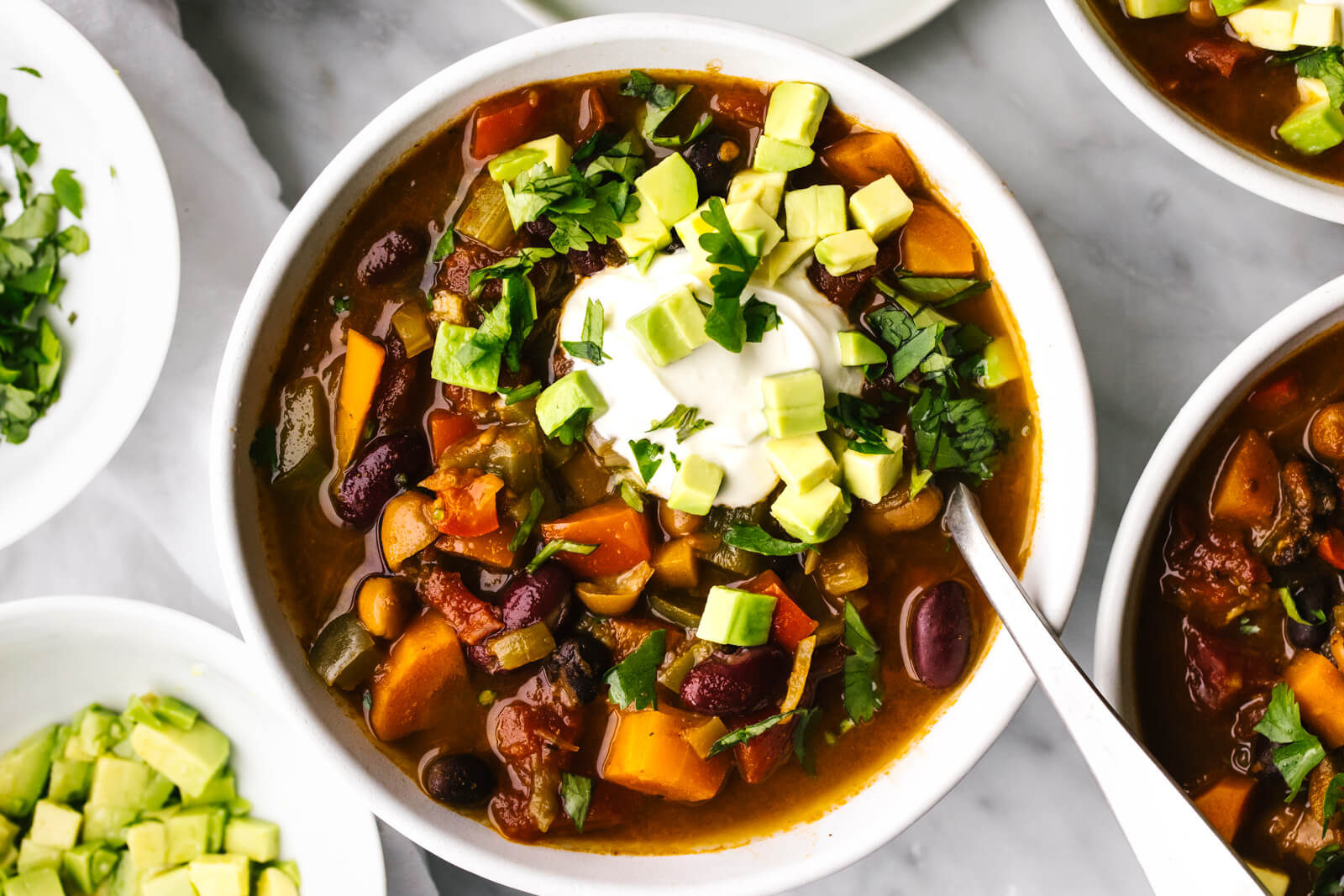
Taste the chili and adjust the seasoning as needed, adding salt, pepper, or additional spices to suit your preference. Serve the chili hot, garnished with fresh cilantro, diced avocado, or a dollop of vegan sour cream. Accompany with cornbread, rice, or a side salad for a complete meal.
Customization and Variations
Adding More Vegetables
To boost the nutritional content and add variety, consider incorporating additional vegetables such as:
- Sweet Potatoes: For a touch of sweetness and extra vitamins.
- Zucchini or Butternut Squash: For added texture and flavor.
- Mushrooms: For a meaty texture without using actual meat.
Incorporating Grains
For a more substantial meal, add grains like quinoa, bulgur, or barley. These grains not only enhance the heartiness of the chili but also boost its protein and fiber content.
Adjusting Spice Levels
Tailor the heat of your chili to your taste by adjusting the amount of chili powder and adding ingredients like cayenne pepper or hot sauce. For those who prefer a milder flavor, reduce the amount of spicy spices and increase the sweetness with additional vegetables or a splash of lime juice.
Making it Vegan
Ensure your chili is vegan by selecting dairy-free toppings such as avocado slices, vegan sour cream, or a sprinkle of nutritional yeast. Additionally, verify that all broth and seasonings used are free from animal products.
Nutritional Benefits
This hearty vegetable chili is not only delicious but also packed with essential nutrients:
- High in Protein: Beans provide a significant source of plant-based protein, supporting muscle health and satiety.
- Rich in Fiber: A high fiber content aids in digestion and promotes a feeling of fullness, which can assist in weight management.
- Vitamins and Minerals: A variety of vegetables contribute vitamins A, C, K, and essential minerals like iron and potassium.
- Low in Fat: Using vegetable broth and minimal oil keeps the fat content low, making it a heart-healthy option.
Serving Suggestions
Enhance your meal by pairing the chili with complementary dishes and toppings:
- Cornbread: A classic accompaniment that adds a sweet contrast to the savory chili.
- Rice or Quinoa: Serve over a bed of grains for a more filling meal.
- Salad: A fresh green salad can balance the richness of the chili.
- Garnishes: Fresh cilantro, diced onions, shredded cheese, or a squeeze of lime juice can elevate the flavors.
Storage and Reheating Tips
This chili is perfect for making in advance and storing for later:
-
Refrigeration: Store in airtight containers in the refrigerator for up to 5 days.
-
Freezing: Freeze in portioned containers for up to 3 months. Thaw overnight in the refrigerator before reheating.
-
Reheating: Gently reheat on the stovetop or in the microwave, adding a splash of vegetable broth if necessary to maintain the desired consistency.
Frequently Asked Questions
Can I Use Different Types of Beans?
Absolutely! Feel free to use any combination of beans you prefer. Each type adds its unique texture and flavor, so mix and match to your liking.
How Can I Make This Chili Gluten-Free?
Ensure all ingredients, including broth and any added grains, are certified gluten-free. This recipe is naturally gluten-free if you avoid adding wheat-based products.
Can I Add Meat to This Recipe?
Yes, you can incorporate plant-based meat alternatives or traditional meat such as ground beef or turkey. Adjust the cooking time as needed to ensure thorough cooking.
Conclusion
Hearty vegetable chili is a versatile and nutritious dish that caters to a wide range of dietary preferences while delivering robust and satisfying flavors. Whether you're a vegetarian, vegan, or simply seeking a healthier meal option, this chili serves as an excellent choice. Its adaptability allows for endless variations, ensuring that each preparation can be uniquely tailored to suit individual tastes and seasonal ingredients.
Beyond its delightful taste, this chili offers substantial health benefits, making it not only a delicious comfort food but also a valuable addition to any balanced diet. Perfect for meal prepping, leftovers, or a quick weeknight dinner, hearty vegetable chili stands out as a go-to recipe that combines convenience with culinary excellence.
References
Last updated January 21, 2025